News
Company News

Open-Top Flexible Water Tanks | Custom PVC & TPU Tanks | DERFLEX

Update:2026/10/12 20:56:31 Views:
Portable containment / Open-access water storage

Open-Top Flexible Water Tanks

Fast access to stored water. A compact tank to transport when empty. Open-top systems for firefighting water staging, irrigation, construction washdown and temporary field operations.

DERFLEX supports project-specific self-supporting onion tanks and frame-supported flexible tanks using reinforced PVC coated fabric, with TPU material alternatives reviewed where appropriate. Capacity, operating depth, inlet/outlet details, foldability and packing are matched to your application—not assumed from a generic catalogue size.

Self-supporting / framedCustom footprintReinforced coated fabricOEM & project supply
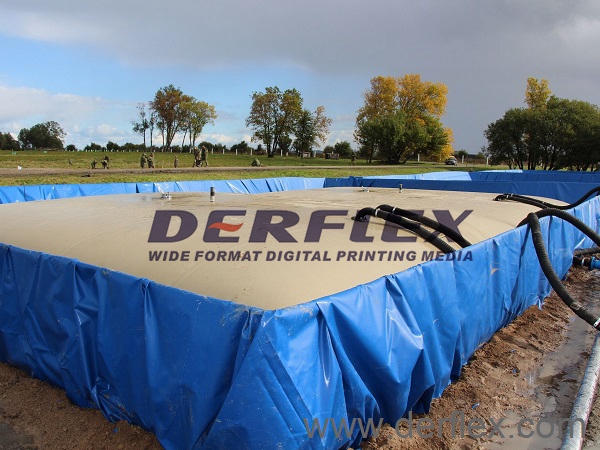
DERFLEX blue open-top flexible water storage tank with coated-fabric sidewalls and large working footprint
Open-access water containmentActual DERFLEX field tank photograph
Open-top accessVisual monitoring, quick draw-off and cleaning access
Two support formatsSelf-supporting onion / frame-supported tank
PVC / TPU optionsCoated-fabric construction by project review
Custom connection planDrain, hose, coupling and accessory coordination
The essential distinction

What Is an Open-Top Flexible Water Tank?

A portable fabric tank with direct access from above.

An open-top flexible water tank stores water in a reinforced, waterproof coated-fabric structure with no fixed closed roof. Depending on its design, the wall is supported by the contained water and a shaped rim, or by a separate structural frame.

Open access makes these tanks useful when operators must fill rapidly, dip a suction line, observe the water level, wash equipment or draw water repeatedly. The same open surface also introduces splash, evaporation, debris and hygiene considerations that a closed bladder avoids.

For the wider family of closed and open containment systems, explore DERFLEX heavy-duty tarpaulin tank solutions.

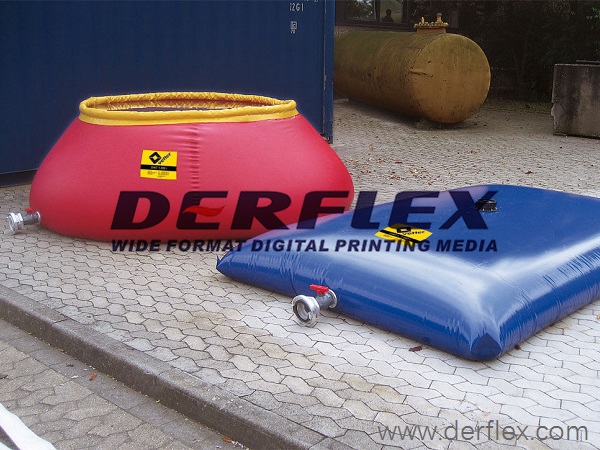
DERFLEX self-supporting red onion water tank shown with a blue pillow-style closed bladder for design comparison
Real DERFLEX tank formats: the red self-supporting open-top onion tank and a blue closed bladder illustrate different access requirements.
Tank design choice / before fabric selection

Choose the Support System Before You Choose the Tank Size

An onion tank, a framed open tank and a closed bladder may all be portable—but they solve different operational problems. Start with how the water will be accessed, and how the perimeter will stay stable.

01 / MINIMAL SET-UPSelf-supporting / onion tank

Open top, flexible sidewalls, compact packing

Usually formed from a tapered or specially shaped flexible body with a supporting rim. The wall geometry stabilizes as the tank fills. Useful where fast deployment and direct access are priorities.

  • Check minimum operating fill level and stability
  • Confirm rim construction and any collar system
  • Plan splash control and temporary cover options
Common consideration: emergency response, remote field work
02 / DEFINED PERIMETERFrame-supported open tank

A liner supported by a frame

A coated-fabric liner is carried by a project-matched tubular or engineered frame. The perimeter remains more defined and can be useful for repeated access and site integration.

  • Check frame availability, assembly and anchorage
  • Specify liner attachment and edge protection
  • Define frame strength for filled hydrostatic loads
Common consideration: construction, washdown, aquaculture
03 / PROTECTED STORAGEClosed pillow / water bladder

Use an enclosed design when exposure is a problem

For longer storage, mobile enclosed water supply or contamination-sensitive projects, a closed flexible tank can be preferable to an open water surface.

  • Enclosed contents and lower exposure to debris
  • Fitting-based fill / drain workflow
  • Compact empty-state shipping
For this alternative, see collapsible water storage tanks.
Procurement data sheet

Technical Specification Framework

Open-top systems should be specified as complete assemblies: fabric, geometry, rim or frame, seams, drains and site interface. The values below are specification fields, not unverified stock-model promises.

SpecificationDERFLEX project directionWhat your drawing / RFQ should confirm
Tank formatSelf-supporting onion / open-top framed linerHow the wall and rim are supported throughout filling and emptying
Usable capacityCustom to agreed geometry and safe operating levelRequired liters or m³, freeboard, maximum water depth and footprint
MaterialReinforced PVC coated fabric; selected TPU coated fabric subject to reviewStored water quality, coating, base textile, UV exposure, folding duty
Fabric thickness / weightProject-specific; existing DERFLEX flexible tank references include selected 0.75–1.20 mm constructions, not universal open-top specificationsApproved material datasheet, tensile, tear and welding requirements
Seams & reinforcementFabric-compatible welded seams and local stress reinforcementJoint design, patch size, attachment points and inspection criteria
Top rim / frameDesigned according to tank type; structural details by projectFrame material, connection arrangement, edge attachment, safe support
Drain systemCustom drain and hose interface options for reviewDrain point, fitting size, thread / coupling type, valve, flow target
AccessoriesGroundsheet, cover, repair components, packing options by requestCleanability, intended weather exposure, transport and deployment cycle
OEM supplyColor, logo, labels and export packing can be discussedApproved drawings, model codes, order volume, destination and QA scope

Specification caution: the published broad DERFLEX flexible-tank family is not a guarantee that every volume or thickness is suitable for an unsupported open-top design. Final working capacity and construction require project confirmation.

Engineering insight / usable liters

Open-Top Capacity Is a Working Water Level — Not Just Rim Height

Nominal capacity claims are easy to misunderstand in flexible containment. An open rim must maintain suitable freeboard above the operating waterline to reduce spill risk during hose movement, pumping, wind or nearby activity. Shape changes under load also affect volume.

Illustrative rectangular volume = L × W × working water depth × 1,000

For a theoretical 2.0 m × 2.0 m basin with 0.6 m working water depth: 2 × 2 × 0.6 × 1,000 = 2,400 L. This is a geometric example only—not a DERFLEX rated tank capacity. Real capacity must account for wall profile, frame/liner geometry, freeboard and operating limits.

For larger engineered storage projects, see the separate large-capacity flexible water tank guide. High volume does not automatically mean that an open-top format is the most suitable choice.

Four values to approve

A useful tank drawing shows more than one number

01 / WORKING LITERS

Usable water volume

Volume available within the project-approved operating fill level.

02 / WATER DEPTH

Maximum operating depth

Controls hydrostatic load, access height and practical draw-off.

03 / FREEBOARD

Unfilled rim allowance

Reserve height above the waterline, assessed for actual operating conditions.

04 / FOOTPRINT

External installation area

Includes the frame, tank perimeter, hose access and safe clearance.

Material system

Waterproof Fabric Is Only One Part of a Safe Open-Top Tank

Tank material must resist hydrostatic load, abrasion, folding stresses and outdoor exposure while forming sound seams and reinforced fitting interfaces. Material selection should follow the stored liquid, operating temperature, use cycle and destination requirements.

PVC coated polyester is a practical starting point for many industrial, agricultural and temporary water-storage applications. TPU coated fabric can be evaluated for selected flexibility, abrasion or folding requirements; suitability is grade- and design-dependent.

Where water is intended for drinking, neither the words “PVC” nor “TPU” demonstrate potable-water approval. The exact contact surface, fittings and assembled system must meet the relevant documented market requirements. Review potable-water liner material considerations before requesting such a product.

Fabric / assembly checkpoints

Ask for evidence at the correct level

  • Coated fabric: base-fabric construction, coating adhesion, dimensional and surface consistency.
  • Panel joining: approved weld process, seam geometry, workmanship and inspection method.
  • Local stress points: drain flange, rim attachment, webbing, corners and fold zones.
  • Operational environment: ground abrasion, UV exposure, temperatures and chemical compatibility.
  • Finished system: agreed inspection / leak-check procedure, connection fit and documentation.

Testing and certification are specified by project; no universal approval or test result is asserted for every tank configuration.

Operating workflow

Design the Fill, Access and Drainage Route Together

An open top solves accessibility but does not replace engineered connections. Operators need controlled filling, a predictable draw-off method and a way to drain residual water without stressing the liner.

01

Fill

Define hose diameter, target filling rate and how incoming flow is directed. Avoid concentrated jets hitting unsupported fabric or the tank base.

02

Access

Provide room for suction lines, inspection, cleaning or repeated water pickup. Plan splash and debris control around an exposed water surface.

03

Draw down

For self-supporting tanks, confirm the water level required to maintain shape. For framed tanks, inspect liner support and manage hose loading.

04

Empty & pack

Plan an accessible drain path, safe residual-water removal, drying and folding. Do not lift, drag or relocate a filled tank.

Field applications

Where an Open-Top Flexible Tank Makes Operational Sense

The reason to select an open tank is usually the work happening around its water surface. The correct material and support method still depend on the site and use cycle.

FIELD 01

Firefighting Water Staging

Temporary reservoir for filling, suction or water relay at remote operations. Confirm coupling and pump arrangement, required flow and local fire-service expectations.

FIELD 02

Construction Washdown

Accessible temporary water for surface cleaning, equipment washing and jobsite utility support. Review containment of dirty water and local discharge rules.

FIELD 03

Agriculture & Irrigation

Open intermediate water holding for irrigation filling points, mobile farm operations and seasonal distribution. Consider algae, debris and evaporation management.

FIELD 04

Aquaculture & Holding

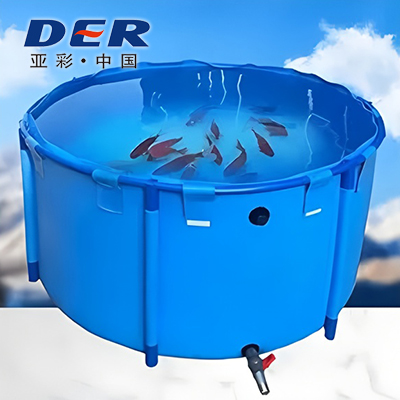
Framed flexible pools can support temporary fish holding, cleaning or maintenance operations where species needs, oxygenation and water quality are addressed separately.

FIELD 05

Remote & Relief Operations

Compact-to-transport open reserve for temporary operations. A protected closed water-storage solution is preferable when hygiene and prolonged storage dominate.

FIELD 06

Industrial Process Buffer

Selected temporary non-potable water holding. Check exact liquid chemistry, wastewater controls, leak consequences and whether secondary containment is required.

Selection guide / no one-size solution

Onion Tank or Folding Frame Tank?

For procurement, compare the operating system rather than assuming all open-top tanks are interchangeable.

Decision variableSelf-supporting onion tankFrame-supported tank
Set-upTypically minimal rigid assembly; shape depends on design and water levelFrame assembly or fold-out operation required, depending on model
Perimeter shapeFlexible and may change with fill levelDefined by the supported rim / frame
Working at low fillRequires specific stability assessmentWall perimeter generally supported by frame; liner still requires correct installation
TransportFlexible tank packs down without a large rigid wall structureIncludes frame components; folded size and weight must be quoted
MaintenanceInspect rim and flexible support geometryInspect liner attachment, frame joints and wear points
Best reason to chooseFast field deployment and minimal structural handlingRegular access and a more predictable installed footprint

Actual properties are construction-specific. Ask for the approved product drawing and installation instructions before comparing models.

Before the first fill

Site Preparation Is a Product Requirement

A flexible liner is only as protected as the surface beneath it. Ground defects, settlement and misrouted hoses can create localized load or abrasion even when the coated fabric itself has suitable strength.

  1. Select a level, stable site with enough clearance for the tank and operators.
  2. Remove sharp stones, scrap metal, exposed roots and protruding edges.
  3. Install a project-specified groundsheet or protective layer if needed.
  4. Assemble and verify the frame or open rim according to the tank design.
  5. Check outlet seals, hoses and flow direction before controlled initial filling.
  6. Keep vehicles and unprotected pedestrian traffic away from the tank edge.

For slopes, retaining structures, large stored volumes or public-access locations, use a site-specific engineering and safety assessment. Do not rely on generic slope or wind-load claims.

Five common specification mistakes

Prevent redesign before production

01

Liters without footprint

The tank may not fit the installation area.

02

Rim height as usable depth

Freeboard and operating limits are overlooked.

03

No low-level stability review

A self-supporting shape may change during draw-down.

04

Unsized hose / drain interface

Tank operations become slow or create fitting loads.

05

Waterproof = potable

Required contact approvals and hygiene are missing.

Manufacturing-led supply

Why Develop Your Open-Top Tank Program with DERFLEX?

DERFLEX works across reinforced coated fabrics and fabricated water-containment products. That makes it possible to discuss tank material, seams, reinforcement, geometry, fittings and OEM presentation as one procurement brief rather than unrelated components.

For a new size or recurring supply program, ask for a defined approval route: confirm application inputs, select structure, approve material and fitting details, review drawing/sample requirements, agree inspection points and freeze packing details for repeat orders.

Custom tank model development and DERFLEX custom tarpaulin tank engineering are reviewed against the full project requirement.

Fabric + fabricationCoated material and finished containment considerations in one specification
OEM flexibilityModel sizes, colors, connection layouts, marking and packing by project
Export-oriented supplyProcurement documentation and repeat-order specification planning
Buyer's RFQ checklist

Send These Details for a More Accurate Quotation

A project inquiry should allow the engineering and sales teams to understand the filled condition, operating waterline, usage cycle and connection system—rather than just quoting a price per liter.

For distributors building a multi-model range, review bulk water tank and private-label sourcing alongside your product specification.

Send Your Tank Requirements ↗
  • Tank type: onion or framed
  • Usable capacity, liters or US gallons
  • Maximum site length × width
  • Working water depth and fill level
  • Stored water type and contact rules
  • Outdoor UV and temperature exposure
  • Ground condition and installation method
  • Inlet / outlet size and coupling standard
  • Expected fill / drainage flow rate
  • Frequency of deployment and folding
  • Groundsheet, cover or repair kit
  • Model quantity, labels and packaging
  • Destination market and required documents
  • Drawings or photos of the site

MOQ, unit price, confirmed lead time and test documentation depend on the approved construction and production order; request these on the formal quotation.

Frequently asked questions

Open-Top Flexible Tank FAQ

Straight answers to the questions that most often change a project specification.

What is an open-top flexible water tank?

It is a portable water-holding tank made from reinforced waterproof coated fabric, with an accessible upper opening. It may be self-supporting with a floating or shaped rim, or supported by a folding or assembled frame.

What is the difference between an onion tank and a frame-supported tank?

An onion tank develops its operating shape through its flexible wall geometry and water fill, generally without a rigid external frame. A frame-supported tank uses a structural frame to hold its liner and maintain a more predictable perimeter.

How do I size an open-top water tank?

Specify usable water capacity, available footprint and maximum operating water depth. Allow for freeboard, the real tank shape and water movement; do not calculate usable capacity from outside rim dimensions alone.

Can an open-top tank hold drinking water?

Do not assume an open-top flexible tank is suitable for potable water. Drinking-water projects require suitable certified wetted materials and fittings for the destination market, plus a hygienic system design and contamination controls.

Can open-top flexible tanks be used for firefighting?

They can be considered for temporary fire-water staging where rapid water access is needed, subject to compatibility with pumps, hose couplings, draw-off rate, site layout and local operating requirements.

Can DERFLEX customize the capacity, material and drain fitting?

DERFLEX can review custom capacity, footprint, PVC or TPU coated fabric, reinforcement, outlets, drain valves, colors and OEM packaging against the project drawing and intended operating conditions.

How should an open-top tank be cleaned and stored?

Drain using an approved method, remove sediment, clean using a method compatible with the coating and stored liquid, rinse as required, fully dry before folding, and store away from sharp objects and damaging environmental exposure.

Project-ready procurement

Open Access. Defined Capacity. A Tank Built Around Your Site.

Tell DERFLEX your required working liters, footprint, tank support preference, water type and hose arrangement. We can review an appropriate coated-fabric construction and quotation scope for your project or OEM range.

Request A Quote ↗

For custom engineering, include a sketch or site drawing wherever possible. No unconnected form on this page.

Consulting Services
+86-021-54361792 / 54361798
Email
sales@derflex.com