News
Industry News

What Tarp Should I Use? Application Selection Guide | DERFLEX

Update:2026/8/13 17:22:07 Views:
DERFLEX logo Application-Based Tarp Selection Guide

What Tarp Should I Use for My Application?

Start with the job—not the tarp name. The right cover depends on what you are protecting, how long it stays outdoors, whether you need waterproofing or airflow, how often the tarp is handled, and where the real stress points are.

  • Compare PVC, poly, mesh and canvas tarp directions
  • Match duty level to rain, UV, wind and abrasion
  • Choose finished size, reinforcement and tie-down layout
  • Build a clearer specification for custom or bulk orders
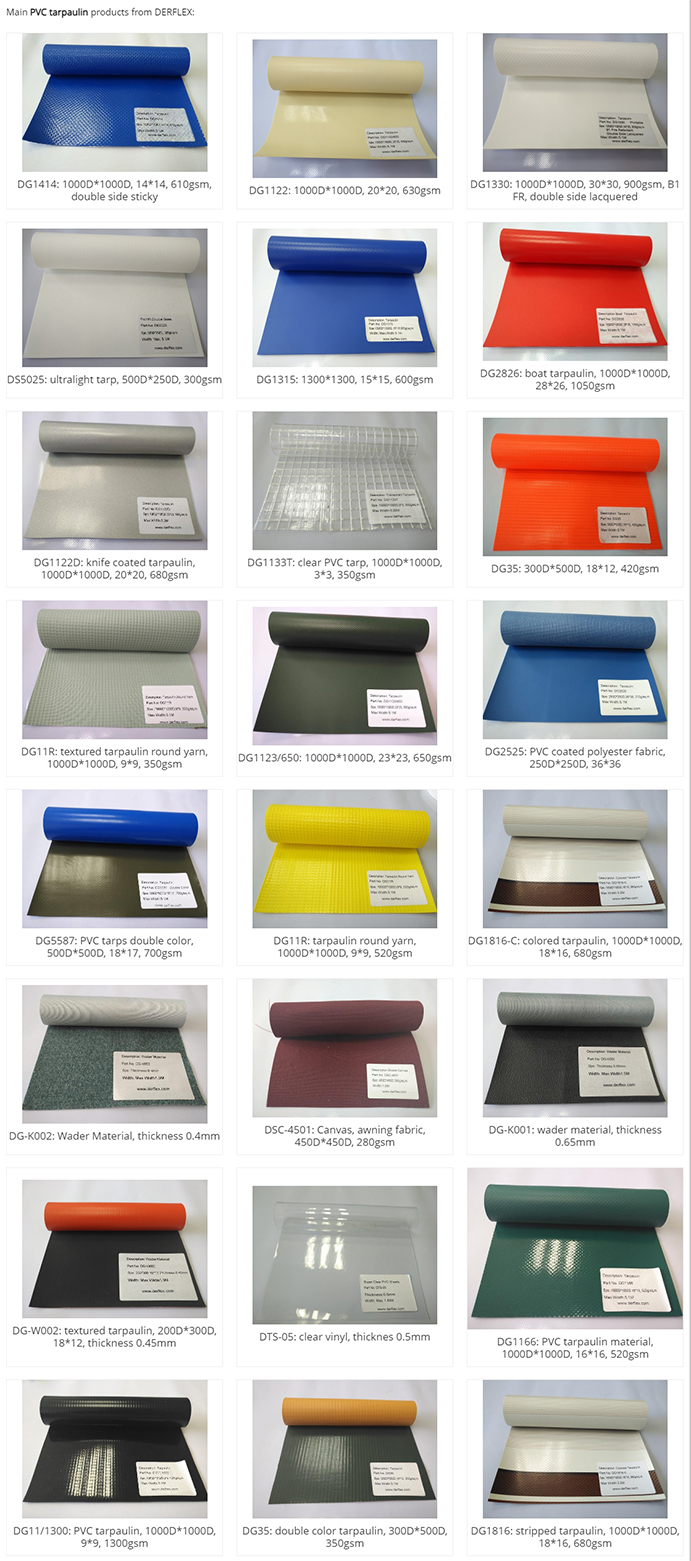
DERFLEX tarp material samples for PVC tarpaulin application selection
One application can require a very different tarp structure from another.

Material weight, yarn construction, coating, finish and fabrication should be matched to the actual service environment rather than selected by color or price alone.

Quick answer

For short-term general coverage, a lightweight poly tarp may be sufficient. For repeated outdoor, transport or industrial use, PVC coated polyester is often the more practical direction. Choose mesh when airflow or wind relief matters more than full rain protection, and consider canvas when breathability is important. Final selection should still account for exposure, size, edge reinforcement, fastening, abrasion and any project-specific safety or test requirements.

60-second starting point

Choose a Tarp Direction by Real Use Conditions

This tool gives a starting direction for discussion. It does not replace a project specification, sample review or application-specific testing.

Tell us what the tarp needs to do

Select the closest conditions. The result is intentionally conservative and focused on practical procurement.

Suggested starting direction

PVC coated polyester or poly tarp, depending on duration

For a general cover, start by deciding whether the job is temporary or repeated. Poly can be economical for short use; PVC coated polyester is usually easier to justify when the cover is handled frequently or remains outdoors for longer periods.

Next check: finished size, edge reinforcement, grommet or webbing layout, exposure to sharp edges, and the required level of UV or weather resistance.

Material decision

PVC, Poly, Mesh or Canvas: Which Tarp Fits the Job?

Each material solves a different problem. The better question is not “which tarp is strongest?” but “which structure fits the failure risks and service conditions of this application?”

Repeated outdoor duty

PVC / Vinyl Tarp

PVC coated polyester is commonly used when buyers need a waterproof, weldable and reusable tarp with custom fabrication options.

  • Suitable for truck, industrial, construction and shelter use
  • Can be specified by GSM, base fabric, finish and UV direction
  • Supports welded seams, hems, webbing, eyelets and custom sizes
Temporary / price-sensitive

PE / Poly Tarp

Polyethylene tarps are light and convenient for general-purpose coverage where easy handling and lower initial cost are important.

  • Common for temporary rain, dust and storage protection
  • Lightweight and easy to move or replace
  • Not the same duty category as many heavier coated PVC fabrics
Airflow / debris control

Mesh Tarp

Mesh is a better direction when the cover should reduce wind load, provide shade or contain debris without creating a solid waterproof barrier.

  • Useful for truck loads, fencing, shade and ventilation
  • Allows air and part of the light to pass through
  • Not intended for applications that require a sealed rain barrier
Breathable protection

Canvas Tarp

Canvas is often considered where breathability, surface protection and lower condensation risk are more important than full waterproofing.

  • Useful for tools, machinery and some storage applications
  • Breathable structure can be helpful around moisture-sensitive goods
  • Water resistance depends on treatment and construction
Application matrix

What Tarp Should I Use for Common Applications?

The matrix below is designed for buyers who need a fast way to move from use case to a more specific material discussion.

Application Starting Material Direction Main Performance Priorities Fabrication / Fit to Check Buyer Note
Short-term general cover PE / poly tarp Water resistance, low weight, easy handling Finished size, grommet spacing, basic edge reinforcement Suitable where replacement frequency is acceptable and duty is limited.
Truck & trailer cargo PVC coated polyester Waterproofing, tear strength, abrasion, flexing, UV exposure Welded seams, reinforced perimeter, webbing, hardware and tension zones Frequent deployment and road movement make edge and attachment design as important as fabric weight.
Construction site cover PVC tarp; project-specific FR option where required Rain, abrasion, dust, repeated handling, site exposure Anchoring pattern, reinforced corners, access points and seam method Confirm any required fire-test method or site specification rather than relying on a generic “FR” description.
Hay, crop & farm storage PVC or PE depending duration and reuse target Rain, UV, wind, puncture and seasonal handling Large-area panel layout, overlap, tie-down spacing and field repair method Long-term outdoor storage usually needs more attention to UV formulation and reinforced fixing points.
Machinery & equipment PVC for weather barrier; canvas when breathability is important Rain, abrasion, surface contact, condensation management Fitted dimensions, corner protection, access openings and ventilation strategy A loose waterproof sheet can trap moisture; the enclosure design should match the equipment and storage duration.
Waste, aggregate & loose cargo Mesh for airflow/debris; PVC when rain containment matters Wind load, tear, abrasion, debris control and repeated rolling Roll-system compatibility, edge reinforcement and attachment points Choose solid or mesh by the cargo-control objective rather than by habit.
Tent, shelter & canopy PVC coated or laminated fabric Weather resistance, dimensional stability, weldability, appearance Panel welding, roof slope, tension pattern, keder/rope/eyelet details Structural loads belong to the complete system; fabric selection should be coordinated with the frame and anchoring design.
Shade screen / privacy barrier PVC coated mesh Airflow, shade factor, wind relief, UV exposure Edge binding, eyelets, spacing and support interval A more open mesh reduces wind load but also changes shade and privacy performance.
Liquid containment / liner Purpose-designed reinforced membrane rather than a generic cover tarp Liquid compatibility, seam integrity, puncture resistance, migration requirements Weld layout, corners, penetrations, substrate preparation and testing Ask for a liner specification matched to the liquid, temperature and service environment.
Failure-first selection

Choose the Tarp by the Failure You Need to Prevent

Application names can be vague. Failure modes are more useful because they point directly to the material property or fabrication detail that needs attention.

Water gets through

Check the sheet material, seam method, edge construction and penetrations. A waterproof fabric can still leak if finished seams or attachment areas are not designed for water exposure.

Grommets tear out

Look beyond grommet spacing. Reinforcement width, webbing, hem construction, corner design and the way tension is distributed can be more important than hardware alone.

Fabric cracks or fades outdoors

Discuss UV exposure duration, color, surface treatment, temperature range and outdoor formulation. “Outdoor use” is not one fixed condition.

Tarp flaps heavily in wind

Review fit, tension, air pressure, attachment intervals and whether a breathable mesh would work better than a solid cover for the specific task.

Surface wears through

Identify sharp edges, sliding contact, folding points and repeated abrasion. Protective pads, heavier coating or a different reinforcement layout may be more effective than simply increasing overall GSM.

Condensation builds underneath

Decide whether full waterproof containment is necessary. Canvas, mesh, ventilation openings or a redesigned enclosure may be more appropriate for moisture-sensitive equipment or stored goods.

Do not buy by weight alone

Why GSM Is Only One Part of Tarp Quality

GSM is useful for grouping light, medium and heavy material directions, but it does not tell the whole story. Two tarps with a similar weight can use different yarns, weave densities, coating ratios and reinforcement systems.

  • Base fabric: yarn denier, weave and density influence tensile and tear behavior.
  • Coating or lamination: affects waterproofing, abrasion, flexibility and welding behavior.
  • Adhesion: coating-to-fabric bond matters during folding, welding and long-term use.
  • Surface finish: matte, glossy, lacquered, printable or anti-mildew directions may suit different end uses.
  • Reinforcement: hems, webbing, corner patches, rope edges and hardware layout carry real service loads.
  • Finished construction: seam method, dimensional tolerance and fit can determine whether the cover performs as intended.
Duty-level framework

How to Think About Light, Medium and Heavy Duty

“Heavy duty” is not a universal technical grade. A more useful specification describes the environment and the expected service.

Duty Direction Typical Conditions
Light Temporary cover, low wind, infrequent handling, limited abrasion.
Medium Regular outdoor use, moderate weather, repeated tie-down and handling.
Heavy Transport, industrial use, strong tension, abrasion, long exposure or frequent deployment.
For procurement, specify measurable targets where possible—material weight, base fabric, tensile/tear targets, temperature direction, UV expectation, seam construction and reinforcement details—instead of using “heavy duty” as the only requirement.
Size & securing

The Right Material Can Still Fail If the Fit Is Wrong

Finished dimensions and tie-down design should be decided together. A tarp that is too small creates excessive tension; one that is too loose can flap, collect water or rub against the covered object.

Measure the finished coverage

  • Measure length, width and height—not only the top footprint.
  • Add side drop and planned overhang where the cover needs to wrap around the object.
  • Confirm whether the supplier is quoting cut size or finished size after hems and seams.
  • Identify doors, valves, handles, exhausts or access points before fabrication.
  • Provide drawings or photos for fitted equipment covers and irregular shapes.

Design the attachment system

  • Choose eyelets, D-rings, straps, webbing, rope hems or keder based on the installation.
  • Reduce concentrated load at corners and frequent pull points with local reinforcement.
  • Use fastening intervals that suit the expected wind and movement of the cover.
  • Avoid pulling a flat tarp tightly over sharp edges without abrasion protection.
  • For rolling or automated tarp systems, confirm dimensional tolerance and edge behavior with the system design.
RFQ preparation

What Information Should I Send a Tarp Manufacturer?

A good inquiry does not need to be long. It needs to describe the application clearly enough for the supplier to recommend a practical material and fabrication route.

1. ApplicationTruck cargo, machinery cover, construction enclosure, hay storage, shade screen, shelter, liner or another use.
2. Finished sizeLength × width × height or a drawing showing the actual cover path and overhang.
3. ExposureIndoor/outdoor, rain, sunlight, wind, cold, heat, dust, chemicals, abrasion and expected service duration.
4. Material targetPVC, PE, mesh, canvas or open recommendation; include any preferred GSM, yarn or finish if already known.
5. ReinforcementHem, webbing, rope edge, corner patches, wear pads, eyelets, rings, straps or custom hardware.
6. FabricationRoll goods, cut panels or finished tarp; welded or sewn construction; access openings and attachment method.
7. Performance requirementsWaterproofing, UV, mildew, cold flexibility, flame-retardant test direction or other project requirements.
8. Commercial detailsQuantity, repeat-order plan, color, logo, labeling, packing and destination market.
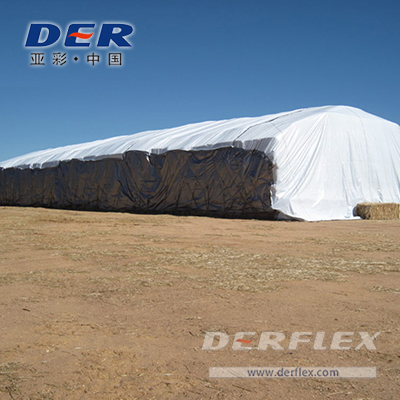
DERFLEX tarp application for outdoor agricultural storage protection
DERFLEX manufacturing support

From “Which Tarp?” to a Repeatable Purchase Specification

DERFLEX supplies PVC coated polyester tarpaulin materials, mesh and other tarp directions for distributors, converters, fleet-related buyers, contractors, agricultural suppliers and, industrial customers. Depending on the project, supply can be discussed as roll goods, cut panels or finished custom tarps.

For PVC tarpaulin programs, material discussions can cover weight, base fabric, width, color, surface finish, UV direction, cold flexibility, welding requirements and fabrication details. Finished tarp discussions can add hems, webbing, eyelets, rings, straps, logos and packing.

  • 350–1200 gsm PVC tarp material directions available for discussion
  • Custom roll, panel and finished tarp supply routes
  • Hot-air or high-frequency weldable material options by specification
  • Custom size, color, edge reinforcement and hardware layout
  • OEM / private-label discussion for repeat B2B programs
  • Sample and specification confirmation before bulk production
Procurement perspective

How to Compare Tarp Quotations More Accurately

Price per piece or price per square meter is meaningful only when the specifications being compared are sufficiently similar.

Compare the technical scope

  • Material family and total weight
  • Base fabric yarn and weave structure
  • Coated vs laminated construction
  • Required tensile and tear targets
  • UV, cold, mildew or fire-test requirements where applicable
  • Finished-size tolerance and seam method

Compare the finished-product scope

  • Hem and webbing reinforcement
  • Eyelet material, spacing and corner design
  • D-rings, straps, buckles or special hardware
  • Logo printing and labeling
  • Folded, rolled, pallet or carton packaging
  • Sample approval and repeat-order consistency controls
A lower-price tarp can be appropriate for a short temporary task. A heavier or more engineered tarp can be more appropriate where replacement, downtime, cargo damage or frequent handling carries a higher cost. The decision should be based on the expected use rather than a single “best tarp” claim.
FAQ

Questions Buyers Ask Before Choosing a Tarp

Short answers to common material, sizing and supplier questions.

What tarp should I use for long-term outdoor protection?

For repeated outdoor and industrial protection, PVC coated polyester is often a practical starting direction because it can combine waterproofing, UV-oriented formulations, tear strength, weldability and custom reinforcement. Final weight and structure should be matched to wind, abrasion, handling frequency, temperature and the way the tarp is secured.

Is a PVC tarp better than a poly tarp?

Neither material is automatically better for every job. Poly tarps are often suitable for temporary, lightweight and price-sensitive coverage. PVC tarps are more commonly selected for repeated use, transport, industrial covering and custom fabrication where stronger reinforcement and weldability are useful.

What GSM tarp should I choose?

Start with the application rather than a fixed GSM number. Light temporary covers may use lower weights, while truck, construction and industrial tarps often require heavier coated polyester structures. Base yarn, weave, coating, tear strength and reinforcement should be reviewed together with GSM.

When should I use a mesh tarp instead of a solid tarp?

Use mesh when airflow, shade, wind relief or debris containment is the main objective. A solid PVC or poly tarp is more appropriate when the application requires a rain barrier or enclosed coverage.

How do I choose the right tarp size?

Measure the object length, width and height, then calculate the required side drop and overhang. Confirm whether the supplier uses cut size or finished size after hems and seams. For fitted equipment covers, provide a drawing or photos with attachment and access points.

What tarp is suitable near welding or fire-risk work?

Do not choose only by the phrase “fire retardant.” Identify the project environment and the test standard required by the buyer, contractor or authority, then select a material that has been tested for that requirement. Hot-work protection may require a specialized material rather than a general PVC tarp.

Can DERFLEX make custom tarps for OEM or bulk orders?

DERFLEX can discuss custom tarp material and finished-cover programs including size, GSM, base fabric, color, surface finish, welded seams, hems, webbing, eyelets, logo, labels and export packing. Feasible options depend on specification, quantity and application.

Still Not Sure Which Tarp to Use?

Send DERFLEX the application, finished size, outdoor exposure, fastening method, quantity and any performance requirements. The team can discuss a practical material direction and quotation scope for your project.

Request A Quote
Material recommendations should be confirmed against the final application, fabrication method and any required tests or local project specifications.
Consulting Services
+86-021-54361792 / 54361798
Email
sales@derflex.com