



Industrial cover materials · Custom tarp supply
Heavy Duty Tarps
for Every Application
Source heavy duty PVC coated polyester tarps for trucks, construction, farm equipment and outdoor storage. DERFLEX supplies material rolls, fabricated panels and custom finished covers for converters, distributors and OEM buyers. Compare applications, choose the fabric and reinforcement, and define finished dimensions and fittings before requesting a quotation.
Choose your supply formMaterial rolls · Fabricated panels · Finished covers
Define the working conditionsRain · Sun · Abrasion · Repeated handling
Turn the operating conditions into a cover design
Describe what is being covered, how it is accessed and what usually damages the existing cover. The following starting points identify the decisions to resolve before selecting a fabric grade.
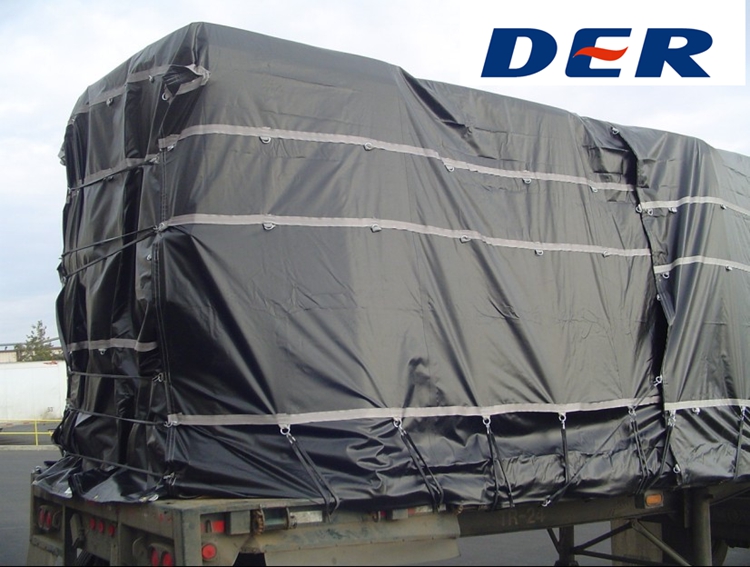
Truck, trailer & cargo covers
Moving loads combine weather exposure with flutter and repeated folding. Record cargo height, drop length, projecting corners and the vehicle's attachment points. Put wear protection at contact zones and check that the finished tarp can be handled during each loading cycle. Cargo restraint and cover fastening need their own suitable arrangements.
Explore truck tarp options →Jobsite & building-material covers
Identify whether the job is covering stored materials, closing a work area or providing temporary weather protection. Raised supports, drainage and attachment layout change the design. A freestanding sheet, a scaffold enclosure and a supported temporary roof have different installation requirements; describe the actual arrangement when requesting material.
Review construction tarp applications →Farm equipment & seasonal storage
Plan around sun exposure, storage duration, cover removal and moisture beneath the sheet. A waterproof surface cannot prevent condensation around damp goods. Keep sharp machine features away from unsupported fabric, provide an appropriate drying or ventilation route, and state whether the material touches the stored product.
See agricultural tarp applications →Machinery & equipment covers
Record protrusions, service doors, cable exits and the points that rub during removal. A shaped cover with selected access openings can be more practical than an oversized rectangular sheet. Mark wear pads and distinguish rain protection from any heat or liquid-contact requirement; those conditions affect the material selection.
View industrial tarp solutions →Pallets, stockpiles & yard inventory
Large exposed covers need a workable panel and anchor plan. Include storage height, required edge overlap, drainage and how workers will remove the cover. If a single panel is difficult to carry or store, discuss smaller joined sections rather than increasing fabric weight without checking the finished mass.
Container & bulk-material covers
Choose between a solid rain barrier and an open cover for airflow or debris control. Record the cargo temperature, abrasive surfaces and opening mechanism. Mesh openings also need to suit the material being covered. A tarp used on a rolling system must match the roller, guides and existing attachment geometry.
Boat, dockside & port equipment covers
Allow for projecting fittings, persistent moisture and repeated installation. Use a supported shape that sheds rain and a closure arrangement that permits necessary access. Identify fastener material requirements and ventilated areas in the drawing; a tight waterproof envelope alone does not manage moisture trapped around the asset.
Canopy covers, sidewalls & partitions
Separate the fabric cover from its supporting structure and attachment system. Describe the panel span, access openings, joining details and any required flame-performance documentation. A material report applies to the tested material and conditions; the supporting frame, tracks and installation are separate items to define in the quotation.
PVC, PE, canvas or mesh?
Start with water and airflow requirements, then compare handling and fabrication. These are material-family distinctions, not interchangeable product grades. DERFLEX's focus on this page is reinforced PVC tarp material and fabricated covers.
On smaller screens, scroll the comparison table horizontally.
| Material family | Useful starting point | Decision to check |
|---|---|---|
| PVC coated polyester | Reusable solid covers with a reinforced textile base and welded fabrication. | Grade data, cover mass, joint construction, cold flexibility and wear zones. |
| PE / poly tarp | Programs where carrying weight, temporary cover needs and initial cost are priorities. | Actual reinforcement, coating, finish dimensions and suitability for the intended reuse. |
| Canvas / textile cover | Applications where a textile construction and moisture-management requirements influence selection. | Fiber, treatment and actual water and vapor behavior; “canvas” alone does not establish waterproofing. |
| Mesh | Shade, airflow and selected loose-material covering tasks. | Opening size and material retention. Open mesh permits water passage. |
Need a closer comparison before choosing a construction? Read the tarp material selection guide. A lighter or more open material may solve the job better when full rain blocking is unnecessary.
Specify the fabric and the finished cover together
The fabric carries distributed stress; seams join panels; reinforcement transfers force into the fixing points. Approve these details as a connected design. Adding coating weight cannot correct an attachment placed in the wrong position.
Material specification
Record the product code, coating construction, reinforcing fabric, nominal mass, thickness, usable roll width, color and surface. Request the relevant technical data for the proposed grade. Keep mass and thickness as separate fields; neither is a substitute for mechanical test results.
Finished-cover specification
Record finished dimensions and tolerances, panel layout, required seam sealing, hem construction, corner patches and attachment coordinates. Mark the cover orientation and outside face. Place repeated access features consistently so replacement covers can fit the same equipment.
| Dominant condition | Detail to specify | Check before approval |
|---|---|---|
| Flutter or changing pull direction | Attachment positions, edge reinforcement and fitted geometry. | Cover fit, load path and compatibility with the actual fixing arrangement. |
| Rubbing against corners | Contact map, local wear pads and protection of sharp surfaces. | Where movement occurs, rather than fabric weight alone. |
| Standing water or persistent leakage | Supported fall, sealed joints and protected openings. | Drainage and the agreed water-check method for the finished assembly. |
| Frequent folding or cold handling | Service and handling temperatures, fold routine and material grade. | Flexibility of the proposed sample under the relevant conditions. |
| Extended outdoor exposure | Exposure profile, surface requirements and applicable aging evidence. | Test conditions and property retention; test hours are not a guaranteed service life. |
Keep evidence specific. Ask for test method, units, sample direction, conditioning and the relevant material code. A reported fabric value does not establish the strength of the complete seam, hem or fastener assembly.
Measure the coverage. Then check the weight.
For a simple rectangular asset with a flat top, start with top length L, top width W and the required side drop D. A flat sheet covering the top and dropping equally on all sides begins at (L + 2D) × (W + 2D). Add any required overlap or closure allowance separately. Sloped tops, irregular shapes and fitted box covers need a drawing or a measured surface path.
State whether quoted dimensions are finished dimensions after hems and seams or an unprocessed cut size. For a replacement, measure fixing centers from a consistent datum and identify the viewing direction. Overall width alone will not locate a row of eyelets.
Sheet mass planning tool
Use an agreed material mass to estimate sheet weight. The default is an illustration, not a DERFLEX grade specification. For a 6 × 10 m sheet at 650 g/m²: 60 × 650 ÷ 1,000 = 39 kg, before fabrication extras.
Formula: area in m² × g/m² ÷ 1,000. Excludes seam overlaps, hems, wear pads, fittings and packing. It does not calculate an approved lifting or installation method. Ask for finished packed mass when planning transport.
Look closely at the material and finishing
The following images come from DERFLEX product pages. They illustrate fabric surfaces and cover details; choose the exact material and hardware through the specification and approved sample.
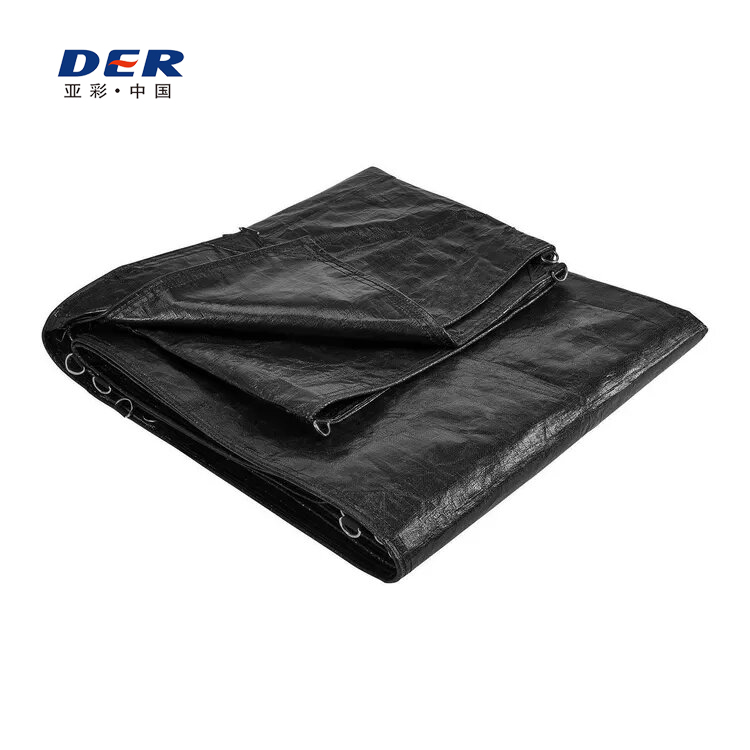

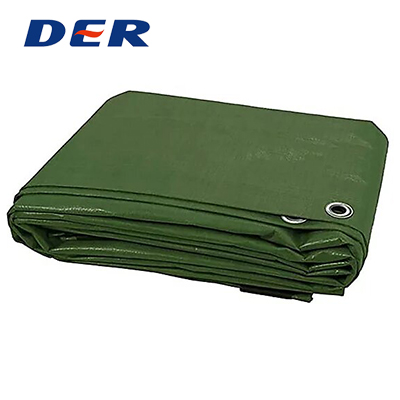
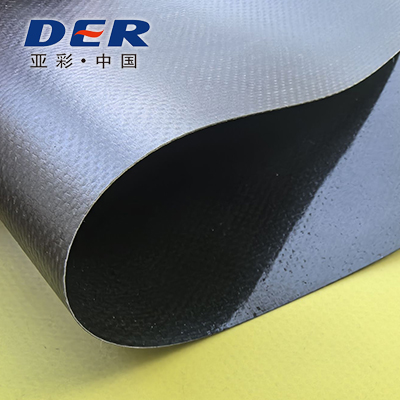
From roll material to a repeatable cover program
Converters can source material for their own cutting and fabrication. Buyers of panels or finished tarps should define the work included in the quotation: panel joining, edge processing, reinforcement, fittings, printing and packing. A cover-material order does not automatically include a supporting frame, track system or installation service.
For general construction information, explore PVC tarp materials and covers. When the finished design is ready, use the custom heavy duty tarp program to discuss the drawing, sample and repeat-order details.
| Approval item | What to record | What it helps prevent |
|---|---|---|
| Material identity | Product code, color reference, mass/thickness tolerances and applicable report. | Substituting a visually similar construction. |
| Dimensions & hardware | Finished size, measurement conditions, attachment centers and orientation. | Replacement covers that cannot align with the asset. |
| Seams & reinforcement | Approved joint sample, reinforcement map and relevant check criteria. | Approving strong fabric while overlooking a weak assembly detail. |
| Labels & packing | Part reference, drawing revision, folded/rolled dimensions and packing format. | Mixing sizes, revisions or customer-specific covers. |
For flame performance, prolonged liquid contact or another special condition, include the required method and exposure conditions in the RFQ. Request evidence for the proposed grade and assembly where relevant; a general material description is insufficient.
Prepare a clear RFQ and a practical use plan
Describe the duty
Send an application photo or sketch, the asset being covered, outdoor exposure, contact surfaces and opening frequency. Describe a previous failure if available. Include relevant operating and handling temperatures or contact liquids rather than asking for an unspecified “industrial grade.”
Define the deliverable
Choose rolls, panels or finished covers. Provide quantities by size, finished dimensions, attachment coordinates, access openings, color and printing. Mark revision numbers and identify any fittings to be supplied by the buyer.
Agree the sample and checks
Review the proposed material data and a relevant fabrication sample. For a fitted cover, confirm the geometry before the bulk order. Agree dimensional tolerances, joint checks, labels and the reference sample so receipt inspection uses the same criteria as production approval.
Compare the complete quotation
Check material, cutting yield, seam work, reinforcement, fittings, packing and delivery terms. State the destination and required date. Confirm minimum order quantity, sample arrangements and schedule for the selected design; the lowest fabric price may not represent the lowest finished-cover cost.
Plan for use and storage. Remove sharp contact points, support drainage and inspect seams, edges and hardware after demanding use. Follow the material supplier's cleaning instructions and let the tarp dry before packing. Retain the material and drawing references when requesting a repair or replacement.
Heavy duty tarp FAQ
What makes a tarp heavy duty?
A heavy duty tarp is intended for demanding cover service, but the label alone does not define a strength class. Compare the reinforcing fabric, coating, mechanical test results, seam construction, edge details and attachment layout. Choose the complete cover around its exposure, contact surfaces and handling cycle.
What is the best material for heavy duty tarps?
PVC coated polyester is a practical starting point for reusable rain-blocking covers that need welded fabrication. PE, treated canvas and mesh meet different priorities, including carrying weight, moisture management and airflow. The best choice depends on the job; mesh should not be specified as a waterproof sheet.
What GSM should I choose, and is a thicker tarp stronger?
There is no universal GSM or thickness threshold for all heavy duty tarps. GSM measures mass per area; thickness measures the distance through the material. Neither alone establishes tear resistance, seam strength or attachment performance. Review the proposed grade data, the finished cover design and its handling weight together.
Are heavy duty PVC tarps completely waterproof?
An intact solid PVC-coated sheet can block rain, but a finished cover also includes seams, hems, openings and fasteners. Specify which joints must resist water and how they will be checked. The installed cover must shed water; fabric waterproofing does not correct low spots, unsealed penetrations or unsuitable drainage.
Can DERFLEX supply custom sizes, rolls and finished covers?
DERFLEX offers PVC tarp material, fabricated panels and custom finished tarps. Specify the supply form, finished dimensions, quantity, seam plan, reinforcement, hardware and packaging. For replacement covers, send the existing attachment coordinates as well as overall dimensions so the new cover can be checked against the installation.
What determines the price and delivery schedule of a custom tarp order?
Material construction, usable roll width, cutting yield, seams, reinforcement, hardware, printing, order quantity and packing affect the quotation. Destination and delivery terms affect the delivered cost. Ask DERFLEX to confirm the sample process, minimum order quantity and production schedule for the agreed specification rather than assuming a fixed catalog lead time.
Build the right cover specification with DERFLEX
Send the application, a photo or drawing, finished size, quantity and delivery destination. Add the fixing layout and any required material evidence. DERFLEX can review the supply form and fabrication details so your quotation starts with the cover you actually need.
DERFLEX · Heavy duty tarp materials, fabricated panels and custom covers