


 COATED FABRICS / OEM SOURCING
A specification starts with a document
Military Specification Tarp Fabric: Compliance & OEM Sourcing
Military specification tarp fabric should be purchased against an identified document, an applicable grade and evidence linked to the supplied material. For importers, fabricators and OEM cover manufacturers, the first task is to establish what the contract actually requires. Use this guide to prepare a clear RFQ for roll goods, requested yardage or fabricated panels, and to separate commercial coated fabric from a documented specification-controlled supply.
Material routeDiscuss PVC-coated polyester and camouflage tarp material.
Order controlDefine grade, usable width, length, tests and lot identity.
Supply formatConfirm rolls, requested cuts or drawing-based fabrication.
Compliance basisThis page does not establish an approved military-specification grade.
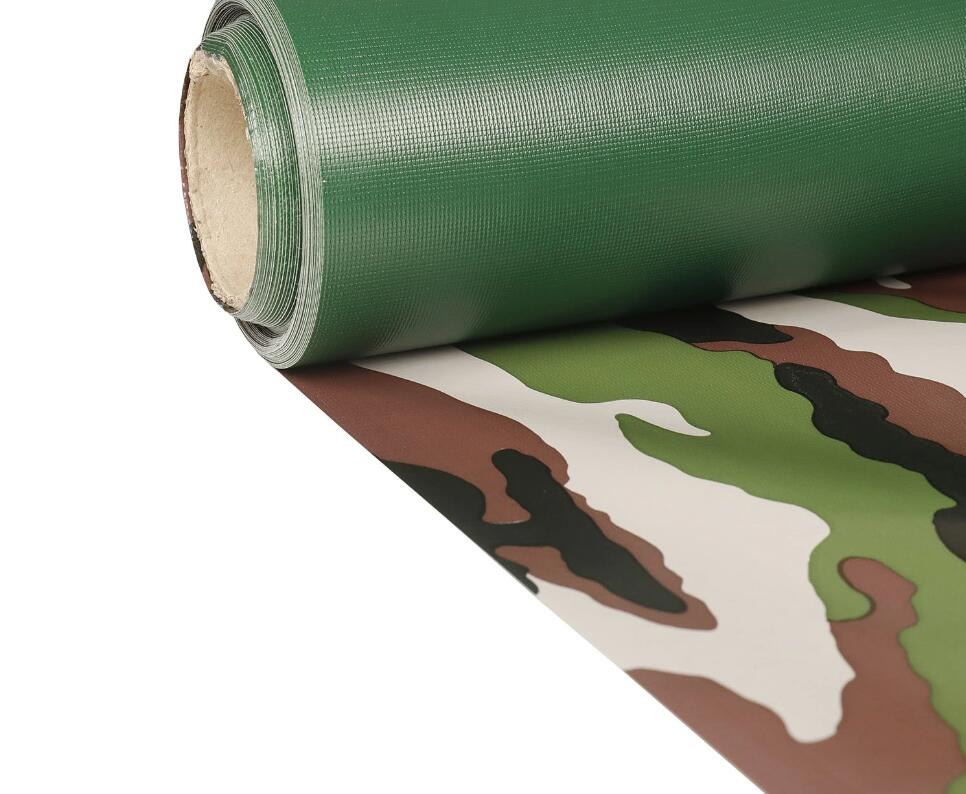
What does “military specification” mean for tarp fabric?
A military specification is an identified set of requirements. A buying description such as “army green,” “heavy duty” or “military grade” does not identify the required document, revision or acceptance criteria. The same visual appearance can be produced in different fabric constructions and does not establish equivalent performance.
Begin with the purchase requirement, then identify the material and supporting evidence. DERFLEX publishes commercial PVC-coated fabric and PVC tarpaulin material information. These are useful starting points for a material discussion; they do not establish conformity with a particular military specification.
Reference example: DLA ASSIST lists MIL-PRF-20696 as a specification for waterproof, weather-resistant cloth. Refer to the official document record to identify the required issue. A reference to the standard is not a DERFLEX compliance claim.
Choose the correct sourcing route
On a small screen, scroll the table horizontally.
| Buyer requirement | What the order should define | Decision before approval |
|---|---|---|
| Commercial weather cover | Operating conditions, construction, dimensions, finish and agreed tests. | Evaluate the proposed commercial grade against the application. |
| Specified military fabric | Document identifier, revision, applicable type/class, acceptance criteria and evidence. | Establish a documented match for the actual grade before ordering. |
| Finished tarp or cover | Fabric requirements plus drawings, seams, reinforcement, hardware and final inspection. | Verify the fabricated article separately from the roll material. |
Specify the fabric before comparing quotations
Ask competing suppliers to answer the same fields. Keep mandatory requirements separate from preferences so that a quotation can show the proposed grade, supporting evidence and any deviation clearly.
| Control field | Put in the RFQ | Check in the response |
|---|---|---|
| Document identity | Identifier, revision, applicable classification and purchase-order exceptions. | The same issue is used in the proposed compliance matrix. |
| Material construction | Required fiber, reinforcement, coating or laminate, and face/reverse finish. | The offered construction is identified; substitutions are declared. |
| Mass and dimensions | Mass per area, thickness where relevant, usable width, roll length and tolerances. | Units and measurement basis match; nominal and acceptance values are distinguished. |
| Mechanical properties | Required strength and durability characteristics with methods and directions. | Results match the specified method, specimen direction and conditioning. |
| Exposure conditions | Water, folding, abrasion, temperature, cleaning and other relevant exposure. | Applicable test conditions and any retained-property requirements are stated. |
| Color and surface | Approved physical color reference, finish, print repeat and acceptance conditions. | Approval sample is identified. Screen appearance alone is not the color standard. |
| Documents and lots | Required reports, conformity declaration, roll marking and lot linkage. | Documents can be connected to the supplied material and shipment. |
For the wider relationship between construction, weight, tests and finishing, use the DERFLEX tarp specifications guide. A material family or GSM value alone is insufficient to identify a controlled grade.
A document-to-roll evidence checklist
A useful approval file lets the buyer follow the requirement through the test sample to the rolls being delivered. The following is a proposed procurement workflow, rather than a statement that a particular DERFLEX military grade has completed these steps.
Agree the requirement matrix
List applicable clauses, acceptance values, methods and documents. Identify deviations before sample approval. Keep buyer-authorized exceptions attached to the final specification.
Identify the tested material
Record the material code, construction, finish, color, sample identifier and available lot information. A report on an unidentified swatch cannot reliably identify the bulk material.
Review the actual result
Check the laboratory, report number, issue date, method, conditions, results and scope. Confirm whether the evidence is grade qualification, a batch test or a limited screening test. Each answers a different question.
Link documents to delivered rolls
Agree the lot definition and roll identification. Packing records should support the required link between the shipment and its documents, including any multiple-lot deliveries.
Keep a signed reference sample, the agreed data sheet and an approved document list. Define which material, formulation, reinforcement, finish or production changes require notice and reapproval. The DERFLEX quality-control overview provides general manufacturing context; a project still needs its own evidence requirements.
Conformity declaration and test report have different roles. A declaration states conformity within its stated scope. A test report records results for the identified sample and tests. Read both against the contract rather than treating either document title as universal approval.
Fabric by the yard, by the meter or by the roll
A linear yard measures length along the roll, across the stated width. It is different from a square yard. When comparing roll prices, match the usable width as well as the length, construction and acceptance requirements.
State whether the job needs continuous lengths, whether joined rolls are acceptable, how defects are marked, and how any unusable length is handled. Cutting service, sample size, minimum order and standard roll packing must be confirmed for the proposed material.
Worked example: 50 linear yards = 45.72 meters. At an assumed usable width of 1.50 meters, the nominal area is 68.58 m². These are calculation inputs, not a DERFLEX stocked roll size. They exclude cutting loss, seam overlaps, hems and rejected material.
Yardage planning calculator
Enter linear length in yards and usable width in meters. This estimates nominal uncut area.
1 international yard = 0.9144 meter exactly. A finished-cover cutting plan needs separate allowances.
Separate appearance from documented performance
These existing DERFLEX images show a sample and commercial camouflage-cover applications. They are visual references, not military qualification samples, current test records or evidence of a named customer project.
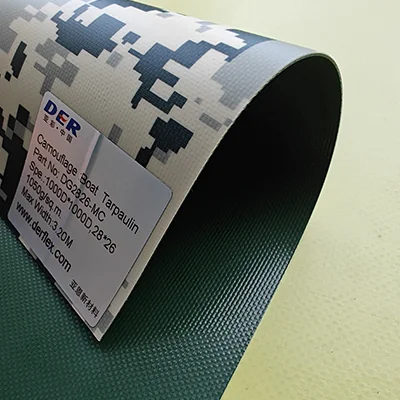
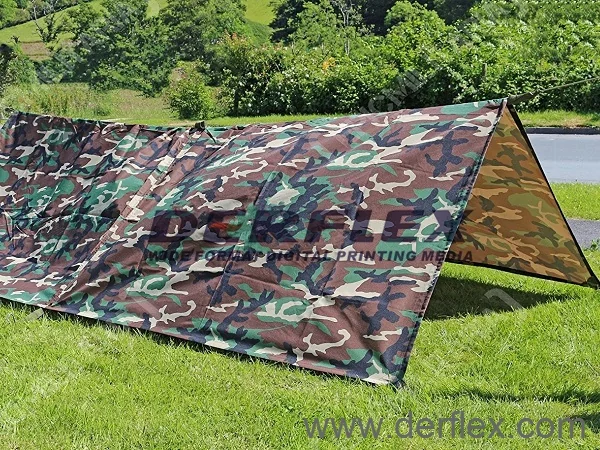
For visual patterns and commercial construction choices, see camouflage tarps and OEM cover materials. Pattern selection and specification conformity are separate approval tasks.
From approved roll goods to an OEM cover
Define what the quotation includes
Identify the requested delivery form: roll material, cut panels or a fabricated cover. Provide finished dimensions, tolerances, openings, seam positions, reinforced areas and fastening interfaces. Frames, installation and structural design require a separate scope.
Confirm the proposed conversion route with the selected material. A seam made on one construction does not establish performance for a different coating or reinforcement. Include seam samples and finished-article checks where required.
Make repeat orders reproducible
Approve the material reference, drawing revision, seam construction, color reference, marking and packing instructions together. Keep deviations visible in the order record. Before a repeat order, check whether a specification revision or material change affects the previous approval.
Use the tarpaulin manufacturing process overview to distinguish material production from cutting, joining and finished-cover inspection.
What changes the quotation?
Material construction, usable width and cutting yield, testing scope, documentation, order size, continuous-length requirements, fabrication, packing and delivery terms all affect the offer. Ask the quotation to separate material supply from one-time sampling or testing costs where applicable. Agree MOQ, lead time and shipment terms for the actual order.
Resolve the details that cause receiving and production delays
Before sample approval
- Confirm the required document and authorized exceptions.
- Agree usable width, continuous length and dimensional tolerances.
- Identify the tests needed for the material and the finished article separately.
- Approve color under agreed viewing conditions and retain a physical reference.
- Describe folding, cleaning, storage and contact-surface conditions.
Before releasing the shipment
- Match material identity, roll labels and packing records.
- Check the required report and conformity-document references.
- Separate multiple lots and maintain their identities through cutting.
- Inspect roll condition, usable dimensions and declared defects.
- Hold unapproved substitutions for written disposition before use.
Tell DERFLEX if the purchase has mandatory origin, approved-source or other contract-specific restrictions at the start of the inquiry. Material performance evidence and procurement eligibility are separate questions; establish both before committing to a supply route.
Military specification fabric sourcing FAQ
Is military-grade fabric the same as military specification fabric?
No. Military-grade is a commercial description unless it is tied to an identified requirement and supporting evidence. A specification-controlled order needs the document identifier, revision, applicable classification, agreed acceptance requirements and records linked to the supplied grade and lot.
Can I order military specification fabric by the yard or by the roll?
State the requested linear length and usable roll width in the RFQ. Ask DERFLEX to confirm cutting availability, minimum order, continuous-length requirements and roll packing for the proposed material. This page does not establish a stocked or certified military-specification roll program.
Does a camouflage pattern prove military compliance?
No. A visible pattern or an olive-green color does not establish conformity with a military specification. Color, pattern, finish and any additional optical requirements must be assessed separately against the applicable purchase requirements.
What documents should accompany a compliant fabric order?
The purchase agreement should identify the required documents: an approved grade description, the applicable specification and revision, relevant test reports, a certificate of conformity where required, and packing records that connect the delivered rolls to the material lot. The exact document set follows the contract.
Does a fabric report also approve a finished tarp or shelter?
No. Seams, hems, attachment points and finished dimensions introduce additional requirements. A fabric test report does not establish finished-tarp performance or structural shelter approval. Specify and verify the finished article separately.
What should I send DERFLEX before requesting a quote?
Send the application, target specification and revision if applicable, material or performance requirements, usable width, linear length or quantity, color reference, fabrication drawing, destination and required documents. If no formal specification applies, describe the operating conditions so a commercial material can be discussed clearly.
Send the requirement. Make the quotation comparable.
Share the intended cover application and the specification you need to satisfy. DERFLEX can discuss its commercial coated-fabric material range and the evidence needed to assess a proposed grade. A military-specification supply claim requires a documented match for the actual material and order.
Include these details
- Application, drawing and operating conditions.
- Specification identifier, revision and classification.
- Material, usable width, linear length and quantity.
- Color, finish and requested delivery form.
- Test documents, lot marking and acceptance requirements.
- Destination, required date and purchase restrictions.
Reference: DLA ASSIST / MIL-PRF-20696 document record. Use the applicable purchase specification for acceptance decisions. Images on this page are DERFLEX commercial material and application references.