


Tarp Roll for Professional Fabrication & Bulk Supply
DERFLEX supplies tarp roll material for buyers who cut, weld, sew, reinforce or resell tarpaulin products. Build the roll specification around the finished tarp: material structure, GSM, usable width, color, surface finish, welding method, functional requirements and export packing.
This page is designed as the broad tarp-roll purchasing hub. For a specific PVC construction, heavy-duty weight or roll-size calculation, use the related technical pages linked below.
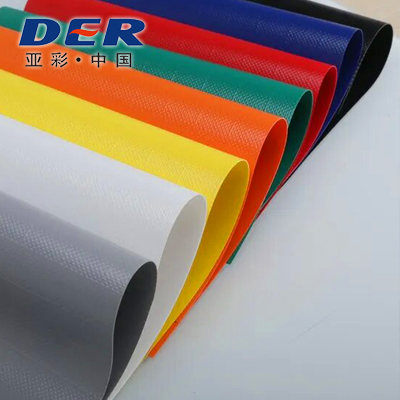
What Is a Tarp Roll?
A tarp roll is continuous tarpaulin material supplied before it becomes a finished cover. Professional buyers use the roll format when they want to control cutting size, seam position, welding or sewing, edge reinforcement, hardware and finished-product inventory. For heavy-duty waterproof applications, PVC coated polyester is a common roll construction because the woven base fabric provides strength while the PVC surface provides water resistance, cleanability and thermal-welding compatibility.
“Tarp Roll” Is a Purchasing Format, Not One Universal Product
The same phrase can describe a retail 18 oz vinyl roll, an industrial PVC tarpaulin roll, bulk coated fabric for a converter, or raw material for an OEM cover program. The right specification depends on what happens after the roll arrives.
Converter / Fabricator
You need predictable roll width, coating behavior, welding compatibility and batch consistency because the material will become custom tarps, covers or curtains in your own workshop.
Distributor / Wholesaler
You need practical stock grades, repeat colors, clear product positioning and packing that is suitable for warehousing, local reselling or downstream cutting service.
OEM Brand / Project Buyer
You need a repeatable specification connected to the final product, required performance, labeling, packaging and future reorder control rather than a one-time roll purchase.
Define the Tarp Roll Before You Ask for Price
A useful quotation starts with the finished application and conversion method. The table below separates the decisions that affect production, handling and end-use performance.
| Specification Item | DERFLEX Buying Direction | Why It Matters |
|---|---|---|
| Material structure | PVC coated or laminated polyester fabric, selected according to performance and conversion needs. | The coating route, base fabric and finish influence flexibility, surface behavior, weldability and finished-product positioning. |
| Fabric weight | Approx. 350–1300gsm direction for published DERFLEX tarp-roll programs; final grade must be confirmed. | Weight affects handling, strength potential, abrasion resistance, roll mass and cost. |
| Roll width | Approx. 1.02–5.10m direction depending on selected construction and production feasibility. | Usable width affects seam count, trim waste, cutting yield and workshop equipment compatibility. |
| Roll length | Order-specific; 50m and 100m are common references on existing DERFLEX tarp-roll pages. | Longer is not always better: roll weight, core strength, storage and unwinding equipment must also be considered. |
| Color & finish | Standard or custom color direction; glossy, matte, lacquered or application-oriented finish can be discussed. | Color affects branding and visibility. Finish affects appearance, cleanability, blocking behavior and handling. |
| Functional requirements | UV, flame-retardant, anti-mildew, cold-resistant or other options should be defined only when the application requires them. | Adding unnecessary performance can increase cost; missing a required function can create field or compliance problems. |
| Conversion method | Hot-air, HF, hot-wedge, sewing or a combined fabrication route depending on the selected grade. | The material should be sampled and trialed using the same process that will be used in production. |
| Packaging | Core, PE wrapping, woven protection, labels, pallet or project-specific export packing. | Good roll packing protects edges, surface appearance and roll shape during long-distance transport and warehouse handling. |
Choose Fabric Weight by Duty Cycle, Not by “Heavier Is Better”
The ranges below are practical selection directions, not universal performance guarantees. Final construction, base fabric and test values should be confirmed for the exact application.
Lighter Protection
Useful direction for temporary protection, lighter-duty fabricated covers and products where easier manual handling is important.
General Heavy-Duty
A practical zone for many transport covers, outdoor tarps and converter programs that need a balance of durability and fabrication convenience.
Repeated Handling
Consider for higher-wear covers, tougher industrial use and products exposed to frequent folding, fastening or abrasion.
Demanding Service
Consider where a more substantial construction is acceptable and stronger material direction is needed for severe industrial use.
For a familiar North American heavy-duty reference, DERFLEX also publishes an 18 oz vinyl coated fabric page. 18 oz is approximately 610gsm and is commonly discussed for truck covers, industrial curtains and fabricated waterproof covers.
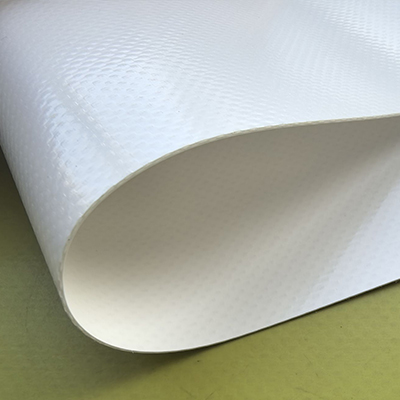
Plan Roll Width Around the Finished Panel and Seam Strategy
Two rolls with the same price per square meter can produce different real conversion costs. Usable width changes panel layout, number of seams, trim waste, roll weight and feeding practicality.
- Finished panel width: choose a roll width that reduces unnecessary longitudinal joints without creating excessive trim.
- Welding table / machine: confirm that the selected width can be handled by your cutting and joining equipment.
- Roll mass: wider and heavier material can exceed manual handling limits quickly.
- Core and unwinding: the roll core and winding format should fit your rack, stand or automated feed system.
- Container efficiency: packing diameter, core, palletizing and roll count affect export loading—not just square meters ordered.
For detailed width, length and roll-weight planning, use the verified DERFLEX Tarp Roll Size Guide.
Specify the Roll for the Way Your Workshop Builds Tarps
Material that looks correct on a sample can still create production problems if its surface, width or coating behavior does not match the actual conversion process.
Match the Tarp Roll to the Finished Product
Application should drive the material route. The same roll specification should not be assumed suitable for every cover simply because all are called “tarps.”
| Finished Product | Material Direction | Key Buying Questions |
|---|---|---|
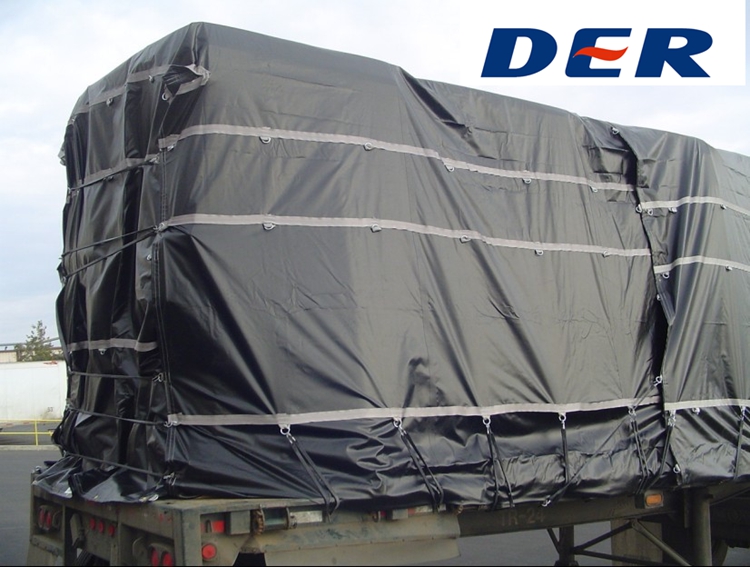
| Truck & trailer covers | Heavy-duty PVC coated polyester direction with weldable surface and repeat handling in mind. | How often is the cover tensioned and folded? Is abrasion high? What reinforcement and fastening system will be used? |
| Industrial equipment covers | Waterproof coated tarp roll selected around outdoor exposure, abrasion, access points and finished shape. | Will the cover be removed frequently? Are there sharp corners, heat sources, oil or chemical contact? |
| Tents & temporary shelters | Flexible PVC roll with application-appropriate surface and, where required, project-defined flame-retardant direction. | Is flame performance required? What climate, tension and folding cycles will the material see? |
| Agriculture & outdoor storage | Weather-resistant tarp roll selected for UV exposure, repeated seasonal use and handling conditions. | What is being covered? How is the tarp anchored? Is long-term outdoor exposure expected? |
| Industrial curtains / partitions | PVC coated fabric roll selected around hanging, movement, cleaning and joining requirements. | Does it need frequent sliding or folding? Is FR required? How will the top edge and hardware be reinforced? |
| OEM private-label tarps | Repeatable roll program with controlled color, grade, labels, packaging and documented purchase specification. | Which finished SKUs share one material? What details must remain stable on repeat orders? |
For transport-specific fabrication, review DERFLEX truck tarpaulin material and finished-cover considerations.
Six Errors That Create Cost After the Roll Arrives
Many tarp-roll problems are specification problems rather than material defects. These checks help reduce rework, waste and mismatched expectations.
Buying by GSM Alone
Weight does not describe base-cloth construction, coating adhesion, surface finish, tear behavior or the way the material will weld.
Ignoring Usable Width
Nominal width has limited value if edge trimming, seam overlap or machine setup reduces the width you can actually use.
Requesting the Longest Roll Possible
A longer roll can become inefficient when it is too heavy for the warehouse, unwinder or fabrication team.
Not Declaring the Welding Method
Coating formulation, surface treatment and thickness can influence the process window. Trial the actual production grade.
Adding Every Optional Treatment
UV, FR, anti-mildew and cold-resistant directions should be chosen for a real requirement instead of being added automatically.
Quoting Without the Finished Product
Truck covers, tents, curtains and equipment covers can use very different designs even when the raw material description sounds similar.
Retail Roll, Fabric by the Yard or Factory-Direct Tarp Roll?
The best buying format depends on volume, customization and whether you need a repeatable material program.
Retail / Fixed-Stock Roll
- Useful for repairs, prototypes or immediate local demand.
- Often sold in a fixed width, weight, length and color.
- Fast purchasing when the listed specification already fits the job.
- Less flexibility for OEM color, width, coating or repeat program control.
DERFLEX Factory-Direct Roll Program
- Starts from final application, conversion method and buying volume.
- Supports discussion of weight, width, color, finish, functional treatment and packing.
- Suitable for distributors, fabricators and OEM buyers needing repeat specifications.
- Can connect roll material to broader PVC tarpaulin and finished-cover programs.
Why Coated-Fabric Manufacturing Matters to Tarp Roll Buyers
For a converter, the roll is part of a production process. Surface uniformity, width control, coating adhesion, winding quality, color direction and predictable fabrication behavior all affect the finished tarp.
DERFLEX works from the coated-fabric side of the supply chain. Buyers can compare broader industrial PVC coated fabric structures when the project needs a material route beyond a standard tarp grade.
For buyers who want a more technical explanation of raw roll material before conversion, the tarp fabric by the roll page covers PVC coated polyester structure, fabrication details and repeat-production considerations.
Send the Finished Product Details, Not Only “Tarp Roll Price”
A more useful quotation starts when DERFLEX understands how the material will be converted, where it will be used and which details must remain consistent on repeat orders.
- Finished product / application
- Target GSM or existing sample
- Required roll width
- Preferred roll length
- Color and surface finish
- Welding or sewing method
- UV / FR / cold / mildew needs
- Estimated quantity
- Repeat-order frequency
- Label / packaging requirement
- Destination market
- Required test method or standard
Continue from Tarp Roll Selection to Technical Specification
These verified DERFLEX pages cover adjacent decisions without forcing all roll-related intent into one page.
Tarp Roll Buying Questions
Direct answers for converters, distributors, procurement teams and OEM buyers.
What is the difference between a tarp roll and a finished tarp?
A tarp roll is continuous material supplied before cutting, hemming, welding, sewing, eyeleting or reinforcement. A finished tarp already has its final dimensions and fabrication details. Roll supply is more suitable when a buyer wants local conversion, multiple finished sizes or a repeat OEM material program.
What material is commonly used for heavy-duty tarp rolls?
PVC coated polyester is a common heavy-duty tarp-roll construction because the woven polyester base provides tensile and tear strength while the PVC surface provides water resistance, cleanability and thermal-welding compatibility. The exact yarn, density, coating and finish should be matched to the final application.
What width should I choose for a tarp roll?
Choose width from the finished panel, seam plan, cutting equipment, roll-handling limit and expected trim waste. A wider roll can reduce seams, but it can also increase roll mass and make feeding or lifting more difficult. DERFLEX publishes selected roll-width directions up to approximately 5.10m depending on construction.
Is 18 oz vinyl a common tarp-roll specification?
Yes. 18 oz vinyl coated polyester, approximately 610gsm, is a familiar heavy-duty commercial reference used for truck covers, industrial curtains, equipment covers and other fabricated products. It is one option rather than a universal standard.
Can tarp roll material be hot-air or high-frequency welded?
Suitable PVC coated fabric grades can be processed by hot-air, high-frequency or hot-wedge welding. Welding behavior depends on coating formulation, thickness, finish, equipment and settings, so the intended process should be declared before ordering and production trials should be completed where required.
Can DERFLEX customize color, width, finish and packing?
DERFLEX can discuss custom color direction, roll width, fabric weight, surface finish, roll length, functional treatment, labels and export packing according to the selected material construction, quantity and production feasibility.
What information should I send for a tarp roll quotation?
Send the finished application, target GSM or reference sample, roll width, preferred length, color, finish, welding or sewing method, required UV/FR/cold/mildew performance, expected quantity, packaging preference, destination and any required test standard.
Product ranges and application directions on this page are for purchasing discussion. Final specification, tolerances, test methods, color approval, packing, performance requirements and commercial terms should be confirmed in the approved sample, quotation and purchase agreement.