



Tarpaulin Warehouse
PVC warehouse tarpaulin material and custom protective covers for storage buildings, distribution sites, temporary shelters and industrial stock areas. From coated fabric rolls to drawing-defined roof and wall panels, DERFLEX helps project buyers align material construction, fastening details and supply scope before production.
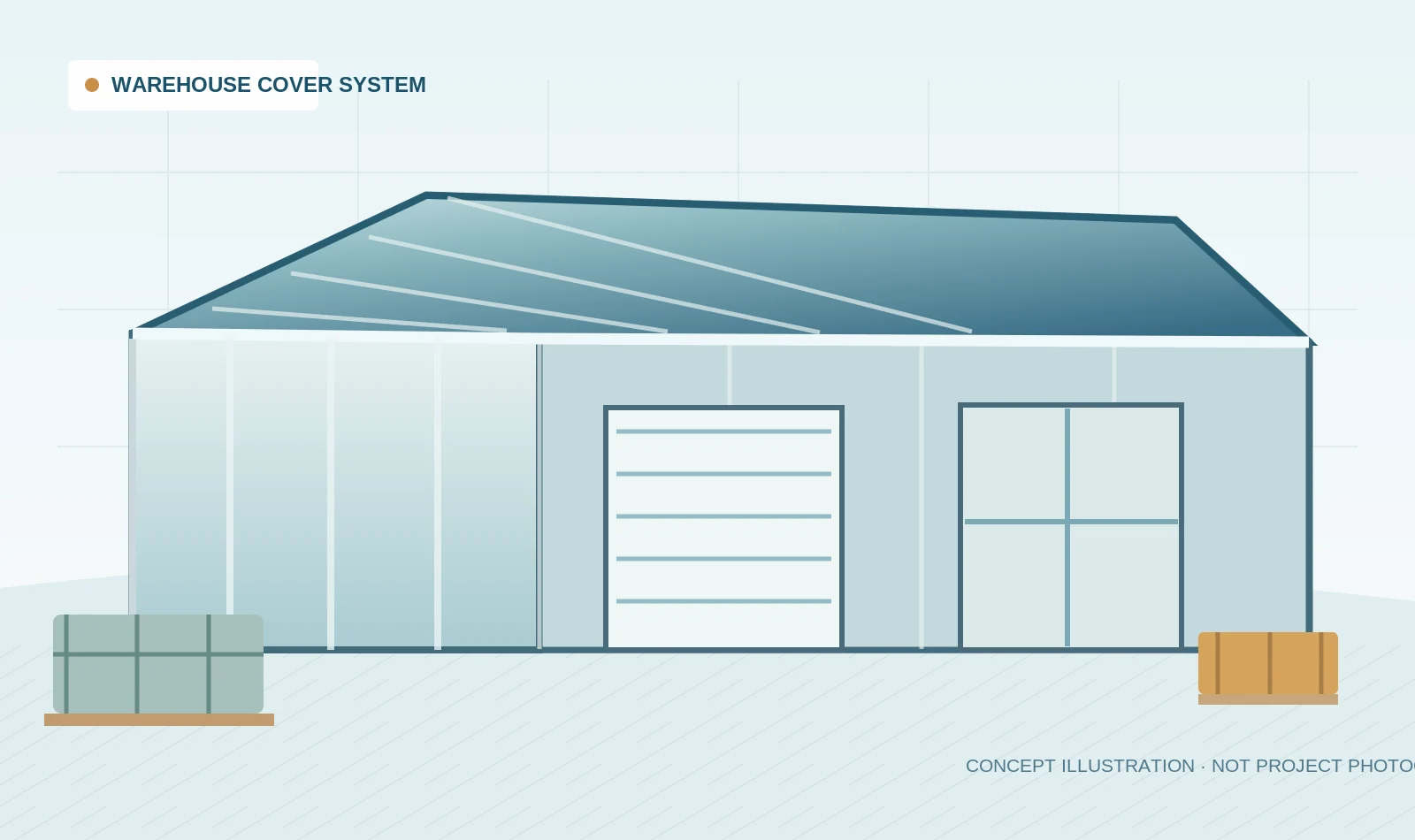
Warehouse covers designed around real operating conditions.
Outdoor storage creates different risks from enclosed indoor partitioning. A useful warehouse tarp specification begins with rain paths, ultraviolet exposure, movement, abrasion and the surfaces that contact the material.
A warehouse tarpaulin is a flexible protective sheet, commonly based on PVC-coated textile, used for storage-area covers, temporary roofing, sidewalls, partitions and protective enclosures. The base fabric provides reinforcement; the coating creates a protective surface. Finished performance also depends on panel size, welds, openings, edges, fixings and drainage.
Specify the cover, not just the fabric.
Two products described as heavy-duty PVC tarpaulin can behave differently after installation. GSM describes weight, but it does not establish tensile capacity, tear resistance, seam strength or service life. A cover facing wind movement may need a different construction and attachment layout from an indoor curtain.
For a broader overview of materials and industrial uses, see DERFLEX tarpaulin types and applications.
Warehouse tarpaulin specifications to confirm.
Use the matrix below as a purchasing checklist, not a data sheet for one fixed grade. Exact properties, test methods and tolerances belong to the agreed material specification and sample approval.
| Specification field | Common DERFLEX discussion direction | Buyer confirmation |
|---|---|---|
| Base material | PVC-coated polyester fabric; coated or laminated structure depending on intended grade | Base cloth, coating construction, finish and approved sample |
| Weight (GSM) | Different material weights are used for different duty levels; related DERFLEX ranges should not be treated as one available SKU | Target GSM and tolerance, tensile/tear requirements, handling frequency |
| Roll width & panel size | Roll supply or wider fabricated panels through planned joining | Usable width, panel orientation, seam overlaps and cutting yield |
| Surface & color | Color selection, smooth or textured finish and project-specific surface treatments can be discussed | Approved color reference, cleaning conditions, outdoor exposure |
| Outdoor exposure | UV-stabilized or weather-oriented material options by grade | Location, sunlight, cold exposure, maintenance and service requirements |
| Flame behavior | Project-specific fire-retardant material options where supported | Required standard, exact grade and matching test documentation |
| Fabrication | Rolls, cut panels or specified finishing such as welding, reinforcement or eyelets | Shop drawing, edge details, weld trial and acceptance criteria |
The range on a legacy product page may describe multiple constructions. This page intentionally does not assign a common temperature limit, outdoor lifespan, wind rating or fire classification to every warehouse cover. For material background, see DERFLEX PVC tarpaulin.
Fabric construction, panel joints and the interfaces that matter.
Strong material selection requires attention to both the roll itself and the assembly that will be exposed to weather and daily warehouse operations.
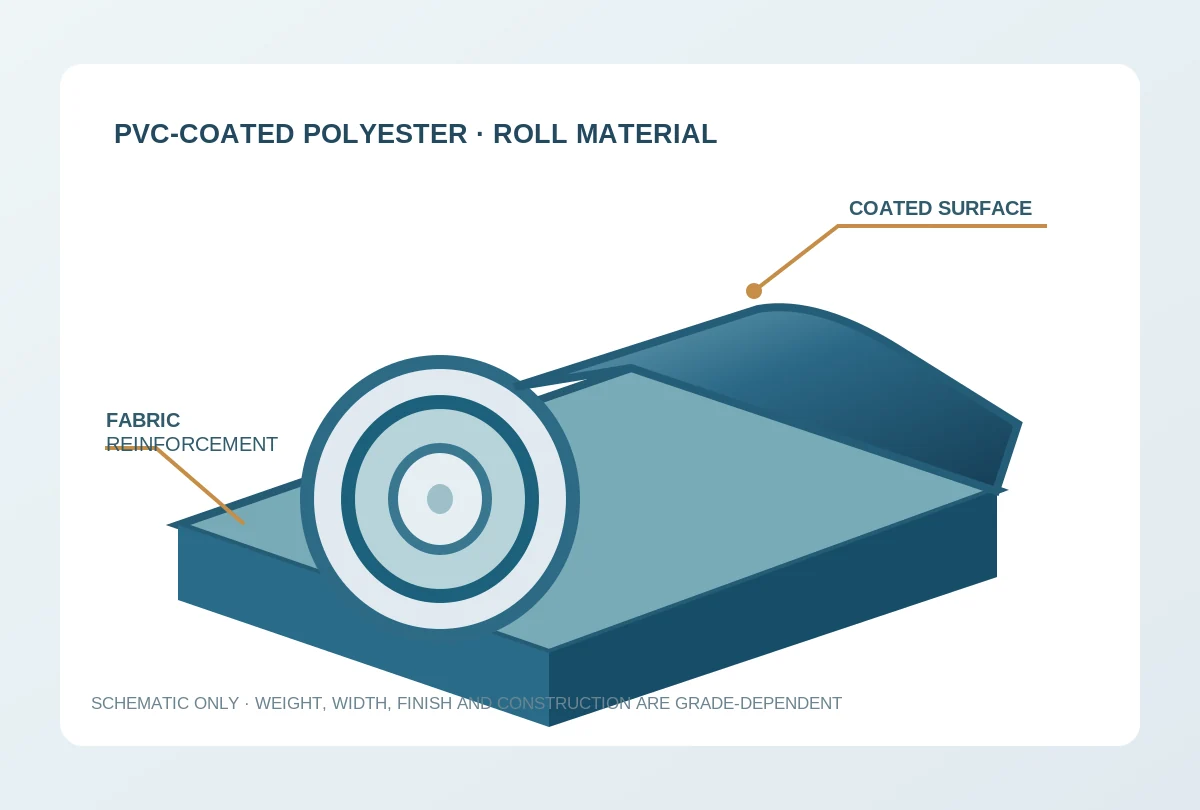
The roll is only the starting point.
PVC coatings and a polyester reinforcement can provide a useful balance of weather protection, flexibility and fabricability. However, actual tearing and tensile results depend on the grade, construction and test method. For a roof cover, panel geometry and supported span also influence the load path.
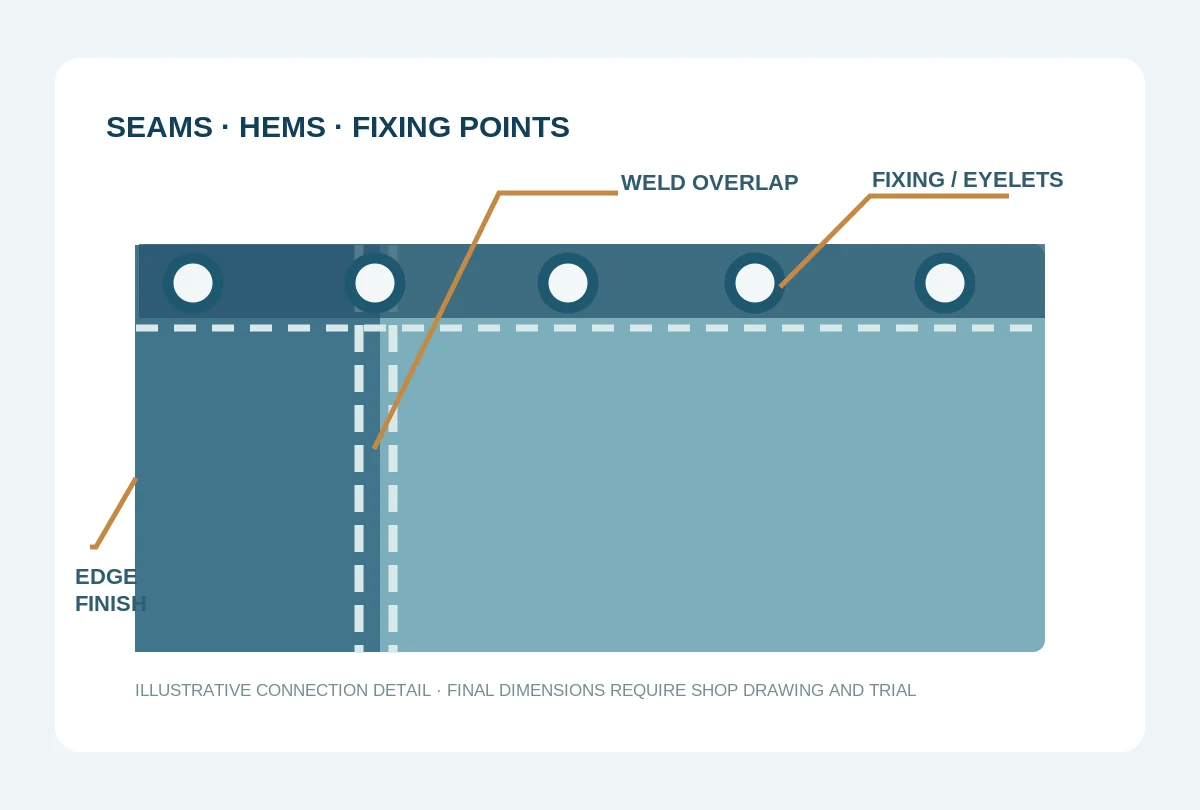
Ask for the intended welding or sewing method before ordering. Shop trials should check the actual joint—not assume that fabric strength transfers unchanged through the seam.
- Check roll flatness, working width and coating condition before cutting.
- Align seam direction and overlap with the drawing and installation sequence.
- Identify areas exposed to rubbing, repeated handling or local fastener load.
Further technical context: tarpaulin roll procurement and fabrication.
Edge reinforcement should follow the fixing pattern.
Eyelets, rope hems, reinforced borders, webbing and other interfaces serve different installation methods. Their spacing and size should follow the structural drawing and actual loading—not a universal rule copied from another cover.
Waterproof fabric alone does not guarantee a watertight enclosure: openings, welds, roof slope, hardware penetrations and drainage must all be reviewed.
Explore the guide to tarp corners and fixing-point reinforcement when detailing attachment zones.
One material family. Several different warehouse duties.
The choice of tarpaulin changes with whether the fabric is a roof skin, a sidewall, a removable partition or a protective cover over stored goods.
Warehouse roofing
Water-shedding covers for temporary storage shelters and roof replacement projects. Confirm slope, ponding prevention, restraint and structural responsibilities.
Sidewalls & doors
Weather screens and enclosure panels with designed openings, zipper or door interfaces and protection at high-wear edges.
Logistics facilities
Protecting material-handling and staging areas where abrasion, repeated opening and fastening requirements influence the grade.
Agricultural storage
Covering agricultural equipment and stock with appropriate attention to moisture movement, ventilation and cleaning methods.
Portable storage sites
Fabric covers for temporary or relocatable structures, subject to engineering and installation approval for the chosen location.
Industrial stock covers
Protective wraps, stockpile sheets and equipment covers where shape, securing points and handling frequency drive fabrication.
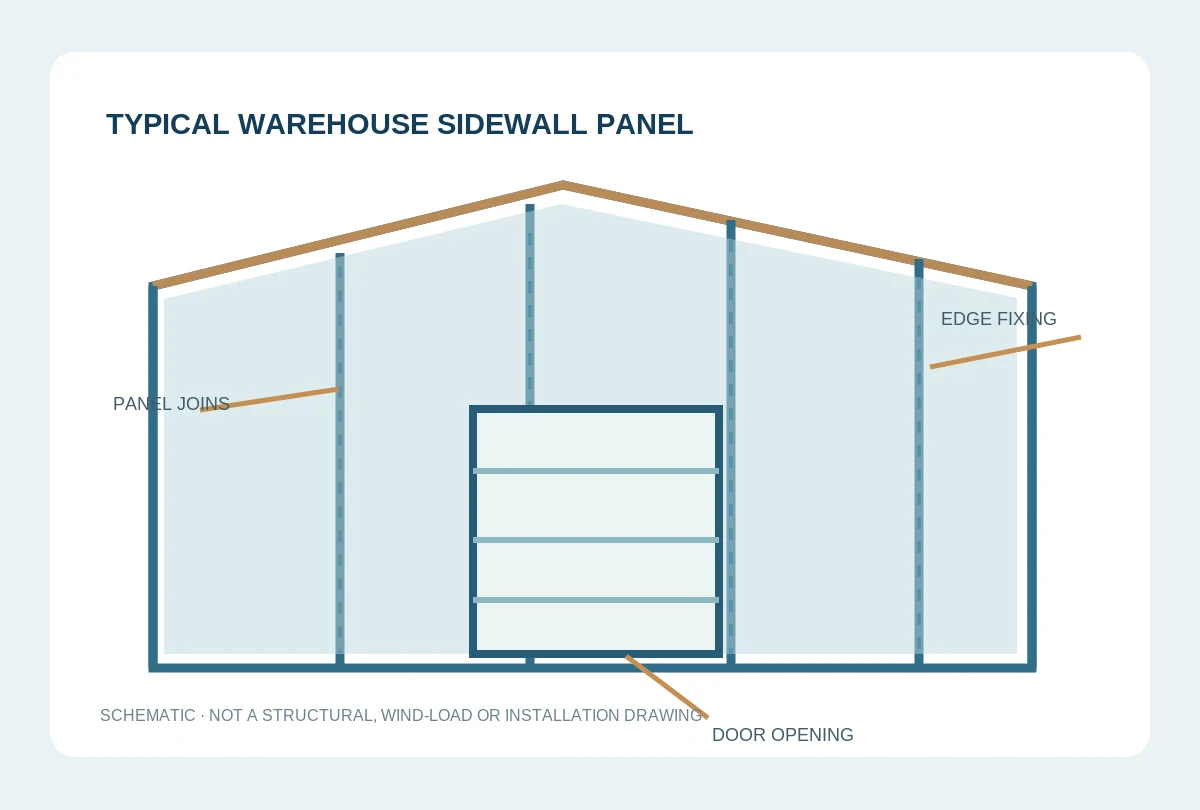
Do you need a fabric skin or a complete building?
DERFLEX warehouse tarpaulin discussions can cover coated material and quote-defined fabricated covers. Do not assume a price for the fabric includes steel or aluminum frames, doors, anchoring, civil works, building permits or site installation. These must be quoted separately by the responsible supplier.
For a more application-focused reference, see warehouse tarpaulin covers and industrial storage cover applications.
Specify the format of supply before comparing quotations.
The most useful quotation is one where material scope, manufacturing work and interfaces are explicit—so a roll price is not confused with an installed warehouse enclosure.
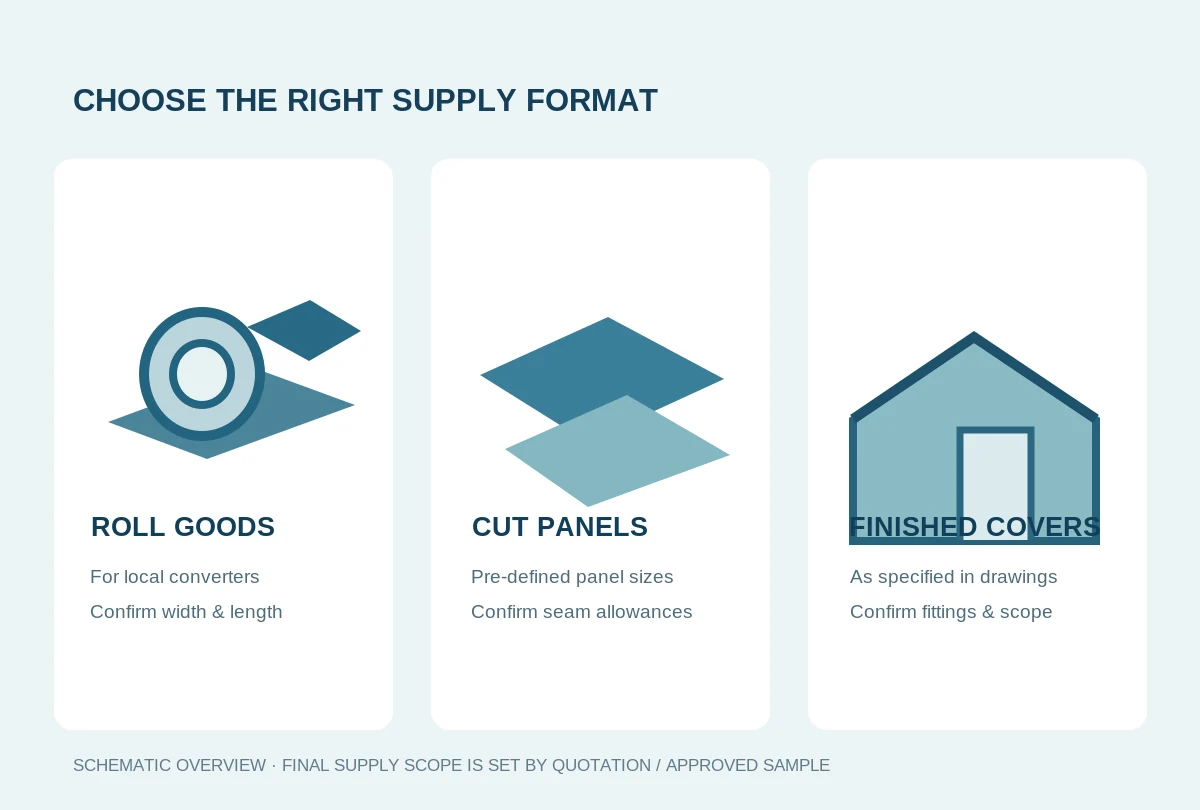
Three possible procurement routes
Roll goods: for buyers cutting and joining panels locally. Confirm width, length, packaging and approved material sample.
Cut or joined panels: for buyers with approved dimensions. Confirm panel layout, weld location, allowance and identification.
Finished covers: for defined roof or wall patterns. Confirm hems, eyelets, webbing, openings, individual marking and transport packing.
DERFLEX also discusses wholesale tarps and OEM distribution programs. Actual supply options are determined by the final approved drawing and quotation.
A buyer’s checklist that prevents expensive scope gaps.
Warehouse coverings often become difficult to install or replace when the drawing, fixing method and commercial scope are not aligned during quotation.
Document the environment
State indoor or outdoor use, location, sunlight, rainfall, expected contact abrasion and any site-specific standards.
Share dimensions and interfaces
Send roof slopes, wall elevations, openings, edge restraints, supports and fitting details. A simple annotated photograph can start the discussion.
Define the material target
Identify any approved sample, reference GSM, surface finish, color and testing needs rather than choosing by color alone.
Confirm seams and hardware
Request drawings for weld positions, hem reinforcement, eyelet or rail interfaces and handling clearance.
Set quality acceptance
Agree visual acceptance, useful dimensional tolerances, relevant test documentation and the sample sign-off process.
Clarify the delivered scope
Confirm roll or cover quantities, packing, destination, Incoterm, and who supplies structure, anchors and installation.
Maintenance is part of the specification.
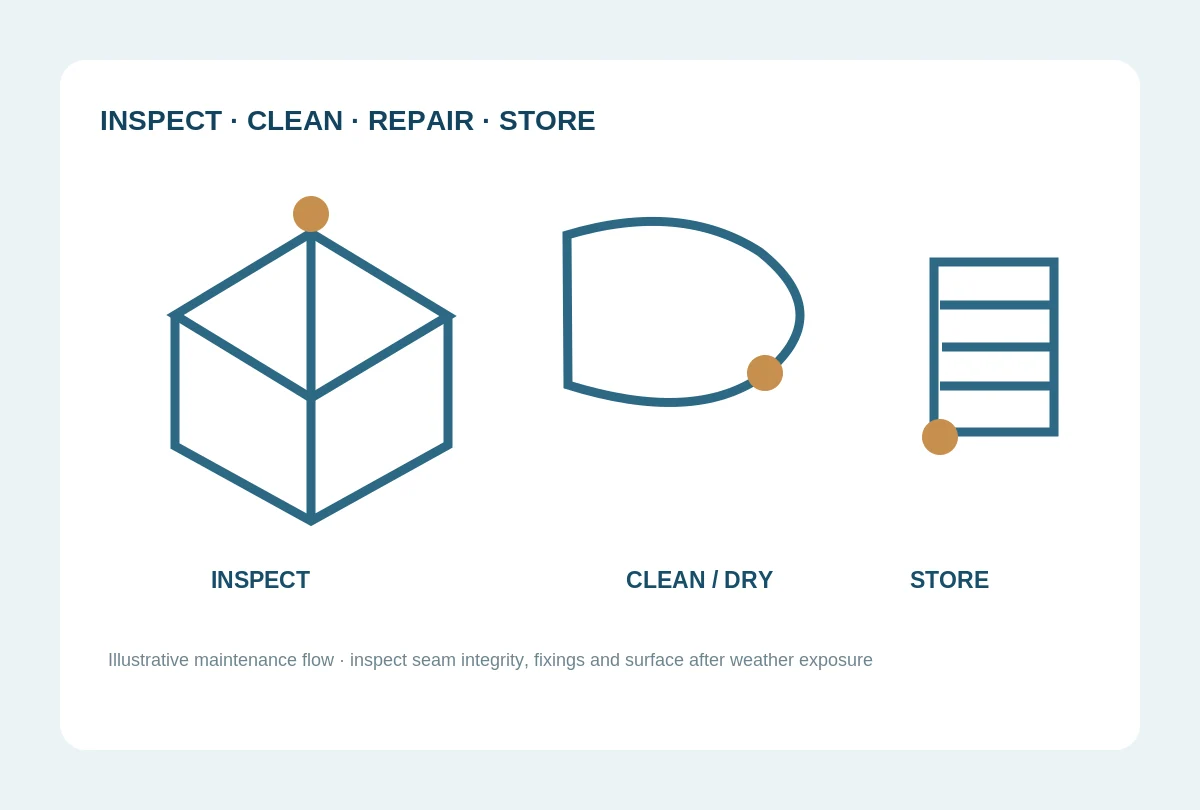
Regularly inspect coating wear, joints, fasteners and high-friction contact points. Clean with a method approved for the selected PVC grade, dry before folding or storage, and repair damage before redeployment. Seek engineering review if the cover sags, water ponds or restraints loosen.
Related reading: reinforcement details for repeated-use covers.
Designing a warehouse cover or planning a repeat supply program?
Share a sketch, roof or wall dimensions, expected conditions and preferred supply format. DERFLEX can review the fabric and conversion requirements for an application-focused quotation.
Useful information to include
- Application and site location
- Roof / wall dimensions and drawings
- Material preference or approved sample
- Color, finishes and any required test reports
- Fixing method, seams, hardware and openings
- Quantity, packing and delivery destination
Warehouse tarpaulin: buyer questions answered.
Answers below distinguish the material from the fabricated cover and the installed storage system.
What is a warehouse tarpaulin used for?
A warehouse tarpaulin is a reinforced protective fabric used as a storage cover, partition, sidewall or roof covering within a designed support system. Its suitability depends on exposure, dimensions, seam construction and fastening details.
Can PVC warehouse tarpaulin be supplied as rolls or finished panels?
DERFLEX discusses PVC coated polyester roll supply and project-defined fabricated panels or covers. The final quotation should identify whether cutting, welding, hems, hardware, frames and installation are included.
Does a waterproof PVC fabric make the complete warehouse waterproof?
No. A waterproof fabric surface is only one part of the assembly. Roof slope, joints, doors, penetrations, seams, attachment points and drainage determine whether the installed enclosure resists water ingress.
What weight of warehouse tarp should I specify?
Start with the use case and expected loading, then evaluate the base fabric, tensile and tear properties, surface treatment and reinforcement alongside GSM. A heavier sheet is not automatically the correct or strongest choice.
Are fire-retardant warehouse tarp grades available?
Flame-retardant material options may be discussed for a defined project. Request the report for the exact grade and applicable test method; fabric test results do not establish approval for the entire warehouse structure.
What details should be sent for a warehouse tarp quotation?
Provide use location, roof or wall drawings, installed dimensions, fabric or performance target, doors and fixing interfaces, color, quantity, delivery destination and any required standards. A sketch or photograph is useful for an initial discussion.