News
Industry News

Welding & Sewing Fabric Material Selection | DERFLEX

Update:2026/11/16 19:19:13 Views:
Skip to material selection
DERFLEX industrial coated fabric materialsFabrication-led
material sourcing
DERFLEX / TECHNICAL TEXTILE SELECTION

Send Your Welding / Sewing Requirements for Material Selection

The right coated fabric is selected around the joint you need to make—not by weight alone. Send DERFLEX your hot-air or high-frequency welding method, sewing setup, finished-product drawing and end-use conditions so the material options can be reviewed for actual conversion.

For industrial cover makers, truck curtain fabricators, tent and shelter converters, flexible-product manufacturers and OEM roll buyers. Material availability and performance remain subject to the exact selected grade and trial approval.

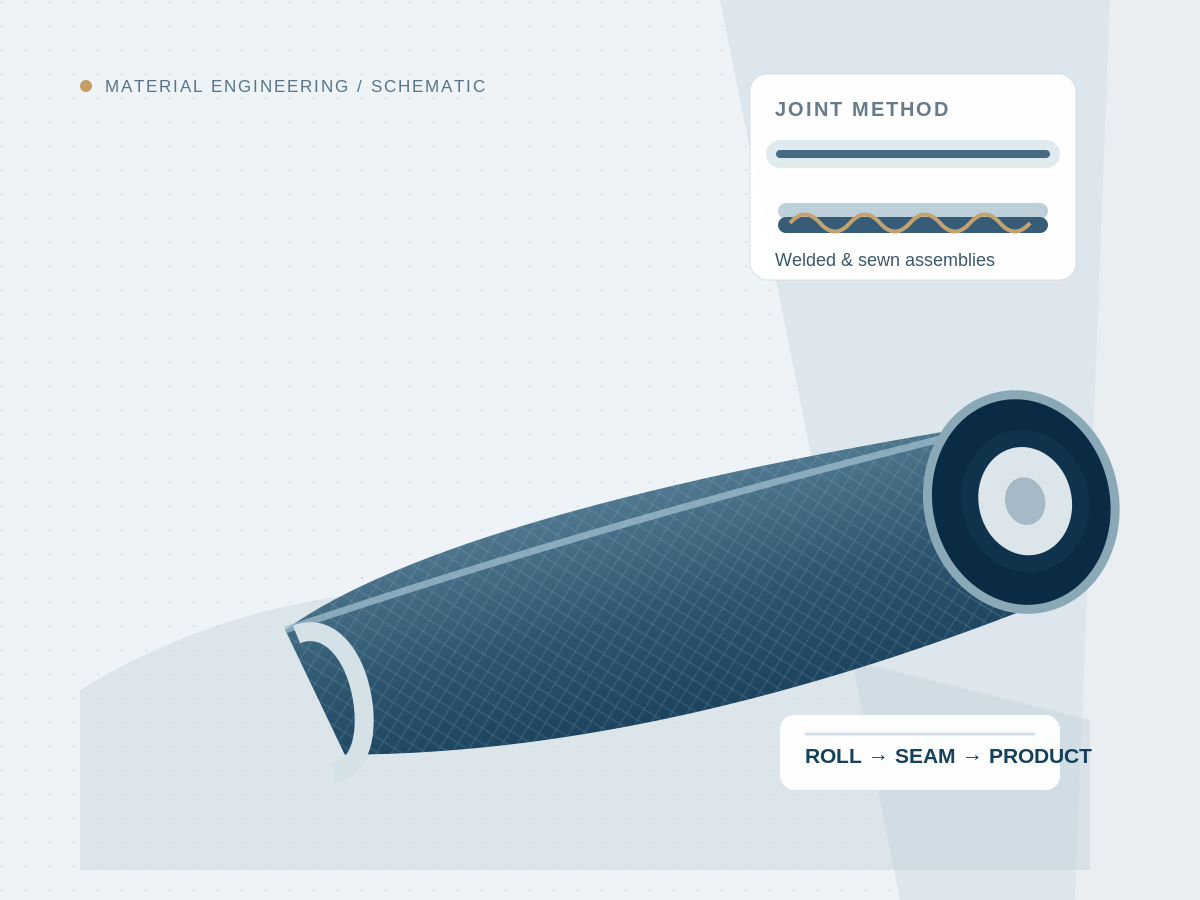
Schematic visual of coated fabric roll and welded or sewn seam options
From base fabric to a dependable finished joint.
Technical illustration only; use an approved DERFLEX roll photograph for verified product imagery.
01
Define the processHot-air, HF, stitched or mixed seam construction
02
Match the materialCoating, scrim, flexibility and service environment
03
Approve the trialRepresentative equipment, specimens and repeat-order controls
01 / Quick answer

Start with your finished seam—not a generic fabric grade.

What information determines whether a material can be welded or sewn?

Identify the joining machine and process, layer stack, seam geometry, end-use loading and environment. The coating chemistry and surface finish govern thermoplastic welding compatibility, while base-fabric structure, needle behavior, fold stiffness and reinforcement influence sewn joints. The result must be tested on the intended grade.

For roll-good buyers, this approach makes fabric selection a production decision. The highest-GSM option is not automatically the most weldable, the easiest to stitch or the most economical to convert. A change to lacquer, color, backing or coating structure can justify a new trial even when the nominal weight is unchanged.

If your factory combines both methods—for example, welded waterproof panels with sewn webbing or zipper details—describe the complete joint sequence. Each interface must be reviewed independently, including how needle perforations affect water protection.

PVC coated polyesterTPU coated optionsSewn cover materialsOEM roll supply
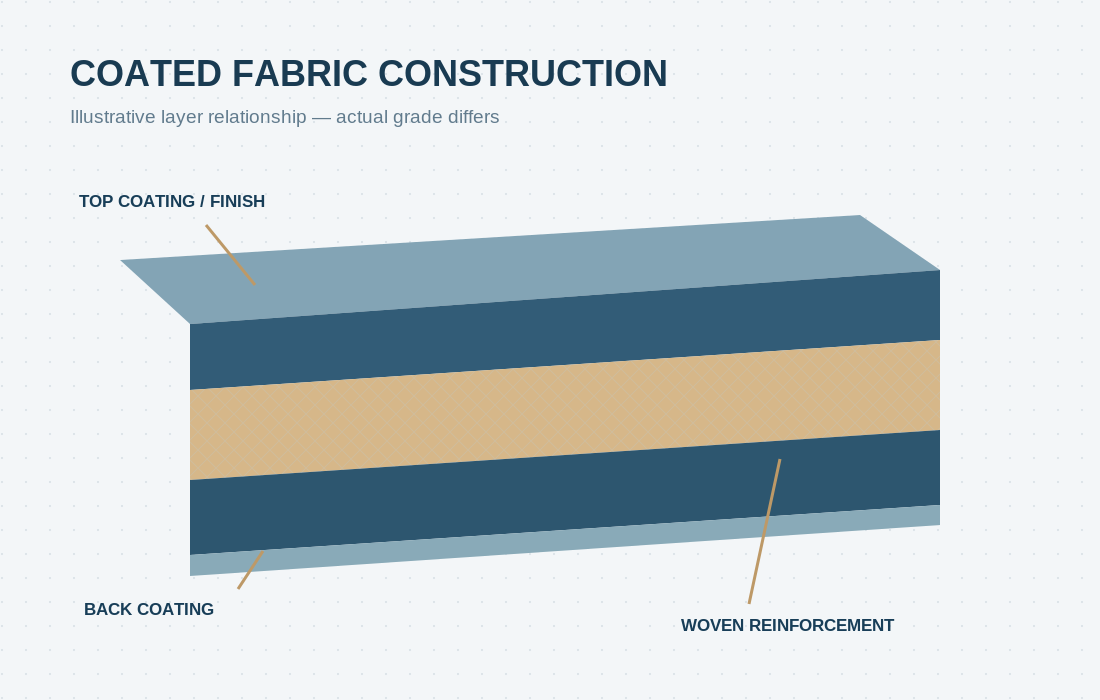
Exploded schematic of coated fabric layers including protective coating and woven textile reinforcement
Conceptual layer diagram. Coating side, chemistry and base weave differ by grade and must be confirmed against the requested sample.
02 / Joint selection

Choose the joining route before freezing the specification.

Welding and sewing solve different fabrication problems. The appropriate route depends on coating response, finished geometry, reinforcement, leak requirements and equipment—not on a universal machine setting.

Method A / Thermoplastic joining

Hot-air and high-frequency welding

Review PVC or other compatible thermoplastic-coated fabric for panel-to-panel joining when the chosen grade can form a satisfactory bond with the actual equipment and joint design.

  • Specify machine type, weld width, overlap and coating face.
  • Check peel, shear or seam strength where relevant.
  • Test aged, cold-flexed or wet seams if service demands it.
  • Do not assume a lacquered finish welds like an untreated coating.
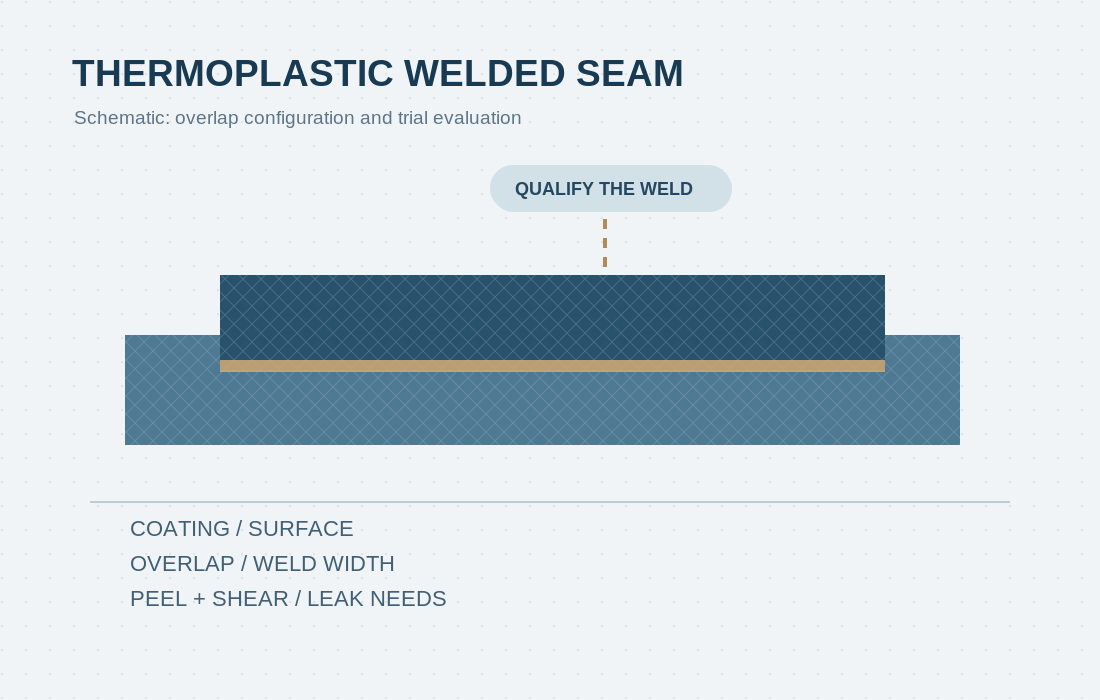
Schematic overlapping thermoplastic fabric panels with a welded seam zone
Illustrative overlap only; production seam parameters require equipment trials.
Method B / Needle joining

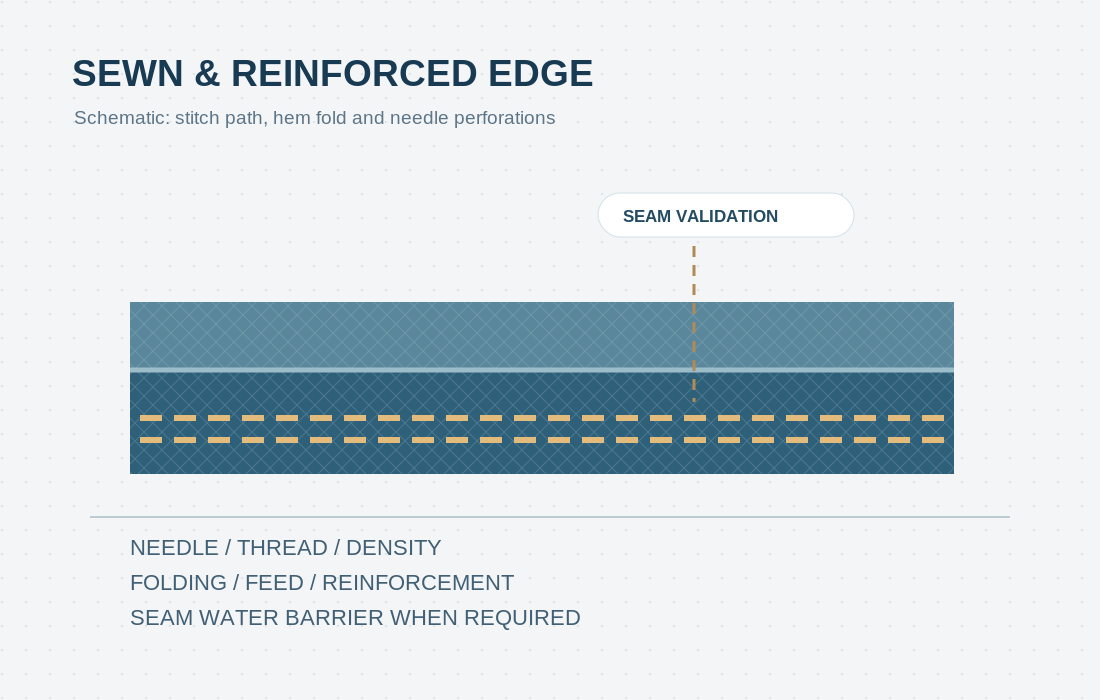
Sewing, reinforced hems and stitched attachments

Industrial sewing may suit curved assemblies, webbing, zip closures, repairable components and configurations where a stitch line or mechanical attachment is needed.

  • Share needle system, thread, stitch pattern and layer count.
  • Check tearing at holes, coating marking and feed consistency.
  • Assess flexing, abrasion and load direction around seams.
  • Use a separate sealing strategy where sewn joints must resist water ingress.
Schematic stitched and folded PVC coated fabric edge with two sewing lines
Illustrative hem; it is not a prescribed thread or stitch-density specification.

Terminology: “Welding” on this page means joining thermoplastic textile panels with fabrication equipment. It does not refer to protective fabrics for metal-welding sparks, molten spatter or high-temperature hot-work safety.

03 / Application fit

Different finished products create different seam demands.

Define the product’s behavior in service, then decide which material questions matter most. These are selection directions, not verified grades or finished-system certifications.

Finished productMain conversion concernMaterial direction to reviewTrial acceptance question
Industrial equipment coversMultilayer hems, abrasion and frequent handlingFlexible PVC coated fabric with suitable scrim and surface feeding behaviorDoes the approved seam withstand the actual handling and edge loads?
Truck curtains and transport coversLong welded panels, reinforcement and repeated movementWeld-compatible coated polyester; confirm panel width, color lot and UV conditionsHow do joining, edge reinforcement and cycling perform together?
Tents and shelter panelsWater paths, folding, dimensional control and installation stressAppropriate coated fabric selected for the operating climate and applicable flame requirementsDo production seams and hardware interfaces meet the project specification?
Inflatable or fluid-containing assembliesAirtight or liquid-tight joining and flex fatigueGrade-specific TPU or PVC systems considered only with compatibility and containment evidenceDoes the complete assembly pass the defined pressure or leakage trial?
Industrial partitions and curtainsSuspension load, access openings, cleaning and abrasionPVC or other appropriate industrial textile with suitable finishing propertiesAre connection points, seams and any required fire documentation validated?
Important boundary: Material-level waterproofing does not establish a waterproof stitched seam, and a material flame test does not certify an installed curtain or shelter. Define the finished-product test requirement separately.
04 / Purchasing specification

Build an RFQ your production line can actually use.

Send the fields you know now; a drawing, seam photo and existing material sample are acceptable starting points. Final values and tolerances belong in the grade-specific quotation and approved production specification.

Specification fieldWhat to sendWhy it changes material selection
End product & environmentFinished use, installed geometry, indoor/outdoor exposure, temperature, UV, cleaning and wearDefines required durability, flexibility and performance evidence
Joining processHot-air / HF / hot-wedge / sewing / mixed sequence, equipment model if available, seam photoIdentifies coating compatibility and how the joint will be formed
Fabric structureCurrent sample, target mass in g/m², thickness in mm, scrim or strength requirementControls handling, layer buildup, tear behavior and joining window
Panel & seam designPanel dimensions, overlap, hems, reinforcement, orientation and critical load pathsConnects material properties to actual finished-product failures
Roll formatNominal and usable width, target roll length, permitted joins, winding and core preferenceControls cutting yield, automation stops and handling
Surface & colorDesired finish, coating face, gloss/matte, print need, color swatch or standardChanges weld response, feeding, appearance and repeat-order matching
Test & commercial dataRelevant test method/acceptance, quantity, destination, packaging and target delivery windowSupports sample approval and a usable bulk quote without invented guarantees

Avoid converting generic material-range claims into guaranteed machine settings or specification values. Approved performance belongs to the specific material and test condition.

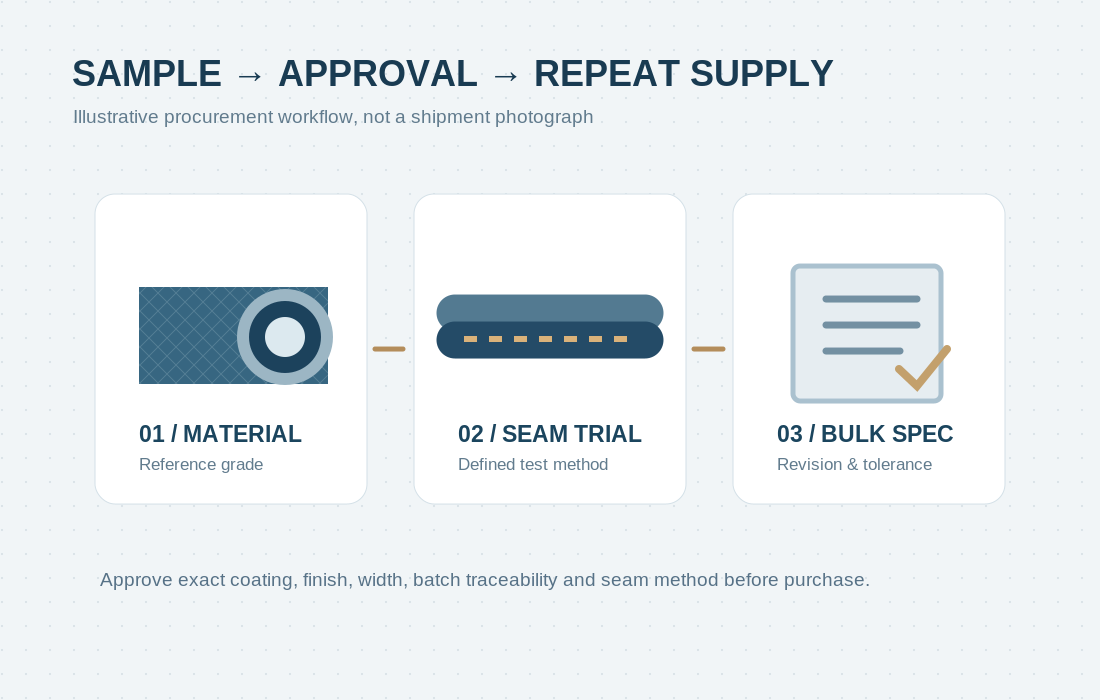
05 / From trial to repeat order

Qualify the fabric–machine–seam combination.

A roll that looks correct on inspection may still give an unsuitable seam. A documented process makes it easier for buyers and converters to compare sample candidates and manage repeat production.

01

Review the duty

Define end use, temperature, flexing, exposure, stress and leak requirements.

02

Shortlist grades

Compare coating, backing, weight, width, surface finish and available evidence.

03

Run real seams

Trial the chosen material on production equipment and inspect the defined failure modes.

04

Lock bulk details

Agree sample reference, tests, tolerances, color, joins, labels and roll packing.

06 / Before you order

Protect yield and seam consistency before buying bulk rolls.

Fabricator checkpoints

  • Confirm the minimum cuttable width, not just nominal roll width.
  • Agree whether splices or joins are permitted, and how they are marked.
  • Check the thickest production layer stack and its bend or feed behavior.
  • Specify the seam or attachment direction relative to the intended load.
  • Retest when coating, lacquer, backing, thread, process or supplier grade changes.
  • Keep material samples and accepted seam specimens linked to the PO revision.

Quote cost is influenced by conversion— not only roll price.

Material composition, usable width, finish, order volume, color, cutting utilization, reinforcement, packaging and delivery terms can change the landed and converted cost. Buyers should compare accepted output rather than price per nominal meter alone.

Supply boundary: This page addresses coated roll materials and specification review. Finished cover fabrication, components and system assembly must be separately confirmed in the quotation; they are not automatically included.

07 / Inquiry ready

Send the requirements you have. We can review the missing fields together.

A productive first inquiry can be a short technical email, a marked-up drawing or a photo of the existing seam. Focus on what the product must do and how your workshop will make it.

  • Your product: cover, truck curtain, tent, liner, inflatable panel or another finished assembly.
  • Your method: hot-air / high-frequency welding, stitching or mixed assembly.
  • Your current material: sample or target fabric description, coating, thickness or GSM if known.
  • Your build: finished sizes, seam overlap, reinforcement and panel layout.
  • Your buying plan: roll width, quantity, destination and needed documentation.

Example message to DERFLEX

“We manufacture coated-fabric industrial covers using hot-air welding and stitched webbing. The cover operates outdoors and folds regularly. We need to review a fabric structure and an appropriate roll width for our cutting plan. We can supply a sample seam, production drawing and expected annual volume. Please advise which grade-specific samples and technical data should be evaluated.”

This is a sample inquiry structure, not evidence of a completed customer order or a promised outcome.

09 / Frequently asked questions

Answers before selecting a welding or sewing fabric.

Can the same PVC coated fabric be both welded and sewn?

Some PVC coated grades can be processed by both methods, but compatibility is not universal. Test hot-air or HF welding and stitching on the exact material, including the finish, thickness and reinforcement used in production. A fabric suitable for sewing does not automatically make a waterproof stitched seam.

What matters more for seam selection: GSM or coating structure?

Both matter, but neither is enough alone. GSM affects handling and layer bulk, while coating chemistry, coating-side orientation, base weave, finish and joint design affect weldability, needle penetration and seam failure. Select by the defined use and production trial.

Do hot-air and high-frequency welding need the same settings?

No. They use different heating mechanisms and equipment controls. Appropriate settings depend on the exact coated fabric, finish, machine, overlap and test criteria. DERFLEX should review your equipment and sample requirements instead of supplying a universal temperature or dwell time.

How can a sewn cover be made more water resistant?

Needle perforations and seam geometry can create water paths even when the panel material is waterproof. Review overlaps, seam sealing, tape, welding in critical areas and representative leakage tests. The complete finished cover—not the roll material alone—must meet the required result.

What should an OEM fabricator submit for sample selection?

Send the final application, exposure conditions, machine or sewing process, layer stack, seam drawing or photo, target fabric structure, usable roll width, expected quantity and required tests. If some fields are unknown, an existing sample and use-case description are a useful starting point.

Does DERFLEX supply finished covers with the material selection?

This selection page focuses on coated fabric materials and roll sourcing. Finished covers, seam fabrication, accessories and full-system supply are separate scope decisions. Confirm the exact deliverables, samples, inspection plan and commercial terms in the formal quotation.

Coated textiles / OEM supply / Sample selection

Tell us how you make the product. Select the fabric with a purpose.

Share your welding or sewing method, intended service conditions, target roll format and quantity. DERFLEX can discuss material candidates and the next steps for a production-representative trial.

Send Your Welding / Sewing Requirements Material selection and technical data are subject to grade-specific confirmation.

DERFLEX · Material selection guidance for converters and OEM fabricators. Illustrations on this page are schematic, not product-test evidence. Confirm all specifications and finished-assembly requirements against approved samples.

Consulting Services
+86-021-54361792 / 54361798
Email
sales@derflex.com