
01
UV Aging
Long sunlight exposure can drive fading, chalking, loss of flexibility and gradual strength reduction in polymer surfaces that are not stabilized for the duty cycle.



For continuous sun, heat, wind and dust, the best tarp is not simply the thickest sheet. Long-term performance comes from a UV-stabilized material system, strong polyester reinforcement, a suitable surface color, welded fabrication and reinforced anchor zones.
Specify the exposure period, UV-stabilization requirement, surface color, GSM, tensile/tear direction, seam method, reinforcement layout, wind restraint method and any accelerated-weathering documentation required for approval.
A high-UV climate combines sunlight with surface heat, thermal cycling, abrasive dust and often strong wind. A material can be waterproof and still fail early if the coating embrittles, the seam weakens or the anchor points are overloaded.
Long sunlight exposure can drive fading, chalking, loss of flexibility and gradual strength reduction in polymer surfaces that are not stabilized for the duty cycle.
Dark surfaces can become significantly hotter under direct sun. Heat can accelerate material aging and increase stress around folds, coatings, adhesives and hardware.
Open desert yards, mines and construction sites often expose covers to repeated uplift and flutter. Edge design and restraint can matter as much as fabric weight.
Sand and fine mineral dust can abrade high-contact zones. A smooth, cleanable PVC surface and sensible protection at sharp contact points help reduce local wear.
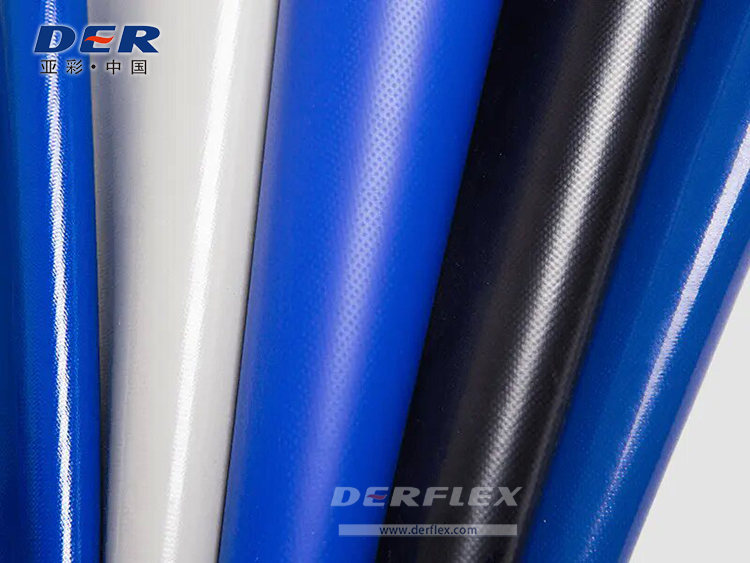
For reusable industrial protection, PVC-coated polyester combines a structural woven polyester base with a waterproof, weldable polymer surface. That combination allows buyers to engineer the tarp as a complete product rather than depend on a thin film alone.
For hot-desert and high-UV use, the important point is the outdoor formulation. A heavy tarp without suitable UV stabilization may not deliver the desired service interval. Conversely, a well-formulated tarp can still fail at the edges if grommets, webbing and tensioning are poorly designed.
There is no universal “best” tarp for every desert job. The correct material depends on whether the priority is long service life, low initial cost, waterproofing, airflow or ease of handling.
| Material | High-UV / Heat Direction | Strengths | Limitations | Best Fit |
|---|---|---|---|---|
| UV-Stabilized PVC-Coated Polyester Recommended starting point | Well suited to long outdoor exposure when the formulation and surface finish are specified for UV weathering. | Waterproof, weldable, reusable, strong, customizable, easy to clean. | Heavier than PE; dark colors can absorb more solar heat; specification quality matters. | Industrial equipment, truck covers, mining, construction, long-term storage, OEM tarp programs. |
| UV-Treated PE Tarp | Can work well for hot and sunny use when UV-treated, especially for short-to-medium duty cycles. | Lightweight, economical, easy to deploy, widely available. | Generally less durable under repeated abrasion and long-term mechanical stress than heavy PVC systems. | Temporary covers, seasonal storage, construction weather protection, budget-driven applications. |
| HDPE / PVC Mesh Shade Tarp | Excellent when the job is primarily shade and airflow rather than rainproof sealing. | Reduces wind pressure, allows ventilation, lighter handling. | Not fully waterproof; dust can pass depending on mesh openness. | Shade structures, livestock areas, work zones, fence screening, solar-farm service areas. |
| Treated Canvas | Breathable and useful where condensation control matters, but not the first choice for continuous desert dust plus waterproof duty. | Breathability, soft handling, reduced condensation risk in some applications. | Not inherently waterproof like PVC/PE; can hold dust and requires treatment/maintenance. | Breathable equipment protection and moderate-duty applications with airflow needs. |
When the tarp covers temperature-sensitive equipment or goods, consider how the surface color influences solar heat absorption as well as visibility, cleanliness and appearance.
A practical direction when reducing solar heat gain is important. Confirm the actual coating and reflectance characteristics rather than relying on color name alone.
Often preferred for hot-climate covers because light surfaces can reduce heat buildup compared with dark surfaces. Also useful for clean industrial appearance.
Useful where visual blending, dust appearance and desert-site aesthetics matter. Pair the color choice with the required UV package.
Provides strong light blocking but can absorb more solar heat. Use when blackout matters and elevated surface temperature is acceptable for the application.
The following ranges are procurement starting points, not universal pass/fail limits. Final GSM and construction should be confirmed against tarp size, wind exposure, handling frequency, restraint method and target service interval.
For temporary-to-medium outdoor covers where handling speed and freight weight are important.
A strong general direction for repeated handling, industrial covers, transport and long outdoor storage.
For large covers, abrasion-prone sites, mining/construction projects and heavy restraint loads.
Wind can concentrate load at a few anchor points. Rough equipment edges can rub one spot thousands of times. A seam that is not designed for the stress path can open even when the central fabric is still sound.
Hot-air or HF welding can create wide, continuous joins in suitable PVC materials. Seam width and process settings should match the fabric and cover geometry.
Webbing, rope hems, corner patches, D-rings or reinforced eyelets can distribute load and reduce local tearing.
A heavier tarp does not automatically solve flapping. Correct tension, anchor spacing and contouring can reduce repeated cyclic stress.
Use padding, sleeves or stand-off design where the tarp touches corners, rough steel or heat sources. Heat-resistant outdoor tarp is not the same as fireproof fabric.
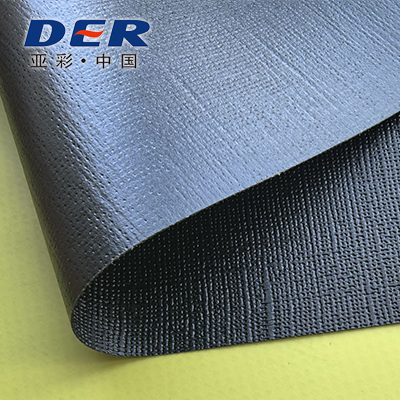
The same core material can be engineered differently depending on the application and the dominant failure mode.
Equipment, stockpile and service-area covers exposed to sun, dust, abrasion and high wind. Heavy reinforcement and practical cleaning matter.
Material covers, temporary enclosures and scaffold protection where UV exposure combines with sharp edges, dust and frequent repositioning.
Long-haul cargo protection across hot regions, with repeated tensioning, road wind, abrasion and exposure to sunlight during loading and parking.
Outdoor feed, hay, machinery and seasonal storage where heat reflection, waterproofing and long perimeter restraint are important.
Generators, pumps, machinery, pallets and project materials stored in uncovered industrial yards for weeks or months.
When the primary requirement is shade rather than rainproofing, mesh fabric can lower wind pressure and improve airflow around people or equipment.
State whether the tarp will remain outdoors continuously, seasonally or only during transport. Include approximate months per year and whether it is stored folded between uses.
Tell the supplier if the tarp covers temperature-sensitive goods, dark equipment, metal surfaces or enclosed spaces where solar heat buildup is a concern.
For project procurement, request the agreed weathering or color-retention test documentation rather than relying only on the phrase “UV resistant.”
Provide tarp dimensions, attachment spacing, expected wind environment and whether the cover is tensioned, draped, rolled or repeatedly opened.
Mines, trucks and industrial yards may involve rough surfaces, oil, dust or cleaning chemicals. These details can change the coating and reinforcement direction.
For repeat programs, confirm color, hand feel, welding behavior, edge construction and documentation before mass production.
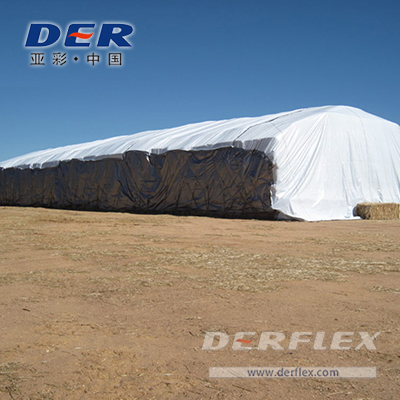
DERFLEX supplies PVC-coated polyester tarp materials for B2B buyers who need repeatable roll goods, fabricated tarps or OEM programs. For high-UV markets, the useful advantage is specification flexibility: buyers can discuss fabric weight, base scrim, UV direction, color, surface finish, width, welding and edge reinforcement before production.
Define outdoor exposure, surface aging requirements and buyer test expectations before the formula is confirmed.
Support for roll supply, cut panels and finished covers depending on the buyer's conversion model.
Discuss hot-air/HF welding, hems, webbing, eyelets, D-rings, patches and custom dimensions.
Custom color, logo, packaging and repeat supply planning for distributors and industrial brands.
Six related DERFLEX pages are linked below to connect high-UV climate research with material, outdoor, heat, heavy-duty and application selection.
Answers are written for distributors, project buyers, fleet operators, contractors and OEM tarp programs.
For reusable industrial covers and long outdoor exposure, UV-stabilized PVC-coated polyester is often a strong starting point because it combines waterproofing, mechanical reinforcement, weldability and custom outdoor formulations. UV-treated PE can be more economical for temporary or medium-duty use, while mesh is better when shade and airflow matter more than waterproofing.
Light and reflective surfaces are usually worth considering when solar heat buildup matters because they can absorb less heat than dark surfaces. However, the actual performance depends on the coating, pigment and surface construction, so buyers should confirm the specific product rather than select by color name alone.
No. GSM influences mechanical durability and coating mass, but UV resistance also depends on the resin formulation, stabilizers, pigments and surface treatment. A heavier tarp without the right outdoor formulation can still age faster than expected.
As a practical starting point, 450–550 gsm can suit medium-duty covers, 650–750 gsm is commonly considered for repeated industrial or transport use, and 900–1200 gsm can be used where large cover size, abrasion or high mechanical load requires additional strength. Final selection should be based on the real application.
Use a restraint system that distributes load across the perimeter rather than concentrating it at a few eyelets. Reinforced hems, webbing, corner patches, D-rings, properly spaced grommets and a suitable tensioning method can be combined according to tarp size and wind exposure.
DERFLEX can discuss custom PVC-coated tarpaulin specifications including GSM, width, color, surface finish, UV direction, welded fabrication, reinforcement, hardware and OEM packaging. Buyers should send the climate, application, dimensions, quantity, expected outdoor exposure and any required test documentation when requesting a quote.
Send DERFLEX the application, country or climate, tarp dimensions, expected outdoor exposure, quantity, color preference, reinforcement method and required test documentation. The team can recommend a practical PVC tarpaulin direction for quotation and sampling.