


 Coated fabrics / Custom covers
Request a Quote ↗
Box-Shaped Tarps vs Flat Tarps: Choosing a Fitted Equipment Cover
Match the shape to the job before choosing the fabric.
A flat tarp adapts to changing loads. A box-shaped tarp follows a defined equipment profile, reducing the corner material that otherwise needs folding and securing. Both can use PVC coated polyester; the difference is the pattern and how it works around your asset. Compare finished dimensions, access, drainage, fastening and handling before deciding. DERFLEX supports custom tarp and drawing-based fitted-cover projects, with material and fabrication details agreed for the application.
For equipment OEMs, distributors, fleet buyers and industrial cover fabricators.
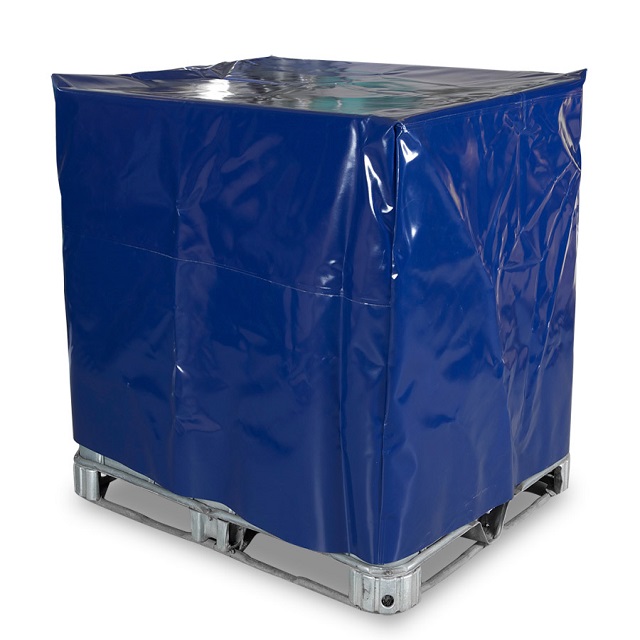
Choose fitted for a repeatable shape; choose flat for flexibility.
A fitted cover is most useful when the same equipment model is covered repeatedly and the panel geometry can be defined. A flat sheet is useful when load dimensions change, the cover serves several jobs or a simple drape is practical.
What is the difference between box-shaped tarps and flat tarps?
A flat tarp is a two-dimensional sheet that drapes over equipment and creates corner folds. A box-shaped tarp is a fitted cover with joined corners and defined side panels. Choose by equipment variation, installation clearance, access, drainage and fastening, while comparing equivalent material specifications.
A dedicated cover for a known profile
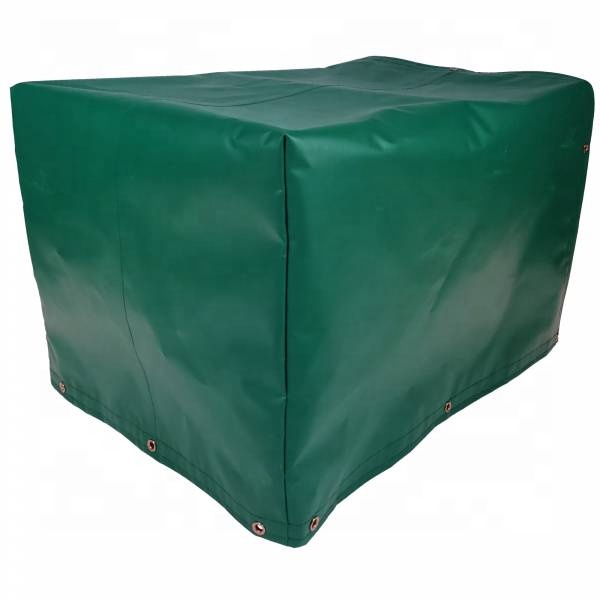
A common five-sided format has one top and four descending sides, with an open bottom. Joined corners control the shape.
- Repeated machinery, cabinets or consistent pallet loads.
- Defined side drops and attachment positions.
- A fit sample can be checked on the actual asset.
Review the available box-shaped tarp configurations once the fitted route is appropriate.
One adaptable sheet for several loads
A flat tarp drapes across the top and down the sides. At box corners, the surplus fabric needs a deliberate fold and fastening plan.
- Changing stack heights or mixed equipment sizes.
- Temporary covering with accessible fixing points.
- A flexible replacement or spare-cover requirement.
Flat tarps can also be custom-made: compare made-to-measure tarpaulin options.
Keep the comparison fair. Flat does not mean lightweight or disposable, and fitted does not automatically mean stronger. Compare the same material construction, exposure conditions and required finished protection.
The trade-off is adaptability versus controlled geometry.
Use this matrix to decide which format deserves a drawing or fit trial. Neither shape provides a wind rating or a watertight assembly by itself.
On smaller screens, swipe the table horizontally to read both options.
| Decision factor | Flat tarp | Box-shaped tarp |
|---|---|---|
| Changes in load size | Can be repositioned and folded around several profiles, within the available coverage. | Works within an agreed equipment envelope; a larger handle or revised machine can prevent installation. |
| Corners & loose fabric | Creates surplus at rectangular corners. Secure folds where the fabric actually lands. | Formed corners reduce corner bulk. Incorrect ease can still create tight spots or slack. |
| Water management | May avoid a formed corner seam, but folds and low areas can collect water. | Needs suitable corner joints, a shedding top profile and protected openings. Fit alone does not stop pooling. |
| Installation & access | Flexible placement; crews may need to recreate folds each time. | Defined orientation can help repeat placement. Deep sidewalls may require more lifting clearance or an opening. |
| Fastening & wind | Tie-down positions must account for the final fold, edge reach and anchor locations. | Fixings can be located on the pattern. Their load path and the equipment anchors still require review. |
| Material & handling | A large draped sheet includes corner surplus; weight depends on its full finished area and build. | Can remove geometric surplus, but joins, overlaps, reinforcement and hardware affect final weight. |
| Purchase & repeat use | A simpler pattern may reduce fabrication work and serve several assets. | Additional pattern and joining work may be justified by repeated handling. Confirm savings with a trial. |
Which cover format suits the equipment application?
Use the actual storage configuration and access routine to narrow the options.
Swipe the application table horizontally on smaller screens.
| Equipment situation | Compare first | Confirm before choosing |
|---|---|---|
| Repeated OEM equipment model | A dedicated fitted hood for a consistent profile. | Model revision, installation clearance and an approved fit sample. |
| Mixed machinery in storage | A flat tarp that can serve several asset sizes. | Coverage at the largest profile and a secure fold at each corner. |
| Pallet loads with changing heights | A flat sheet for variation; a fitted cover if the loaded envelope stays consistent. | Loaded dimensions, corner protection and the fastening line. |
| Equipment inspected frequently | A fitted cover with reviewed access, or a flat tarp that is easy to remove. | Opening size, runoff direction and the removal sequence. |
The same equipment needs two different size specifications.
Record the equipment envelope first. Then define the required finished cover. For a simple rectangular object with a level top, these schematics explain why a flat sheet and a fitted hood cannot be ordered using the same dimensions.
Flat tarp: top plus opposing drops
Plan schematic / Equal drops shown / Not to scale
Finished width = top W + left drop + right drop
Fitted cover: top and individual sides
Developed panel schematic / Open bottom / Not to scale
Side panels = agreed front, rear, left and right drops
Worked geometry example: 1,200 × 800 mm top, 600 mm drops
The following is a mathematical illustration with equal drops. It excludes fitting ease, hems, overlaps, reinforcement and hardware; it is not a production specification or a quoted material saving.
Swipe on mobile to compare the illustrative areas.
| Illustrative item | Flat sheet | Five-sided hood |
|---|---|---|
| Geometry | (1,200 + 600 + 600) × (800 + 600 + 600) mm | 1,200 × 800 mm top, with four 600 mm side drops |
| Developed surface area | 2.4 × 2.0 = 4.80 m² | (1.2 × 0.8) + 2(1.2 × 0.6) + 2(0.8 × 0.6) = 3.36 m² |
| What the difference means | Includes four corner squares, each 600 × 600 mm. | Removes 1.44 m² of geometric corner surplus before fabrication allowances. |
Material purchased and finished weight may differ from the geometric comparison because roll width, nesting, offcuts, joins and reinforcement change the result. Do not add an estimated seam allowance to an order already stated as finished size; see cut size versus finished size.
Agree the ease explicitly. Equipment dimensions are not automatically finished cover dimensions. Clearance for installation, equipment variation, protrusions and the chosen fabric must be reviewed together. A universal “add a few centimetres” rule is unreliable.
For broader coverage estimates, use the DERFLEX tarp size calculator and measuring guide. A flat-sheet estimate still needs conversion into individual panel dimensions before ordering a fitted cover.
Control the joints, water path and attachment points.
Choose the geometry first, then specify the complete assembly. Material weight alone cannot describe how the cover will behave around corners, seams and anchors.
Specify the material in either shape
Compare base fabric, coating, flexibility, handling weight and the evidence relevant to the actual exposure. PVC or vinyl describes a material direction; flat or fitted describes geometry. Start with the PVC tarpaulin material range, then request the proposed grade and its applicable data.
Define the corner and seam construction
A fitted corner adds a joint; a large flat sheet may also need panel joins. Specify welding, sewing or a combined construction as applicable, and how stitch penetrations or overlaps are protected. For water-sensitive equipment, agree an assembly check that includes corners and closures.
Locate fixings after the cover is positioned
Show the anchor line and the actual direction of pull. With flat tarps, check where the folded corner ends. With fitted covers, keep force from concentrating at a corner joint or opening. Plan reinforced hems, straps or grommet positions and edge reinforcement around the load path.
Provide a route for water and access
Both shapes need a supported profile that sheds water. Keep runoff clear of openings and account for condensation beneath a coated cover. If repeated inspections make full removal awkward, review zippered access and removable-panel layouts with protected openings and suitable reinforcement.
Compare the cost of covering the asset repeatedly.
A fitted cover introduces pattern work and corner fabrication. A flat sheet may use more geometric area and take longer to fold around a specific machine. Neither is automatically the cheaper option over the required service period.
Keep both quotations on the same basis
- Same equipment, coverage line and storage or transport duty.
- Same proposed material construction and required evidence.
- Equivalent reinforcement, attachment hardware and access.
- Same order quantity, packaging, destination and delivery terms.
Record what a fit trial actually changes
- Time to position, fasten, inspect and remove the cover.
- Number of people and safe access needed.
- Loose folds, pooling, abrasion and exposed areas.
- Repairability and suitability if the asset dimensions change.
Planning model: purchase + installation/removal labour over the expected cycles + maintenance and replacement. Compare both formats over the same period.
If a trial demonstrates a measurable labour saving, divide the additional fitted-cover purchase cost by the saving per cycle to estimate a labour-only break-even point. This estimate excludes unmeasured service-life or equipment-protection benefits.
Approve the fit and the use conditions together.
For a first fitted design, a revised equipment model or a critical clearance, arrange a fit sample before repeat supply. For a flat tarp, trial the drape and folded corners on the same asset.
Application notes
- Measure the covered state. Include handles, guards, connectors, folded attachments and the widest points. Identify front, rear and a fixed measurement origin.
- Protect contact points. Mark sharp corners and abrasive edges for padding or reinforcement; do not rely on extra GSM to solve concentrated contact.
- Check heat and airflow. These are protective-cover options for the agreed storage duty. Follow the equipment manufacturer's instructions for cool-down, ventilation and any operating restriction.
- Separate transport duty. A stationary storage cover is not automatically suitable for road use. Specify the exposure and attachment design; the tarp does not replace cargo restraint.
- Inspect after removal. Dry and clean the cover using a material-compatible method before folding. Record wear, damaged seams and loose hardware.
Send one brief for both cover options
Photos, a clear sketch and quantity are a useful starting point. Add the following where available:
- Equipment L × W × H and required lower coverage line.
- Top, front, rear and side views; protrusions and access points.
- Each drop, proposed clearance and dimensional acceptance method.
- Indoor/outdoor conditions, temperature range and removal frequency.
- Anchor locations, closure preference and reinforcement needs.
- Material preference, colour, branding, quantity, destination and planned order date.
Confirm whether the quotation covers fabric rolls, cut panels or finished covers. Equipment, support frames, anchoring systems and installation are separate scope items unless expressly agreed.
Box-shaped tarp vs flat tarp FAQ
Resolve the practical differences before specifying a fitted equipment cover.
Is a box-shaped tarp the same as a fitted equipment cover?
A box-shaped tarp is one type of fitted cover, suited to a broadly rectangular profile. Irregular machinery may need a more detailed multi-panel pattern. A common five-sided hood covers the top and four sides with an open bottom; define the actual covered faces on the drawing rather than relying on the style name.
Can I fold a flat tarp into a box cover?
A flat sheet can be draped and folded around a box-shaped asset. It remains a flat tarp with corner surplus. Check the folds, water paths and fastening positions in the deployed state. Turning it into a permanent fitted hood requires a designed corner construction; cutting away surplus without a reviewed pattern can remove needed coverage or reinforcement.
Are fitted tarps more waterproof than flat tarps?
Shape alone does not decide that. A flat tarp can have panel seams and pooling folds; a fitted tarp has formed corners and may have access closures. Compare the coated material, every joint, openings, runoff and installation. A water-shedding assembly check is more useful than a blanket claim that either format cannot leak.
How much larger should a fitted cover b, e than the equipment?
There is no universal allowance. The required ease depends on the widest equipment envelope, dimensional variation, protrusions, fabric flexibility and how the cover is installed. Separate equipment measurements from agreed finished cover dimensions, then approve critical clearances on a sample.
Does a fitted cover always cost more or weigh less?
No. Pattern development and corner joins can add fabrication work, while removing corner surplus can reduce developed surface area. Roll utilisation, material grade, hems, reinforcement and hardware all affect the result. Ask for two quotations on the same functional specification and compare handling during a trial.
What should I approve before placing a repeat OEM order?
Record the equipment model and revision, covered configuration, finished dimensions and tolerances, orientation, material reference, seam and edge details, fixing layout, openings and accepted sample. Define how completed covers will be measured and inspected. This gives future orders a usable reference if equipment or fabric details change.
Send the equipment profile. Compare the cover options.
Share your photos, dimensioned sketch, quantity and use conditions. Request a flat-tarp or fitted-cover proposal with clear material, fabrication and supply scope.