News
Industry News

Building Tarps | Custom Waterproof Construction Covers | DERFLEX

Update:2026/7/28 0:17:05 Views:
DERFLEX · Building protection materials for project and OEM supply Roll fabric · Cut panels · Finished custom tarps
Home / Building Tarps
Construction enclosure & weather control

Building Tarps Specified by Exposure Zone

DERFLEX supplies custom building tarps for scaffold enclosures, façade work, temporary roofing, unfinished openings, material stacks, equipment protection and controlled jobsite containment. The material and perimeter are configured around rain, wind, abrasion, handling frequency and the way the cover will be fixed to the structure.

Solid PVC, PE and mesh directions Custom size and hardware layout Project, wholesale and private-label supply
Roll Material For local converters and enclosure fabricators
Welded Panels Large-format sheets with planned seam direction
Finished Tarps Perimeter, hardware and reinforcement by drawing
OEM Programs Repeat sizes, labels, packaging and product tiers
Product definition

What Are Building Tarps?

Building tarps are removable protective sheets used around a structure during construction, renovation, restoration, demolition, emergency stabilization or temporary enclosure. They can shield unfinished areas from weather, help separate work zones, cover scaffolding, protect stored materials and reduce the movement of dust or light debris.

The phrase covers several product types rather than one universal sheet. A waterproof building tarp used over an open roof has different requirements from a breathable scaffold screen. A reusable façade enclosure faces different wind loads from a loose cover over a pallet of insulation. A responsible specification therefore begins with the building zone, exposure and anchoring method.

DERFLEX can discuss PVC coated polyester for repeated heavy-duty use, PE woven tarpaulin for short-cycle coverage, and PVC mesh where airflow and lower wind pressure are more important than full rain exclusion.

Application boundary: building tarps are temporary or removable protection products. They are not a substitute for a permanent roof, engineered fall-protection system, certified debris net or code-approved building envelope unless the complete system has been designed and verified for that use.
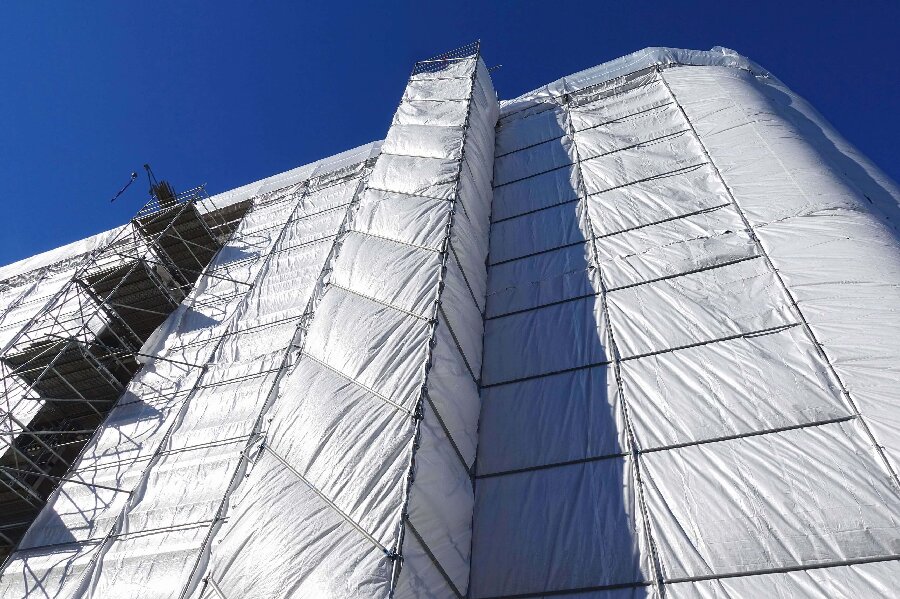
White building tarps installed over scaffolding for façade weather protection
Scaffold and Façade Enclosure A building tarp system should account for panel size, wind pressure, fixing intervals, seams and access requirements.
Application architecture

One Building, Five Different Tarp Zones

The most efficient choice is not always the heaviest sheet. Each zone creates a different combination of water, wind, wear, access and handling demands.

01

Scaffolding & Façade Enclosure

Solid or ventilated panels for renovation, cladding, masonry, painting and weather shielding around the vertical work face.

  • Confirm wind exposure before choosing solid or mesh material
  • Plan reinforced perimeter, intermediate fixing rows and access points
  • Discuss light transmission, privacy and flame-retardant direction where required
02

Temporary Roofs & Openings

Weather covers for unfinished roof decks, renovation phases, damaged areas, skylight openings and temporary building closure.

  • Use a water-shedding profile and avoid uncontrolled ponding
  • Coordinate seam direction, overlap and anchoring with the roof geometry
  • Temporary protection should be followed by permanent repair or enclosure work
03

Building Material Storage

Custom covers for lumber, drywall, insulation, pipes, steel, roofing products, cement bags and palletized supplies.

  • Match the cover to moisture sensitivity and stack shape
  • Protect sharp corners and allow drainage or ventilation where needed
04

Machinery & Site Equipment

Rectangular or shaped covers for generators, pumps, mixers, lifts, tools and idle plant during outdoor storage.

  • Add wear patches at handles, corners and contact points
  • Use straps, buckles, zippers or access flaps when operation requires them
05

Interior Separation & Containment

Temporary partitions for dust control, overspray reduction, work-zone separation, maintenance and restoration projects.

  • Select clear, opaque or mesh structure according to visibility and airflow
  • Confirm that the finished system suits the site's safety and ventilation plan
PVC Reusable heavy-duty direction

PVC Coated Polyester Building Tarps

Commonly considered for repeated outdoor use, welded large panels, temporary roofs, robust equipment covers and demanding scaffold-enclosure programs. The coated structure supports waterproof material performance and custom fabrication.

Weldable seams Reinforced perimeter UV options Custom hardware
PE Lightweight short-cycle direction

PE Woven Construction Building Tarps

Useful where handling weight, economical coverage and fast deployment matter. PE tarps can suit short-duration material covers, temporary weather shielding and project stock, subject to grade, UV treatment and exposure.

Low handling weight Cost-sensitive projects Short-cycle coverage Bulk supply
MESH Airflow and wind-relief direction

PVC Mesh Scaffold & Screening Tarps

Selected for screening, privacy, shade and light debris control where air passage is beneficial. Mesh can reduce wind pressure compared with a solid sheet, but it is not intended to provide full waterproof enclosure.

Air passage Scaffold screen Privacy Debris-control direction
CLEAR Visibility and daylight direction

Clear or Translucent T, emporary Enclosure Panels

Useful for selected curtains, dividers and enclosure sections where sight lines or natural light matter. Thickness, reinforcement, cold flexibility and project-specific flame-retardant requirements should be discussed before selection.

Visibility Temporary partitions Access panels Custom edging
Failure-point engineering

Six Risks That Shape a Heavy Duty Building Tarp

Fabric weight is only one input. Field performance often depends on how the complete cover responds to these recurring failure risks.

W

Water Entry

Coating, welded seams, panel orientation, overlap, slope and penetrations all influence practical rain protection.

A

Anchor Pullout

Webbing, rope hems, corner patches and suitable fixing intervals help distribute concentrated tie-down load.

P

Puncture & Abrasion

Sharp edges, scaffold fittings, dragging and repeated folding may require local patches or protective sleeves.

V

Wind Pressure

Solid enclosure panels can create substantial wind load. Installation and structural review must match the site exposure.

C

Cold Flexibility

Low temperatures can change handling and fold behavior. State the expected climate when discussing the formulation.

H

Handling Fatigue

A cover can be durable but impractical for the crew. Size, GSM, folding method and deployment frequency should be balanced.

Specification discussion

Building Tarp Reference Platform

These ranges are starting points for RFQ discussion, not universal grades. Final material, dimensions, test values and workmanship should be confirmed by sample, drawing, installation method and destination requirements.

Application direction Material direction Reference weight Fabrication priorities Procurement notes
Reusable scaffold or façade enclosure PVC coated polyester or PVC mesh, selected by rain and airflow needs Approx. 300–750 gsm depending on solid or mesh structure Reinforced perimeter, intermediate fixing rows, grommets, webbing, sleeves or pockets Review wind exposure, panel size, access points, light transmission and local project rules.
Temporary roof and unfinished opening Heavy-duty PVC coated polyester; PE option for selected short-cycle use Approx. 550–900 gsm for many reusable PVC discussions Welded seams, water-shedding panel layout, reinforced corners and dense attachment zones Confirm slope, ponding risk, penetrations, roof geometry and anchoring before use.
Building material cover PVC coated polyester or PE woven tarpaulin Approx. 200–900 gsm according to duty cycle Hem, rope edge, webbing, grommets, D-rings and sharp-edge wear patches State the covered material, moisture sensitivity, stack shape, ventilation and handling frequency.
Equipment and machinery cover PVC coated polyester; breathable direction for selected storage cases Approx. 450–900 gsm for many custom-cover programs Shaped panels, access flaps, straps, buckles, zippers, vents and local reinforcement Provide a drawing, photos or physical sample for irregular equipment.
Interior curtain or containment panel Opaque PVC, clear vinyl, reinforced PE or mesh by visibility and airflow needs Project-specific Track pockets, Velcro, weighted hems, clear windows, overlap and access openings Confirm ventilation, fire-safety direction and site operating procedure before installation.
Wholesale or private-label line Tiered PVC, PE and mesh product family Defined by commercial tier Repeat sizes, colors, printed marks, labels, barcodes, cartons and packing method Approve a golden sample and stable specification for replenishment orders.

DERFLEX tarp platforms can be discussed across broader material ranges where the project requires them. Reference values vary with yarn, weave, coating formulation, width, finish and test method.

Product image display

Building Enclosure and Material Protection

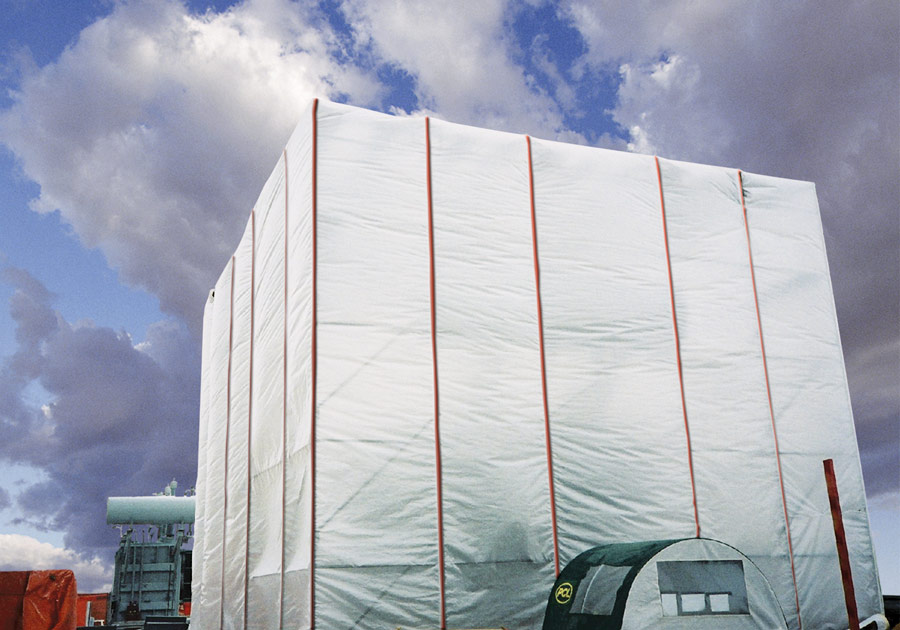
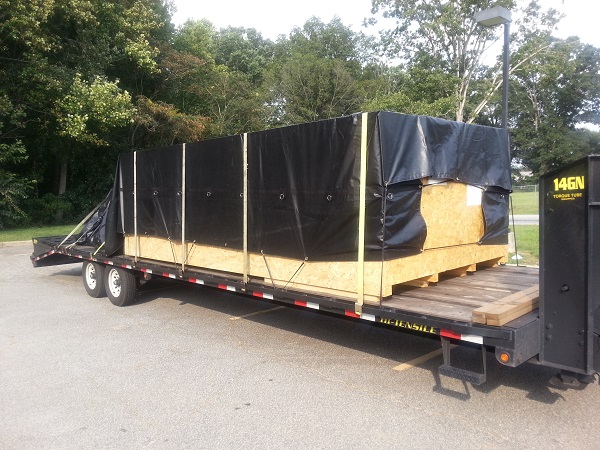
Actual DERFLEX website images show two different building-tarp functions: vertical weather enclosure and transport or storage protection for construction-related loads.

Fabrication details

Custom Building Tarps Begin at the Perimeter

Many site failures occur at seams, corners and fastening points. The finished-cover design deserves the same attention as the base material.

01 / JOINING

Welded Seam Layout

Hot-air or high-frequency welding can create large PVC panels. Seam direction can be arranged to support drainage, handling and panel geometry.

02 / PERIMETER

Hems, Rope & Webbing

Folded hems, rope edges and webbing can spread load along the edge rather than concentrating stress at one attachment point.

03 / HARDWARE

Grommets, D-Rings & Straps

Spacing and hardware type should match the frame, tie-down method, wind exposure and frequency of installation.

04 / STRUCTURE

Pipe Sleeves & Pockets

Sleeves, pockets and keder-style edges can simplify attachment to selected frames or tensioning systems when included in the drawing.

05 / WEAR ZONES

Corner and Contact Patches

Additional layers can be positioned at scaffold contact points, sharp edges, handles and corners instead of increasing the weight of the full cover.

06 / OPERATIONS

Windows, Flaps & Identification

Clear windows, doors, zippers, printed orientation marks, size labels and project codes can reduce installation confusion and improve repeat use.

Procurement workflow

From Site Conditions to Repeatable Production

A clear five-step process helps avoid excessive weight, weak attachment details, mismatched materials and dimensions that are difficult to install.

01

Define the Zone

Identify the scaffold, roof, façade, opening, material stack, equipment or interior work area.

02

Rank Exposure

List rain, wind, UV, abrasion, cold, dust, chemicals and handling frequency in order of importance.

03

Design the Cover

Confirm dimensions, panel direction, seams, perimeter, hardware, openings and reinforcement zones.

04

Approve a Sample

Review material, color, workmanship, dimensions, fixing details, labels and packing before repeat production.

05

Control Reorders

Use an approved specification, drawing and sample reference for project phases or private-label replenishment.

Why DERFLEX

Material Supply and Finished-Cover Development in One Workflow

DERFLEX works with contractors, project suppliers, tarp distributors, fabricators and OEM brands that need application-based specification rather than a single retail shelf size.

1

Multiple Supply Forms

PVC coated fabric rolls, cut panels, welded sheets and finished custom building tarps.

2

Project-Based Fabrication

Dimensions, seams, hems, webbing, grommets, D-rings, sleeves, straps, patches and access features by drawing.

3

Material Matching

Solid PVC, economical PE and breathable mesh directions according to weather, wind and duty cycle.

4

OEM & Wholesale Support

Custom colors, product tiers, logos, labels, barcodes, cartons and export packing for repeat programs.

5

Verification-Oriented Communication

Performance and compliance directions can be discussed against the target application, test method and destination requirement before production.

DERFLEX building tarpaulin installed around scaffolding
Specify the Complete Cover System Material, seam, perimeter, fixing layout and installation conditions jointly determine practical performance.
Building tarps FAQ

Questions from Contractors, Distributors and Project Buyers

Practical answers for custom sizes, material choice, waterproofing, wind, flame-retardant directions and quotation preparation.

What are building tarps used for?

Building tarps are used for scaffold and façade enclosure, temporary roof or opening protection, construction-material storage, equipment covers, temporary partitions, renovation containment and other removable jobsite protection. The selected structure should match the building zone, weather, handling and attachment method.

Which material is suitable for heavy duty building tarps?

PVC coated polyester is commonly considered for reusable heavy-duty covers because it supports waterproof material performance, welding, reinforced edges and custom fabrication. PE woven tarpaulin may suit lighter or short-cycle work. PVC mesh is useful where airflow and reduced wind pressure matter more than full waterproofing.

Are DERFLEX building tarps waterproof?

DERFLEX can supply waterproof PVC coated material and welded finished-cover directions. Practical water protection also depends on seam design, penetrations, overlap, slope, water pooling and installation. Mesh products are not intended as fully waterproof covers.

Can building tarps be made to a drawing or unusual shape?

Yes. Custom directions can include finished dimensions, shaped panels, seam location, reinforced hems, webbing, grommet spacing, D-rings, straps, buckles, pipe sleeves, pockets, windows, access flaps, printed marks and packaging. Drawings, photos or samples help define irregular covers.

How should wind load be considered for scaffold building tarps?

Solid tarp panels can catch significant wind, especially on exposed elevations. Panel size, porosity, fixing intervals, frame capacity and site conditions should be reviewed by the responsible project professionals. Mesh may reduce wind pressure where rain exclusion is not required, but material choice does not replace structural and installation review.

Can DERFLEX discuss flame-retardant building tarp options?

Project-specific flame-retardant directions can be discussed when the buyer provides the target standard, test method and destination requirements. The final material, report and applicability should be verified before production and site use; no single flame-retardant label applies to every jurisdiction or installation.

What information is needed for a building tarp quotation?

Provide the application zone, dimensions or drawing, quantity, expected reuse, rain and wind exposure, material preference, target GSM if known, color, seams, hems, webbing, grommets, D-rings, straps, access features, printing, labels, packaging, destination and any requested test direction.

Request a project-based recommendation

Build the Tarp Around the Structure, Not a Generic Size

Send DERFLEX the building zone, drawing, dimensions, quantity, exposure, material preference, reinforcement and attachment method. The team can discuss a practical material and fabrication route for samples, project supply, wholesale or private-label production.

Product ranges and performance descriptions are for specification discussion. Final construction, test values, compliance and installation should be confirmed for the actual application and destination requirements.

Consulting Services
+86-021-54361792 / 54361798
Email
sales@derflex.com