


Water containment / Technical buying guide
Can a Tarp Be Used as a Pond Liner?Material and Seam Requirements
A tarp can hold pond water only when its material, joins and installation are suitable for continuous immersion. An ordinary rain cover does not provide that assurance.
Compare pond-grade PVC, reinforced polyethylene and other liner options, then define the support, water-contact evidence and seam checks your project needs. DERFLEX can discuss coated-fabric rolls, welded panels and custom liner fabrication against your drawing.
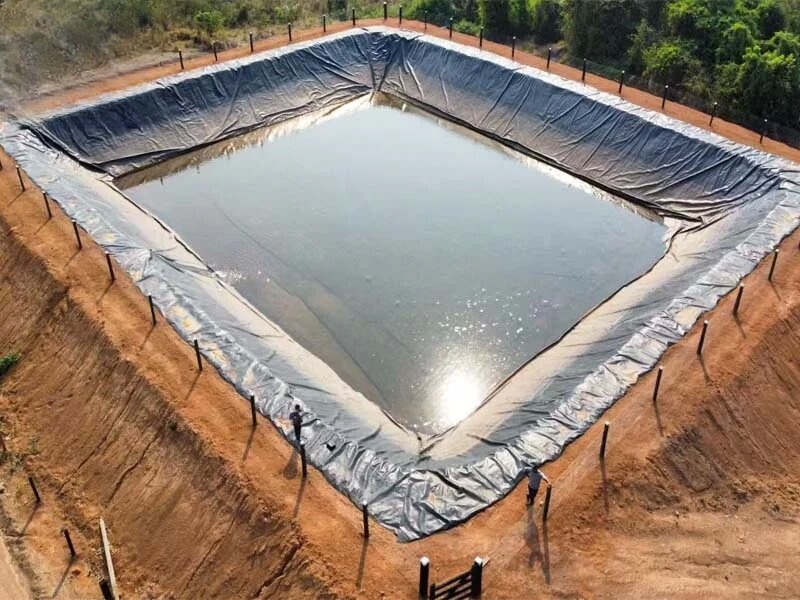
The direct answer
Yes, with a liner specification.
A purpose-specified reinforced PVC or polyethylene membrane may serve as a pond liner. A general-purpose tarp should not be assumed suitable for a permanent pond. Confirm continuous-immersion suitability, a continuous waterproof barrier, compatible sealed seams and a protected supporting surface. For fish ponds, require evidence for the exact water-contact formulation.
01 / Material selection
Tarp vs pond liner: the construction matters.
“Heavy duty,” “waterproof” and “vinyl” describe too little to approve a liner. Ask what the complete material has been qualified to do.
| Material | Pond-use position | Key purchasing requirement |
|---|---|---|
| Ordinary woven PE tarp | Do not default to permanent containment. Cover-grade laminate, seams and eyelets may be unsuitable for sustained immersion. | Replace an unknown cover specification with an identified liner grade. Color and weave count are insufficient. |
| Reinforced PVC-coated polyester | A candidate for fabricated, supported liners when the selected construction and formulation are approved for the duty. | Check coating continuity, adhesion, water compatibility and validated HF/RF or thermal welds. |
| PVC geomembrane sheet | A separate liner category from PVC-coated textile. Exposure and protective-cover requirements are grade and project dependent. | Identify reinforcement status, thickness, approved seaming method and exposed or buried use. |
| RPE / reinforced polyethylene liner | Consider a purpose-made reinforced liner for a project prioritizing panel handling and factory fabrication. | Identify the resin/coating construction, immersion documentation and seam system; a PE cover tarp is not interchangeable. |
| HDPE / LLDPE geomembrane | Consider for larger engineered ponds with a specified installation and field-welding plan. | Agree thickness, qualified installers, penetration details and seam inspection before comparing price. |
| Pond-grade EPDM rubber | A candidate for shaped garden ponds and water features where the exact product is approved for the application. | Use its specified primer/tape system. Conventional thermoplastic heat welding does not apply to cured EPDM. |
On mobile, swipe the table to compare requirements. This is a selection framework, not an interchangeable-grade list.
The woven reinforcement supplies strength; the continuous coating or film supplies the water barrier. A woven core does not automatically make a membrane leaky, and a thicker sheet does not automatically make its joints sound. Review the construction behind PVC-coated tarpaulin materials, then select a documented containment grade rather than a cover by appearance.
02 / Procurement specification
Specify immersion, support and evidence together.
There is no universal tarp GSM or thickness that makes every pond safe. GSM is mass per area; millimeters and mils describe thickness. In reinforced fabric, the yarn, coating distribution and adhesion also affect behavior.
| Variable | Write into the enquiry | Request before approval |
|---|---|---|
| Continuous water contact | Freshwater or saltwater; water temperature; pH and relevant cleaning chemicals; intended immersion duration. | A grade-specific suitability statement and applicable supporting data. A rainwater-shedding claim is insufficient. |
| Thickness / GSM / construction | Measured thickness and method; weight; reinforcement; tolerance and lot identification. | The selected technical data sheet. Avoid converting GSM to thickness without construction-specific data. |
| Mechanical duty | Pond geometry, depth, supporting surface, frame gaps, cleaning and handling conditions. | Relevant tensile, tear, puncture and coating-adhesion data, with methods and agreed acceptance limits. |
| Exposure | Exposed rim and slopes; drawdown; sunlight; minimum handling temperature; covered or uncovered design. | The grade’s exposure limitations and protective-cover instructions. |
| Fabrication | Finished dimensions, seam map, corner details, outlets and rim termination. | A fabrication drawing, agreed seam acceptance plan and representative welded sample. |
Water pressure rises with depth.
For freshwater, p = ρgh is approximately 9.8 kPa per meter of depth. This indicates pressure at a depth; it does not directly select fabric thickness. Soil, walls or an engineered frame must support the membrane, with local loads assessed at gaps, corners and fittings.
“900 gsm” is a starting point.
Two fabrics with the same weight may have different reinforcing yarns, coatings and weld response. Ask for the exact grade and assembly details. Increasing GSM cannot compensate for a sharp stone, an unsupported span or an unsealed penetration.
03 / Seam requirements
A waterproof sheet needs a qualified joint.
For PVC-coated pond liner fabric, evaluate HF/RF welding or a compatible thermal process on the actual material. Specify the joint and its acceptance evidence, rather than only the name of the machine. [1]
PVC-coated textile
Confirm weldability of both joining faces, including any lacquer or surface finish. Qualify overlap, effective welded width and settings on the production grade. A sewn joint alone leaves needle holes and is unsuitable as the submerged waterproof seal.
Other liner systems
Use the specified thermal system for thermoplastic geomembranes and the approved primer/tape system for EPDM. Household tape, general silicone and a different polymer’s adhesive should not be substituted for the selected liner’s seaming procedure. [2]
Six items in a seam acceptance plan
Material identification
Record grade, lot, face orientation and compatible components. Reconfirm the procedure when construction or surface finish changes.
Trial welds
Agree trial frequency, conditions and process settings. Use representative coupons before production and when conditions change.
Strength checks
Define applicable peel and shear tests, sampling, limits and failure modes for the actual reinforced fabric or film.
Continuity checks
Select a suitable nondestructive method for the joint. Air-channel testing requires a compatible dual-track weld; it cannot test every single-strip RF seam.
Detail inspection
Inspect starts, stops, corners, T-junctions and fittings. Check for unbonded areas, gaps, burns, wrinkles and exposed reinforcement.
Repair & release records
Mark repairs on the seam map, retest them and retain results. Agree site commissioning checks separately from factory release.
The air-channel principle is documented for specific PVC dual-track geomembranes. It is not an automatic acceptance method for all coated textiles. The project’s technical reviewer should approve the applicable procedure. [3]
04 / Installation details
Resolve the places where leaks start.
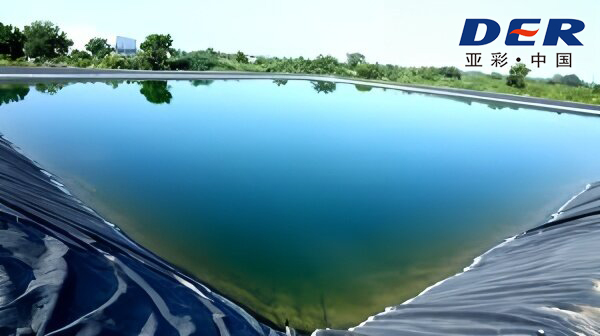
Plan the substrate, outlets and top edge alongside the material. A sound sheet can still fail at an overlooked interface.
Protect the foundation.
Remove sharp debris and roots; prepare a stable supporting surface. Select protective geotextile or another compatible cushion for actual puncture and abrasion risks. An old tarp is not a specified cushion.
Detail every penetration.
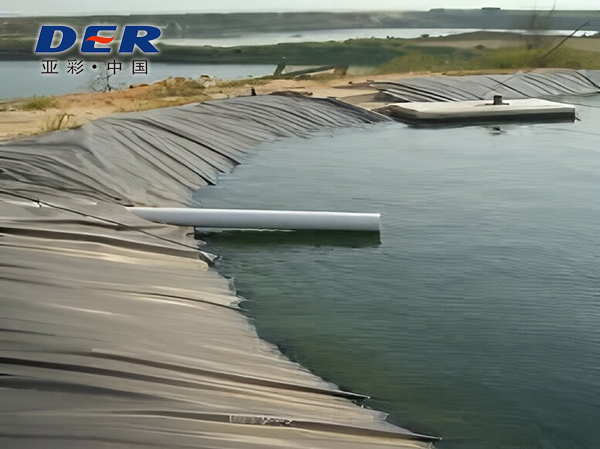
Provide pipe diameter, location, flange or boot design, gasket compatibility and movement support. Keep liner eyelets and fastening holes above the maximum operating water level unless a sealed detail is designed.
Allow fit and movement.
Do not stretch the liner across corners or use grommets to support the water load. Agree slack, anchorage and rim termination. Assess groundwater uplift and trapped gas before an empty pond is refilled.
For the wider system, review pond lining and water-storage solutions. Ground preparation, anchorage and groundwater drainage are also addressed in NRCS agricultural lining guidance; apply the relevant project and local requirements. [4]
05 / Fish ponds & aquaculture
Fish suitability belongs to the exact grade.
“PVC,” “phthalate-free” or “REACH compliant” is not a fish-safety test.
Request written confirmation for the intended aquatic species, water chemistry, temperature and immersion conditions. Ask what testing supports the claim and whether it covers the exact formulation and water-contact components, including adhesives, patches and fittings. Avoid used billboard, truck-cover or unknown recycled materials for fish containment.
NRCS Code 521 cautions against PVC geomembranes for aquatic production because additives may leach, and advises consultation with manufacturers. It also specifies protective cover for PVC in its agricultural lining context. Do not interpret a general PVC product claim as overriding that guidance or proving every PVC-coated textile suitable. [4]
For a specific project, compare documented pond-grade alternatives or obtain application-specific technical approval before selecting PVC. A trial water hold checks leakage; it does not prove biological compatibility.
The supporting structure and cleaning cycle matter too. Review fish-farming tank liner applications when your pond is a supported tank or framed aquaculture system.
06 / Dimensions & panel planning
Measure the liner path, not just the water surface.
For a simple rectangular pond, a preliminary flat-sheet estimate adds twice the depth and an edge allowance on each side. Measure the actual surface path across shelves, slopes and steps before placing an order.
This rule does not design a fitted box liner or include every irregular contour, weld allowance, anchor trench or transport fold. Give DERFLEX a section drawing and finished dimensions for fabrication approval.
Reduce field seams thoughtfully.
Ask for a panel plan that balances seam count with packaged size, panel weight, unloading and placement access. A factory-welded “one-piece” assembly may contain several seams; it does not mean a seamless sheet.
For agricultural projects, compare irrigation pond liners against the site geometry and exposure conditions.
Preliminary liner size estimator
Meters only. Values shown are an editable example, not a recommended pond design.
Flat-sheet area: 69.56 m²
Check the surface path, anchorage and fabrication allowance before ordering. The estimate is not a capacity or structural calculation.
07 / Material & fabrication enquiry
Bring the containment duty to DERFLEX.
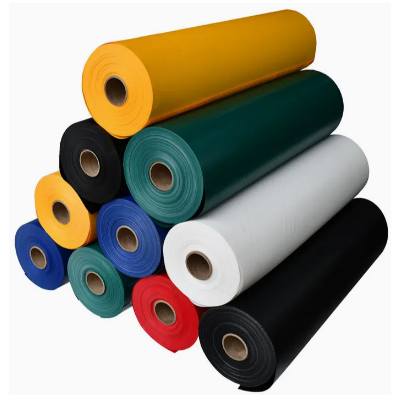
Discuss roll material for your own conversion, welded panels for site installation, or a made-to-drawing supported liner. Define who approves the material, fabricates the seams, installs the system and signs off commissioning.
Published reference construction
DERFLEX 900 gsm fish-pond tarpaulin material
DERFLEX publishes a reinforced polyester construction with PVC on both sides. Use it as a reference for discussion, with the selected grade, current data and immersion suitability confirmed for your project.
See the fish pond tarpaulin supply formats for roll, panel and custom fabrication discussions. Reference figures are not a depth rating or universal aquaculture approval.
Custom size, color, seam layout and packaging are subject to technical and production confirmation. MOQ, sample availability and lead time are confirmed with the quotation.
08 / RFQ & total installed cost
Get comparable quotes with one clear brief.
Send these details with your drawing.
Application: irrigation, ornamental pond, fish farming or other water containment.
Geometry: internal length × width × depth, section profile, shelves and support/frame drawing.
Water & exposure: water chemistry, species if applicable, temperature, sun exposure and cleaning chemicals.
Assembly: roll goods, welded panels or fitted liner; seams, drains, inlets and rim detail.
Acceptance: material documentation, representative seam sample, agreed testing and installation responsibilities.
Order: quantity, destination, delivery schedule, packaging and any project specification.
Compare more than the sheet price.
A low tarp price may omit fabrication, seam checks, underlay, fittings or site work. Compare quotations at the same scope and consider the cost of draining, repair and downtime.
09 / Common purchasing questions
Pond liner material & seam FAQ
Can a blue polyethylene tarp be used as a pond liner?
A general-purpose blue PE tarp should not be assumed suitable for a permanent pond. Its coating, seams and water-contact formulation may only be intended for covering duty. Specify a purpose-made liner with documented immersion suitability and an approved joint system; blue color does not identify the grade.
Is PVC tarpaulin safe for a fish pond?
That depends on the exact formulation and supporting evidence. Do not infer fish suitability from PVC content, waterproofing, REACH compliance or a phthalate-free claim alone. Request application-specific documentation for the species and water conditions, and consider documented alternatives where that evidence is unavailable.
What thickness or GSM should a tarp pond liner have?
There is no universal value. Select the material using pond depth and geometry, support, puncture risk, exposure, water chemistry and seam performance. Specify both measured thickness and GSM for reinforced fabric where relevant; do not convert one to the other without grade-specific data.
Can I sew or tape pond-liner seams?
A sewn seam alone is not an adequate submerged waterproof seal. Compatible PVC liners may use qualified HF/RF or thermal welds; pond-grade EPDM uses its specified primer and tape system. General household tape and unqualified sealants should not replace the selected liner’s approved joint or repair procedure.
Does a one-piece pond liner have no seams?
Not necessarily. A one-piece delivered liner can be assembled from factory-welded sections. Ask whether it is a single sheet or a fabricated panel, and request the seam map and acceptance records. Reducing field joints does not remove the need to qualify factory joints.
How should a new pond liner be checked before use?
Approve the substrate, dimensions, seams, penetrations and anchorage against the agreed plan. Review the specified test records, repair and retest defects, then perform commissioning checks at the planned operating conditions. Investigate water loss with evaporation and plumbing considered. A water-hold check alone does not prove durability or fish-contact suitability.
Specify before you fabricate
Turn your pond drawing into a clearer liner enquiry.
Share the depth, support, water-contact conditions and fitting positions. Ask DERFLEX to review the material and fabrication scope before approving a sample or bulk order.
Include dimensions, quantity and destination, plus your seam acceptance and documentation requirements.