Coating Stiffness Rises
As temperature falls, a coating can lose flexibility. A stiff surface does not distribute bending strain as easily, so tight creases become higher-risk zones.



A winter tarp should be specified for the temperature at which it must move, fold, roll, flex and stay secured—not only the lowest air temperature on a weather app. This guide helps industrial buyers compare cold-resistant PVC, polyethylene, canvas and insulated tarp systems for snow, ice, sub-zero transport and outdoor storage.
DERFLEX lists a typical outdoor direction of about -30°C to +70°C for many standard PVC tarp grades, with separately selected cold-resistant formulations listed for -40°C, -50°C and -60°C projects. Final suitability must be confirmed for the ordered material and finished tarp construction.
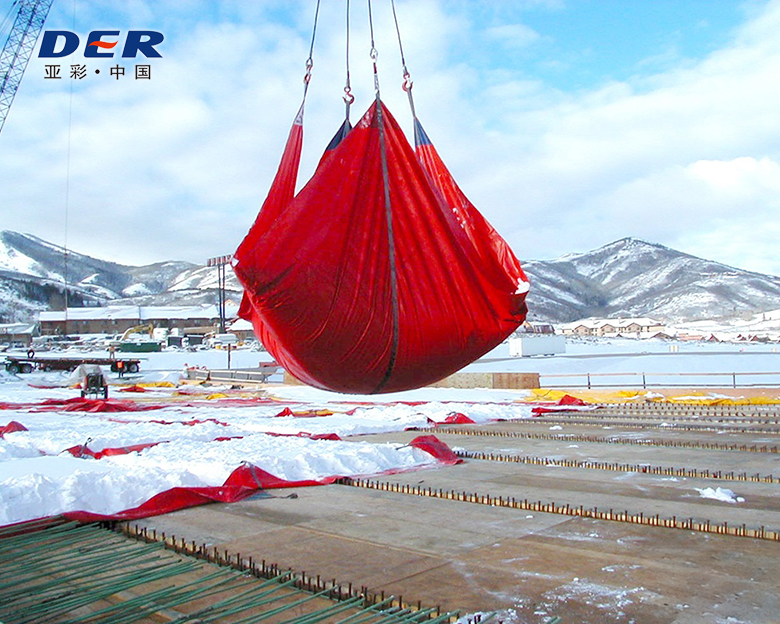
For reusable, waterproof industrial covers that must be handled in freezing weather, cold-resistant PVC-coated polyester is often the strongest starting direction because the textile core carries load while a purpose-selected PVC formulation can retain flexibility at temperatures below the range of ordinary outdoor grades. For temporary low-cost covers, PE can work when its actual low-temperature grade is known. Canvas remains useful where breathability matters, but wet/freeze cycles, water treatment and added weight need attention. Insulated tarps are a different system: they are selected when heat retention, not only weather protection, is required.
Buyer rule: do not ask only, “What temperature can this tarp withstand?” Ask, “At what temperature can this finished tarp be folded, rolled, tensioned and repeatedly deployed without unacceptable cracking or stiffness?”
Cold weather changes how polymer coatings move. Failure usually appears first where the tarp is bent, pulled, rolled, struck or connected to hardware—not necessarily in the middle of the sheet.
As temperature falls, a coating can lose flexibility. A stiff surface does not distribute bending strain as easily, so tight creases become higher-risk zones.
Repeated folding or rolling at low temperature can create the same crease again and again. The colder and tighter the fold, the more important cold-flex performance becomes.
Winter storms combine low temperature with flapping. Dynamic movement at a grommet, hem or sharp contact point can cause local damage even when the base sheet remains strong.
Frozen water can create rigid contact points and extra abrasion. Dragging a tarp over frozen cargo, metal corners or packed snow can produce puncture and coating damage.
Daily warming and refreezing creates dimensional cycling. Water trapped in seams, fabric interfaces or poorly protected edges can make this duty more demanding.
A heavy fabric does not fix weak attachment geometry. Grommets, D-rings, webbing, straps and seam transitions must spread load when the sheet is less flexible.
Cold-crack rating is not automatically a full service-temperature guarantee. A laboratory cold-crack claim may describe one specimen and test condition. Real field use adds folding radius, wind, impact, seam geometry, ice, hardware and repeated cycles. Ask the supplier to state the test method and how it relates to the intended finished tarp.
The same -20°C environment can require different materials depending on whether the cover stays fixed all winter or is rolled twice every day on a truck.
| Cold-Weather Duty | Starting Material Direction | What to Specify | Main Failure Risk |
|---|---|---|---|
| 0°C to about -15°C 32°F to 5°F General freezing conditions | Outdoor-grade PVC, suitable PE, treated canvas or application-specific cover. | Waterproofing, UV, wind, handling frequency, edges, grommets and drainage. | Buying by thickness only and ignoring wind or frozen contact points. |
| About -15°C to -30°C 5°F to -22°F Cold industrial outdoor use | Verified winter-grade PVC-coated polyester is a practical B2B starting point. | Low-temperature flexibility, fold/roll temperature, base fabric, seam method and reinforcement map. | Assuming every “vinyl tarp” remains equally flexible near the lower end. |
| -30°C to -40°C -22°F to -40°F Severe winter | Purpose-selected cold-resistant PVC or another material with documented cold performance. | Cold-flex / cold-crack evidence, motion cycle, wind, snow, hardware and sample validation. | Using a standard heavy-duty grade because GSM is high. |
| -40°C to -60°C -40°F to -76°F Extreme cold project | Special cold-resistant PVC formulation selected for the actual minimum temperature. DERFLEX lists -40°C / -50°C / -60°C directions. | Actual use temperature, folding temperature, specimen/test method, finished construction and project approval sample. | Transferring a material test claim directly to every finished tarp design. |
| Freezing + heat retention Construction curing / heated enclosure | Insulated or multi-layer tarp system; cold-resistant outer fabric may be part of the assembly. | Thermal requirement, heater arrangement, FR requirement, ventilation, panel overlaps and fastening. | Expecting a single waterproof sheet to provide meaningful insulation by itself. |
| Cold + daily rolling Truck / trailer / roll-off system | Cold-flex PVC-coated polyester matched to roller, pockets, hems and tie-down geometry. | Minimum deployment temperature, cycle frequency, roll diameter, snow/ice removal and seam layout. | Fold cracking, pocket wear, grommet stress and stiff deployment. |
Temperature bands above are procurement starting points, not universal guarantees. Final suitability depends on the selected grade, actual test evidence, fabrication and duty cycle.
“Winter tarp” is not one material. The correct option depends on waterproofing, handling weight, flexibility, welding, breathability, insulation and replacement strategy.
Useful for reusable waterproof truck, construction, equipment and storage covers because the polyester reinforcement carries load while the PVC system can be formulated for lower-temperature flexibility. Heat welding, reinforced hems and custom fabrication are major advantages for B2B programs.
Check: minimum use and folding temperature, cold test method, GSM, yarn/scrim, coating adhesion, seam design, reinforcement and UV package.
PE tarps are lightweight and economical, making them useful for temporary or broad-area coverage. Cold behavior varies by resin, laminate construction and grade, so a generic “poly tarp” label is not enough for severe winter procurement.
Check: actual resin/grade, lamination, mil thickness, weave, tear behavior, grommet reinforcement and cold handling requirement.
Canvas can be useful where breathability and reduced trapped condensation matter. It behaves differently from a continuous PVC barrier, and wet/freeze cycles can increase weight and change handling. Water resistance depends on treatment and construction.
Check: treatment type, water resistance, drying, mildew control, wet weight, freeze–thaw exposure and seam/thread specification.
Insulated systems are selected when the buyer needs to slow heat loss, protect curing concrete or create a warmer temporary enclosure. They should not be confused with a normal cold-resistant tarp: insulation adds a thermal layer and changes weight, seams and installation.
Check: insulation thickness/R-value direction, outer shell, moisture management, FR requirement, panel overlap and heater compatibility.
For a broader structure comparison beyond cold weather, see DERFLEX's tarp material guide and the dedicated PVC vs vinyl vs canvas tarp comparison.
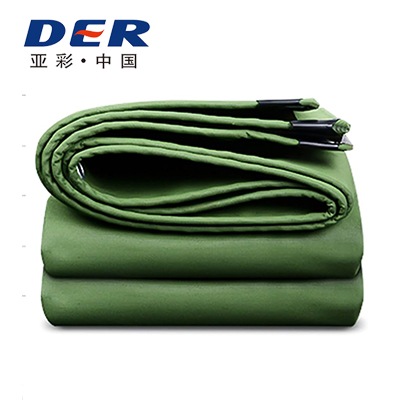
Cold-flex performance describes how well the material can bend or move at low temperature without unacceptable damage. Cold-crack performance usually refers to resistance to cracking under a defined low-temperature test condition. Both are useful, but neither is meaningful unless the supplier states the grade, temperature and test or acceptance method.
For truck tarps, roll-off covers and repeatedly handled construction sheets, the practical question is often more demanding than a static laboratory sample: can the finished assembly be deployed, folded, strapped and re-tensioned day after day at the route's lowest operating temperature?
Cold resistance in the center of the fabric does not prevent failure at a seam, corner, grommet or roll pocket. The full construction has to carry winter loads.
Seams create thickness transitions and bending lines. Confirm welding or sewing method, overlap design and whether the seam remains workable at the lowest handling temperature.
Wind and tie-down force enter through edges. Webbing, rope hems, corner patches and doubled fabric can spread load better than relying on sheet GSM alone.
Hardware concentrates force. Spacing, backing patch size, webbing layout and line angle should match the tarp area and expected wind rather than a cosmetic standard pattern.
A waterproof tarp is not automatically designed to carry pooled meltwater or deep snow. Geometry, slope and support control load. Remove dangerous accumulation rather than treating the tarp as a structural roof.
Ice, frozen cargo edges and metal corners can become cutting surfaces. Add wear patches, padding or local reinforcement where the cover repeatedly touches rigid points.
Tighter bends create higher strain. For cold-weather roll systems, the operating geometry can matter almost as much as the nominal material temperature rating.
Specification principle: define winter performance for the complete tarp—sheet, seam, hem, reinforcement, hardware and motion cycle—then approve a production-equivalent sample for critical programs.
| Application | Winter Priority | Recommended Starting Direction | RFQ Details That Matter |
|---|---|---|---|
| Truck & trailer tarp | Daily rolling/folding, road wind, ice, tie-down. | Cold-flex PVC-coated polyester when route temperatures approach or exceed standard-grade limits. | Lowest deployment temperature, roll system, pocket design, route, snow/ice exposure, finished dimensions. |
| Winter construction enclosure | Wind, repeated installation, waterproofing, possible heating. | Heavy-duty or cold-resistant PVC; insulated system if heat retention is required. | Site minimum, scaffold geometry, fastening, heater use, FR requirement, panel overlap and ventilation. |
| Outdoor machinery cover | Static cold, wind, sharp corners, access frequency. | Cold-capable waterproof PVC or suitable PE depending on duty level and handling frequency. | Equipment shape, contact points, ventilation, access openings, wind exposure, service interval. |
| Hay / agriculture storage | Snow, wind, condensation, large-area tie-down. | UV-stabilized winter-grade tarp matched to expected reuse and fastening system. | Climate, storage duration, bale geometry, airflow, ground contact, tie-down spacing and repair plan. |
| Mining / remote industrial site | Extreme cold, abrasion, repeated service, logistics. | Purpose-selected cold-resistant PVC with project-specific reinforcement and evidence. | Lowest actual temperature, handling cycle, abrasion sources, repair method, hardware, sample approval. |
| Concrete curing / heated work zone | Heat retention and moisture control as well as weather. | Insulated blanket/tarp system rather than a single standard waterproof sheet. | Target thermal performance, heater setup, dimensions, overlap, FR and moisture conditions. |
For construction-specific winter protection, see DERFLEX's construction tarp for winter guide. For temperature-range terminology and hot/cold comparison, see the tarp temperature rating guide.
A useful RFQ lets a supplier quote a repeatable material and lets your QC team verify it later.
Lowest ambient, folding/rolling temperature, snow, freezing rain, UV and wind.
PVC/PE/canvas/insulated direction, GSM, thickness, base fabric and coating structure.
Static, daily fold, roll tarp, repeated removal, lifting, dragging or tensioning.
Welds, sewn seams, hems, webbing, pockets, grommets, D-rings and wear patches.
Named low-temperature test/acceptance criterion, sample approval and batch documentation.
DERFLEX's tarpaulin technical specification guide explains how to turn these requirements into a purchasing document. If your team is still deciding GSM, mil or weight, use the GSM, thickness and weight selection guide.
Real product and factory visuals help buyers understand the difference between a finished winter tarp, roll material and the fabrication environment behind custom supply.
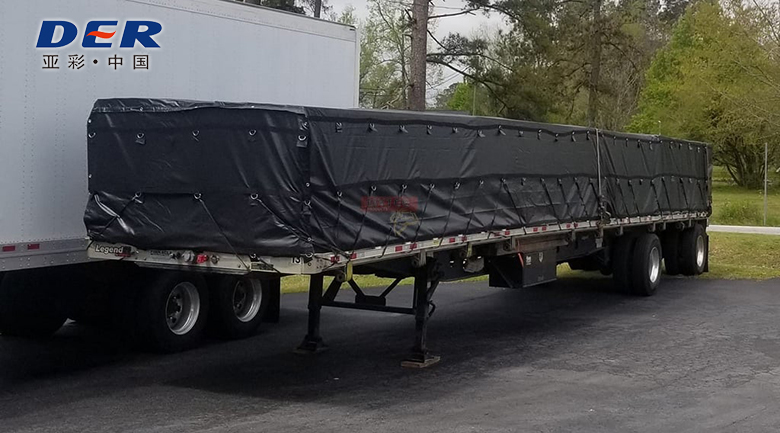
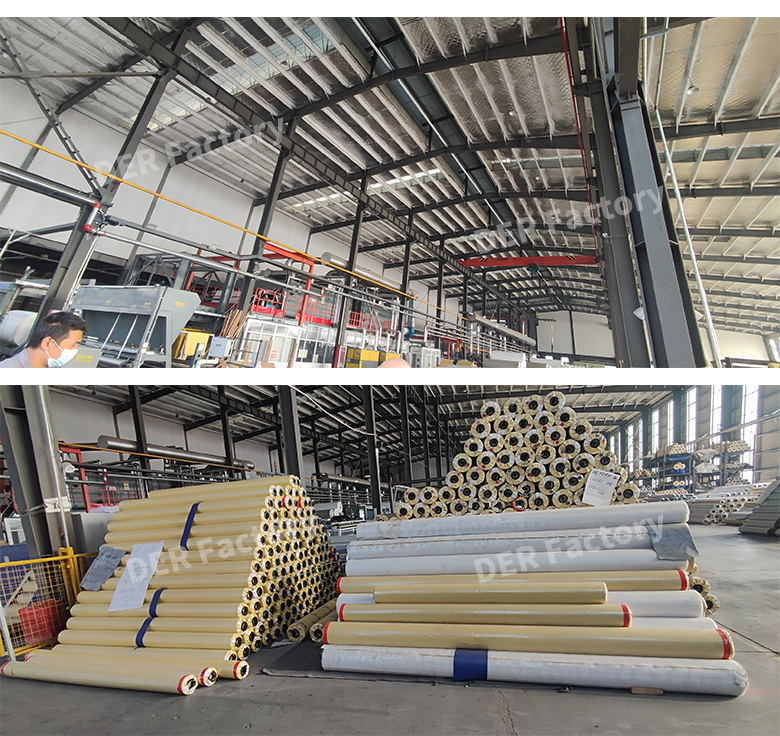
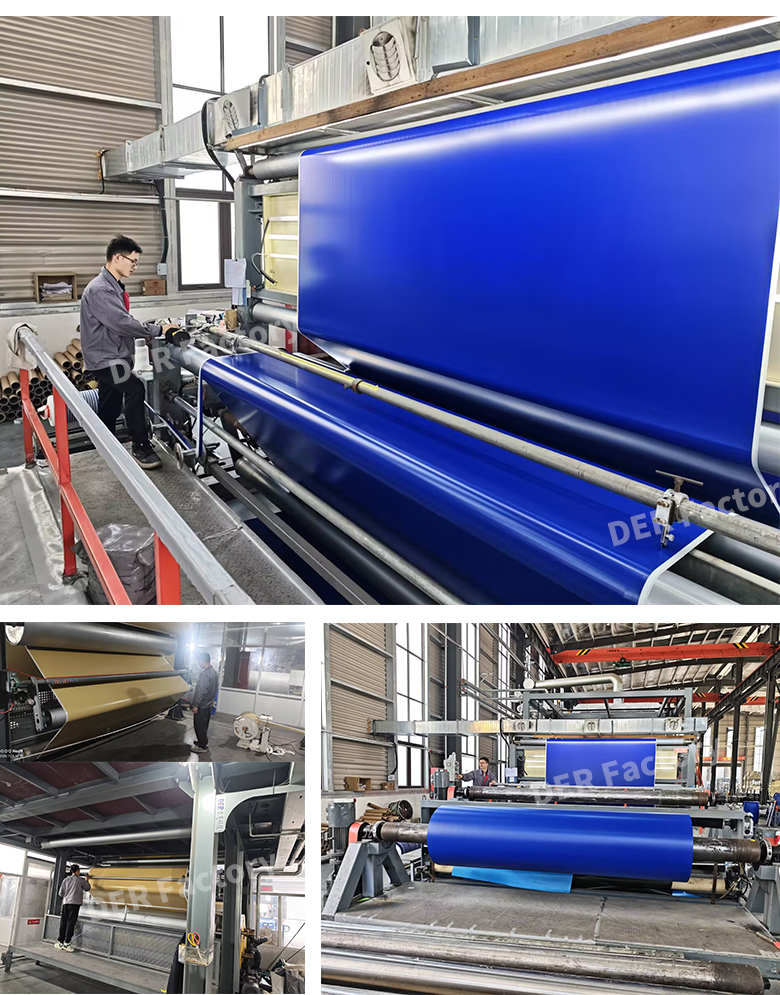
DERFLEX manufactures PVC-coated tarp materials and finished tarp programs for industrial, transport, construction and outdoor protection. For cold-climate sourcing, the useful advantage is not a generic “winter” label—it is the ability to discuss the material formulation together with base fabric, weight, roll/fold duty, reinforcement and fabrication.
For severe sub-zero projects, review the dedicated DERFLEX cold-resistant tarp range. For general heavy-duty programs, start from the DERFLEX tarp manufacturer page.
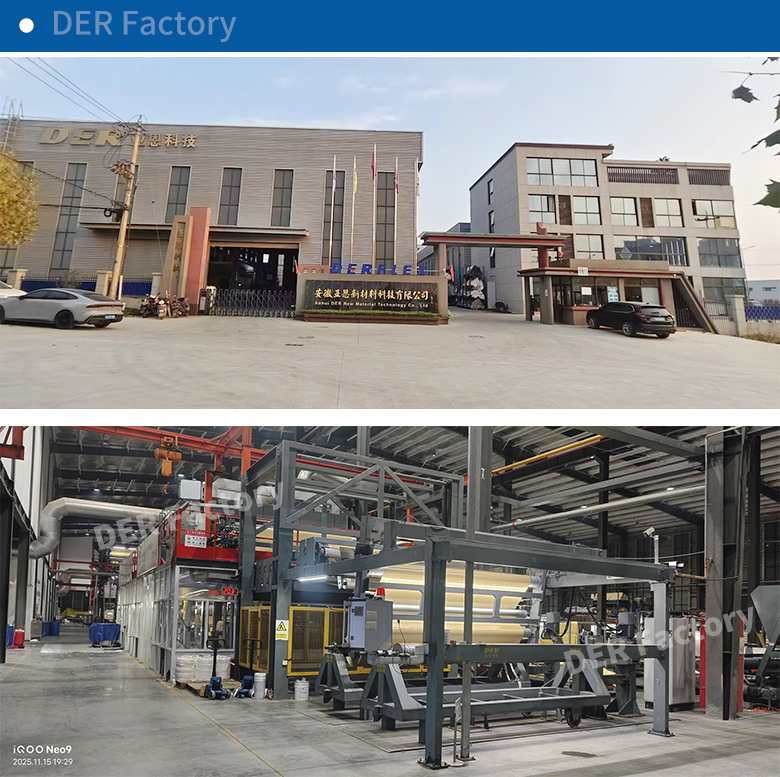
A better inquiry reduces back-and-forth and makes competing quotations easier to compare.
For reusable waterproof industrial covers, a cold-resistant PVC-coated polyester grade is often a practical starting point because it combines a reinforced textile core with a waterproof, weldable coating that can be formulated for low-temperature flexibility. The exact grade must be matched to the minimum temperature and handling cycle. PE, canvas and insulated systems can also be appropriate for different cost, breathability or thermal requirements.
They can if the selected formulation becomes too stiff for the ac, tual temperature and handling. Cracking risk is highest at folds, roll points, seams, grommets and other areas where strain is concentrated. Specify low-temperature flexibility and the minimum temperature at which the tarp will be rolled or folded.
A cold-crack rating generally refers to performance under a defined test condition. Service temperature is the real operating envelope of the finished tarp and includes movement, wind, seams, reinforcement, hardware, ice and repeated cycles. Ask for the test method and do not treat one laboratory number as a universal field guarantee.
Do not assume so. High GSM or thickness does not prove low-temperature flexibility. DERFLEX separates many standard PVC tarp directions, commonly listed around -30°C to +70°C, from special cold-resistant formulations listed for -40°C, -50°C and -60°C projects. The ordered grade and finished construction should be confirmed for the actual duty.
No. A cold-resistant tarp is selected to remain usable in low temperature, while an insulated tarp or concrete blanket is designed to slow heat loss. A winter construction project may need both cold-capable outer materials and an insulating layer.
Use adequate slope and support, prevent water pooling, remove dangerous snow accumulation, protect sharp contact points, avoid dragging stiff frozen fabric, and inspect edges, seams and tie-downs. A tarp should not be treated as a structural roof unless the complete supporting system is engineered for the load.
Provide minimum ambient and folding/rolling temperature, application, movement cycle, wind/snow exposure, material preference, dimensions, GSM or thickness if known, seams, hems, reinforcement, grommets/D-rings, quantity, destination and any named test or customer specification.
Send DERFLEX the real minimum temperature, whether the tarp must move while frozen, the application geometry and your finished-cover requirements. The discussion can then start from a realistic cold-weather envelope instead of a generic “heavy duty” label.