Buyer questions
Shipping container cover FAQ
What size tarp do I need for a 20 ft or 40 ft shipping container?
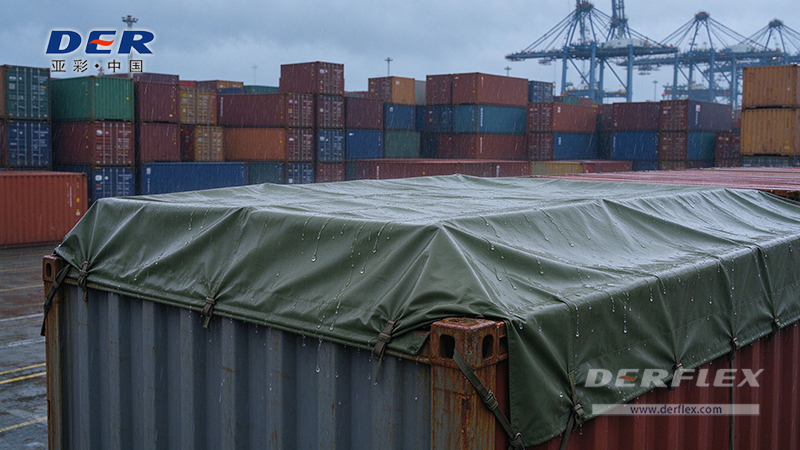
Use the actual container and an approved drawing, not its nominal length alone. Measure the supported cover path, side and end overlaps, corner reliefs and attachment positions. Roof-opening dimensions are not finished tarp dimensions, and covers can differ between container models.
Should I choose a 650 gsm or 900 gsm container tarp?
Compare handling weight, material construction and the required performance. DERFLEX publishes both material directions. For the same area, 900 gsm fabric has about 38% more mass than 650 gsm. This does not by itself prove greater finished-cover strength; verify the selected grade, seams, reinforcement and fit.
Are shipping container tarps waterproof?
PVC coated fabric can provide a continuous water barrier, but the finished cover also depends on seams, edge overlap, drainage, support and wear. Agree a finished-cover water-ingress check if the cargo requires it. A rain cover does not remove humidity already inside cargo or packaging.
How is a tarp secured to an open-top shipping container?
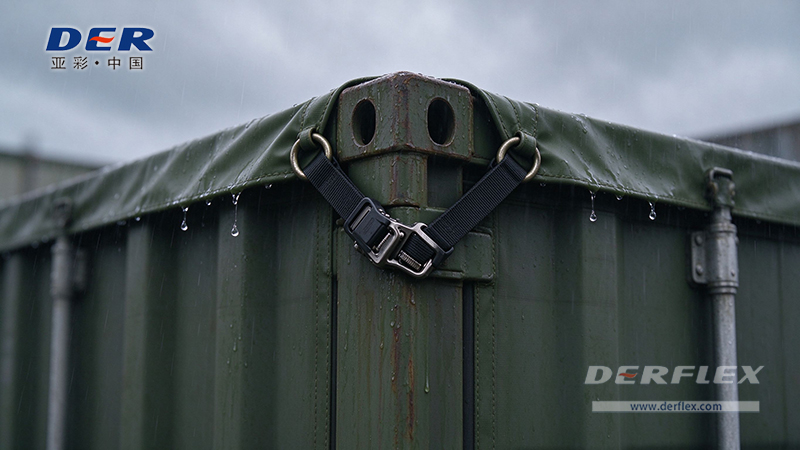
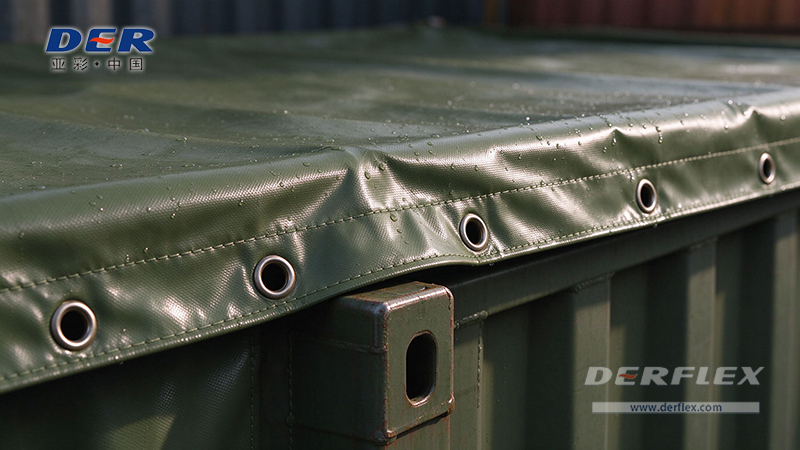
Use the attachment arrangement specified for the container, such as eyelets aligned with bars or rings and a compatible cable or strap system. Map the hardware positions and opening sizes on the drawing. Secure cargo independently; the weather cover does not replace cargo blocking or lashing.
Can DERFLEX supply custom replacement covers and OEM programmes?
DERFLEX can review drawing-based dimensions, PVC fabric options, seam construction, reinforcement, fastening details, colour, printing and packaging. Send the container configuration, drawing or sample, quantity and destination. Confirm the finished assembly and any accessories in the quotation scope.
What determines the price, MOQ and lead time?
Finished area, fabric grade, fabrication, reinforcement, hardware, printing, packaging and quantity affect the quotation. MOQ, sampling arrangements and production timing should be confirmed for the actual order. Compare suppliers using the same drawing, material specification and scope of supply.
[1] Container geometry: Hapag-Lloyd 20 ft open-top and 40 ft open-top fleet examples. Verify the specific unit before fabrication.
[2] Packing and securing: IMO/ILO/UNECE CTU Code, including cargo securing, condensation prevention and safe access guidance. Apply the operator’s instructions to the intended shipment.