


Customized Fabrics Manufacturer for OEM, Industrial, Architectural, Printing, and Performance Fabric Applications
DERFLEX supplies customized fabrics for buyers who need more than standard stock materials. We support distributors, converters, product manufacturers, project contractors, printing companies, brand owners, and procurement teams looking for custom coated fabrics, custom technical fabrics, custom printable fabrics, custom architectural fabrics, and OEM fabric solutions built around real application requirements.
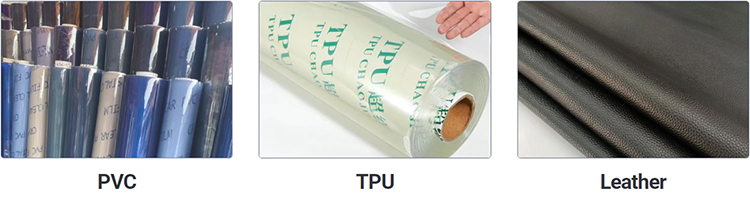
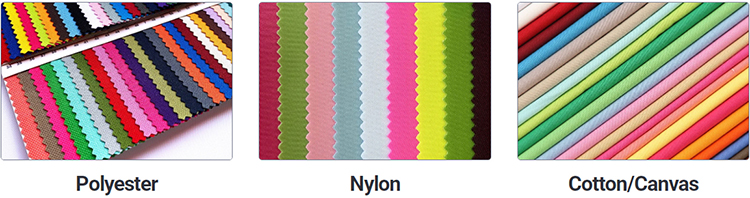
When buyers search for customized fabrics, they are usually not looking for one generic roll. They are comparing whether a fabric manufacturer can adjust weight, width, coating structure, strength, surface finish, color, printability, fire performance, packaging, and commercial delivery logic to fit the end use more accurately.
What Are Customized Fabrics?
Customized fabrics are textile materials engineered, adjusted, or finished to match a specific commercial or technical requirement instead of being offered only as fixed stock items. In practical B2B buying terms, customized fabrics can include tailored weight, width, coating type, base cloth, color, texture, printability, weather resistance, weldability, flame-retardant direction, packaging, branding, and other application-led details.
This is why the keyword “customized fabrics” attracts buyers from many industries. One customer may need custom PVC coated fabric for transportation covers. Another may need custom TPU fabric for inflatables or outdoor gear. A third may need custom printable fabrics for branding or display systems. Architectural buyers may need custom membrane materials for canopies, façades, and tensile structures. The common point is that stock material alone is often not enough.
A strong customized fabrics manufacturer does more than say yes to any request. The real value comes from understanding which adjustments are commercially useful, technically realistic, and repeatable in production. That is the difference between an inquiry that moves smoothly into long-term supply and one that becomes difficult after sample approval.
Why Buyers Search for Customized Fabrics Instead of Standard Stock
- The target application has performance requirements that generic fabrics do not match well.
- The buyer wants a supplier who can support OEM, private label, or custom product development.
- The final use requires special width, weight, coating, or print compatibility.
- The project needs more control over weather resistance, strength, flexibility, or surface behavior.
- The procurement team needs repeat-order consistency instead of one good sample followed by unstable later batches.
- The product line needs stronger brand differentiation than ordinary commodity fabrics can provide.
- The customer wants clearer lead time, export packing, testing direction, and technical communication.
Need a custom fabric recommendation based on your application?
Send your target use, material preference, width, weight, color, coating direction, performance expectation, estimated quantity, and delivery target. DERFLEX can recommend a more practical customized fabric route for quotation and supply.
Key Features of DERFLEX Customized Fabrics
1. Application-Led Material Design
Instead of forcing one standard roll into every use, DERFLEX helps match fabric construction to the actual job, whether the target is printing, transport, architecture, industrial protection, or inflatables.
2. OEM and Private-Label Support
Customized fabrics are often part of a larger product strategy. DERFLEX supports OEM and private-label supply logic with production, packaging, and repeat-order coordination in mind.
3. Flexible Base Fabric and Coating Choices
Custom programs may include different reinforcement directions, PVC, TPU, PU, printable or architectural coating options, and adjusted surface structures depending on the application.
4. Custom Width, Weight, and Finish
For many buyers, the real value of custom fabrics starts with the right width, gsm range, texture, gloss level, or weldability rather than a standard catalog specification.
5. Performance Matching
Waterproofing, UV resistance, abrasion behavior, flexibility, printability, flame-retardant direction, and environmental adaptation can be aligned more closely with the intended use.
6. Better Commercial Repeatability
Repeat orders matter. Good custom supply is not just the first order. It is the ability to deliver reliable later batches that behave like the approved construction.
7. Stronger Brand Differentiation
For product owners and distributors, customized fabrics can create a more defendable product position than ordinary commodity materials.
8. Export-Oriented Supply Logic
Large buyers also care about packing, roll handling, labeling, documentation, and communication speed, not only material performance on paper.
9. Multi-Industry Use Potential
From custom coated fabrics to custom technical textiles, one supplier relationship can sometimes support several product lines if the manufacturer has enough breadth.
Technical Specifications of Customized Fabrics
Because customized fabrics cover a wide range of end uses, the table below is a practical reference framework rather than one fixed stock specification. Final construction should be selected according to application, fabrication method, environment, compliance expectations, and commercial target.
| Specification Item | Typical Custom Direction | Buyer Value |
|---|---|---|
| Base Fabric | Polyester, technical textile reinforcement, application-led base cloth | Controls strength, stability, handling, and downstream fabrication behavior |
| Coating Direction | PVC / TPU / PU / printable coating / architectural membrane route | Matches use environment and performance expectation more accurately |
| Weight Range | Approx. 250–1500 gsm depending on application | Balances durability, flexibility, and commercial cost |
| Width | Custom width direction based on product line or fabrication workflow | Improves cutting efficiency and production practicality |
| Surface Finish | Matte / glossy / textured / printable / project-oriented finish | Affects appearance, print quality, dirt behavior, and brand perception |
| Color | Standard or custom color matching | Important for branding, OEM programs, and application alignment |
| Printing Compatibility | Digital / UV / screen / application-specific printable direction | Supports signage, graphics, branding, and visual communication use |
| Performance Add-Ons | Waterproof, UV-resistant, abrasion-focused, airtight, low-temperature or fire-retardant direction | Creates better fit between the fabric and the end-use environment |
| Packaging | Standard export or custom OEM packing | Reduces handling friction and supports private-label supply |
| Documentation Support | Project-oriented testing or specification communication | Helps procurement teams and downstream customers make decisions faster |
Looking for a custom fabric manufacturer with OEM and repeat-order capability?
DERFLEX supports custom development for buyers who care about material fit, stable production, lead time clarity, export handling, and long-term supply relationships.
Applications of Customized Fabrics
The reason this keyword is commercially strong is that customized fabrics serve many industries at once. Buyers are rarely shopping for “fabric” in the abstract. They are searching for a material system that fits their product, installation method, or end-use environment.
Why Customized Fabrics Matter More in Professional Procurement
- Standard catalog materials can create waste or performance mismatch when real application needs are more specific.
- Custom fabrics can improve fabrication efficiency, especially when width, handling, or weldability are tuned properly.
- OEM buyers often need better brand separation, not just a common stock item that competitors can buy too.
- Project buyers need clearer control over appearance, outdoor behavior, compliance direction, and delivery planning.
- Repeat procurement becomes easier when the manufacturer can reproduce the approved structure reliably.
This is why custom coated fabric supplier, OEM fabric manufacturer, customized technical textile supplier, and custom industrial fabrics manufacturer are all commercially related searches. Buyers want a supplier relationship that solves a specification problem, not just a quoting problem.
Why Choose DERFLEX for Customized Fabrics
Broad Product Logic
DERFLEX can support multiple custom fabric directions instead of limiting buyers to a single narrow category.
OEM and Custom Focus
We understand that many buyers need specification flexibility, market positioning, and private-label support rather than only standard materials.
Quality Control Awareness
Custom fabric supply is only useful when later production matches approved expectations. Consistency is essential for repeat business.
Lead Time Communication
Commercial buyers need realistic planning around samples, confirmation, production, packing, and shipment rather than vague timing.
Certification-Oriented Support
Where needed, custom programs can be aligned with fire performance direction, export expectations, or project-oriented documentation logic.
Export-Ready Cooperation
DERFLEX supports global supply logic for distributors, importers, project teams, and product manufacturers who need practical commercial coordination.
Comparison: Customized Fabrics vs Standard Stock Fabrics vs Generic Textile Options
Buyers should not assume that the cheapest starting option is the lowest total-cost option. In many categories, custom fabrics reduce waste, improve fabrication efficiency, and create better final product value than a stock material that only partially fits the job.
Need custom width, weight, color, coating, or packaging?
Tell DERFLEX your end use and target market. We can help structure a more suitable custom fabric program for industrial supply, architectural use, printing, inflatables, or branded OEM development.
Case Study: Custom Coated Fabric Program for a Multi-Application OEM Buyer
A buyer operating in several categories needed a more unified supply strategy for custom coated materials used in transport covers, outdoor protection products, and branded industrial applications. The main problem was not simply price. The buyer had been using several suppliers, with different quality levels, inconsistent widths, unstable color matching, and unclear lead time communication.
Key Challenges
- Different batches behaved differently from the approved sample.
- Product teams needed custom surface and color directions to support brand identity.
- Procurement wanted better control over lead time and documentation.
- Downstream fabrication teams wanted more stable material handling and production behavior.
DERFLEX Support Logic
- Reviewed the actual use cases instead of quoting one generic stock roll for everything.
- Narrowed fabric directions by application, not only by broad category name.
- Aligned custom width, coating direction, surface finish, and packaging expectations.
- Built the quotation discussion around repeat supply practicality and future order consistency.
Result
The buyer gained a more controlled custom fabrics sourcing path with stronger product-line consistency and a better foundation for repeat orders. This is a typical reason why customized fabrics manufacturing is increasingly important for serious B2B buyers across industrial and commercial markets.
Related DERFLEX Pages for Buyers Researching Customized Fabrics
These internal links are relevant to customized fabrics because they move users from the broad custom-fabric search intent into specific product and application directions.
Frequently Asked Questions About Customized Fabrics
1. What are customized fabrics?
Customized fabrics are materials adjusted to fit a specific product, project, or performance requirement rather than being supplied only as standard stock.
2. Can DERFLEX provide OEM and custom fabric manufacturing?
Yes. DERFLEX supports OEM and custom manufacturing programs for coated fabrics, printable fabrics, architectural fabrics, TPU fabrics, and technical textile applications.
3. What can be customized in a fabric program?
Common custom points include width, weight, base cloth, coating type, color, gloss, texture, printability, packaging, and application-oriented performance direction.
4. Are customized fabrics only for large buyers?
No. Large-volume buyers often benefit more, but custom fabric programs can also be valuable for niche brands, specialized projects, and technical applications with clear requirements.
5. Why does repeat-order consistency matter so much?
Because later orders must match the approved material logic. If later production differs, downstream fabrication, product quality, brand image, and project performance can all be affected.
6. Which industries most often use customized fabrics?
Transportation, architecture, tents, inflatables, awnings, industrial protection, printing, branded OEM products, and technical textile markets all use custom fabrics regularly.
7. How should buyers choose a customized fabrics supplier?
Compare technical matching ability, OEM flexibility, communication quality, lead-time realism, quality control, export experience, and long-term reliability, not just the initial price.
Ready to build a more practical customized fabrics program?
If you are sourcing custom fabrics for industrial, architectural, transport, printing, inflatable, or OEM product applications, DERFLEX is ready to help you move from requirement to quotation more efficiently.
Contact DERFLEX for Customized Fabrics
To get a faster and more accurate quotation, send your target application, material preference, estimated quantity, desired width, weight range, surface requirement, color, packaging request, certification direction, and delivery target. DERFLEX can help you compare the most suitable custom fabric solution for your commercial or project use.