



Flame Retardant Tarps After Cleaning and Weathering
Flame retardant tarp cleaning is part of the performance specification. For rental fleets, contractors and fabricators, the key question is whether the exact PVC coated fabric, maintenance process and exposure history are covered by the evidence supplied.
Plan tarp retesting around a defined material and an approved procedure. Send DERFLEX your destination market, target standard and maintenance workflow to discuss material supply, sampling and the documents needed for your project.
Build your retest brief
When does a tarp need retesting?
Review the evidence before continued use whenever the material, cleaning method, exposure history or finished construction falls outside the report’s documented scope. Retest where the applicable standard, approving authority or agreed project plan requires it, or where evidence is insufficient to support the claimed condition.
There is no universal “retest after every wash” rule or service interval that applies to all flame retardant tarps. A clean appearance and an intact label do not demonstrate retained flame performance.
Check what changed before choosing the next test.
The matrix below is a procurement review tool. It identifies information to resolve with the material supplier, laboratory and responsible project reviewer; it does not issue an acceptance decision.
| Situation | What to establish | Next step |
|---|---|---|
| Within documented scope Same approved material and maintenance process | Report includes the applicable post-cleaning / exposure condition; material identification and service records match. | Follow the agreed inspection and review schedule. Keep records; continued acceptance remains subject to project requirements. |
| Scope review New cleaner, stronger solution or changed wash process | Compare cleaner chemistry, concentration, temperature, contact time, mechanical action, rinse, drying and cycle count with the approved process. | Obtain a compatibility and scope review. Define additional post-cleaning testing when required before making a retained-performance claim. |
| Scope review Outdoor exposure exceeds the documented condition | Identify exposure location, dates, orientation, rain / moisture, solar exposure, storage and any existing weathering evidence. | Agree representative sampling and any relevant conditioning and flame tests. Do not extrapolate an untested service life. |
| Construction change New color, print, topcoat, repair or reinforcement | Determine whether the supplied variant or modified assembly is explicitly covered by the report or an accepted extension of scope. | Ask the laboratory / acceptance reviewer to decide what additional evidence or testing is needed. |
| Condition concern Cracking, coating loss, heat damage or oily deposits | Record defects and contamination before cleaning, repair or disposal. Establish whether representative sampling is possible. | Keep the affected tarp out of service requiring verified FR performance pending responsible review. Testing, approved repair or replacement may be needed. |
| Evidence missing Unknown model, batch or maintenance history | Recover labels, purchase records and the complete report. A report for a similar-looking tarp is insufficient. | Do not assume coverage. Resolve identity and acceptance requirements before relying on an FR claim. |
Lock the material identity before assessing durability.
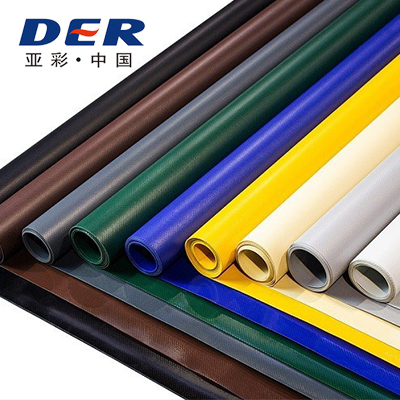
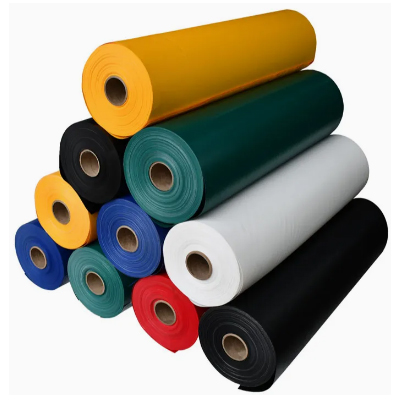
“PVC tarp” is a material category, not a tested specification. Coating formulation, reinforcing textile, mass, color, surface finish and fabrication all need to be identifiable in the project file.
A report may cover one construction or an explicitly assessed range. Coverage of another weight, color or finish must come from the report or accepted supporting assessment, rather than a sales description.
Start with the PVC tarpaulin material range, then agree the exact supply code and variant before selecting samples.
Distinguish the construction
FR additives in a PVC compound, a separately applied treatment and an inherently FR textile are different material routes. None of those descriptions alone proves durability under a particular cleaning or weathering process.
For this guide, the main supply discussion is FR PVC coated polyester. Do not transfer a cleaning prescription from treated canvas, PE sheeting or protective clothing.
| Controlled item | Record for the project | Scope question |
|---|---|---|
| Product & production identity | Supplier product code, formulation revision, roll / batch identifiers and specimen location. | Can the test specimen be linked to the supplied material? |
| Fabric & coating | Base textile, coating / lamination route, nominal GSM, thickness and agreed tolerances. | Does the report identify or explicitly cover this construction? |
| Variant & surface | Color, lacquer / topcoat, printing system, print coverage and any additional treatment. | Is this variant included, or is a scope extension needed? |
| Final fabrication | Seam, hem, webbing, patch, repair adhesive, window and accessory details as relevant. | Is evidence for base material sufficient for the specified end use? |
| Condition & history | New or used state, cleaning record, outdoor exposure, contamination, repairs and storage. | Does the condition claimed match the condition tested? |
Record the whole cleaning process, not just the detergent.
Use the written care procedure approved for the exact fabric and finish. If none is available, ask for one before selecting chemicals, temperatures or equipment. A spot check may reveal surface incompatibility; it cannot verify flame performance.
| Process variable | What to record | What must be confirmed |
|---|---|---|
| Chemical system | Cleaner trade name, product revision / SDS, dilution, water quality and any disinfectant or pretreatment. | Compatibility with the coating, topcoat, print, seam and repair components. |
| Time & temperature | Solution / surface temperature, soak or dwell time and time between cleaning stages. | The approved limits, rather than a generic “warm water” instruction. |
| Mechanical action | Wipe / brush / machine method, tool contact and, if approved, pressure-washer settings and distance. | No unapproved abrasion, steam cleaning or jetting process. |
| Rinse & drying | Rinse method, residue check, drying method / temperature and condition before folding or testing. | Defined removal of residues and the required pre-test specimen conditioning. |
| Repeated cycles | Cycle definition, number completed, intervening storage and observations after each stage. | Cycles required by the applicable method plus any separately agreed service simulation. |
Keep chemical changes visible.
Do not treat bleach, solvents, degreasers, disinfectants or a pressure washer as automatically acceptable for FR PVC tarps. Obtain construction-specific approval. A maintenance method suitable for another supplier’s fabric may fall outside this material’s care instructions.
Use the general tarp cleaning and storage guide for routine care planning, then apply the more specific FR material procedure.
Cleaning is not recertification.
Removing dirt, restoring a coating’s appearance or applying an aftermarket FR treatment does not automatically restore a previous test result. Any treatment, residue or repair changes the condition that needs review.
Record contamination before cleaning and tell the laboratory if the service condition includes oil, dust, fuel, overspray or biological deposits.
Connect each exposure condition to a matching report.
Ask the laboratory to define the required conditioning, test route and specimen numbers. Project-specific cleaning and weathering studies can add useful evidence, but they must not silently replace conditioning prescribed by the applicable standard.
As-produced reference specimens under the required test conditioning.
Separate specimens exposed to the approved cleaning procedure and defined cycle count.
Separate specimens subjected to the agreed weathering / exposure route.
Additional group when the agreed claim requires a defined sequence of cleaning and weathering.
These sample labels are a planning example, not standard test designations. Group selection, sequence, replicate count, sampling direction and acceptance criteria require laboratory and project approval. Each flame test uses its own specimens.
Define what “weathered” means.
For laboratory exposure, record the apparatus, light source / filters, irradiance and wavelength band, temperature control, moisture / spray / condensation cycle, exposure time or radiant dose, mounting and exposed face. For natural exposure, record location, season, dates, orientation, slope, shading and environmental observations.
The outdoor tarp service guide covers handling and environmental stresses. Retained flame performance needs its own evidence.
Keep durability conclusions bounded.
An accelerated exposure is a defined laboratory condition. It does not, by itself, establish how many outdoor years a tarp will remain compliant. Link any service-life interpretation to an appropriate, supported correlation for the specific material and environment. [3]
Keep flame propagation results separate from tensile, tear, seam and waterproofing results. A tarp can meet one performance requirement while needing review against another.
This guide does not present a DERFLEX post-cleaning or post-weathering pass result. A project-specific durability claim needs an approved test plan and the corresponding report for the stated material and exposure conditions.
Audit the report against the condition you are claiming.
Confirm the acceptance route
Name the destination market, end use, relevant standard and edition, test method, acceptance criteria and responsible reviewer. Do not assume that NFPA 701, French M classifications and DIN 4102 classifications are interchangeable.
Match the material and variants
Check sample description, code, mass, color, surface and traceability. Resolve any differences between the quoted product, tested specimen and delivered batch.
Read the conditioning details
Identify whether results concern as-produced, cleaned, weathered or sequentially conditioned specimens. Check exposure records and all deviations, rather than only a summary certificate.
Check the complete result
Review specimen numbers, individual observations / measurements, applicable acceptance criteria, photos where provided and the laboratory conclusion. Confirm that the laboratory’s relevant competence and scope meet the project requirement.
Control changes after testing
Define how a new formulation, color, finish, print, repair material or maintenance method triggers scope review and, when needed, additional testing.
Record the release decision
Link the report number, approved plan revision, supplied batch and acceptance record. Agree future inspection and retest triggers with the responsible project party.
NFPA 701: distinguish initial performance from durability.
Where durability to cleaning or weathering is claimed, NFPA 701 addresses testing in the as-produced condition and after the applicable cleaning or exposure procedures. Have the laboratory confirm the adopted edition, applicable method and required conditioning for your material and end use. [1] [2]
A small on-site burn check is not a substitute for the required laboratory evidence. Flame retardant does not mean fireproof, a fire barrier rating or suitability for direct flame, hot work or wildfire exposure.
For the material supply discussion, compare the FR tarpaulin construction options. For conversion into finished covers, review the flame retardant vinyl tarp fabrication options and identify any added components that need assessment.
Prepare a material and tarp retesting brief.
DERFLEX supplies PVC coated fabric and custom tarp options. A useful inquiry connects the material order with the intended maintenance process. Confirm sample availability, test coordination, documentation, MOQ and lead time for the actual specification.
Send the technical context.
- Destination market, end application and responsible acceptance party.
- Target standard, edition / method, required class and document format.
- Product code or sample, GSM / thickness, color, coating, topcoat and print.
- Cleaner, dilution, temperature, contact time, equipment, rinse, drying and frequency.
- Outdoor exposure and storage history; photos of damage, repairs or contamination.
Add the supply requirement.
- Roll width / length, or finished cover dimensions and drawings.
- Seams, hems, reinforcement, windows, fittings and repair materials.
- Trial quantity, bulk demand, packaging and delivery destination.
- Available report numbers, care instructions and the proposed test plan.
- The exact durability statement you need the evidence to support.
Start with a quick scope check.
This tool organizes your inquiry. It does not assess compliance or authorize continued use. No information is sent from this tool.
Recover the material identity, complete report and maintenance history. Ask the laboratory and responsible reviewer to define any sampling or retesting needed.
Flame retardant tarp cleaning: related questions.
Does washing remove the flame retardancy of a PVC tarp?
It depends on the specific construction and cleaning process. A treated textile and an FR PVC compound are different systems, and neither a material label nor a clean surface proves retained performance. Follow the care procedure for the exact product and confirm that the evidence covers the relevant post-cleaning condition.
How often should flame retardant tarps be retested?
Use the interval or triggers required by the applicable standard, approving authority and agreed maintenance plan. There is no single interval for every tarp. Review the evidence when cleaning, exposure, formulation, fabrication or condition changes, and ask the responsible reviewer whether retesting is required.
Can one fire test report cover every color, weight and repaired tarp?
Only the products and conditions within its stated scope, or an accepted supporting assessment, can be relied on. Compare the exact construction, color, mass, finish, print and repair materials with that scope. Do not extend a report to all DERFLEX models or to every used condition.
Can accelerated weathering hours be converted into outdoor years?
Not without an appropriate, supported correlation for the specific material, exposure and property being assessed. Report the actual laboratory conditions and duration or dose. A weathered specimen result alone does not establish an outdoor compliance period or warranty.
Is a clean tarp with an intact FR label enough for reuse?
No. Appearance and labeling help with inspection and traceability, but they do not measure retained flame performance. Check the material identity, maintenance and exposure records, complete report and project acceptance requirements. Escalate visible damage, deposits or missing records to the responsible reviewer.
Can I apply an aftermarket flame retardant spray after cleaning?
Do not assume that an aftermarket treatment is compatible with a PVC coating or restores a previous result. Obtain written approval for the specific material and treatment. Review any effect on the coating, printing, welding and report scope, then obtain the testing or acceptance evidence required for the modified condition.
Make the next material order easier to verify.
Send DERFLEX the market, standard and maintenance process first. Add the material specification, dimensions and quantity so the supply discussion and validation request refer to the same product.
Request a material & retest reviewInclude with your inquiry
- Destination & end use
- Target standard & edition
- Material / report identification
- Cleaning & weathering history
- Dimensions & order quantity
Project-specific evidence and test arrangements must be confirmed before making a durability claim.
- NFPA 701 — Standard Methods of Fire Tests for Flame Propagation of Textiles and Films. Confirm the edition adopted for the project.
- Element — Flame Propagation Testing: CAN/ULC-S109 vs NFPA 701. Laboratory discussion of applicable conditioning and durability claims.
- ASTM G151 — Accelerated exposure using laboratory light sources. General interpretation of exposure conditions and results; not a flame performance test.
The specimen grouping, review matrix and inquiry checklist are planning aids developed for this guide. They do not reproduce a test standard or constitute an approved experimental plan.