News
Company News

PVC Tarp Cold Flex Test: Folding Cycles & Seam Checks | DERFLEX

Update:2026/10/20 20:43:44 Views:
Industrial fabrics / Technical guideDiscuss your cold-fold duty

DERFLEX / Heavy duty PVC tarps / Repeated cold folding

Temperature + movement + evidence

Cold Folding Cycles in Heavy Duty PVC Tarps

A PVC tarp cold flex test should describe what happens when the material is folded repeatedly at a controlled temperature. For truck-cover OEMs, tarp fabricators and reusable-cover buyers, the useful questions are the bend radius, movement speed, cycle count and behavior at welded seams.

Use the brief below to define a comparison of the selected PVC-coated polyester construction and production weld. Submit your minimum handling temperature, folding method and use frequency so the material and finished-tarp trial can be discussed together.

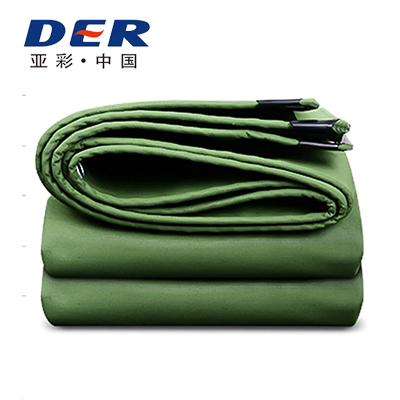
Green PVC tarpaulin folded into a compact sheet, illustrating stored folds rather than a laboratory test
Real DERFLEX material photograph. This folded sheet illustrates handling geometry; it does not document a measured cold-fold cycle result.
Actual sheet temperatureKeep the material cold during motion
Defined fold pathRadius, angle, speed and tension
Traceable cycle countCheckpoints and stop rules
Production seamTest the fold and weld relationship
What does the test establish?

Cold-fold cycles answer a different question from a cold-crack rating.

A repeated PVC tarp cold flex test evaluates damage after a defined number of bending movements at a specified material temperature. A meaningful result includes specimen construction, conditioning, bend geometry, cycle definition, inspection intervals and the acceptance rule. A temperature and cycle count alone are incomplete.

A low-temperature bend result does not establish how many repeated folds a finished tarp can tolerate. Keep general cold-crack interpretation in the existing low-temperature flexibility guide; use this section for cyclic handling. Specify the actual PVC-coated tarpaulin construction before comparing samples.

Choose the method before comparing numbers

Separate bend tests, flexing tests and the finished-tarp trial.

Test basisQuestion it addressesWhat must remain explicit
ISO 4675:2017
Low-temperature bending
How does conditioned coated fabric respond to the prescribed bend?Method edition, temperature, conditioning and acceptance. It provides no general conversion to service performance.
ISO 7854:1995
Repeated flexing
How does coated fabric resist damage under a specified flexing method?Which method, specimen arrangement, atmosphere, cycles and assessment. Naming the standard alone does not demonstrate cold cyclic performance.
Project-specific cold cycling
Application screening
What happens under an agreed combination of cold temperature, fold geometry and seam placement?Fixture drawing, full operating conditions, controls and departures from any referenced standard. A modified test must be identified as modified.

Method references: ISO 4675 and ISO 7854. The laboratory must use the complete applicable method for any conformity claim. For the wider operating envelope, consult the tarp temperature-rating guide.

Proposed screening plan / CF-01 / Revision 1

Make the folding sequence reproducible.

CF-01 is a proposed mandrel-fold comparison for discussion with a competent laboratory. Before running it, approve a dimensioned fixture drawing and production-seam record. The plan below fixes an example condition; a different field temperature, radius or folding action needs a separately identified test condition.

VariableProposed CF-01 conditionRequired record
Material identificationOne identified production lot, color, finish and construction. Record measured mass and thickness.Grade, lot, roll location, coating faces A/B, yarn directions and specimen IDs.
Coupon and mounting50 × 250 mm strips; 150 mm free span between the inner grip edges in the flat position. Center the fold in that span.Actual dimensions; fixture drawing with grip offsets, contact surfaces and compensating travel.
Cold exposureTarget −20 °C, control band ±2 °C. Pre-cool fixture and specimens for at least 4 h; begin only after a matched witness specimen remains within the band for 30 min.Air and witness-material temperature traces, sensor location, conditioning duration and time outside the band.
Bend path10 mm inner bend radius on a 20 mm diameter mandrel. Fold rotation: 0° flat → 180° → 0° flat. Face A is on the outside of the bend for this condition.Mandrel size, surface, rotation stops, grip travel and a video of one complete cycle.
Motion and load4 s to fold, 1 s dwell, 4 s to unfold, 1 s dwell: 6 complete cycles/min. Compensating grip travel maintains 5 ±1 N strip tension.Measured timing, tension trace and calibrated cycle counter. Control the actual motion, not only motor speed.
CheckpointsInspect at 0, 100, 500, 1,000 and 2,000 complete cycles. Keep coupons cold during inspection; log every pause.Last clear checkpoint, first observed defect, actual stopped count and exposure time.
Replicates and controlsPropose 5 independent coupons per orientation, construction and condition. Include cold-conditioned unflexed controls and matched +23 ±2 °C flexing controls.Actual n, every individual outcome and exclusions. This sample count is a screening proposal, not statistical proof of fleet reliability.
Stop rule and endpointStop an affected coupon at the first visible coating fracture, exposed textile, delamination or seam opening; otherwise stop at 2,000 cycles.Pre-agreed inspection lighting and magnification; image scale, defect location and endpoint classification.

Important distinction: −20 °C and 2,000 cycles are example screening conditions. They are not a DERFLEX product rating, a recommended threshold for every application or an equivalent number of winters. Sub-zero performance must be approved for the selected grade and actual assembly.

Freeze the comparison variables

Cut coupons across documented roll locations. Keep coating, color, thickness, manufacturing lot and weld settings traceable. Record the long-axis relationship to warp and weft using the fabric-direction cutting guide. If both faces may be folded outward in service, run a separate face-B-out condition.

Preserve the cold condition

Use a chamber-compatible fixture so movement occurs at the target material temperature. A freezer soak followed by repeated folding in a warm room is a different exposure. If inspection requires removal, record time and temperature, recondition, and identify that interrupted protocol separately.

Record first observation honestly

If the coupon is clear at 500 cycles and cracked at 1,000, report the first observed crack within (500, 1,000]. Do not label 1,000 as the exact initiation cycle. At the final checkpoint, report “no crack observed through 2,000 cycles under CF-01,” with actual specimen n and conditions.

Keep follow-up tests comparable

Use separate, method-compatible specimens for destructive strength or adhesion tests. Agree their flexing geometry before testing. Compare exposed and cold-conditioned unflexed controls using the same specimen width, method and test temperature. Report any recovery period; recovered room-temperature strength does not describe strength while frozen.

The fold–weld relationship

Test where the tarp changes stiffness.

The flat sheet and a welded overlap have different thickness and bending geometry. A seam check should identify whether the crease runs along a weld, crosses its edges, or stays in the single-layer panel. A fabric-only result cannot describe all three arrangements.

Two proposed fold and seam arrangementsLeft: fold line parallel to a welded overlap, with position relative to each weld toe recorded. Right: fold line crosses the overlap and its two toes. This is a placement schematic, not a fixture drawing or test result.A / Along the weldB / Across the weldDashed line = fold axisBlue band = welded overlap

Placement schematic only. The approved fixture drawing must define clearances, contact points and motion; this illustration is not a laboratory apparatus specification.

Along the weld

Record whether the fold is on the overlap centerline or at a weld toe, and measure its offset. Separate tests at the two toes may be needed if the weld is asymmetric. Inspect each coating face and the sheet next to the seam.

Across the weld

Document overlap width, seam thickness and the position of both toes along the crease. Look for coating fractures, lift at the overlap edge and damage in the adjacent textile. Do not pool the results with an along-weld arrangement.

Use the intended production welding process. Retain overlap dimensions, machine identification, heat or power settings, speed or dwell, pressure and the actual seam photo. If a folded hem, webbing or pocket lies in the operating fold, add a separately documented finished-detail trial.

Tarp fold cracking / What to look for

Separate an appearance change from a functional failure.

ObservationRecord it preciselyNext decision
Whitening or a pale creaseFace, location, checkpoint, inspection temperature and whether it remains after agreed recovery.Do not automatically call it a crack or a pass. Check the surface at the agreed magnification and apply the stated appearance criterion.
Visible coating fractureLength, orientation, scale image and whether textile is exposed.Apply the agreed stop rule. Assess barrier performance separately if relevant.
Overlap lift or seam openingWhich weld toe, opening dimensions, fold orientation and production-weld record.Review the seam process and geometry; use a separately agreed seam-strength or peel assessment.
Leakage after cyclingSpecimen ID, test method, pressure/head, duration and test temperature.Compare to matched controls. Visual inspection alone does not establish waterproofness.
No defect by the stop countActual cycles, n, condition and inspection resolution.Report the tested limit. Do not infer unlimited folding or predict years of service.

For existing field damage, use the tarpaulin failure-analysis guide to document other contributors before attributing every split to low temperature. Frozen debris, abrasion, notches and tension should be identified as separate exposure variables.

Evidence that another lab can examine

A usable report preserves every specimen result.

Publish the protocol revision with a fixture drawing, conditioning and temperature log, raw specimen records, sample count and annotated photographs. Include both favorable and unfavorable outcomes. A summary such as “cold-flex passed” cannot be independently interpreted.

  • Before cycling: each face, fabric-direction mark, sample ID, dimensions, baseline defects and weld geometry.
  • At checkpoints: the same crease and seam locations with a scale, cycle counter and temperature record.
  • At failure or stop: first observed damage, reason for stopping, raw follow-up values and excluded samples with reasons.

When reporting retained seam strength, identify the post-cycle and control groups and use the same measurement basis. State whether a percentage is a ratio of group means or a mean of paired ratios. Never assign a percentage to a coupon that has no measured strength value.

Make the test represent the job

Match the motion before changing the cycle target.

Handling patternDefine before testingUseful companion trial
Repeated fold at one storage creaseFold direction, minimum radius, cold dwell, compression during storage and folds per handling event.Same-crease cycling of flat fabric and the actual hem or seam location.
Roll-up truck or trailer tarpCore diameter, roll build-up, travel, tension, seam orientation and snow/ice condition.A representative roll-and-unroll assembly. A sharp-fold coupon is not a direct substitute.
Concertina or reverse foldingAlternating faces, changing curvature, spacing between creases and support contact.A reverse-bend or assembly sequence identified separately from one-direction CF-01.
Cover folded only after warmingLowest handling temperature, warming procedure and static cold exposure.A trial reflecting that procedure; do not describe it as repeated folding at the lowest storage temperature.
Related buyer questions

Questions about cold folding and weld behavior

What is a PVC tarp cold flex test?

It is an evaluation of bending behavior under specified cold conditions. For repeated-fold qualification, the report must define the material temperature, fold path, radius, load, cycle count, inspection method and acceptance rule. A general “cold flex” label does not identify those conditions.

Does a cold-crack pass prove resistance to repeated folding?

No. A specified low-temperature bend result and a repeated-fold result describe different exposures. Request cyclic evidence for the selected material, seam arrangement and handling geometry if the tarp must be folded repeatedly while cold.

How many folding cycles should a heavy duty tarp pass?

There is no universal cycle target. Define the field movement, folds per event, frequency, environment and failure consequences before agreeing a test target. CF-01's 2,000-cycle stop is a proposed screening limit, not a general acceptance threshold or a service-life prediction.

Why can tarp fold cracking begin near a welded seam?

A welded overlap changes local thickness and bend geometry. The crease may fall within the overlap or beside a weld toe, and damage can occur in the adjacent coated sheet as well as in the seam. Record the fold position and compare along-weld and across-weld arrangements separately.

Is a white fold line automatically a failed tarp?

No. Whitening is an observation that needs a defined inspection and acceptance rule. Record whether a fracture, exposed textile, seam opening or leakage is present. Do not classify a visual mark as a coating crack without checking it.

What should I submit to DERFLEX for a cold-fold review?

Start with the lowest material temperature during handling, a description or video of the fold or roll motion, and movements per day or week. Add the bend radius or roll diameter, material construction, seam drawing, quantity, destination and the evidence required for approval.

Start with three operating details

Tell us how cold, how it folds and how often.

DERFLEX supplies PVC-coated fabrics and custom tarp solutions. For a heavy duty tarp program, discuss the material construction and production seam together. Ask for a test plan and the available evidence for the exact grade; confirm laboratory scope, samples, pricing and lead time for the project.

Your enquiry: minimum handling temperature + fold or roll description + use frequency. A dimensioned seam drawing and a short handling video make the discussion more useful.

The brief builder works in your browser. Copy the result into the DERFLEX enquiry page and attach drawings or video there. It does not submit your information automatically.

Prepare your test brief

Consulting Services
+86-021-54361792 / 54361798
Email
sales@derflex.com