Repeated use
Discuss coating adhesion, fold behavior, wear zones and representative weld samples. A heavy fabric can still fail at an unprotected contact corner.




Dry fertilizer storage / Custom cover supply
Plan the cover around your stock, your storage bay and the way you open it.
DERFLEX supplies custom PVC coated polyester fertilizer storage tarps for bagged inventory, bulk storage bays and approved temporary storage arrangements. Define rain exposure, contact conditions and operating access before fixing the fabric and finished size.
Source a fabricated fertilizer cover, cut panels or roll material for local conversion. Welded joins, reinforced edges, attachment details, color and OEM packaging can be discussed for your specification. Send the fertilizer identity, dimensions and quantity to start a quotation.
The direct answer
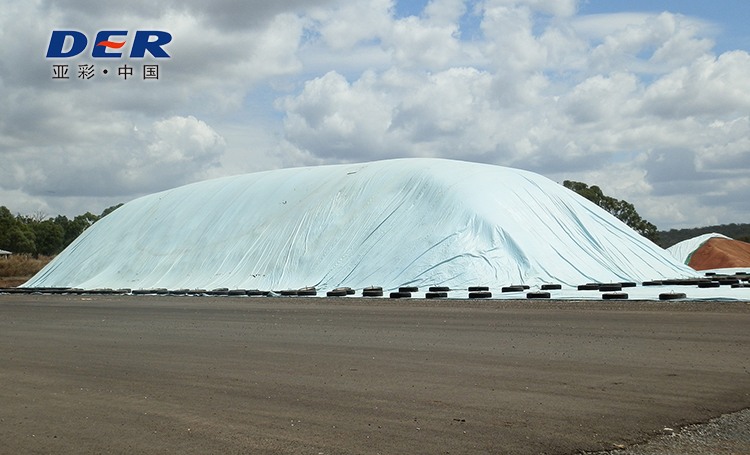
A fertilizer storage tarp is a flexible weather cover placed over dry fertilizer bags or an approved bulk storage area to limit direct rain and surface contamination. Its specification includes the fabric, finished coverage, seams, perimeter restraint and access arrangement.
A fertilizer tarp can shed rain through its intact surface. Humid air, a wet floor, damp stock and condensation can still introduce moisture. The cover cannot independently control those routes.
Keep the fertilizer supplier's storage instructions, packaging requirements and site moisture controls in the purchasing brief. For a broader product overview, see the DERFLEX fertilizer cover range.
01 / Storage format first
The first buying question is where the cover operates and how often it moves. Use the storage format below to define the drawing, then qualify the material against the actual fertilizer and exposure.
| Storage situation | Cover direction to evaluate | Information that changes the order |
|---|---|---|
| Bagged fertilizer on pallets | A fitted cap or sheet with defined side drops, protected contact corners and an accessible lower fixing edge. Retain the original packaging. | Maximum stack envelope, pallet projection, packaging condition, wind exposure and ground clearance. |
| Dry bulk in a covered bay | A removable sheet or sections that keep the protected portion covered during material withdrawal. Plan clean storage for the opened panel. | Bay width, wall heights, stock profile, loading face, overhead obstructions and daily opening routine. |
| Approved outdoor bulk storage | A cover layout following the pile surface, with reviewed joins, perimeter restraint, runoff routes and manageable sections. | Whether outdoor storage is permitted, maximum pile profile, base condition, product contact, local weather and restraint design. |
| Seasonal distributor inventory | Repeat-size covers with position labels, agreed folding pattern and protection at frequently handled edges. | Number of stacks, cover reuse cycle, crew and equipment, package dimensions, identification and cleaning procedure. |
Fertilizer type and SDS come before material approval. A weather cover does not authorize an outdoor storage arrangement or replace a containment system.
02 / Material choice
Evaluate PVC coated polyester when repeated handling, welded fabrication and reinforced fixing details are central to the job. Evaluate a suitable reinforced PE cover when lower handling mass or a shorter storage cycle is the priority. Compare the actual grades and completed joints before choosing.
The woven reinforcement carries tension; the coated surface provides the rain barrier. Fabric construction, surface finish and weld compatibility need to be agreed together. Review PVC tarpaulin material options before specifying roll goods or a finished sheet.
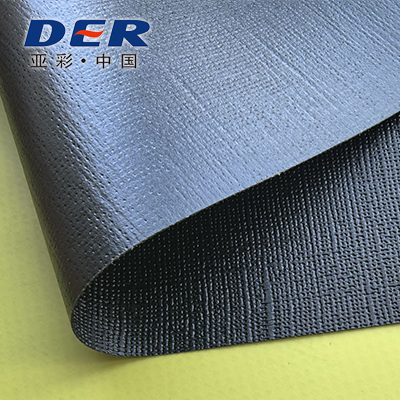
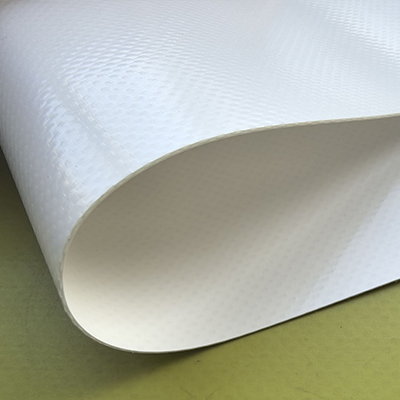
Discuss coating adhesion, fold behavior, wear zones and representative weld samples. A heavy fabric can still fail at an unprotected contact corner.
Compare handling mass, fold size and opening equipment. Sectional covers may make operation easier, but add joins that need weather and restraint review.
Define sunlight, local temperatures and storage duration. Request evidence for the selected weathering requirement; a color name or “UV resistant” label does not state a service life.
Open mesh allows rain through and is unsuitable where rain exclusion is the objective. DERFLEX's supply focus here is PVC coated cover material; alternative constructions require confirmation.
03 / An orderable specification
Use the following as an RFQ framework. Project-dependent entries are confirmed during quotation and sample approval; they are not declared performance ratings.
| Order item | DERFLEX supply discussion | Record before production |
|---|---|---|
| Material & surface | PVC coated polyester; color, finish and coating direction on request. | Grade identity, contact face, fertilizer identity and approved material sample. |
| Weight & thickness | Selected according to exposure, cover area and handling. | Nominal values, measurement basis and agreed tolerances. |
| Width & finished dimensions | Roll material, cut panels or fabricated covers; wider assemblies by compatible welding. | Usable roll width, finished size after fabrication, hems and connection allowances. |
| Joints & openings | Hot-air or high-frequency welded PVC joins where compatible; sectional layouts by drawing. | Join position, overlap, access opening and representative assembly approval. |
| Perimeter & accessories | Reinforced hems, webbing, eyelets, loops, D-rings, sleeves or pockets can be reviewed. | Fixing coordinates, reinforcement detail and hardware suitability for the exposure. |
| Outdoor & contact requirements | Weathering, low-temperature handling and application-specific evaluation on request. | Test basis, exposure conditions, acceptance limits and contact review. |
| Color, marking & packing | Custom color, panel identification, logo and OEM packaging discussion. | Color sample, markings, fold sequence, package size and quantity. |
| Commercial terms | Quotation by approved construction and order scope. | Price basis, MOQ, sample terms, production timing and destination. |
No universal wind rating, temperature range, chemical approval or outdoor lifespan is stated for this product family. If a fire-performance requirement applies, identify the required classification and request evidence for the exact construction.
04 / Size and operating layout
A footprint measurement is not a finished-cover measurement. For a rectangular stack with flat top and vertical sides, a first estimate adds the side drops to each top dimension. A sloping bulk pile needs the surface distance over its profile instead.
Allowances include the agreed hems, connections, restraint returns and fit. Corners, fitted caps, uneven stacks and irregular pile ends require a drawing. Use the finished-size measurement guide when preparing dimensions.
Mark where stock is removed and where the opened cover will sit. Keep a wet outer face and dirty folds away from exposed product. Agree any sectional overlap so it sheds water during use.
Fabric-only mass = area in m² × GSM ÷ 1,000. A 12 × 8 m sheet at an illustrative 650 gsm weighs 62.4 kg before hems, hardware and reinforcement. This arithmetic example is not a product specification or lifting rating.
A reinforced eyelet is one component of the restraint system. Agree attachment locations, edge load distribution and the site's restraint design. More isolated eyelets alone do not establish wind suitability.
05 / Fertilizer contact
A fertilizer name alone cannot approve a coating or hardware. State whether the cover rests on intact bags, touches dry bulk, or may retain wet fertilizer residue. Review the exact composition, temperature and contact period before committing to a material.
Inspect contact corners, straps, pallet projections and torn bags. A cover protecting intact packaging may encounter a different exposure when residue leaks or the packaging becomes wet.
Provide the product SDS and expected dry or wet conditions. Discuss representative exposure and fabrication samples with the supplier. Check coating condition, flexibility and joins after the agreed evaluation.
For ammonium-nitrate-based or other oxidizing fertilizers, have the fertilizer supplier and responsible site team approve the contact materials and storage arrangement. Fire-retardant fabric is not a substitute for that review. Read the contact-compatibility considerations for industrial tarps.
06 / Buyer acceptance
Turn the quotation into agreed release criteria. The following are proposed buyer checks to discuss with DERFLEX, not a claim that every order automatically receives the same laboratory package.
| Stage | What to check | What to retain |
|---|---|---|
| Material sample | Construction identity, mass and thickness, direction-specific tensile/tear data, coating adhesion and the relevant contact or weathering evaluation. | Approved grade, sample ID, test method, conditioning and purchase limits. |
| Fabricated assembly | Representative weld, reinforced attachment, measured size, access join and any required leak check. Inspect the material after fabrication. | Signed drawing, join sample, hardware positions and agreed pass/fail criteria. |
| Production release | Agreed sampling of dimensions, visual condition, seams, accessories, orientation marking, packing and lot identification. | Inspection record linked to the order and a documented process for nonconforming items. |
For comparable evidence, use the PVC coated fabric testing and buyer checklist. A flat-fabric result cannot establish the load capacity of a finished cover and its anchors.
Confirm whether the quoted dimensions are cut size or finished size after hems and welding. Add the agreed drops and attachment returns.
Ask which fertilizer, exposure condition and evaluation support the claim. Universal resistance language does not qualify direct-contact use.
Assign and label covers by product or storage area where cross-contamination matters. Agree cleaning and drying with the fertilizer supplier; review nutrient-bearing washwater handling.
Manufacturing and supply
DERFLEX combines coated-fabric production with custom tarp supply discussions for project buyers, distributors and OEM brands. Its published company profile reports the following manufacturing scale.
Discuss coating direction, fabric format and finished-cover details together. Tie the selected material to the drawing approved for fabrication.
Specify repeat sizes, color, panel labels, branding and package format for agricultural distributors, importers or private-label supply.
Price changes with area, construction, seam count, reinforcement, accessories, order quantity and packing. Confirm MOQ, sample terms and lead time for the approved configuration.
07 / Procurement brief
Start with fertilizer identity, storage format, dimensions and quantity. Add a simple top view, side view and site photographs when the cover follows a pile, walls or an access opening.
Specify the required sample review date and delivery destination. A repeat wholesale order and a one-off bay cover may have different production and packing requirements.
Fill in what you know, copy the brief and send it through the quotation page or your email app. Add the drawing and SDS when sending your inquiry.
Buyer questions
Practical answers for distributors, storage operators and procurement teams.
Choose a waterproof reinforced cover with material, seams and fixing details suited to the storage operation. PVC coated polyester is worth evaluating for repeated handling and custom welded fabrication; a suitable reinforced PE grade may reduce handling weight. Fertilizer identity, contact conditions and the approved storage arrangement determine suitability.
A properly installed cover can reduce direct rain exposure, but cannot guarantee that fertilizer stays free-flowing. Humid air, damp stock, ground moisture and condensation may still contribute to caking. Follow the fertilizer supplier's storage instructions and manage those moisture routes separately.
There is no single GSM for every fertilizer storage cover. Select weight together with base-fabric strength, coating, cover area, handling frequency, reinforcement and exposure. Ask for the approved construction and finished handling mass rather than buying by weight alone.
Measure the cover route over the stack or pile, then add agreed side drops, hems, connection and restraint allowances. A rectangular stack can use top dimensions plus drops as a starting estimate. Irregular piles, fitted caps and sectional covers require a drawing rather than a universal percentage allowance.
Contact suitability must be reviewed for the exact product, composition, dry or wet condition, temperature and duration. Provide the SDS where applicable. Ammonium-nitrate-based or other oxidizing fertilizers also need approval of the contact materials and storage arrangement by the fertilizer supplier and responsible site team.
Price depends on material construction, finished area, panel layout, seam work, reinforcement, accessories, quantity and packing. MOQ, sample terms and production timing are confirmed for the reviewed order. Include dimensions, fertilizer identity, contact conditions, quantity, destination and required delivery date in the RFQ.
Custom fertilizer covers / DERFLEX
Share the product, stack or bay drawing and operating access. Discuss material selection, panel layout and order approval before production.