


Flexible Membrane Manufacturer for Custom Architectural, Industrial, Roofing, and OEM Supply Projects
DERFLEX is a flexible membrane manufacturer serving buyers who need more than a generic roll material. We support distributors, fabricators, contractors, project buyers, engineering teams, and OEM sourcing managers looking for a membrane supplier that can balance flexibility, strength, weather resistance, fabrication compatibility, delivery control, and long-term commercial reliability. Whether the requirement is a flexible fabric membrane for a tensile structure, a reinforced waterproof membrane for project use, or a custom membrane material for resale and conversion, the goal is the same: get the right structure for the real job.
- OEM & Custom: Fabric weight, coating logic, width, color, finish, and conversion direction tailored to your application.
- Project-Oriented Supply: Suitable for tensile architecture, canopies, covers, roofing, waterproofing, and industrial protection programs.
- Quality-Focused Production: Built around stable structure, repeat-order consistency, and practical quality control expectations.
- Certification-Oriented Support: Developed with attention to project fire, performance, and documentation requirements.
What Is a Flexible Membrane?
A flexible membrane is an engineered material system designed to provide protection, enclosure, spanning capability, or controlled separation while remaining lightweight, bendable, and adaptable to fabrication or installation needs. In practical B2B buying terms, flexible membranes are used when rigid materials create too much weight, too little design freedom, too much transport cost, or too many installation constraints. That is why buyers searching for a flexible membrane manufacturer are often already evaluating a real requirement rather than casually browsing material categories.
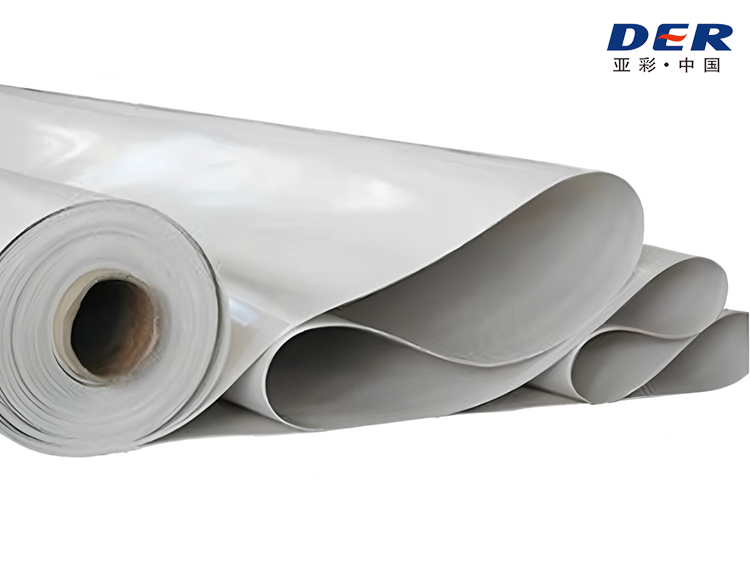
Depending on the application, a flexible membrane may need to deliver weather resistance, weldability, dimensional stability, UV durability, tear resistance, fire-retardant performance, self-cleaning capability, visual consistency, or waterproof protection. In architectural applications, flexible membrane materials are often selected for tensile structures, canopies, walkway covers, shade systems, façade elements, or large-span roof concepts. In industrial and infrastructure uses, buyers may need reinforced flexible membrane systems for waterproofing, containment, equipment shielding, soft structures, storage, and broader project protection.
What matters most is not the phrase itself, but the specification logic behind it. A serious membrane supplier should help the buyer move from keyword intent to material fit. That means aligning the base fabric, coating system, finishing method, color direction, performance target, fabrication compatibility, and delivery expectation with the real use case. A flexible membrane that looks acceptable on paper but does not match handling conditions, climate exposure, installation method, or conversion requirements can quickly become an expensive sourcing mistake.
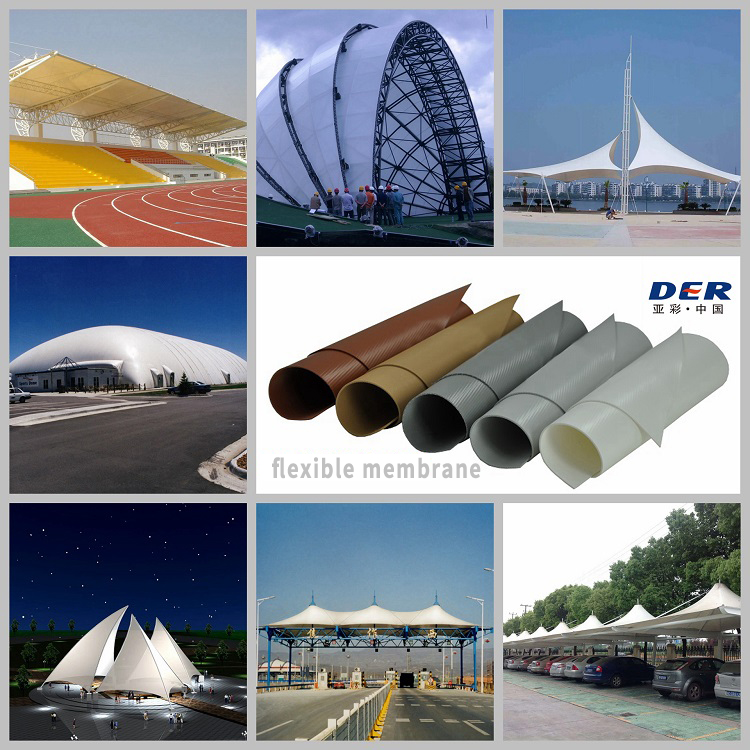
For that reason, DERFLEX positions flexible membrane manufacturing around practical decision-making. Instead of pushing one generic structure into every project, we support buyers who need a more accurate match between membrane performance and commercial purpose. That includes custom membrane supply for architectural tensile applications, project-oriented membrane development for roofing or waterproofing, and OEM membrane manufacturing for customers building a product line under their own brand.
Need a flexible membrane supplier that can handle OEM, custom, and project-use requirements?
Send your application, target structure, quantity, and preferred material direction. DERFLEX will help move the inquiry toward a more practical membrane recommendation.
Key Features Buyers Usually Expect from a Strong Flexible Membrane Manufacturer
1. Material Selection That Fits the Application
Different projects call for different membrane logic. Some buyers need a cost-efficient PVC flexible membrane for wide commercial use. Others need a higher-end surface treatment, a longer-lifespan architectural membrane direction, or a membrane system better aligned with transparency, fire requirements, or permanent-structure expectations. A capable manufacturer should help filter those choices rather than leaving the buyer to guess.
2. OEM and Custom Development
Custom work matters because membrane performance is rarely just about the raw sheet. It often depends on weight, yarn strength, coating thickness, lacquer system, seam compatibility, width, reinforcement, surface finish, and downstream conversion. DERFLEX supports OEM and custom membrane requests for buyers who want a structure built around their business model rather than a stock-only product list.
3. Lead Time Clarity
For project buyers and repeat-order distributors, lead time is not a small detail. It influences planning, inventory, installation schedule, and quotation confidence. A serious flexible membrane supplier should be able to discuss production rhythm, quantity impact, and delivery logic with enough clarity to support commercial decisions.
4. Quality Consistency
Membrane buyers usually care less about one nice sample and more about repeat-order stability. That is why process control, raw-material discipline, and batch-level consistency matter. A well-managed production system helps reduce complaint risk, improve fabrication predictability, and protect buyer reputation in resale or project delivery.
5. Certification and Documentation Readiness
Different destination markets and project categories may require different levels of fire documentation, material declaration, performance testing, or compliance support. The best manufacturers do not treat certification as an afterthought. They build it into the quotation and development conversation early enough to prevent mismatch later.
6. Commercial Understanding
Not every buyer needs the same outcome. Some need a flexible membrane manufacturer for a landmark canopy project. Some need a custom membrane partner for repeat OEM supply. Others need a practical membrane material that protects margin and keeps the supply chain simple. Good supply starts with understanding which of those outcomes actually matters.
Technical Specifications
The exact structure depends on the intended application, lifespan target, coating direction, fabrication method, and market requirement. The table below is designed as a practical specification framework for buyer discussion rather than a one-size-fits-all catalog claim.
| Material Direction | PVC coated polyester membrane, PVDF-oriented flexible membrane, PTFE fiberglass membrane, ETFE film direction, and other project-oriented membrane structures. |
|---|---|
| Typical Weight Range | Common flexible membrane structures can be developed across light, medium, and heavy-duty ranges depending on architectural, industrial, roofing, or protection use. |
| Surface Options | Gloss, matte, lacquered, self-cleaning-oriented, anti-fungal, weather-resistant, UV-stabilized, or application-specific top-surface direction. |
| Performance Priorities | Flexibility, tensile strength, tear resistance, waterproof behavior, dimensional stability, fire-retardant pathway, weldability, printability, or controlled light transmission depending on use. |
| Color & Finish | Standard and custom color development available subject to material system, quantity, and final application need. |
| Fabrication Compatibility | Suitable for cutting, welding, stitching, conversion, panel fabrication, and finished-product development when matched to the right membrane structure. |
| OEM Capability | Custom roll format, packaging logic, private-label support, specification alignment, and product-application development for wholesale and branded supply. |
| Documentation Support | Project-oriented support for technical discussion, quality expectations, and destination-market documentation pathways subject to the final product program. |
Recommended URL: flexible-membrane-manufacturer.html
Have a specification sheet already?
Share the application, dimensions, membrane type, quantity, and target market. DERFLEX can review the request and move it toward a more usable supply direction.
Applications
Architectural Tensile Structures
Flexible fabric membranes are widely used for tensile architecture, public-space shading, walkway covers, stadium edge structures, canopy programs, and large-span design concepts that benefit from lower weight and greater design freedom.
Roofing & Weather Protection
Project buyers use flexible membranes when they need waterproof behavior, practical installation logic, weather resistance, and a more adaptable covering solution for semi-permanent or engineered structures.
Industrial Protection
Industrial membrane supply can support equipment shielding, storage covers, soft enclosures, partition systems, protection barriers, and other working environments where performance matters more than generic sheet pricing.
Waterproofing & Containment
For some projects, buyers need reinforced membrane materials that help manage water control, separation, environmental protection, or substrate coverage in a more controlled and project-ready way.
OEM Product Development
Distributors and brand owners may require a membrane manufacturer that can build private-label or OEM programs with custom packaging, tailored structure, and more stable repeat-order logic.
Specialty Fabrication
Flexible membrane materials can also be selected for soft structures, conversion-based products, fabricated covers, transport-related protection, and custom use cases where standard rigid materials are not commercially practical.
Why Choose DERFLEX
Choosing a flexible membrane manufacturer is rarely just a sourcing decision. It is a risk-management decision. Buyers are trying to avoid the wrong structure, unclear communication, unstable quality, unrealistic lead times, or a supply partner that cannot support the project once the initial quotation stage ends.
DERFLEX approaches membrane supply from a more practical angle. We support inquiries that need custom development, technical alignment, and stronger commercial usability. That includes buyers looking for a membrane manufacturer for tensile architecture, a flexible membrane supplier for industrial protection, a waterproof membrane manufacturer for broader engineering use, or an OEM membrane factory that can support repeat-order consistency and private-label growth.
- Application-first thinking: the membrane structure should match the real job, not just the keyword.
- OEM / Custom orientation: useful for converters, distributors, project buyers, and branded supply programs.
- Lead time awareness: built for businesses that need better planning confidence.
- Quality control logic: focused on repeatability, consistency, and usable material performance.
- Certification attention: supports discussions around fire, compliance, and documentation pathways.
- Commercial fit: designed to reduce sourcing friction and improve long-term procurement value.
Comparison: Flexible Membrane vs. More Traditional Covering Directions
| Evaluation Point | Flexible Membrane | More Rigid or Conventional Covering Direction |
|---|---|---|
| Weight Efficiency | Usually better for lightweight structures, easier handling, and lower transport burden. | Often heavier, which can increase support, logistics, and installation demands. |
| Design Flexibility | Better suited to curves, spans, custom forms, and fabrication-based design logic. | Often limited by rigid geometry and lower adaptability in complex shapes. |
| Customization Potential | Strong potential for OEM, custom widths, finishes, coatings, and application-specific tuning. | Customization may be possible, but often with less flexibility or higher practical limitation. |
| Commercial Use Cases | Useful where weather resistance, fabricability, lighter structure, and project-oriented supply matter. | Useful where rigid form, hard-surface expectations, or non-flexible construction logic dominate. |
| Buyer Decision Logic | Chosen when the material must perform structurally, visually, and commercially in a flexible system. | Chosen when design freedom and membrane behavior are less important than rigid-panel tradition. |
Case Study
Representative Scenario 1: Canopy Program for a Commercial Entry Zone
A project buyer needed a flexible membrane solution for a visible entrance canopy where appearance, weather resistance, and fabrication practicality all mattered. The sourcing challenge was not only choosing a membrane that looked clean at quotation stage, but choosing one that could hold up through fabrication, installation, and outdoor exposure while keeping the procurement workflow manageable. A project-oriented membrane structure with appropriate surface treatment and fabrication compatibility created a more practical path than treating the requirement as a generic waterproof sheet purchase.
Representative Scenario 2: OEM Membrane Program for a Distributor
A distribution customer needed a custom membrane supplier capable of repeat orders, private-label direction, and more stable product logic across multiple applications. The requirement included custom structure discussion, packaging alignment, and better lead-time visibility. In cases like this, the value of a manufacturer is not only making the material, but helping shape a product system that supports resale confidence, fewer sourcing surprises, and better long-term commercial control.
Looking for a membrane manufacturer instead of a stock-only seller?
DERFLEX supports inquiries where performance, customization, documentation, and delivery planning all matter to the final buying decision.
Related Membrane Solutions on DERFLEX
To strengthen internal relevance and help buyers move deeper into related membrane categories, the following six internal links are reserved for closely related pages.
Related for buyers comparing broader structural membrane directions and project-use material systems.
Useful for projects focused on long-span architectural fabric performance and tensile applications.
Suitable for buyers exploring membrane material fit for canopies, roofs, and large-span structures.
Useful for visitors comparing architectural fabric membrane options within the DERFLEX range.
Relevant for buyers who need a more direct membrane path for roofing, waterproofing, or industrial coverage.
Closely related for engineering, protection, and broader waterproof project requirements.
FAQ
1. What does a flexible membrane manufacturer usually produce?
A flexible membrane manufacturer typically produces engineered membrane materials used for tensile structures, canopies, roofing, waterproofing, industrial coverage, containment, protection systems, and OEM converted products. The exact product range depends on the manufacturer’s material base, coating technology, and application focus.
2. How do I choose the right flexible membrane for my project?
Start with the real use conditions: application type, span or coverage logic, climate exposure, desired lifespan, fire requirements, surface appearance, fabrication method, and budget range. The best result comes from matching those factors to the right membrane structure instead of choosing only by keyword or headline description.
3. Can DERFLEX support OEM and private-label membrane supply?
Yes. DERFLEX can support OEM and custom membrane development for distributors, converters, and brand programs that need tailored specification, packaging direction, and more repeatable commercial supply.
4. What performance topics matter most in flexible membrane sourcing?
Buyers commonly focus on flexibility, tensile strength, tear resistance, UV durability, waterproof behavior, fire-retardant pathway, surface finish, weldability, and long-term consistency. The priority order depends on whether the membrane is used in architecture, roofing, industrial protection, waterproofing, or another project category.
5. Are custom colors, finishes, and structures possible?
In many membrane programs, yes. Customization can include weight direction, color, coating logic, lacquer direction, width, packaging, and broader OEM alignment. Feasibility depends on the material type, order volume, and final product target.
6. Why work with a manufacturer rather than a general seller?
Because the right manufacturer can help improve application fit, repeat-order consistency, technical discussion, customization control, and lead-time communication. This is especially important when the membrane is tied to a project schedule, resale program, or performance-sensitive application.
7. What should I send for a faster quotation?
Send the intended application, target dimensions, material preference if known, quantity, destination market, desired performance requirements, and any drawings or reference photos. That usually makes the quotation process faster and more accurate.
Ready to discuss your flexible membrane requirement?
Whether you need a flexible membrane manufacturer, a custom membrane supplier, or an OEM production partner, DERFLEX is ready to review your project and quotation details.