


 Industrial coated fabrics, technical textiles and custom flexible material solutions
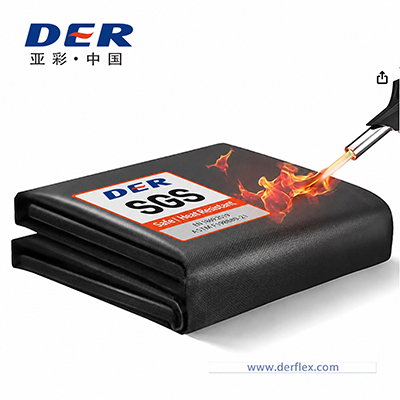
FR Silicone Coated Fiberglass Fabric for Heat, Flame and Industrial Protection
DERFLEX supplies FR silicone coated fiberglass fabric for fabricators and industrial buyers who need a flexible, heat-resistant and fire-retardant textile structure for protective covers, welding shields, removable insulation jackets, fire curtains, expansion joints and OEM thermal protection products.
The material combines woven fiberglass reinforcement with one-side or two-side silicone rubber coating. The fiberglass base contributes dimensional stability and heat resistance, while the silicone surface improves flexibility, water and oil resistance, abrasion performance, weather exposure resistance and handling during cutting, sewing or fabrication. Final performance depends on fabric weight, coating formula, coating side, thickness and testing requirements.
What Is FR Silicone Coated Fiberglass Fabric?
FR silicone coated fiberglass fabric is a functional composite textile made by applying fire-retardant silicone rubber onto woven fiberglass cloth. It is selected when ordinary coated textiles cannot handle the combination of heat exposure, flame-retardant requirements, repeated flexing, moisture, oil, chemical splash risk and industrial abrasion.
For procurement teams, the key point is not only the name of the fabric. A suitable specification must match the finished product design, service temperature, flame-retardant target, coating thickness, fabric weight, processing method and expected handling conditions.
DERFLEX helps buyers compare base fiberglass cloth, silicone coating structure, color, surface feel, roll width and customized performance direction before mass production, helping reduce trial-and-error during sample approval.
Built for Fabricators, OEM Buyers and Project Supply
This page is written for companies that convert coated fiberglass fabric into finished industrial products. Typical customers include insulation jacket factories, welding blanket producers, fire curtain makers, duct connector fabricators, expansion joint manufacturers, equipment cover suppliers and technical textile distributors.
DERFLEX can support roll supply, specification discussion, color direction, coating selection and OEM purchasing needs. Buyers can send drawings, operating conditions and target test standards to receive a more relevant recommendation.
For projects involving direct flame exposure, molten metal splash, certified fire systems, nuclear, aerospace or other regulated applications, the final fabric choice should be confirmed with test reports and customer-side validation before bulk use.
Why Buyers Choose Silicone Coated Fiberglass Cloth
The following benefits are the main reasons this material is widely specified for heat-resistant protective products and high-temperature industrial textile components.
Heat and Flame-Retardant Direction
Fiberglass reinforcement and FR silicone coating help the fabric perform in environments involving heat, flame contact risk, welding sparks or hot equipment surfaces. Temperature data should always be confirmed by grade and test method.
Oil, Water and Weather Resistance
The silicone coating improves resistance to water, oil, outdoor weathering and many industrial exposure conditions, making the fabric practical for removable covers, flexible connectors and outdoor protective parts.
Flexible Handling
Compared with rigid thermal barriers, silicone coated fiberglass fabric can be cut, sewn, draped, wrapped and fabricated into three-dimensional protection systems around pipes, valves, ducts and equipment.
Abrasion and Tear Support
Woven fiberglass provides a stable textile base, while coating structure and thickness can be adjusted to improve handling durability for covers, curtains, blankets and repeated-use industrial parts.
Single or Double Side Coating
One-side coating can be considered for cost, flexibility or directional exposure. Two-side silicone coating is often selected when both surfaces require better protection, easier cleaning or smoother fabrication.
Custom Color and Roll Supply
Common colors include red, grey, black, white, yellow and customized color direction. Roll width, weight, thickness and packing can be discussed according to bulk purchasing plans.
FR Silicone Coated Fiberglass Fabric Specifications
Use this table as a practical purchasing reference. Final values should be confirmed by sample, technical data sheet and required test standard.
| Product Name | FR Silicone Coated Fiberglass Fabric / Fire Retardant Silicone Coated Glass Cloth |
|---|---|
| Base Cloth | Woven fiberglass fabric, E-glass cloth or customized fiberglass substrate depending on strength, thickness and temperature requirements. |
| Coating Structure | Fire-retardant silicone rubber coating on one side or both sides. Formulation can be discussed for flame retardancy, smoke direction, color and surface feel. |
| Weight Range | Common project range: approx. 260–2000 g/m2. Lighter or heavier structures can be reviewed according to finished product design. |
| Thickness Range | Approx. 0.25–3.0 mm depending on base cloth and silicone coating amount. Custom thickness can be discussed for OEM programs. |
| Width | Common roll widths include 1000 mm, 1200 mm and 1500 mm. Other widths depend on production route and order quantity. |
| Temperature Direction | Often selected for high-temperature industrial protection. Typical continuous service temperature should be confirmed by grade; silicone surface and fiberglass base have different thermal limits. |
| Surface Options | Smooth, textured, matte, red, grey, black, white, yellow or customized color direction. Adhesive-backed or special surface versions can be discussed when needed. |
| Processing | Cutting, sewing, grommeting, wrapping, insulation jacket fabrication, blanket fabrication, curtain making, flexible connector production and OEM conversion. |
| Typical Applications | Welding blankets, fire curtains, removable insulation covers, pipe and valve jackets, duct connectors, expansion joints, thermal shields, machinery covers and industrial safety barriers. |
Where FR Silicone Coated Fiberglass Fabric Is Used
Different applications require different fabric weights, coating sides, surface finishes and fabrication methods. DERFLEX supports specification matching before bulk supply.
Welding Blankets and Curtains
Used as fabric base for blankets, screens and curtains that help protect surrounding equipment and work areas from sparks, spatter and heat exposure.
Removable Insulation Jackets
Suitable for covers around valves, flanges, turbines, pumps, exhaust lines and hot equipment where flexible installation and maintenance access are needed.
Fire Curtains and Smoke Barriers
Can be developed into fire-resistant curtain systems or compartment protection products after the final design and testing route are confirmed.
Expansion Joints and Duct Connectors
Used in flexible connectors where heat, vibration, airflow, chemical exposure and movement may appear together in industrial ducting systems.
Thermal Shields and Equipment Covers
Helps build protective covers for machinery, pipes, cylinders, process lines and hot work areas where a flexible barrier is preferred over rigid panels.
Power, Metallurgy and Chemical Plants
Applied in high-temperature industrial environments that require protective textiles with heat resistance, fabrication flexibility and environmental resistance.
Automotive and Transportation Parts
Can be considered for heat shielding, exhaust-area protection, protective sleeves and converted products after OEM-side validation.
OEM Technical Textile Programs
Roll goods, color direction, thickness direction and coating structure can be matched for brands developing protective textile products or industrial components.
How to Choose Between Silicone, PU, PTFE and PVC Coated Fabrics
Buyers often compare coated fabrics by temperature, surface release, flexibility, cost, welding, abrasion and final application environment.
| Silicone Coated Fiberglass Fabric | Preferred when the product needs heat resistance, flexibility, fire-retardant direction, oil and water resistance, sewing compatibility and protective textile handling. |
|---|---|
| PU Coated Fiberglass Fabric | Often considered for lighter heat-protection products, abrasion resistance and cost-sensitive applications where the temperature requirement is lower than silicone or special coatings. |
| PTFE Coated Fiberglass Fabric | Selected when release performance, non-stick surface, chemical resistance and high-temperature processing are key concerns, such as heat sealing or conveyor applications. |
| PVC Coated Fabric | Used widely for waterproof tarpaulins, truck covers, tents and industrial covers where waterproofing, weldability and outdoor durability are more important than high-temperature exposure. |
For projects involving multiple risks, DERFLEX can help compare silicone coated fiberglass fabric with industrial PVC coated fabric, TPU coated fabric and TPO coated fabric according to use environment.
How to Specify FR Silicone Coated Fiberglass Fabric
A clear request helps DERFLEX recommend the correct direction faster and reduces sample approval time.
1. Define Heat Exposure
Share continuous temperature, short-term peak temperature, distance from heat source and whether there is flame, spark, molten splash or radiant heat exposure.
2. Confirm Fire Standard
Tell us whether you need EN, DIN, ASTM, NFPA, GB or customer-specific testing. Different regions and finished products may require different validation routes.
3. Choose Fabric Weight
Light grades improve flexibility and drape. Heavy grades support stronger covers, blankets and abrasion-prone products. Weight should match the fabrication method.
4. Select Coating Side
Single-side coating may suit directional protection. Double-side coating often improves cleanability, surface protection and handling for repeated-use products.
5. Review Fabrication
Tell us whether the material will be sewn, cut, punched, wrapped, grommeted, laminated, adhesive-backed or converted into jackets, curtains or blankets.
6. Prepare Quantity and Packing
Send roll width, roll length, color, quantity, packing style and target delivery plan so the quotation can reflect real purchasing conditions.
Why Source from DERFLEX
DERFLEX combines coated fabric experience, export service and technical communication for buyers who need stable roll quality and repeat supply.
DERFLEX Support
- 20+ years of industrial coated fabric manufacturing experience.
- Custom weight, coating side, color, width, roll length and OEM packing discussion.
- Technical communication for fabricators, distributors and project buyers.
- Quality control for roll appearance, thickness, weight, coating consistency and packing.
- Export service for international bulk purchasing and repeat orders.
Buyer Value
- Clearer specification matching before sampling.
- Better alignment between fabric grade and finished product use.
- Support for quotation based on real operating conditions instead of only weight or photos.
- Practical guidance for heat shields, covers, blankets, curtains, jackets and connectors.
- Long-term supply record for OEM projects and distributors.
From Requirement Review to Bulk Roll Supply
DERFLEX follows a structured process to help buyers move from inquiry to sample confirmation and bulk delivery.
Requirement Review
Application, temperature, fire target, color, width, weight, quantity and processing method.
Specification Direction
Recommend fabric base, coating side, thickness, surface and testing direction for evaluation.
Sample Trial
Check handling, cutting, sewing, drape, flexibility, surface and application fit before bulk order.
Bulk Production
Confirm color, roll length, packing and production data for stable supply.
Export Delivery
Support container loading, labels, documentation and repeat order record.
Explore Related Coated Fabric Solutions
These internal links help buyers compare adjacent material directions and find a more complete supply route.
FR Silicone Coated Fiberglass Fabric FAQs
Answers for procurement teams, engineers and fabricators evaluating silicone coated fiberglass cloth for high-temperature protection.
What is FR silicone coated fiberglass fabric used for?
It is used for welding blankets, fire curtains, removable insulation jackets, expansion joints, duct connectors, thermal shields, equipment covers and other heat-resistant protective textile products.
Is silicone coated fiberglass fabric waterproof?
The silicone coating improves water resistance and surface protection. The final waterproof performance depends on coating thickness, coating side, seams, fabrication design and test method.
Can DERFLEX supply single-side and double-side coating?
Yes. DERFLEX can discuss one-side or two-side silicone coating according to exposure direction, flexibility requirement, surface protection and budget direction.
What color options are available?
Common colors include red, grey, black, white and yellow. Customized color direction can be discussed for OEM programs and distributor projects.
Can this fabric be sewn or fabricated?
Yes. Silicone coated fiberglass cloth is commonly cut, sewn, wrapped, punched and fabricated into blankets, jackets, curtains, shields and flexible connectors. Processing tests are recommended before bulk production.
What information should I send before requesting a quotation?
Please send application, working temperature, peak temperature, fire-retardant target, required standard, coating side, thickness or weight, width, roll length, color, quantity and finished product drawings if available.
Can DERFLEX provide OEM or custom silicone coated fiberglass fabric?
Yes. DERFLEX supports customized coating structure, color, weight, thickness, width, packing and roll specification for OEM buyers, distributors and fabricators.
Need FR Silicone Coated Fiberglass Fabric for Your Project?
Send DERFLEX your application, temperature range, required standard, coating side, width, thickness, color and quantity. Our team will review your requirement and prepare a suitable specification direction for quotation.