


Gas Holder Membrane Material Manufacturer for Reliable Biogas Storage Systems
DERFLEX supplies engineered gas holder membrane material for anaerobic digesters, double membrane gas holders, and renewable energy projects that require low gas permeability, high tensile strength, long-term weather resistance, and dependable factory customization.
Whether you are sourcing a biogas storage membrane for a farm digester, a municipal wastewater plant, an industrial organic waste project, or a complete double membrane gas holder system, the real buying decision is never only about price per square meter. Serious buyers need a membrane that remains stable under pressure cycles, resists outdoor aging, keeps methane loss low, welds cleanly, and matches the operating environment of the installation. This page is built to help EPCs, distributors, contractors, and biogas project developers evaluate the right material structure for long-term performance.
Request A Quote View Related Biogas MembraneWhat Buyers Usually Need
- Stable gas-tight performance for methane-containing biogas systems
- Resistance to moisture, UV, temperature fluctuation, and chemical exposure
- High seam strength for hot-air or high-frequency welding
- Custom weight, color, coating, and fabrication for OEM projects
- Reliable production quality, documentation, and export support
- Fast response from a factory that understands technical project matching
What Is Gas Holder Membrane Material?
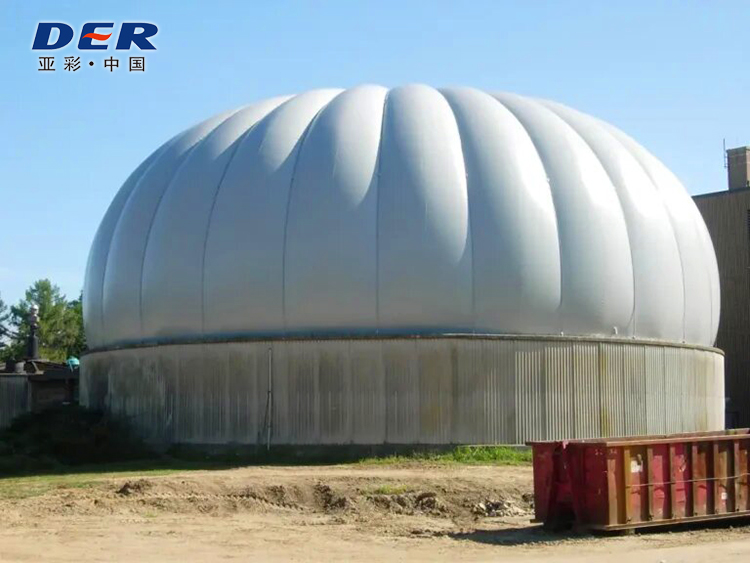
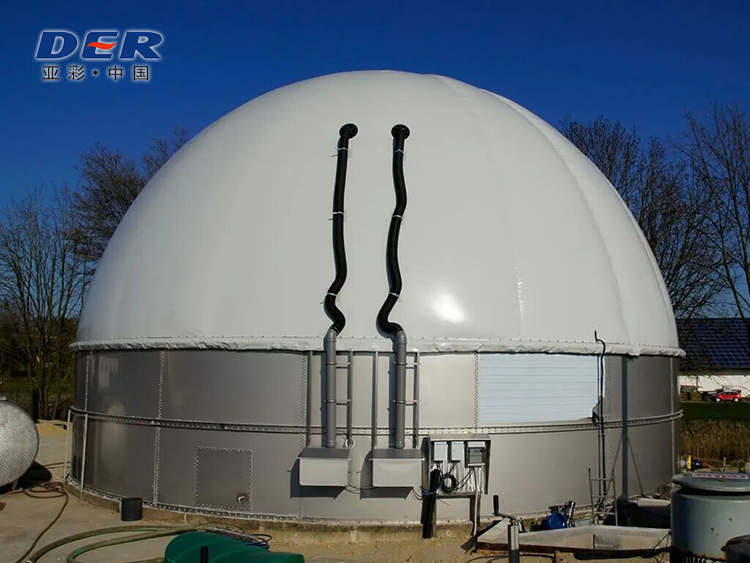
Gas holder membrane material is a specialized flexible composite designed to store, contain, and regulate gas in renewable energy and industrial process systems. In the biogas sector, the material is commonly used as the working membrane in digester covers, biogas storage domes, and double membrane gas holder structures. Unlike general-purpose covers, this material must combine airtightness, structural strength, weather resistance, weldability, and reliable performance under repeated pressure fluctuation. It is not simply a sheet that covers a tank; it is an engineered component that directly affects energy retention, operational safety, and maintenance cost.
For most serious biogas applications, gas holder membrane material is built around a high-strength polyester fabric and then coated with a tailored polymer system such as PVC, PVC with protective surface treatment, or another project-specific gas-barrier structure. The polyester base delivers dimensional stability and tensile performance. The coating system supports gas tightness, chemical resistance, UV stability, and long-term outdoor service. When properly selected, the finished membrane can function in agricultural, municipal, and industrial installations where methane-rich biogas must be stored and handled safely.
Search demand around this product usually comes from buyers looking for terms such as biogas storage membrane, gas holder membrane, double membrane gas holder material, methane storage membrane, anaerobic digester cover material, and biogas membrane manufacturer. Although the wording varies by region and project type, the technical requirement is similar: buyers want a membrane material that can hold performance over time, not just a low initial cost.
Why This Material Matters
Every cubic meter of gas lost through poor material selection reduces project efficiency. Poor seam quality, low UV resistance, weak tensile stability, or insufficient chemical resistance can shorten service life and increase downtime. In renewable energy projects, membrane quality directly connects to the long-term economics of the installation.
Who Usually Buys It
Typical buyers include biogas EPC contractors, digester builders, agricultural energy integrators, wastewater treatment system suppliers, OEM gas holder manufacturers, distributors of membrane structures, and engineering teams managing replacement or upgrade projects.
Need the right membrane for inner and outer gas holder layers?
Send your tank diameter, gas volume, operating temperature, and application scenario for fast technical matching.
Key Features Buyers Expect from Competitive Gas Holder Membrane Material
1. Low Gas Permeability
The most important job of a gas holder membrane is controlling gas loss. A quality membrane must be engineered for very low gas permeability so that methane retention remains stable and system efficiency stays high. Low permeability is especially important in applications where gas pressure fluctuates throughout the day.
2. High Tensile Strength
The membrane must resist internal pressure, wind load, snow load on outer structures, installation tension, and repeated movement over time. Reinforced fabric construction helps the material maintain shape and structural reliability under working conditions.
3. Chemical Resistance
Biogas environments may include methane, carbon dioxide, moisture, and hydrogen sulfide. A properly formulated gas holder membrane material should tolerate demanding chemical exposure while maintaining flexibility and surface stability.
4. UV and Weather Durability
Many projects operate outdoors year-round. Strong UV stability, resistance to temperature fluctuation, and protection against rain, wind, and surface contamination are essential for long-term service life and predictable maintenance cycles.
5. Excellent Weldability
Even high-quality fabric can fail if seam performance is poor. Gas holder membrane material should be optimized for stable welding, consistent seam strength, and airtight fabrication, whether the project uses hot-air or high-frequency welding methods.
6. Long-Term Flexibility
Gas storage systems expand and contract. A membrane that becomes brittle too early can crack, crease, or lose reliable sealing properties. Material selection should account for cyclic stress and installation geometry, not only headline tensile data.
7. Custom Engineering
No two projects are exactly the same. Different climates, storage capacities, gas compositions, pressure ranges, and local standards may require changes in coating formulation, base fabric strength, flame retardancy, or panel layout.
8. Factory Quality Consistency
Professional buyers care about more than the sample roll. They need batch-to-batch stability, traceable quality control, technical communication, and a supplier that can support repeat orders, replacement planning, and brand-level OEM manufacturing.
9. Export-Ready Supply
For international projects, material performance is only one side of the equation. Packaging, documentation, delivery speed, and responsive quoting also affect the success of a purchase. A reliable global supplier reduces commercial risk as much as technical risk.
Typical Technical Specifications for Gas Holder Membrane Material
Final specifications should always be matched to the project. A small agricultural digester, a wastewater biogas holder, and a large industrial gas dome can require different material structures. The table below shows a practical specification framework for professional buyers evaluating gas holder membrane material. It also reflects the kind of parameters that engineers usually request in quotation discussions.
| Parameter | Typical Option / Range | Why It Matters |
|---|---|---|
| Base Fabric | High-strength polyester fabric | Provides tensile strength, dimensional stability, and structural support. |
| Coating System | PVC / PVDF / specialized gas-barrier coating | Supports airtightness, chemical resistance, and outdoor durability. |
| Weight | 900–1500 g/m² | Helps balance strength, lifespan, weldability, and project cost. |
| Tensile Strength | ≥ 4000 N / 5 cm | Important for resisting installation tension, cyclic pressure, and external loads. |
| Gas Performance | Extremely low gas permeability | Reduces methane loss and supports storage efficiency. |
| Operating Temperature | -30°C to +70°C | Supports outdoor use across a wide range of climates. |
| UV Resistance | Project-matched outdoor durability | Crucial for long-term exposure and replacement planning. |
| Flame Retardancy | Optional DIN / EN / NFPA project options | Required in some markets or engineering specifications. |
| Welding Method | Hot-air welding / high-frequency welding | Seam performance strongly influences long-term airtightness. |
| Colors | White, gray, green, or custom | Allows matching to project design, temperature preference, or brand requirements. |
| Fabrication | Roll supply or prefabricated panels | Depends on contractor capability and installation approach. |
Note: exact values and membrane construction should be confirmed based on gas composition, project geometry, local climate, support design, and engineering standard requirements.
Many searchers use phrases like gas holder membrane material specs, biogas membrane GSM, double membrane gas holder fabric, and methane storage membrane thickness. The best answer is always application-based. There is no single perfect GSM or coating for every job. Professional selection depends on the stress profile of the real project.
OEM and custom fabrication available
Need roll material, pre-cut panels, custom colors, or project-specific performance matching? DERFLEX can tailor the membrane structure.
Understanding Inner Membrane vs Outer Membrane in Double Membrane Gas Holder Systems
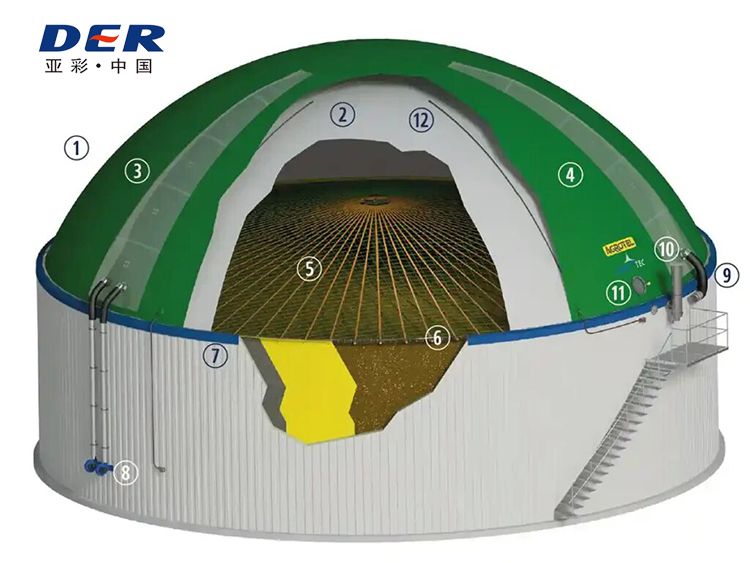
A common purchasing mistake is to ask for “one gas holder membrane” without clarifying whether the material is intended for the inner working layer, the outer weather-protective layer, or both. In double membrane systems, the two layers serve different roles. The inner membrane is the gas-tight functional element that directly stores the biogas. The outer membrane acts as a protective shell that supports form, absorbs environmental loads, and shields the inner layer from weather and mechanical stress.
Inner Membrane Requirements
- Maximum gas tightness for methane-containing biogas
- Strong resistance to moisture and chemical exposure
- Reliable flexibility under cyclic inflation and deflation
- Stable seam performance and airtight fabrication
- Long-term dimensional stability with pressure changes
Because the inner membrane directly contacts the gas environment, the coating formulation is especially important. A low-cost generic cover may look similar at first glance but often lacks the gas barrier and long-term chemical stability required for serious use.
Outer Membrane Requirements
- Excellent UV and weather resistance
- High tensile strength for wind and snow load effects
- Surface stability for long outdoor exposure
- Durability against mechanical wear and environmental contamination
- Clean appearance and low-maintenance surface treatment
The outer membrane does not typically carry the same gas-contact requirement as the inner layer, but it is essential for structural protection and overall service life. In many projects, optimizing the outer layer correctly can reduce maintenance and preserve the performance of the inner membrane over time.
For buyers searching double membrane gas holder material or inner membrane for biogas storage, the key message is simple: the right material package is role-specific. Inner and outer layers often require related but not identical performance priorities.
Main Applications of Gas Holder Membrane Material
Agricultural Biogas Plants
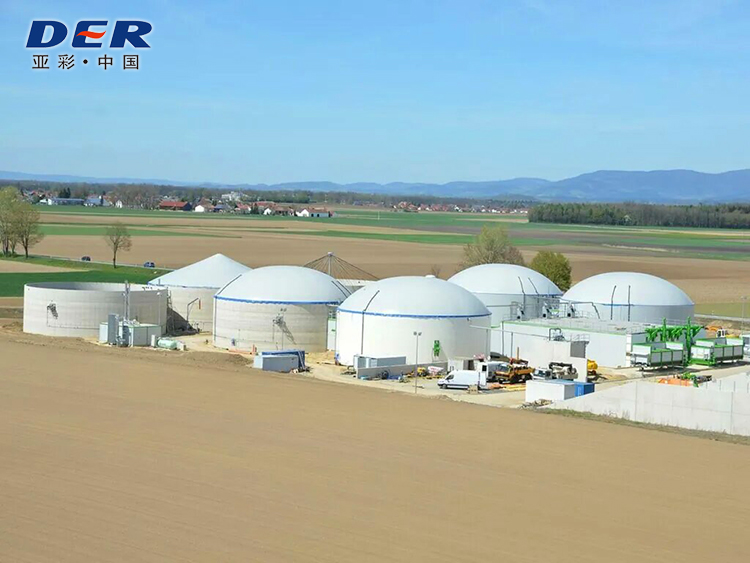
Livestock farms and agricultural waste projects use gas holder membranes to store biogas from manure, crop residue, and organic waste fermentation. The membrane must combine durability with practical maintenance and cost control.
Municipal Wastewater Treatment
Sewage treatment plants increasingly recover energy from sludge digestion. A gas-tight membrane helps capture usable gas while resisting chemical exposure and outdoor conditions over long operating periods.
Industrial Organic Waste Processing
Food processing facilities, breweries, distilleries, and waste recycling plants often need stable gas containment as part of energy recovery systems. Material selection must consider process environment, gas composition, and operating temperature.
Double Membrane Gas Holders
For projects requiring flexible, scalable gas storage, double membrane systems provide a widely used solution. The correct membrane package supports both storage performance and exterior structural stability.
Biogas Digester Covers
Digesters with integrated membrane roofs require materials that can work as both protective cover and gas retention layer depending on design. Proper welding and fit are as important as material grade.
Renewable Energy Expansion Projects
As more markets invest in decentralized energy, demand is growing for reliable biogas membrane suppliers that can deliver factory-direct material with stable quality, engineering support, and export-ready service.
Because this product is tied to real infrastructure performance, buyers usually search from an application angle. Common long-tail phrases include gas holder membrane for farm biogas, biogas storage membrane for wastewater plant, gas dome membrane supplier, and membrane for methane storage tank. A high-conversion product page should answer those use-case questions clearly, which is why this section is critical for both ranking and buyer confidence.
How Gas Holder Membrane Material Compares with Other Outdoor Cover Materials
Not every outdoor cover material is suitable for gas storage. Buyers sometimes compare biogas membrane material with general tarpaulin, PE sheet, single-layer covers, or rigid alternatives. The right comparison should focus on gas retention, seam reliability, weathering, and project lifecycle cost rather than only initial price.
| Material Type | Gas-Tight Performance | Outdoor Durability | Weldability | Best Use |
|---|---|---|---|---|
| Engineered Gas Holder Membrane Material | High | High | High | Biogas storage, digesters, double membrane gas holders |
| Ordinary PVC Tarp | Medium to Low | Medium | Good | General outdoor cover, transport, temporary protection |
| PE Film / Light Poly Sheet | Low | Low to Medium | Limited | Short-term, low-cost general covering |
| Single-Layer Generic Cover | Variable | Variable | Variable | Simple cover tasks where structural separation is not required |
| Rigid Metal Storage System | High | High | N/A | Specific fixed-structure storage installations |
The goal is not to claim that flexible membrane is always the answer. Instead, the point is that a project requiring flexible gas storage should not be downgraded to a non-engineered cover material. A membrane designed specifically for gas holder use brings the necessary balance of airtightness, flexibility, installation practicality, and scalable project economics.
Choosing between PVC, PVDF, and customized gas-barrier options?
Share your gas composition and service environment, and DERFLEX will recommend the most practical membrane structure.
Why Choose DERFLEX as Your Gas Holder Membrane Material Supplier
When buyers search for a gas holder membrane material manufacturer or biogas membrane supplier, they are usually evaluating more than the material itself. They want to know whether the factory can support real-world projects with predictable quality, practical customization, and responsive communication. DERFLEX positions itself as a factory-direct source for coated fabrics and technical membranes, serving industrial, agricultural, infrastructure, and renewable energy applications.
For biogas-related membrane needs, that matters because the product sits at the intersection of industrial textile manufacturing and engineered application matching. It is not enough to sell a roll. The supplier must understand the difference between general outdoor fabric and a gas storage membrane that will operate under pressure, weather exposure, and chemical contact.
- 20+ years of coated fabric and industrial textile manufacturing experience
- Factory scale with advanced knife coating and lamination capability
- Products exported to 120+ countries
- OEM/ODM support for weight, coating, color, finish, and fabrication
- Quality systems and certification focus for international supply
- Support for distributors, EPCs, contractors, and brand buyers
DERFLEX Manufacturing & Service Strength
Factory foundation: DERFLEX is an established technical coated fabric manufacturer with experience across transportation, agriculture, tenting, industrial covers, and specialized membrane structures.
Customization capability: Projects can require adjustments to GSM, base fabric, coating chemistry, top finish, flame retardancy, anti-UV level, color, and fabrication form.
Export reliability: Global shipments, multilingual communication, and practical documentation support help reduce procurement friction for overseas buyers.
Inquiry efficiency: Clear data about application, tank size, gas type, and local climate allows the DERFLEX team to recommend a more accurate membrane structure faster.
Request Factory QuoteCertification Focus
DERFLEX highlights quality and compliance credentials including ISO 9001:2015 quality management, REACH and RoHS environmental compliance, SGS testing references, and CE-related approvals on relevant product lines.
Quality Control Approach
The company emphasizes raw material verification, process monitoring, in-line sampling, laboratory performance testing, and final inspection to keep finished materials consistent across batches.
Project Support
For buyers who need more than raw roll goods, DERFLEX can support custom specifications, panel fabrication logic, and welding-oriented material matching for practical project execution.
How Professional Buyers Choose the Right Gas Holder Membrane Material
Procurement mistakes often happen because the buying team compares quotations without first standardizing the engineering requirements. A lower price can hide a weaker base fabric, a simplified coating formula, lower UV package, or reduced seam stability. To avoid short-term buying logic that creates long-term maintenance cost, use the checklist below before placing an order.
1. Confirm the Application Type
Is the material for a digester roof, double membrane gas holder, inner membrane, outer membrane, or replacement panel? Each use case affects material selection and fabrication method.
2. Clarify the Gas Environment
Ask what gas is being stored and whether moisture, hydrogen sulfide, temperature, or process chemistry create added stress. The best membrane selection begins with the actual working environment.
3. Define the Structural Conditions
Tank size, span, support design, expected internal pressure, local wind, and snow conditions all influence the base fabric strength and outer-layer requirements.
4. Review Welding and Installation Plan
Will the material be fabricated in the factory or on site? Which welding method will be used? Seam behavior can be the difference between long-term airtight performance and future leakage problems.
5. Match Lifespan to Project Economics
Initial material cost should be compared with expected service life, replacement interval, and downtime risk. In most energy projects, the lowest material price is not the lowest lifecycle cost.
6. Ask for Real Technical Data
Professional suppliers should be able to discuss weight, tensile strength, temperature range, coating system, certification logic, and customization options instead of offering only generic sales language.
For search phrases like how to choose biogas membrane supplier, best gas holder membrane material, and gas holder fabric manufacturer, this buying process is the real answer. Good ranking content should help the buyer make a better technical decision, not just repeat keywords.
Quality Control, Testing, and Installation Considerations
Gas holder membrane material is only as reliable as its full production and installation chain. Even an excellent coating formula can underperform if the base fabric varies from batch to batch or if seams are poorly executed. That is why quality control, traceability, and practical installation guidance matter so much in membrane procurement.
Typical Quality Checks
- Raw material verification and supplier qualification
- Weight and thickness control during production
- Tensile and tear strength testing
- Gas permeability evaluation
- UV aging or weathering simulation
- Weldability and seam strength inspection
- Final roll or final panel inspection before shipment
These checks help ensure the delivered material behaves like the approved sample and specification sheet, not just the first quotation promise.
Installation Precautions
- Ensure all contact surfaces are clean and dry before welding or bonding.
- Avoid excessive tension during installation that may create stress concentration.
- Use the correct hot-air or high-frequency welding parameters for the material.
- Protect the membrane from sharp edges and uncontrolled abrasion points.
- Do not store fabricated material wet or folded in poor conditions for long periods.
- Inspect seams, anchors, and inflation/pressure control elements regularly after commissioning.
Installation quality should be treated as part of the product, not as a separate afterthought. Good membrane material deserves equally disciplined site execution.
Looking for a reliable gas holder membrane material manufacturer in China?
DERFLEX supports wholesale, OEM, project supply, and custom specification development for global buyers.
Commercial Value: Why Better Membrane Selection Improves Project ROI
A high-conversion product page should speak to commercial buyers as clearly as it speaks to engineers. The reason gas holder membrane material matters commercially is simple: it influences energy retention, downtime risk, replacement frequency, and maintenance planning. A membrane that performs consistently helps preserve output and stabilize operating cost. A membrane that fails early can create expensive repair windows, unexpected shutdowns, gas leakage concerns, or even a full replacement cycle much earlier than planned.
For distributors and OEM partners, the commercial value goes even further. A stable factory supplier makes it easier to quote repeat business, standardize specification packages, and build a reputation for reliability in the local market. That is why many buyers no longer search only for cheap biogas membrane. They increasingly search for reliable biogas membrane manufacturer, OEM gas holder membrane supplier, and custom gas holder membrane material.
Lower Maintenance Risk
More stable coating and seam performance reduce the frequency of unplanned repair and make maintenance scheduling more predictable.
Stronger Energy Retention
Low gas permeability supports better use of generated gas and helps protect the economics of the energy recovery system.
Better Procurement Efficiency
Working with a supplier that understands project data, export logistics, and OEM needs saves time across quotation, sampling, production, and re-order cycles.
Representative Buyer Scenario
A common buyer scenario is a project team that originally considered a generic cover material for a biogas storage upgrade because the initial quotation looked attractive. After reviewing gas loss risk, chemical exposure, seam reliability, and expected outdoor service life, the team shifts to an engineered gas holder membrane specification. The purchase price increases, but the system is better aligned with actual storage duty, and the total lifecycle cost becomes more predictable. That is the logic behind professional membrane procurement: buy for the job the membrane must do, not just for the line-item cost of a roll.
Another typical scenario involves distributors or local engineering partners who need a factory that can support private-label or OEM supply. In these cases, the value comes from consistent quality, customizable product structure, and a supplier that can respond quickly with samples, parameter guidance, and delivery planning. DERFLEX’s role in these projects is not limited to selling standard stock; it is to help buyers find the best balance of performance, manufacturability, and commercial practicality.
What to send for an accurate quotation
- Application: digester cover, inner membrane, outer membrane, gas dome, or replacement
- Tank or holder dimensions
- Required gas volume or operating pressure information
- Gas composition details if available
- Required weight, color, FR level, or certification requests
- Need for roll goods or prefabricated panels
Frequently Asked Questions About Gas Holder Membrane Material
1. What is the best material for a biogas gas holder?
The best material depends on project conditions, but professional biogas gas holders commonly use a reinforced textile composite with a high-strength polyester base and a gas-tight coating system. Buyers should evaluate gas permeability, chemical resistance, UV stability, tensile strength, weldability, and whether the material is intended for inner or outer membrane use.
2. Is gas holder membrane material different from ordinary tarpaulin?
Yes. Although both may use coated fabric technology, gas holder membrane material is selected and engineered for gas retention, seam integrity, pressure cycling, and long-term performance in biogas environments. Ordinary tarpaulin is usually designed for covering and protection rather than specialized gas storage duty.
3. Can DERFLEX provide customized gas holder membrane material?
Yes. DERFLEX supports OEM and project-based customization for weight, thickness, base fabric, coating structure, color, flame retardancy, anti-UV level, panel fabrication, and other project-specific requirements.
4. What thickness or GSM should I choose?
There is no single GSM that fits every job. The right choice depends on storage design, tank size, local climate, pressure conditions, installation method, and service-life target. In practice, buyers should request a recommendation based on the actual project rather than selecting only by price or headline weight.
5. Is the membrane suitable for methane and hydrogen sulfide environments?
Project-specific membrane structures can be formulated for methane-containing biogas systems and chemically demanding environments. The supplier should be informed about expected gas composition and working conditions so the coating system can be matched appropriately.
6. Do you offer roll goods or finished fabricated panels?
Depending on project needs, DERFLEX can discuss both roll material supply and more fabrication-oriented support. The most suitable delivery form depends on the installer’s capability, project schedule, and field conditions.
7. What certifications or quality systems matter?
Industrial buyers often evaluate ISO-based quality management, environmental compliance such as REACH and RoHS, and test-based quality documentation that supports durability, flame retardancy, or other project requirements. The exact certification package depends on the market and the application.
8. How can I get a fast and accurate quote?
The fastest way is to provide the application type, project dimensions, operating environment, desired material range, and any special performance needs. This helps DERFLEX recommend a practical gas holder membrane material structure instead of sending a generic offer.
Internal Link Suggestions for Future Site Expansion
This page can act as a ranking and conversion hub for the broader renewable energy membrane cluster on the DERFLEX website. To strengthen topical authority and support long-term search performance, you can later add contextual internal links to related pages such as:
Final Buying Summary
If you are comparing gas holder membrane material suppliers, focus on the fundamentals that affect project success: gas tightness, outdoor durability, chemical resistance, welding performance, customization capability, and supplier reliability. A membrane that merely looks similar on a datasheet can behave very differently after installation. That is why experienced buyers ask detailed questions about application, structure, coating, and quality control before they place an order.
DERFLEX provides factory-direct support for buyers who need biogas membrane material that works in real operating conditions rather than in brochure language only. With experience in technical coated fabrics, international supply, and project-oriented customization, DERFLEX is positioned to support distributors, EPCs, and engineering buyers looking for a reliable partner for gas holder membrane material, biogas storage membrane, and double membrane gas holder projects.
Need a quotation for gas holder membrane material?
Send your project data to DERFLEX for faster technical matching, more accurate specification recommendation, and factory-direct pricing support.
Request A Quote Visit DERFLEX