News
Industry News

Grain Cover Fabric | PVC Grain Storage Tarp Material | DERFLEX

Update:2026/10/12 21:08:10 Views:
Skip to content

Agricultural textiles / material supply

PVC Coated Fabric for Grain Storage Covers

Source grain cover fabric around the cover you need to manufacture. DERFLEX supplies PVC coated polyester material for grain bunker covers and outdoor pile protection, with project-specific weight, color and roll-format requirements for technical review.

For cover fabricators, storage-equipment OEMs and industrial distributors, the purchase decision includes weldability, tear performance, coating adhesion and practical handling weight. Share your cover layout, exposure and annual demand to discuss a material sample and bulk quotation.

  • Roll material
  • Welding evaluation
  • Custom specification review
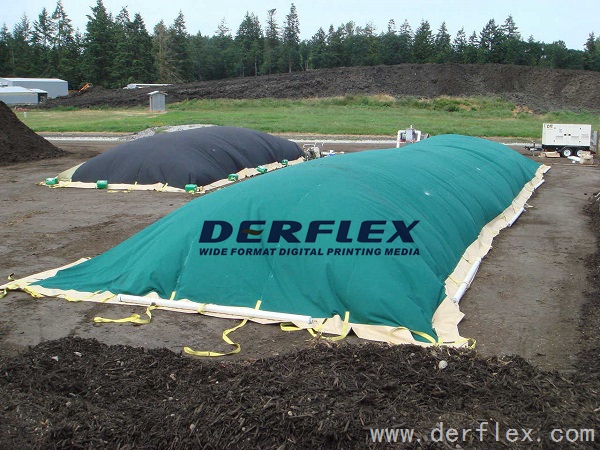
Green grain cover over an outdoor storage pile, illustrating the end use of PVC coated grain cover fabric
Published DERFLEX grain-cover application. Finished-cover geometry, seals and restraint details are specified separately from the roll material.
Reinforced constructionPVC coating + polyester substrate
Fabricator-focusedRoll width, joining and conversion
Outdoor use planningExposure, drainage and handling
Bulk order approvalSample, specification and evidence

01 / Understand the material

A cover starts with the fabric. Storage performance starts with the system.

Choose the grain storage tarp material together with the fabrication and operating plan.

Grain cover fabric is the reinforced sheet material used to manufacture covers for bulk grain piles and bunkers. In a PVC coated polyester construction, the textile carries load and the coating provides a continuous weather barrier. The finished cover also relies on sound seams, protected edges, a prepared base and a suitable hold-down system.

This page addresses material procurement for converters and OEMs. If you need a made-to-size cover rather than fabric rolls, review the finished grain storage cover options.

Covering grain does not dry it or correct poor storage conditions. Grain moisture, temperature, hygiene and the storage operator’s management plan remain separate requirements.

02 / Build the purchase specification

Specify the construction.
Then verify the performance.

Use the published grain-cover range as a starting point. The approved technical sheet and sample must identify the exact material being quoted.

Material reference and project confirmation — not a guaranteed specification for every grade.
Purchase item Published material direction What to confirm for your order
Material PVC coated polyester fabric Coating route, substrate and finish suitable for the cover’s use and joining process.
Area weight 350 / 420 / 500 / 550 / 610 / 700 g/m² in DERFLEX’s published grain-cover range Target GSM, tolerance and total cut-panel mass. Do not treat GSM as a strength rating.
Base fabric Published options include 500D × 500D and 1000D × 1000D Yarn and weave construction; tensile and tear results in both fabric directions.
Roll width The grain-cover page lists widths up to 3.2 m Available width for the selected grade, usable width, tolerance and panel arrangement.
Surface & color Matte / glossy directions; white, green, blue, grey, black and custom-color review Approved color sample, grain-facing side and whether the finish affects welding.
Thickness & roll length Confirm for the required specification Measurement method, tolerances, core size, roll mass and handling equipment.
Mechanical performance Grade-specific evidence required Tensile, tear, coating adhesion and puncture criteria with stated methods and units.
Outdoor exposure UV and temperature requirements require grade confirmation Climate, storage duration, cold-fold conditions and the relevant test evidence.
Contact & gas barrier Not implied by a waterproof PVC construction Direct grain-contact documentation or gas-retention requirements where applicable.

The dimensional and construction references above come from DERFLEX’s published grain-cover information. Availability, performance and acceptance limits must be confirmed for the selected grade at quotation.

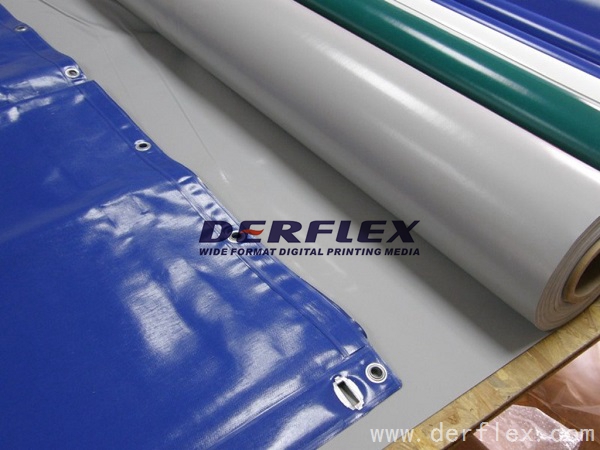
White, green and blue PVC coated fabric rolls beside a fabricated blue tarp edge with eyelets
Roll material and an eyeleted finished edge, published by DERFLEX. Hardware is part of cover conversion; it is not a property of the fabric roll.

Three parts to review in a coated fabric

Weather-facing PVC coating / specified surface finish
Woven polyester reinforcement / warp + weft
Reverse-side PVC coating / specified contact conditions

Coating continuity, substrate strength and adhesion work together. A heavier coating cannot compensate for a weak reinforcement, and a strong substrate cannot compensate for damaged seams or an unsuitable finish.

For the broader roll-material platform, see DERFLEX’s PVC coated fabric manufacturing options.

03 / Match fabric to the operating plan

Which material requirements
matter at your storage site?

These are selection priorities, not preset ratings. Translate the operating conditions into measurable acceptance criteria before comparing quotations.

Use condition Prioritize Request before approval
Seasonal harvest overflow Practical deployment mass, tear resistance and a coating suited to the planned exposure Sample, total panel weight estimate and a folding / deployment plan.
Repeated cover use Flexibility, coating adhesion, fold durability and a workable repair method Fold / flex evaluation and weld or patch coupons using the selected material.
Large welded bunker cover Usable roll width, stable joining behavior and controlled directional panel layout Panel drawing, weld trials, seam acceptance criteria and fabrication tolerances.
High sun or cold handling Documented weathering performance and flexibility at the lowest handling temperature Grade-specific exposure evidence and cold-fold requirements; avoid generic lifespan promises.
Wind-exposed site Tear behavior and load transfer through seams and reinforced edges A separately designed restraint system. Material GSM does not establish a wind rating.
Direct contact with grain Formulation suitability, a clean contact surface and destination-specific documentation Evidence for the exact formulation and contact time / temperature. Do not assume food-contact status.
PVC, PE or PP?

PVC coated polyester is worth evaluating where weldable assemblies, reuse and reinforcement are central requirements. Coated polyethylene or polypropylene can also be appropriate, particularly where lower handling mass matters. Compare actual grades, fabricated seams and exposure evidence rather than the polymer name alone.

Exposed textile edges can create a separate moisture path. If this matters to your cover design, discuss low-wick coated-fabric options and edge protection.

04 / Fabrication decisions

Control the details that a roll datasheet cannot decide.

The following notes are procurement and conversion guidance. The fabricator and storage-system designer should confirm the final seam, edge and restraint details.

Roll width changes panel count

Compare usable width after allowing for weld overlap, hems and layout waste. Wider rolls may reduce joining, but the welding table, transport format and unloading equipment must also suit the roll and finished assembly.

Agree panel orientation before cutting

Mark warp and weft on the panel drawing and relate directional test results to the proposed layout. Choose seam positions with the cover profile, runoff, handling and edge-load paths in mind. Do not set seam direction by convenience alone.

Approve a weld on the actual material

Evaluate hot-air or high-frequency joining on the selected coating and finish. Use coupons made with the intended equipment. Agree the overlap, process window and acceptance method, including checks for weak bonds, overheating and leakage paths.

Use the tarpaulin purchase-specification framework to record methods, units and tolerances.

Design edges as part of the assembly

Hems, webbing, pockets and attachment details must spread load without leaving unprotected punctures or exposed yarn. Grommet spacing is a cover-design decision. A fabric strength value alone cannot validate an anchor layout.

Estimate the fabric mass

Fabric mass (kg) = total cut area (m²) × GSM ÷ 1,000. Include overlap and hem allowances in the area. Hardware, packing and moisture add further weight.

610 kgestimated fabric-only mass

Illustrative example: 1,000 m² at 610 g/m² weighs 610 kg before hardware and packing. This is a logistics estimate, not a lifting or structural rating.

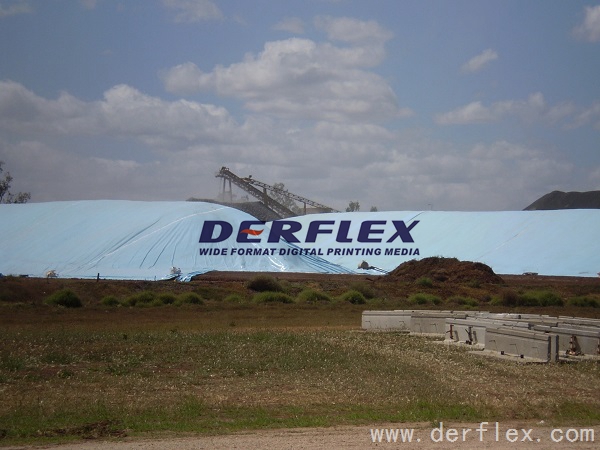
Large pale blue grain cover at an outdoor storage site, illustrating the scale of a fabricated bunker cover
Outdoor grain-cover application published on the DERFLEX website. Application imagery illustrates end use and does not establish a material rating or documented customer project.

05 / Define the storage boundary

Rain protection, moisture control and gas retention are separate requirements.

  • Top cover and groundsheetA top cover sheds weather; the base needs its own puncture, drainage and sealing review. Do not assume both use the same fabric specification.
  • Condensation and grain conditionA waterproof cover can still enclose moisture. Set crop-specific storage limits and monitoring arrangements with the grain-storage operator.
  • Gas-tight or fumigation storageRain resistance does not prove gas retention. Specify the complete barrier system, seals and openings with the relevant storage specialist.

For a fabricated agricultural-cover program, explore custom farm-cover construction and finishing.

Independent storage guidance: Stored Grain bunker planning resources address site preparation, cover sizing, runoff, hold-down and groundsheet sealing.

06 / From sample to repeat supply

Approve the material as a manufacturing input.

DERFLEX’s coated-fabric and agricultural-cover range supports a joined discussion of roll material and conversion requirements. Use a documented approval route so that the sample, quoted specification and bulk order refer to the same construction.

  1. Define the duty

    Identify crop, cover geometry, exposure, grain contact, storage period and how the cover will be deployed and reused.

  2. Evaluate a sample

    Review finish, flexibility, dimensional values and the grain-facing surface. Make weld coupons using the proposed conversion process.

  3. Set acceptance criteria

    Agree test methods, directional results, tolerances, inspection records and the treatment of nonconforming rolls.

  4. Control the repeat order

    Retain an approved reference and identify roll lots. Agree how material, formulation or finish changes will be communicated.

07 / Prepare your quotation

Send the application.
Receive a relevant material proposal.

A useful request for grain storage tarp material contains enough detail to compare material cost, conversion effort and shipment format.

What drives the quotation?

Substrate construction, coating weight, usable width, surface finish, color, required documentation, order volume and packing can all affect cost. MOQ, sample terms and lead time should be confirmed for the approved grade and destination.

Compare the PVC tarpaulin material range when planning a wider purchasing program.

Application: grain bunker / outdoor grain pile cover Supply: PVC coated polyester fabric rolls Crop and contact conditions: [specify] Cover drawing and usable roll width: [attach / specify] Target GSM and performance requirements: [specify] Climate, storage duration and reuse: [specify] Joining method and surface finish: [specify] Quantity, destination and target delivery: [specify]

08 / Buyer questions

Grain cover fabric FAQ

Clear answers to the questions that change a material order.

What is grain cover fabric?

Grain cover fabric is the reinforced sheet material used to fabricate covers for grain piles and bunkers. PVC coated polyester combines a woven load-bearing substrate with a continuous coating. A usable specification also defines welds, edge details and the operating environment.

What GSM should I choose for a grain storage tarp?

Select GSM alongside base fabric, tear strength, coating adhesion, exposure and handling method. DERFLEX’s published grain-cover range includes 350–700 g/m² options, but the appropriate grain storage tarp material must be confirmed for the project. More weight alone does not prove better durability.

Does waterproof grain tarp material prevent condensation?

No. A continuous PVC coating can resist rain penetration, but moisture already in the grain or trapped within the storage system can still create condensation. Grain condition, temperature monitoring, drainage and the operator’s aeration or ventilation plan must be managed separately.

Can PVC grain cover fabric be welded?

Many PVC coated polyester constructions can be joined with hot-air or high-frequency equipment. Suitability depends on the exact coating and surface finish. Approve weld coupons made with the proposed production equipment, then agree seam inspection and acceptance criteria before bulk fabrication.

Is this material food-grade or suitable for fumigation?

Neither status should be assumed from the material name. Direct grain contact requires documentation applicable to the exact formulation, contact conditions and destination market. Fumigation requires a separately specified gas-retention system, including joints, perimeter seals and openings, reviewed by the storage specialist.

What affects price, MOQ and lead time?

Fabric construction, GSM, roll width, coating and finish, color, documentation, order quantity and packaging all affect the quotation. MOQ and lead time should be confirmed for the approved specification. Send the fabric requirement, fabrication plan, quantity, destination and target delivery date to DERFLEX.

Discuss your grain-cover material

Bring the drawing.
Start with the fabric.

Tell DERFLEX what you are covering, how the cover will be made and where it will operate. Include quantity and destination so the discussion can move toward a defined material specification and bulk quotation.

For cover fabricators, grain-storage OEMs, industrial distributors and agricultural project buyers.

Request A Quote
Consulting Services
+86-021-54361792 / 54361798
Email
sales@derflex.com