01
Material Production
Ask where the base cloth comes from, how PVC is coated or laminated, how weight and width are controlled, and which material codes are used for repeat orders.



A specification-led buying guide for importers, distributors, tarp brands, fabricators and industrial buyers sourcing PVC heavy duty tarps, roll goods and custom finished covers.
Compare factory capability, 450/650/900gsm directions, 1000D/1300D/2000D base fabrics, coated vs laminated PVC, tensile and tear performance, UV/FR options, reinforcement, hardware, OEM branding, samples, quality control, packing, shipment and RFQ requirements before you compare price.
Start by defining the application, exposure, finished size and fastening system. Then compare suppliers on measurable construction: base fabric, PVC system, GSM, denier, tensile and tear strength, coating adhesion, UV or low-temperature requirements, weldability, reinforced edges, grommet or D-ring layout, sampling, inspection and repeat-order control.
A real manufacturing partner should be able to explain how material construction, fabrication and quality evidence fit the use case—not just quote a weight and a low price. For custom or repeat programs, approve a controlled sample or golden sample before bulk production and require the factory to state any deviation from the RFQ.
Use DERFLEX's dedicated heavy duty tarp manufacturer page when you want direct product capability, and use this sourcing guide when you need to compare factories, specifications and commercial risk.
The words are often used interchangeably online. For procurement, the useful question is which party controls the material, fabrication, quality records and corrective action when something changes.
| Source Type | Typical Strength | Procurement Risk to Check | Best Fit |
|---|---|---|---|
| Manufacturer / Factory | Direct process knowledge, production scheduling, sample control and technical discussion. | Confirm which processes are truly in-house and which are subcontracted. | OEM, custom tarps, repeat programs, specification-driven industrial orders. |
| Trading Supplier | May combine several factories, product families and sourcing services. | Confirm traceability, who owns the approved sample and how changes are controlled. | Mixed-product sourcing or buyers who value consolidation. |
| Stock Wholesaler | Fast access to standard sizes and existing inventory. | Limited customization and less control over future batch construction. | Standard replacement orders where immediate availability matters most. |
| OEM Program Partner | Combines factory production with branding, packaging and repeat-order documentation. | Clarify artwork control, packaging approval, inspection scope and product revision. | Private label brands, distributors and long-term product programs. |
A product catalog proves that a supplier can market tarps. A factory review should show whether it can reproduce the same construction, color, strength and finishing over repeat batches.
Ask where the base cloth comes from, how PVC is coated or laminated, how weight and width are controlled, and which material codes are used for repeat orders.
Review cutting, hot-air or hot-wedge welding, HF welding where applicable, sewing, hem construction, webbing and patch reinforcement.
Check grommet presses, D-ring reinforcement, corner build-up, strap or buckle installation and how positions are controlled from drawings.
Ask which checks are routine, which are project-specific and which are performed by external laboratories. Request units and test methods, not only pass/fail claims.
For repeat programs, confirm material code, color reference, drawing revision, sample ID, packing specification and batch/lot references.
Review packing, carton/roll marks, pallet requirements, loading photos, container planning, documentation and response process for nonconformity.
GSM is useful, but it does not describe the whole tarp. Base fabric, yarn density, coating system, adhesion, finishing and reinforcement all influence performance.
Often discussed for covers needing a balance of handling weight, waterproofing and cost. Final suitability depends on fabric and finished construction.
Frequently used as a reference point for reusable PVC covers, transport, industrial and outdoor programs where stronger structure is required.
Consider when the application needs more robust sheet construction, but verify tensile, tear, abrasion and handling requirements instead of assuming heavier is automatically better.
A common industrial yarn reference. The final fabric strength also depends on weave density, yarn quality, coating and test method.
Can be discussed for increased structural demand where the fabric architecture and finished cover design justify it.
Useful for selected high-demand constructions, but should be specified with measurable performance targets rather than denier alone.
| Specification Field | What the Buyer Should Define | Why It Matters |
|---|---|---|
| Supply format | Roll goods, cut panels, welded panels or finished tarp | Material-only quotes cannot be compared directly with finished-cover quotes. |
| Nominal GSM / thickness | Target plus tolerance if controlled | Controls product mass and helps normalize quotations. |
| Base fabric | Denier, weave/density or approved reference | Major contributor to tensile and tear behavior. |
| PVC construction | Coated or laminated, surface finish, color | Affects adhesion, appearance, durability, weldability and cost. |
| Mechanical performance | Tensile, tear, adhesion with units and method | Makes strength claims inspectable. |
| Weather performance | UV, cold flexibility, mildew, optional FR or other requirements | Matches formulation to the actual service environment. |
| Finished structure | Seams, hems, webbing, corner patches, hardware map | Often determines field failure at edges and tie-down points. |
| Dimensions | Finished size, tolerance, drawing revision | Avoids disagreement between cut size and usable finished size. |
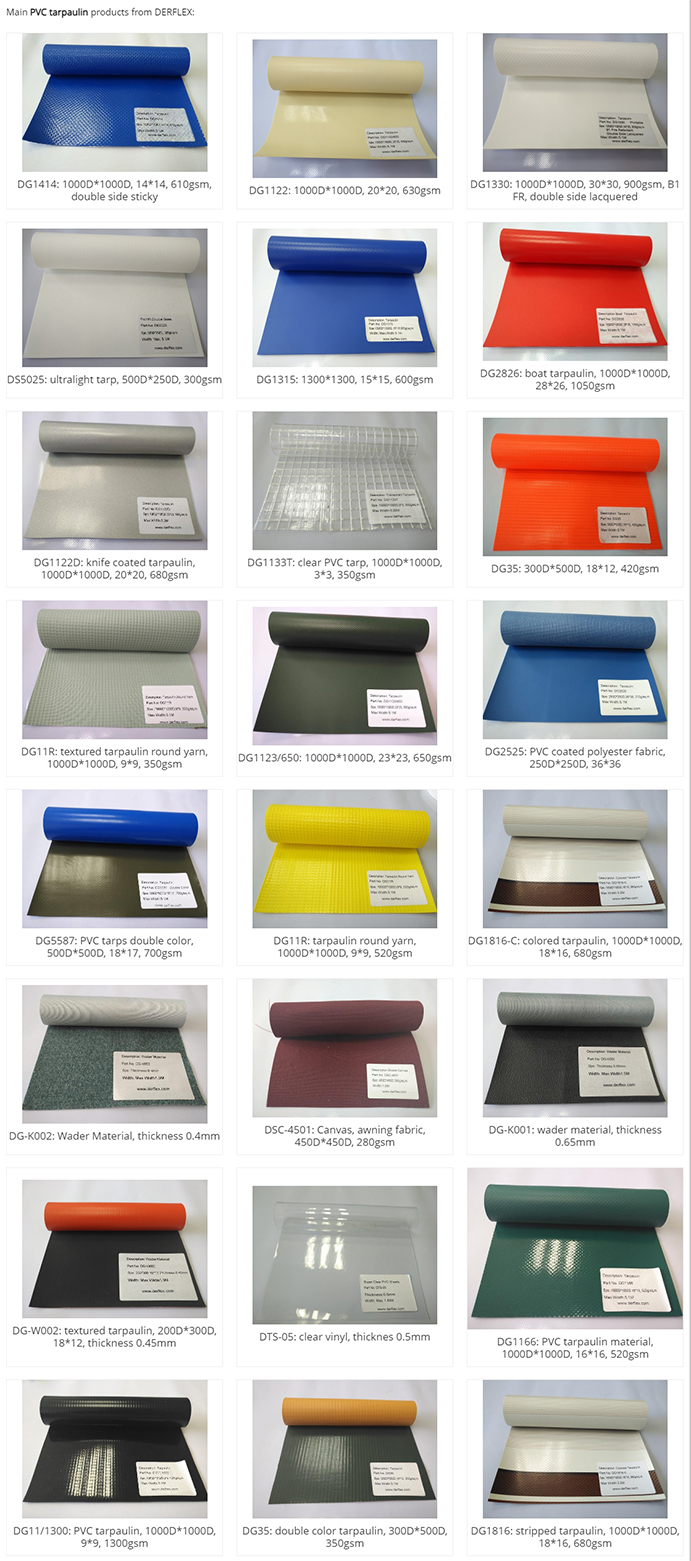
PVC coated polyester is commonly selected when the buyer needs a robust, weldable, reusable sheet and wants the PVC layer integrated with a reinforcing textile. Knife coating, dip coating or related coated-fabric processes may be used depending on the product construction.
PVC laminated tarpaulin uses film layers laminated to a reinforcing scrim. It can provide an economical and versatile route for many tarp applications, but the exact structure should be selected around expected handling, adhesion, welding and service cycle.
Two tarps with the same nominal weight can perform differently. Use measurable properties and finished-cover construction to compare like with like.
Shows resistance to pulling load in machine and cross direction. Always record unit and test method.
Helps assess how a cut or puncture may propagate through the fabric. Important around sharp cargo and dynamic loads.
Important for coated-fabric integrity, folding, abrasion, welding and long-term surface stability.
Relevant where the tarp rubs against rails, cargo corners, ground, machinery or repeated handling points.
Important for cold climates where stiffening can increase cracking or handling damage.
The sheet can be strong while the finished cover fails at a seam. Validate the selected welding or sewing method.
Grommets and D-rings transfer load into the hem and reinforcement. The whole load path should be reviewed together.
The strongest sheet can still fail if concentrated tie-down force enters through an unsupported eyelet, a narrow hem or a poorly positioned corner. Treat the perimeter as a structural system.
For more engineering detail, see DERFLEX's tarp with reinforced edges and tarp with D-rings pages.
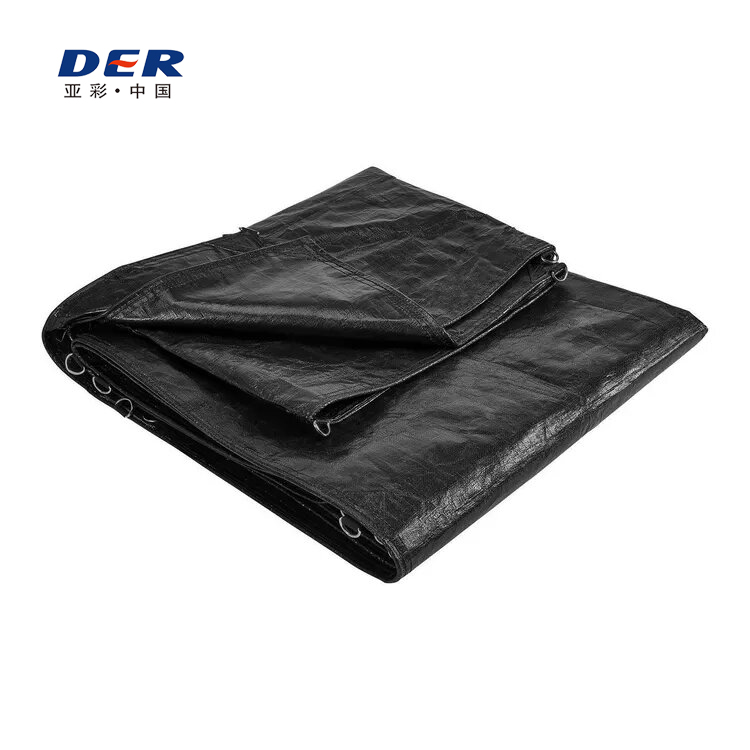
Optional performance claims should be tied to the buyer's target market, end use and requested test evidence. Do not treat every grade as carrying every certification.
| Requirement | Procurement Question | Control Point |
|---|---|---|
| UV / outdoor aging | How long and how intense is sun exposure? Is a laboratory aging method required? | Specify requested UV formulation or test method and avoid unverified life claims. |
| Flame retardancy | Is a named standard/classification mandatory in the destination market or project? | State the exact requested classification and require applicable test documentation. |
| Cold weather | What is the lowest handling/service temperature? | Control low-temperature flexibility or cold-crack performance where needed. |
| Mildew / humidity | Will the tarp be stored wet, used in agriculture or exposed to humid environments? | Discuss anti-mildew treatment, drainage and storage conditions. |
| Waterproofing | Is the need simple rain protection or a hydrostatic requirement? | Check both fabric and finished seams/penetrations; hardware holes affect the system. |
OEM is more than adding a logo. A repeatable program needs controlled material, artwork, hardware, packaging and inspection references.
Finished size, shape, GSM, base fabric direction, color, surface finish, reinforcement and hardware layout.
Logo printing, labels, barcode, product ID, instruction sheet, carton artwork and shipping marks.
Use a material code, drawing revision, approved sample ID and packing specification so future orders reference the same product definition.
A low unit price is meaningless if suppliers quote different GSM, base cloth, reinforcement, packing or delivery basis. Normalize the construction before you normalize the price.
PVC formula, polyester construction, GSM, denier, width, color, finish and optional performance package.
Cutting complexity, weld/seam length, hems, webbing, patches, grommets, D-rings, straps and pockets.
Logo process, print area, colors, labels, private-label packaging, artwork and setup cost.
Material run size, finished-tarp quantity, size/color mix and repeat-order forecast.
Internal QC, specific test methods, third-party testing and required compliance documentation.
Folded vs rolled, individual bags, cartons, pallets, marks and distributor-ready presentation.
Roll diameter, folded dimensions, palletization and loading efficiency affect freight cost per usable unit.
EXW, FOB, CFR, CIF or another agreed basis changes what is included in the quoted number.
MOQ, sample cost, production lead time and pricing are project-specific and should be confirmed in the current quotation. Do not use a generic web number as a contract value.
One MOQ number can hide several production constraints. A standard-color finished tarp may have a different minimum from a custom PVC color, custom printing or a dedicated packaging program.

Inspection should follow the specification from incoming material through finished packaging. The exact checks and acceptance limits should be agreed for the project.
Material code, yarn/base cloth, color, width, weight and relevant incoming records.
GSM, thickness, surface, adhesion direction, color consistency and roll appearance.
Finished dimensions, seam/weld, hem, reinforcement, hardware and drawing locations.
Project-defined tensile, tear, adhesion, waterproof, UV, cold, FR or other required checks.
Visual inspection, quantity, labels, carton/roll marks, packing, PSI evidence and loading records.
Lead time is affected by material availability, custom color, printing, fabrication complexity, inspection and packaging. Freight efficiency depends on how the tarp is packed, not only its weight.
Clarify whether the buyer needs a swatch, lab sample, finished prototype or approved production sample, and identify who signs it off.
Confirm the production schedule after material, color, artwork and sample approval. Treat the confirmed quotation/PO as the current source of truth.
Ask for packing dimensions, roll diameter, gross/net weight, pallet configuration and estimated loading quantity for the actual order mix.
Send the same structure to each shortlisted factory so quotations can be compared on the same construction, testing, packing and delivery basis.
Replace unknown technical fields with “supplier to recommend” rather than guessing.
That leaves multiple cost drivers undefined: base fabric, coating/lamination, tensile/tear, UV/FR, finished size, hem, hardware, packaging and delivery basis. Two suppliers can quote two very different products under the same phrase.
If a tensile, tear or adhesion value matters, add the unit, direction and test method. Otherwise the value may not be comparable between suppliers.
For a deeper specification checklist, visit the Tarpaulin RFQ Template page before sending the final inquiry.
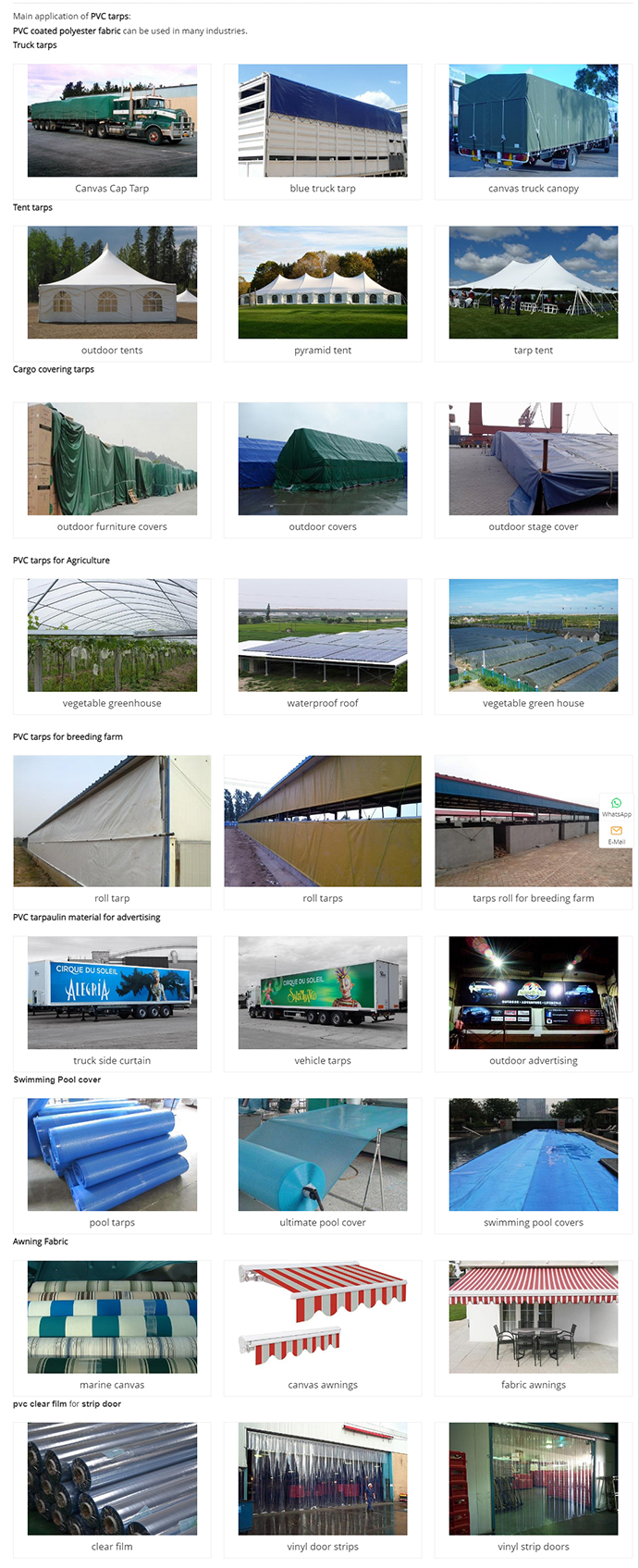
A truck tarp faces wind flutter, tie-down loads and repeated handling. A construction cover may face abrasion and irregular geometry. An agricultural cover may need long outdoor exposure and large-area handling. A warehouse divider may prioritize weldability, cleanability and dimensional layout.
That is why DERFLEX's custom heavy duty tarps program starts with the application and finished-cover requirements rather than a single stock weight.
Use the page cluster below to move from broad manufacturer research into product selection, OEM development, reinforcement detail and quote preparation.
Concise answers for buyers comparing a China manufacturer, supplier or factory.
There is no universal cutoff. Buyers often discuss higher-weight PVC coated polyester constructions such as 450gsm, 650gsm, 900gsm and above for reusable commercial or industrial use, but GSM alone does not determine strength. Base fabric, denier, weave, tensile, tear, adhesion, reinforcement and finished-cover design should be reviewed together.
No. A 900gsm construction is heavier, but “better” depends on the application. A well-engineered 650gsm tarp may be preferable when handling weight, folding, fabrication or cost matters, while a higher-weight grade may be appropriate for a more demanding duty. Compare measurable performance and finished design.
Coated fabric has PVC applied and bonded to the textile substrate through a coating process; laminated tarpaulin uses PVC film layers laminated to a reinforcing scrim. Both can be useful. The selection should consider adhesion, durability, surface finish, weldability, handling, required performance and price.
Verify the processes it controls, request production and QC evidence, review material codes and traceability, inspect fabrication and hardware capability, ask for test methods, and confirm how samples, drawings and repeat orders are controlled. A factory visit or third-party audit can be useful for higher-risk programs.
DERFLEX supports custom tarp and OEM discussions including size, material direction, color, hems, reinforcement, grommets, D-rings, printing, labels and packaging. Final specification, MOQ, artwork route and commercial terms should be confirmed for the actual order.
Send the application, supply format, finished size, quantity, target material/GSM if known, service environment, reinforcement, hardware layout, color, branding, packaging, destination, inspection/test requirements and requested Incoterm. Add a drawing or photos for fitted covers.
For custom, repeat or higher-risk orders, an identified material swatch or finished prototype creates a useful control reference. Link the approved sample to the final specification, drawing revision and purchase order so bulk inspection has a clear baseline.
MOQ depends on the material construction, standard or custom color, finished size, printing, packaging and production route. Confirm whether the factory's minimum is expressed in pieces, square meters, rolls or a material batch, and ask whether branding creates an additional minimum.
Describe the application, finished size, quantity, target material direction, environment, reinforcement, hardware, branding, packaging and destination. If you do not know the GSM or denier, describe the failure risk and ask the factory to recommend a specification for review.
Procurement note: examples on this page are specification-planning directions, not a guarantee that every construction or performance option is available for every order. Final material code, tolerances, test methods, certifications, MOQ, lead time, pricing, packing and delivery terms should be confirmed in the current DERFLEX quotation, approved sample and purchase contract.