Connect to reinforcement
Define the tab overlap, backing patch, hem or webbing strip and attachment method. Review tension, shear and peeling at the real pull angle. A familiar stitch pattern has no universal strength value.



Technical design guide
Custom covers · OEM supply
Heavy duty tarps with straps and buckles combine a protective cover with adjustable, repeatable closures. They suit equipment covers, fitted trailer tarps, access flaps and industrial cover programs where the same tarp is opened, removed and installed again. A useful design must fit the anchors, stay within the attachment’s capacity and remain easy to inspect.
DERFLEX supports custom PVC tarp fabrication with webbing reinforcement, straps, buckles, welded seams and drawing-based finishing. Send equipment photos, finished dimensions, anchor positions, installation frequency and quantity. The fabric, closure layout, replacement approach and approval checks can then be reviewed as one finished assembly.
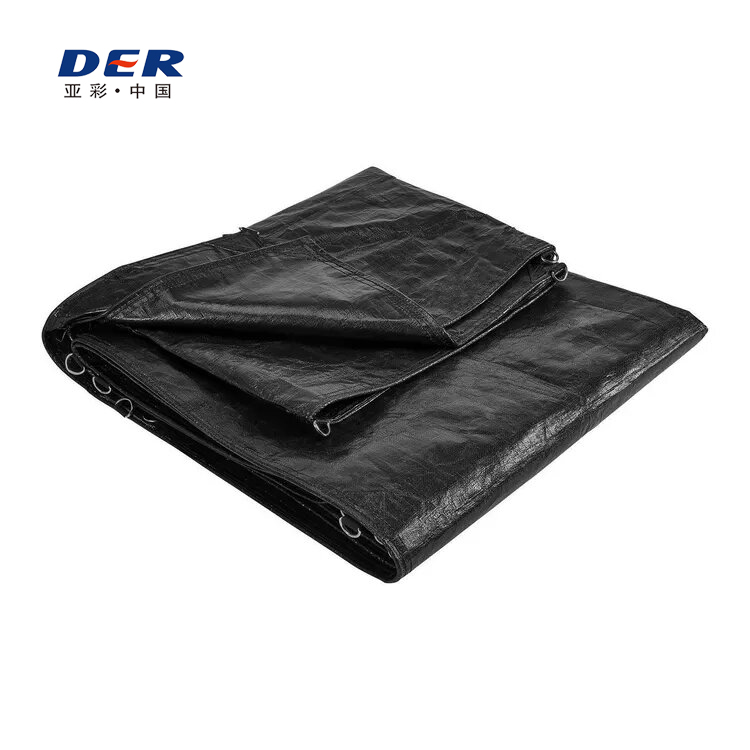
Pull should be transferred through the strap connection into an appropriate reinforced zone. Review the actual loading direction and attachment geometry. Avoid treating a buckle sewn to an unsupported piece of coated fabric as a complete specification.
Define the tab overlap, backing patch, hem or webbing strip and attachment method. Review tension, shear and peeling at the real pull angle. A familiar stitch pattern has no universal strength value.
Welding the main PVC panels does not seal a sewn strap joint. Determine whether the attachment needs a compatible sealing detail, covering flap or different location. Check water ingress after flexing and repeated use.
Position the buckle away from common fold lines and places where it can rub the coating. Consider a protective pad, sleeve or local wear layer after checking that it does not obstruct release or hold grit against the fabric.
When the strap clips to a reinforced ring rather than attaching directly, compare the D-ring attachment and pull-direction considerations.
Specify the installed adjustment range instead of ordering by total strap cut length. Material used in sewn returns, buckle threading and anchor loops is not all available as free travel.
If an intended installed route varies from 600 to 800 mm, the assembly needs to cover that 200 mm variation while maintaining its approved threading and free tail at both extremes.
The calculation does not determine the cut length. Sewing allowances, buckle wrap, loop geometry and the final grip tail must be added or accounted for using the actual assembly drawing.
| Drawing field | What to record | Why it matters on repeat orders |
|---|---|---|
| Station ID & datum | Identify each station; locate its attachment center from defined finished-panel datum points. | Prevents measuring from different hems or changing the reference when the panel shape changes. |
| Pull direction & anchor | Anchor type, route, orientation, contact surfaces and clearance. | Prevents sideways buckle loading or a strap rubbing a sharp edge. |
| Webbing & buckle codes | Approved manufacturer/part references, width, construction, finish and threading method. | Prevents a visually similar substitute from changing grip, fit or release behavior. |
| Usable range & tail | Minimum and maximum installed span, fixed section, free tail and keeper detail. | Prevents a replacement cover that connects but cannot tighten or open properly. |
| Attachment & tolerance | Patch/hem detail, sewing or joining specification, water-barrier detail and positional tolerance. | Controls the finished interface, not just the fabric or accessory. |
| Service part & label | Replacement assembly, connection instructions, station label and drawing revision. | Helps operators install the approved part in the intended location. |
There is no universal strap spacing for heavy duty tarps. Map the anchors, unsupported fabric spans, exposure and access requirements before deciding how many stations to use. Additional buckles also add handling steps, weight and maintenance points.
For vehicle-specific dimensions and cover forms, review DERFLEX’s trailer tarpaulin configurations.
A fast closure is useful only if it can be reached, threaded correctly and checked without unnecessary rework. Agree the fitting sequence with the user during the trial fit.
For cargo-cover applications, consult the related logistics tarp application guide when defining access, routing and exposure.
A material swatch cannot verify closure fit, buckle slip, patch distortion or water ingress at a strap joint. Use a representative finished cover or attachment assembly. The following is a proposed buyer–supplier approval plan; it does not describe completed DERFLEX testing or certify a service life.
| Check | Procedure to agree | Acceptance item to define |
|---|---|---|
| Fit & operator access | Fit the sample to actual anchors at minimum and maximum intended geometry; use the expected gloves and handling sequence. | Usable range, retained tail, release access and an agreed fitting-time target. |
| Installed retention | Apply the agreed force, direction and hold time to the complete connection; measure strap movement and connection distortion. | Permitted slip, permanent deformation and visible damage. |
| Install–release cycles | Repeat the intended fitting, tensioning, opening and storage sequence for a jointly defined number of cycles. | Closure function, webbing wear, seam/patch condition and fit after cycling. |
| Wet / dirty operation | Include representative water and contamination conditions relevant to the job; repeat operation and retention checks. | Grip, release, cleaning needs and component condition under the agreed conditions. |
| Water barrier | Evaluate water entry around panel seams and attachments using the agreed orientation and exposure, after representative cycling. | Specified leakage criteria and inspection of needle holes, sealing details and drainage. |
| Replacement & packing | Change a proposed service part, refit it, then pack and reopen the cover using the intended method. | Compatible parts, correct threading, station identification and absence of hardware-induced damage. |
A webbing breaking strength, buckle rating and finished tarp attachment result describe different things. Do not convert a raw component value into a cover working load limit. Where a rated system is required, define its complete test basis and documentation.
Retain the sample, drawing revision, material reference, component list, threading instructions and agreed acceptance record. Component substitutions or changes to the tab and patch should trigger a review of the affected checks.
Use the table as a diagnostic starting point. Photograph the installed route and damaged component before changing the design; several causes can produce the same symptom.
| Observed symptom | Possible contributor | What to review |
|---|---|---|
| Strap gradually loosens | Incorrect threading, webbing/buckle mismatch, contamination or worn gripping surfaces. | Approved component pair and threading; reproduce the operating conditions before choosing a replacement. |
| Tab lifts or patch distorts | Pull angle, insufficient load distribution, attachment wear or excessive tension. | Anchor alignment, reinforced zone, attachment method and the tensioning routine. |
| Strap frays beside buckle | Twisting, an abrasive contact edge or incompatible slot geometry. | Threading alignment, hardware condition, webbing specification and wear protection. |
| Coating wears at folds | Hard hardware trapped in the folded cover or repeated contact in one zone. | Buckle position, fold plan, tail storage and local protective details. |
| Water enters at attachment | Needle holes, a damaged sealing detail or water collecting at the joint. | Attachment sealing, location and drainage; repeat the water check after repair. |
| Replacement strap does not work | A different buckle half, webbing thickness, fixed length or threading method. | Exact approved part references and usable range; review the full connection rather than one spare component. |
A detachable strap may simplify replacement, but its connector adds another interface that must retain the intended load and remain inspectable. A permanently attached strap reduces loose connections but can require a larger repair when worn. Decide the service boundary before the sample is approved.
DERFLEX’s published custom tarp capabilities include PVC fabric selection, finished shapes, welded or sewn fabrication, reinforced edges, webbing, straps, buckles, printing and private-label packing. Specific buckle models, serviceable components and test requirements need technical review for your project.
Define the cover geometry and closure locations together. Confirm the finished construction and trial fit before committing a repeated-installation design to bulk supply.
Control drawing versions, matched components, labels and pack counts across the order. For distributors, identify the approved spare assemblies and the information needed by the end user.
Price depends on fabric area, reinforcement, station count, buckle type, fabrication, testing and packing. Ask DERFLEX to confirm MOQ, sampling, lead time and hardware availability for the reviewed design.
Application / equipment model:
Finished cover dimensions, drops and openings:
Equipment photos / anchor map / drawing revision:
Installation frequency and handling routine:
Fabric requirements: construction, GSM, color, exposure:
Closure station IDs and expected pull directions:
Buckle preference / approved part reference:
Webbing specification and usable adjustment range:
Attachment reinforcement and water-barrier requirements:
Inspection, sample-cycle and retention acceptance criteria:
Replacement strap / buckle assembly requirements:
Quantity / destination / requested schedule:
Logo, labels, packing and required test documentation:
Send DERFLEX your drawing or equipment photos and describe how the tarp is fitted and removed. Request a quotation for the proposed fabric, reinforcement and closure assembly, with sample approval requirements and supply details stated together.
Straps and buckles can be more convenient when a cover is repeatedly fitted to the same equipment or frame, because they provide an adjustable closure without retying knots. Grommets remain useful for perimeter lacing or varied anchor arrangements. The appropriate choice depends on anchor geometry, exposure and the strength of the complete attachment.
A cam buckle is a useful candidate for frequent hand tensioning; an over-center buckle can suit a repeatable closure after its operating range is approved. A side-release buckle can simplify opening on suitably rated cover closures. Ratchets require particular care because their mechanical advantage can overload a tarp attachment. Confirm the actual buckle and webbing combination on a finished sample.
Measure the actual strap route at the smallest and largest intended fit. Specify the usable installed adjustment range, fixed-end construction and the free tail needed for threading and gloved handling. Total cut length alone does not describe whether the assembly will fit. Check that the strap tightens at the smallest fit and remains securely engaged at the largest.
Yes. Needle holes through a water barrier can become leakage paths even when the main panels are welded. Review where the attachment sits, how water drains and whether a compatible sealing or covering detail is needed. Evaluate water ingress on the finished attachment after representative installation cycles.
A serviceable design may allow an approved detachable strap or matched buckle assembly to be replaced while the reinforced tarp connection stays in place. This must be designed and checked in advance. The extra connector is another load-bearing interface, and a damaged tab, backing patch or seam requires assessment as well.
Send finished dimensions, equipment or frame photos, anchor positions, installation frequency, usable strap range, buckle preference, fabric requirements, exposure, quantity and destination. Include reinforcement, waterproof attachment details, replacement parts, branding, packing and any required test criteria. MOQ, sample arrangements, lead time and hardware availability are confirmed for the proposed specification.