News
Industry News

Heavy Duty Tarps for Tropical & Humid Climates | UV, Mildew & Condensation Guide | DERFLEX<

Update:2026/10/1 19:34:33 Views:
Tropical Climate Tarp Engineering Guide

Heavy Duty Tarps for Tropical & Humid Climates

High humidity changes how a tarp should be specified. In tropical regions, a heavy duty cover must deal with intense UV exposure, warm rain, trapped water vapor, mildew risk, repeated wet/dry cycling and mechanical stress at the same time. This guide shows B2B buyers how to select the material, surface, seams, drainage, ventilation and reinforcement as one system rather than relying on a simple “waterproof” or “heavy duty” label.

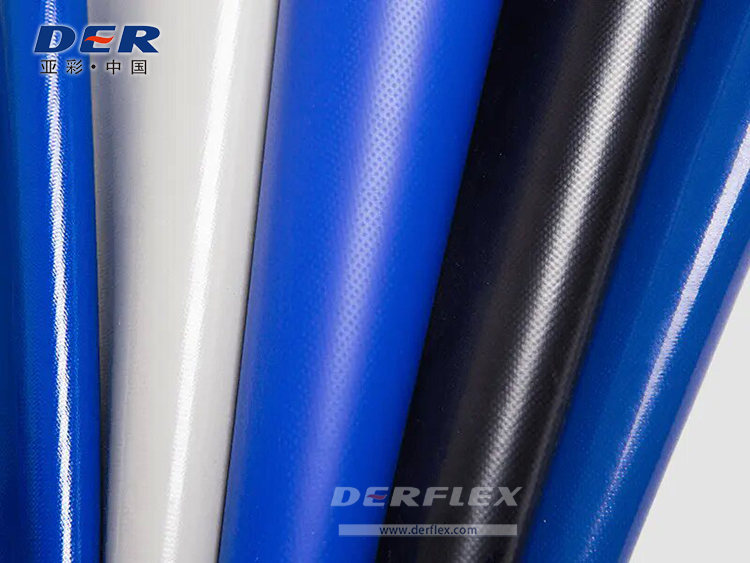
DERFLEX UV resistant PVC coated polyester tarpaulin for humid tropical outdoor use
DERFLEX PVC coated polyester tarpaulin example. Final construction should be matched to sunlight, humidity, wet time, handling stress and the finished cover design.
UV ResistanceSlow sunlight-driven hardening, fading and coating deterioration.
Mildew ControlReduce prolonged dampness, dirt retention and fungal-growth risk.
Condensation ControlManage vapor, airflow, surface temperature and dew-point conditions.
Drainage & ReinforcementPrevent ponding, water traps, flap damage and stressed attachment points.
Answer First

What Is the Best Heavy Duty Tarp for Tropical and Humid Climates?

For repeated outdoor use in tropical and humid climates, PVC coated polyester is often a practical starting point when the project needs waterproofing, strong reinforcement, heat-weldable seams, UV-resistant formulation and custom fabrication. The material alone is not enough. The finished system should also address mildew risk, positive drainage, controlled ventilation, easy cleaning, reinforced edges and dry storage between jobs.

If airflow is more important than complete rain exclusion, a mesh tarp may be more appropriate. If breathability is essential and occasional water resistance is acceptable, treated canvas can reduce trapped moisture more naturally. Lightweight PE can work for temporary or price-sensitive use, but heavy tropical exposure should be evaluated against UV durability, folding frequency and attachment stress rather than purchase price alone.

The correct specification depends on exposure time, cover geometry, wind, cargo moisture, installation method, service interval and required compliance. “Tropical grade” should be defined by these conditions, not treated as a universal material label.

Three Connected Failure Modes

Why Tropical Humidity Is Harder on Heavy Duty Tarps

Tropical exposure is not simply “more rain.” High solar load, warm moist air and frequent wetting can accelerate different failure mechanisms at the same time. A good specification separates them before deciding what the tarp needs.

UV

1. Sunlight Ages the Polymer Surface

Long periods of strong sunlight can drive color change, chalking, hardening, loss of flexibility and coating deterioration. A thicker tarp is not automatically a better UV tarp. Outdoor formulation, pigment system, surface finish, coating quality and the underlying reinforcement all influence long-term behavior.

For exposed truck covers, farm storage and construction protection, the buyer should specify expected outdoor duty rather than asking only for a certain mil or GSM.

RH

2. Persistent Moisture Raises Mildew Risk

A synthetic tarp surface can still develop visible mildew when dust, plant residue, oils or other contamination stays damp. Water can remain in folds, seam pockets, hem details and low spots even when the sheet itself is waterproof.

Anti-mildew treatment is useful, but it should be combined with easy-clean surfaces, runoff planning, drying access and a maintenance routine. Moisture control is part of the product system.

DP

3. Waterproof Covers Can Still “Sweat”

Condensation occurs when humid air contacts a surface at or below its dew-point condition. A sealed tarp can keep rain out while trapping moisture vapor from wet ground, warm equipment, damp cargo or humid ambient air. Overnight cooling then turns that vapor into droplets on the underside.

That is why full waterproofing and moisture management are separate design problems.

Technical basis: the U.S. National Weather Service defines dew point as the temperature at which air reaches saturation and condensation begins, while the U.S. EPA emphasizes that moisture control is the key to mold control. For tarp design, the practical implication is to manage moisture sources, air exchange, wet surfaces and drainage rather than relying on a coating claim alone.
Tropical Tarp Design Stack

Five Layers Behind a More Reliable Humid-Climate Cover

The strongest procurement specification connects the coated fabric to the finished cover, installation geometry and maintenance routine.

UV-Stabilized Material

Define long outdoor exposure, expected folding and handling, and the need for a UV-oriented PVC formulation or surface finish.

Low-Contamination Surface

Smooth or suitable lacquered finishes can make mud, plant residue, road grime and biological deposits easier to remove.

Waterproof Seam System

Heat-welded seams are often preferred when water exclusion is critical. Seam direction should avoid creating pockets that hold water.

Ventilation + Drainage

Use controlled high/low air paths where the application allows, maintain slope, eliminate low pockets and keep runoff openings clear.

Reinforced Attachment

Hems, webbing, corner patches, grommets, D-rings and tension strategy should distribute load instead of concentrating it in wet, wind-loaded areas.

Material Decision

PVC vs PE vs Canvas vs Mesh in Hot, Humid Conditions

No material solves every moisture problem. Select the tarp according to the balance between waterproofing, airflow, reuse, mechanical load and expected outdoor exposure.

Material route Rain protection Humidity / condensation behavior UV & repeated outdoor use Best fit in tropical climates Main caution
PVC coated polyester Waterproof surface; welded fabrication available Can trap vapor if sealed tightly; ventilation must be designed separately Can be specified with UV and anti-mildew directions; suitable for robust industrial covers Truck tarps, industrial covers, farm storage, construction, equipment protection, OEM finished tarps Do not confuse waterproofness with breathability
PE / poly tarp Waterproof film structure in suitable grades Also non-breathable; condensation can occur under tight coverage Useful for temporary and economical coverage; UV durability varies strongly by grade Seasonal protection, temporary roofs, short-term storage Light grades may wear quickly at folds and tie-down points
Treated canvas Often water-resistant rather than fully waterproof Breathability can reduce trapped vapor and condensation Can work well where ventilation matters; treatment and maintenance remain important Equipment or materials where evaporation is valuable and full waterproofing is not mandatory Natural fibers can absorb moisture and require thorough drying
Mesh tarp Not a complete rain barrier Excellent airflow and heat release Useful for shade and ventilation when full enclosure is unnecessary Shade, debris control, wind reduction, ventilated covers Unsuitable where cargo must stay dry in driving rain
Practical rule: if the project needs both strong rain exclusion and long tropical exposure, start the discussion with PVC coated polyester, then solve condensation through cover geometry, ventilation and moisture-source control rather than by making the sheet thicker.
Application-to-Specification Matrix

How to Match a Heavy Duty Tarp to the Actual Humid-Climate Job

The recommendations below are specification directions, not fixed universal grades. Final values should be confirmed after reviewing the application, size, duty cycle and required test standards.

Application Primary climate risk Material direction Fabrication priorities Buyer should specify
Truck & trailer cargo Sun, road spray, wind flap, wet folding, abrasion UV-oriented PVC coated polyester for repeated use Welded seams, reinforced hems, webbing, load-distributed tie-downs Route climate, daily exposure, finished size, grommet / D-ring plan, folding frequency
Agricultural storage Plant residue, wet ground, condensation, strong sun Waterproof easy-clean PVC route when rain exclusion is critical Ground separation, slope, vent path, reinforced high-contact zones Crop / equipment type, ground condition, storage duration, cleaning cycle
Industrial machinery cover Condensation, hot equipment, oil / grime, edge abrasion PVC coated fabric with finish matched to cleaning and contact conditions Stand-off space, vent openings, access flaps, wear patches Operating temperature, whether equipment is covered warm, chemical contact, access points
Construction / temporary roof Heavy rain, ponding, wind, intense UV, repeated tension Heavy-duty waterproof construction with outdoor UV direction Positive roof pitch, seam orientation, reinforced perimeter, frequent inspection points Span, slope, anchoring plan, wind exposure, expected service period
Coastal / marine-adjacent storage Humidity, salt deposits, sun, corrosion, condensation Washable waterproof PVC system with UV and mildew considerations Drainage, rinse access, suitable hardware, chafe protection Salt exposure, hardware material, surface contact sensitivity, rinse frequency
Distributor / private-label program Different regional climates and inconsistent end-use Create defined duty levels rather than one “heavy duty” SKU Repeatable material spec, label, packing, color, reinforced options Target markets, use cases, retail vs industrial segment, reference sample, test expectations
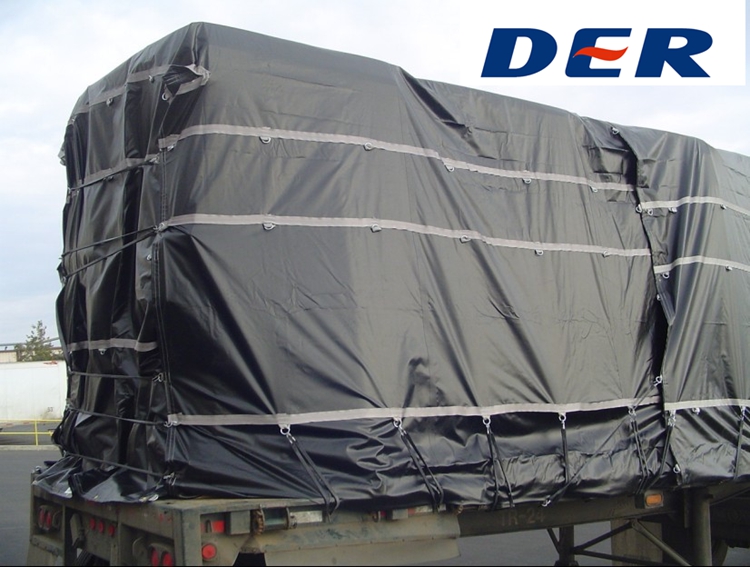
Heavy duty truck tarp with reinforced webbing and tie-down points for outdoor cargo protection
Finished tarp performance depends on the attachment system as much as the sheet. Reinforced webbing, distributed tie-down points and a controlled fit help reduce local stress and wind flap.
Field Observation

Why Reinforcement Becomes More Important After Rain

Water adds weight, wet surfaces can change friction, and tropical storms can combine rain with gusty wind. If a cover is loose, flapping repeatedly works the same fold, seam or grommet area until the local structure fails. A thicker center sheet cannot compensate for a weak edge.

For finished heavy duty tarps, review the complete load path: fabric → seam → hem → webbing / reinforcement → grommet or D-ring → rope / strap → anchor point. Each transition should distribute tension without creating a sharp stress concentration.

  • Use reinforced corners where diagonal loads are expected.
  • Match grommet or D-ring spacing to the finished geometry and wind exposure.
  • Protect high-abrasion contact zones with wear patches or standoff spacing.
  • Avoid over-tensioning one point while adjacent attachment points remain loose.
Engineering & Fabrication Notes

Six Details That Control Real-World Moisture Performance

These details are often more important than adding another generic performance claim to the material datasheet.

1Build a Positive Runoff Path

Avoid flat unsupported spans. Water should have a continuous path to the edge without collecting in a low pocket. Ponding increases load, distorts the cover and keeps the surface wet longer.

2Vent Without Creating a Rain Path

Where the application allows ventilation, create controlled openings at low and high positions so warm humid air can leave. Shield openings from wind-driven rain and maintain enough separation so the cover does not seal directly against the cargo.

3Do Not Wrap a Moisture Source

Fresh-washed machinery, damp timber, wet pallets, fresh concrete and warm equipment can release moisture after the tarp is installed. Let loads drain or cool when practical before sealing the cover.

4Orient Seams to Shed Water

Place welded or sewn details so water runs across them rather than into a reverse lap, pocket or fold. For waterproof systems, heat welding can reduce needle penetrations where suitable for the chosen PVC structure.

5Design for Cleaning and Full Drying

Tropical covers often collect algae-prone residue, dust, feed particles, road grime or salt. The surface and finished geometry should allow washing, runoff and complete drying before long storage.

6Separate Material Tests from System Performance

A UV, mildew or tensile test can evaluate a material property, but it does not validate poor installation geometry. Specify both the material requirement and the finished-cover design that controls drainage, ventilation and attachment stress.

Product Construction

What a Tropical-Climate PVC Tarp Specification Should Actually Describe

“Waterproof, UV resistant, mildew resistant” is not enough for a repeat B2B order. A purchase specification should identify the material and the finished construction in measurable or reviewable terms.

Specification item What to define
Material structurePVC coated or laminated polyester construction; final structure selected by duty and fabrication method.
Weight / thicknessTarget GSM or thickness based on strength, handling and wear — not used as a substitute for UV or reinforcement design.
UV requirementExpected outdoor exposure, color stability expectations and any buyer-defined weathering test route.
Humidity packageAnti-mildew direction, cleanable surface finish, expected wet time, contamination and cleaning routine.
SeamsHot-air / HF welding or sewing route, seam direction and waterproofing requirement.
PerimeterHem type, webbing, rope-in-hem, corner patches, pocket details and reinforcement locations.
HardwareGrommet / eyelet / D-ring type, spacing and corrosion considerations for the service environment.
Supply formatRoll goods, cut panels, finished tarps, OEM labels, packaging and repeat-order specification control.
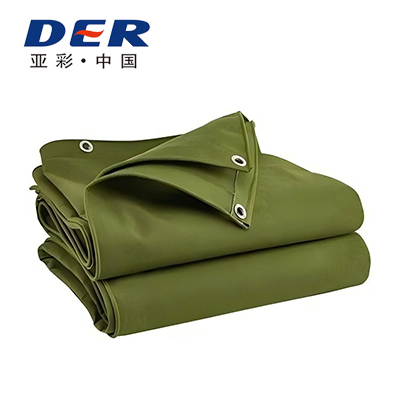
DERFLEX heavy duty vinyl tarp with reinforced grommets for custom industrial cover fabrication
Example finished vinyl tarp. In humid-climate projects, specify the sheet, seams, edges, hardware, ventilation and storage routine as one procurement package.
Common Procurement Mistakes

Six Ways Buyers Accidentally Create a Humidity Problem

Mistake 1: “Thicker means better UV.” GSM and thickness describe mass and dimension, not outdoor formulation. Ask how the material is designed for sunlight exposure.
Mistake 2: “Waterproof means condensation-proof.” A waterproof cover can still trap vapor. Manage the moisture source, air exchange and cold-surface contact.
Mistake 3: “Anti-mildew means no maintenance.” Dirt and organic residue can support surface growth. Cleaning, drying and runoff remain necessary.
Mistake 4: Sealing wet equipment immediately. A warm or damp load can release moisture for hours. Dry or cool the load when operations allow.
Mistake 5: Designing a flat tarp roof. Low pockets collect water and increase load. Give temporary roofs and shelters positive drainage.
Mistake 6: Buying by center-sheet strength only. Many failures begin at corners, hems, grommets, seams and wear points. Reinforcement must follow the load path.
Failure Diagnosis

Is It a Leak, Condensation, Mildew or Ponding?

Identifying the moisture route before changing material can prevent unnecessary replacement and help the next order solve the correct problem.

What you observe Likely direction What to inspect first First corrective action
Fine droplets spread over the underside, often strongest early in the day Condensation Wet ground, sealed perimeter, damp load, overnight cooling Reduce trapped moisture and add controlled air exchange
One wet patch appears below a seam or abrasion point after rain Localized ingress Seam, puncture, grommet, worn contact zone Repair the specific leak path
Dark spotting or odor appears after repeated damp storage Mildew / contamination growth Dirty folds, organic residue, wet packing, low air movement Clean, dry completely and change storage / drying routine
Large sagging water pocket forms on a horizontal cover Ponding Slope, support spacing, tension, seam location Create positive drainage and support geometry
Tearing starts around one eyelet after windy rain Load concentration Grommet spacing, reinforcement, flap, anchor direction Redistribute load and reinforce the attachment zone
Custom Manufacturing Direction

Build the Tarp Around the Climate, Not Around a Generic SKU

DERFLEX can discuss PVC coated polyester roll goods, cut panels and finished heavy duty tarps with project-matched material weight, width, color, surface finish, UV direction, anti-mildew direction, welded fabrication, reinforced hems, webbing, grommets, D-rings and OEM packaging. Final specifications should be confirmed against your actual service environment and required test standards.

Roll goods Finished tarps Heat welding Reinforced hems Custom hardware <, span class="dfx-pill">OEM packaging
RFQ Checklist

What to Send DERFLEX for a Tropical-Climate Tarp Quotation

A climate-specific RFQ reduces guesswork and helps the material, reinforcement and finished geometry match the actual job.

Application & Environment

  • End use: truck, farm, construction, equipment, marine-adjacent, shelter or OEM resale
  • Country / climate zone and indoor or outdoor use
  • Daily sunlight exposure and expected service duration
  • Rain intensity, wet ground, salt, dust, biological residue or process contamination
  • Whether the covered item is warm, wet or moisture-emitting
  • Need for ventilation, access flaps or sealed weather protection

Material, Fabrication & Order

  • Finished dimensions or roll width / length requirement
  • Target GSM / thickness or reference sample
  • Color and surface finish
  • Seam method, hem, webbing, grommet / D-ring spacing and reinforcement drawing
  • UV, anti-mildew, flame-retardant or other project-specific test requirement
  • Quantity, branding, packing method, destination and repeat-order expectations
Buyer Questions

Heavy Duty Tarps for Humid & Tropical Climates FAQ

What type of tarp is best for a tropical climate?

For repeated outdoor protection where full rain exclusion is required, PVC coated polyester is often a practical starting point because it can combine waterproofing, weldable seams, UV-oriented formulation, reinforced fabrication and custom finishing. The finished cover should also provide drainage, ventilation where appropriate and a cleaning / drying plan. If airflow matters more than waterproofing, mesh or breathable canvas may be better.

Can mildew grow on a waterproof PVC tarp?

Yes. The PVC surface itself is non-absorbent, but dust, plant residue, oil, food particles or other contamination can remain on the surface and support growth when they stay wet. Mildew-resistant formulation can reduce risk, but drainage, cleaning, airflow and dry storage still matter.

Why is there water under my tarp even when it does not leak?

The water may be condensation. Humid air trapped below the cover can condense when the underside of the tarp or the cargo surface cools to the dew-point condition. Reduce internal moisture sources, separate the load from wet ground, add controlled airflow where possible and avoid tightly sealing warm or damp equipment.

Does a thicker tarp resist UV better?

Not necessarily. Thickness and GSM affect material mass, but UV durability also depends on polymer formulation, stabilizers, pigments, surface finish, coating quality and the way the tarp is used. A heavy sheet with poor UV stabilization can age faster than a better-formulated outdoor grade.

Should a waterproof tarp be ventilated in humid weather?

If the protected goods and the application allow it, controlled ventilation can reduce trapped humidity and condensation. Openings should be placed and shielded so they do not become direct paths for wind-driven rain. Some applications require a sealed barrier, so the ventilation strategy must be evaluated case by case.

Are white tarps better than black tarps in tropical sun?

Lighter colors can reduce solar heat absorption in many conditions, while darker colors may be preferred for opacity, appearance or other application needs. Color alone does not define UV grade. The coating formulation, pigment system, reinforcement and installation should be evaluated together.

How should heavy duty tarps be stored in humid climates?

Clean off dirt and organic residue, rinse if appropriate, dry the tarp completely, inspect seams and hardware, then fold or roll it in a dry ventilated area. Long-term storage while wet can create odor, staining, mildew risk and corrosion around metal hardware.

What specifications should an importer or distributor include in an RFQ?

Provide the target market, application, climate, finished size or roll dimensions, target GSM or reference sample, color, surface, UV / mildew requirement, seam route, edge reinforcement, grommet or D-ring layout, quantity, packaging, destination and required test standard. A drawing or previous sample can reduce ambiguity for repeat orders.

Technical reference links for readers who want the underlying moisture-control concepts: U.S. National Weather Service — Dew Point  ·  U.S. EPA — Moisture and Mold Control. These references explain the physics of condensation and the role of moisture control; final industrial tarp specifications should be confirmed for the actual application.
DERFLEX · Custom Heavy Duty Tarps

Specify the Climate Before You Specify the Tarp

Send DERFLEX the application, climate, dimensions, duty cycle, UV exposure, moisture risks, reinforcement layout, quantity and packing requirement. The team can review a practical PVC coated polyester material and finished tarp direction for your project or private-label program.

Consulting Services
+86-021-54361792 / 54361798
Email
sales@derflex.com