News
Industry News

How to Prevent Condensation Under Heavy Duty Tarps | DERFLEX

Update:2026/9/30 21:50:27 Views:
Heavy Duty Tarp Moisture-Control Guide

How to Prevent Condensation Under Heavy Duty Tarps

A waterproof heavy duty tarp can stop rain and still become wet underneath. The moisture is often condensation—not a leak. The practical fix is to control the moisture source, keep wet ground and damp cargo from feeding the enclosed air, create deliberate airflow where the application allows it, and avoid letting the cold tarp surface become the only place trapped vapor can go.

Quick answer: To reduce condensation under a heavy duty tarp, cover dry material, elevate the load from wet ground, leave a controlled air path at low and high points, avoid sealing warm or damp equipment immediately, maintain drainage, and use a fitted cover or vented design when long-term storage makes moisture control critical.

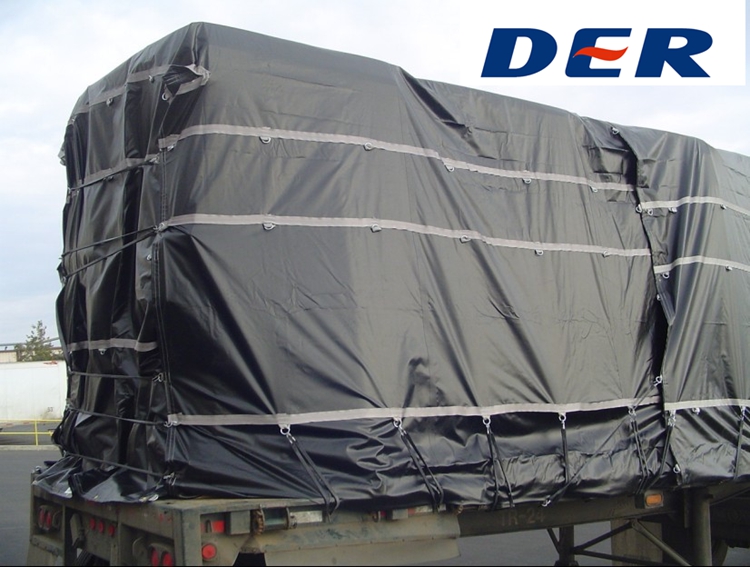
Heavy duty truck tarp cover showing a large waterproof tarp system that may require controlled ventilation to manage condensation
Waterproof protection and moisture control are separate design problems. A heavy duty PVC tarp can block external rain while trapped humidity still condenses on the underside.
Featured-Snippet Answer

What is the best way to stop condensation under a tarp?

Stop the moisture cycle rather than simply choosing a thicker tarp. Condensation forms when moist air under the cover reaches a cold surface at or below its dew point. A durable control strategy therefore combines dry loading, separation from ground moisture, airflow, drainage, temperature management and suitable cover geometry.

For outdoor machinery, pallets, timber, construction materials and truck loads, the most reliable setup usually keeps the tarp from lying tightly against the protected surface, gives humid air a controlled route out, and prevents rain from using that same opening as an entry path.

If the priority is repeated industrial weather protection, start with a suitable heavy duty tarp construction and then specify the ventilation, fit and installation system around the actual condensation risk.
Condensation Science

Why a Waterproof Tarp Can Be Wet on the Inside

A waterproof tarp stops liquid rain from passing through the sheet, but it does not automatically remove water vapor already inside the covered space. If that enclosed air is humid and the underside of the tarp cools enough, water vapor can condense into droplets.

1

Moisture enters the enclosure

Wet soil, damp lumber, fresh concrete, washed equipment, vegetation, warm machinery, cargo moisture and humid outdoor air can all add water vapor.

2

The tarp traps humid air

A waterproof PVC or PE cover greatly limits direct vapor exchange when its perimeter is wrapped tightly or the load has few natural air paths.

3

The surface cools

Night cooling, cold rain, snow, wind or a cold load can lower the tarp surface temperature faster than the enclosed air dries.

4

Water droplets form

When the tarp surface reaches the dew-point condition of the enclosed air, vapor changes to liquid water and can drip back onto the protected goods.

Engineering principle: condensation risk rises when the coldest tarp or cargo surface approaches the dew point of the air trapped below the cover. The control objective is therefore to lower the moisture content of that air, increase air exchange, reduce cold contact, or combine these measures.

Technical note: the U.S. National Weather Service defines dew point as the temperature at which air becomes saturated and condensation begins. In real tarp applications, surface temperature, moisture source and air exchange all vary over time.

Failure Diagnosis

First Decide: Is the Water Coming Through the Tarp or Forming Under It?

Many buyers treat every drop under a cover as a waterproofing failure. That can lead to the wrong repair. Use the moisture pattern, timing and location to separate condensation from rain ingress, ground moisture and pooling-related leakage.

What You Observe Most Likely Direction What to Check Best First Action
Fine droplets spread widely across the underside, especially in the morning Condensation likely Night cooling, trapped humidity, wet load, sealed perimeter Increase controlled ventilation and reduce internal moisture sources.
Wet spot appears directly below one seam, grommet or worn patch after rain Ingress possible Seam integrity, puncture, abrasion, hardware penetration Inspect and repair the localized leak path before changing ventilation.
Moisture is strongest at the bottom of pallets or floor contact zones Ground vapor / capillary source Wet soil, concrete slab, standing water, blocked underside airflow Elevate the load and add a ground moisture strategy.
Water appears after a tarp sags into a puddle or low pocket Ponding / drainage issue Flat span, weak support, uneven tension, seam in low point Create positive drainage; see DERFLEX's tarp water-pooling guide.
Rust, mildew smell or dampness develops even without recent rain Chronic trapped humidity Long storage time, no air path, damp contents, temperature cycling Redesign the cover setup rather than relying only on thicker waterproof material.
Step-by-Step Method

How to Prevent Condensation Under Heavy Duty Tarps in 7 Steps

The sequence matters. A vent cannot overcome a wet load indefinitely, and a dry load can still sweat if it is sealed over wet ground and exposed to large temperature changes.

Cover dry material whenever possible

Do not wrap wet machinery, rain-soaked timber, fresh-washed equipment or damp packaging and expect a waterproof tarp to remove the trapped moisture. Let the load drain or dry first when operations allow.

Separate the load from wet ground

Use pallets, dunnage, racks, skids or another suitable support so moisture from soil or a damp slab is not continuously feeding the enclosed air. Keep drainage paths open around the storage footprint.

Create a deliberate air gap

A tarp pressed tightly against cold metal or packaged goods has little space for vapor to move. Where safe and practical, use fitted geometry, bows, spacers or the load profile to create a small circulation zone.

Vent low and high without inviting rain

Controlled openings can let denser cool air enter and warmer humid air escape. Position vents, overlaps or breathable zones so wind-driven rain does not have a direct path to sensitive goods.

Build drainage into the cover

A crown, ridge or sloped top keeps rain moving off the cover and reduces persistent cold water contact. Good drainage also protects seams, hardware and support points from concentrated ponding loads.

Reduce extreme temperature cycling where practical

White or lighter external surfaces can reduce solar heat absorption in some applications; insulated or double-layer systems may be appropriate when temperature moderation is part of the project. Final material choice should follow the actual duty.

Inspect the setup after real weather

Check the underside after a cold night, rainfall and a warm-to-cool transition. Look for repeated wet zones, blocked vents, sagging and wet ground. Adjust the system based on where moisture actually forms.

Ventilation Strategy

Waterproof, Vented or Breathable? Choose the Moisture-Control Strategy by Risk

There is no universal “anti-condensation tarp.” The correct system depends on whether your primary risk is rain ingress, trapped vapor, dirt, corrosion, mildew, long storage duration or repeated transport.

Maximum rain exclusion

Waterproof PVC tarp + controlled vents

Strong direction for reusable industrial, machinery and storage covers where rain exclusion is critical but the enclosure still needs a designed vapor-release path.

  • Use vent locations protected by overlap, hood or downward-facing geometry.
  • Keep airflow paths from being blocked by the load.
  • Specify welded seams and reinforcement separately from vent design.
Breathability priority

Breathable cover system

Useful where vapor release is more important than creating a fully waterproof enclosure. Treated canvas or purpose-designed breathable constructions may suit selected dry-storage situations.

  • Do not assume breathable means fully waterproof.
  • Consider absorption, drying time and mildew management.
  • Use only where exposure and stored goods permit.
Temperature-sensitive duty

Insulated or double-layer cover

Useful when rapid temperature change is a major driver of condensation and the project also needs thermal buffering. This is a different system from simply choosing a heavier single-layer tarp.

  • Define the thermal objective before material selection.
  • Do not block necessary ventilation unintentionally.
  • Evaluate weight, installation and storage volume.
Important: a waterproof PVC tarp is intentionally low-permeability. If a load must remain rain-protected for weeks or months, condensation management should be designed into the cover system rather than treated as a material defect. DERFLEX's outdoor storage tarp guide also treats drainage, wind, abrasion and trapped humidity as one system.
Application Matrix

Condensation Control Changes by What You Are Covering

The same tarp setup should not be copied from a truck load to a stationary machine or from steel inventory to agricultural storage. Moisture sources and acceptable airflow are different.

Application Main Condensation Driver Preferred Control Direction What to Specify
Outdoor machinery / equipment Cold metal surfaces, warm machinery after shutdown, wet ground, long storage Dry before covering, create air gap, vent high/low, elevate if practical Fitted geometry, vent position, wear patches, access openings, straps
Pallets / industrial inventory Wet slab, damp packaging, sealed perimeter, day/night cycling Elevated pallets, side airflow, controlled top protection Side drop, base clearance, fastening layout, identification, drainage
Truck / trailer cargo Temperature transition, cargo moisture, road weather, tight wrapping Control cargo moisture first; use fit and airflow strategy compatible with transport safety Custom drops, reinforced hems, webbing, D-rings, vent/overlap only where application permits
Construction materials Fresh concrete, wet timber, rain-soaked materials, ground vapor Dry staging, raised base, weather-sheltered airflow, positive drainage Temporary vs reusable duty, tie-downs, access, drainage geometry
Cold-weather storage Large temperature swing, cold tarp skin, freeze-thaw cycles Moisture reduction + airflow + material suitable for cold handling Cold-flex requirement, venting plan, snow/rain drainage, hardware
Moisture-sensitive goods Low tolerance for rust, mold, staining or packaging damage Do not rely on tarp alone; combine cover with controlled storage procedure Moisture limits, ventilation, desiccant/dehumidification strategy if appropriate, monitoring plan

For low-temperature projects, material flexibility and moisture control should be considered together. DERFLEX's cold-weather tarp guide explains why fold temperature, wind, ice and hardware can become the limiting factors in winter service.

Custom Cover Engineering

Build Condensation Control Into the Finished Tarp Instead of Fixing It Later

For repeat machinery covers, yard storage, fleet programs and OEM tarp products, the better approach is to treat the tarp as a complete enclosure. Material, vents, overlaps, seams, drops, straps, drainage and contact zones should be reviewed together.

  • Finished dimensions and load profile, not only flat cut size
  • Where the load is warm, wet, vapor-producing or corrosion-sensitive
  • High and low ventilation positions that remain protected from rain
  • Required air gap or stand-off from cold metal and packaged surfaces
  • Welded seam layout and water-shedding geometry
  • Reinforced hems, webbing, grommets, D-rings, straps and wear patches
  • Color / surface direction where solar heating matters
  • Cold-weather flexibility, UV exposure and handling frequency
  • Packaging and repeat-order specification control

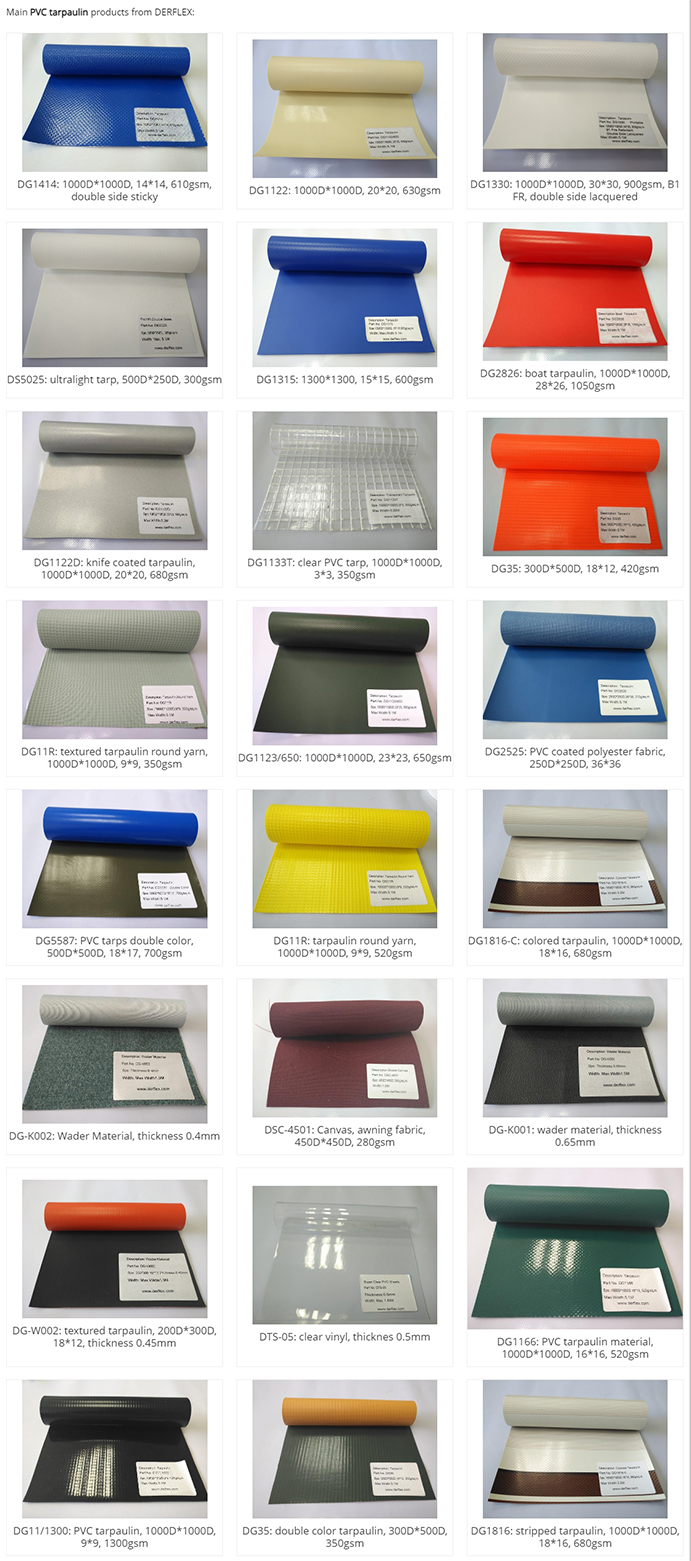
DERFLEX's PVC tarpaulin material platform supports coated polyester constructions for waterproof, weldable and customizable industrial cover programs. Final structure should be selected from the application rather than from GSM alone.

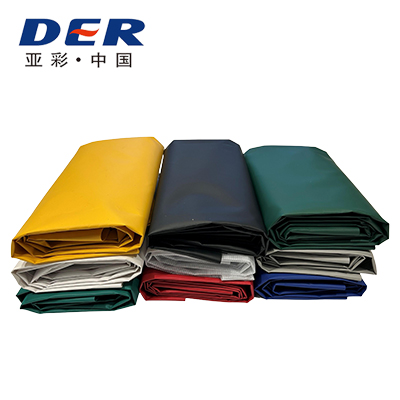
DERFLEX PVC tarpaulin material samples for heavy duty custom tarp and moisture-control cover specification
DERFLEX PVC tarpaulin material examples. Condensation control depends on the complete cover system—material, geometry, ventilation and storage conditions—not on color or GSM alone.
Common Mistakes

Six Ways Condensation Problems Get Worse

Mistake 01

Sealing damp cargo tighter

A tighter wrap can reduce rain entry while trapping even more internal vapor. Drying or ventilation may be the missing control.

Mistake 02

Assuming heavier means drier

Heavier PVC can improve durability, but it does not remove moisture from the enclosed air.

Mistake 03

Putting the load directly on wet ground

Ground moisture can continuously feed the enclosure even when rain never enters from above.

Mistake 04

Opening one large gap toward the weather

Unprotected openings can exchange air but may also admit wind-driven rain. Vent geometry matters.

Mistake 05

Ignoring water pooling

Pooled rain cools the tarp locally, adds load and can make the wet pattern look like condensation or leakage.

Mistake 06

Using the same setup for every stored product

Steel, timber, machinery, bagged goods and agricultural products have different vapor sources and moisture tolerances.

Image Pack

Heavy Duty Tarp Materials & Real Application Context

These DERFLEX site images are included with descriptive alt text and surrounding context so the page can support Google Images as well as text search.

DERFLEX Manufacturing Context

Specify the Moisture Problem, Then Specify the Tarp

DERFLEX publishes an integrated production area of 60,000㎡, a team of 450+ employees including 25+ senior engineers, and customers across 120+ countries and regions. For B2B buyers, the relevant value is the ability to discuss coated material and finished-tarp details—dimensions, welding, reinforcement, hardware, color, branding and packaging—within one sourcing process.

For the broader selection framework, see DERFLEX's Tarpaulin 101 buying guide, which compares material roles, sizes, applications and common specification mistakes.

60,000㎡Published production area
450+Published employees
25+Published senior engineers
120+Countries & regions served
B2B Procurement

What to Send DERFLEX for a Condensation-Sensitive Tarp Project

A useful inquiry describes the moisture prob, lem and installation, not only the required tarp size. Do not guess a fixed MOQ, price or lead time before the material and fabrication scope are confirmed.

RFQ Item Information to Provide Why It Matters
Application Machine, truck, pallet, construction material, agricultural goods, yard storage or OEM cover Sets the moisture, wind, abrasion and handling profile.
Finished dimensions Length, width, height/drop, shape, access points and drawing/photos Determines fit, air gap, vent position, seam layout and tie-down geometry.
Moisture source Wet ground, damp cargo, hot equipment, washdown, high humidity or unknown Helps separate condensation control from simple waterproofing.
Climate Rain, cold, snow, daily temperature swing, UV, wind and storage duration Influences material formulation, drainage and ventilation strategy.
Material direction PVC coated polyester, target GSM/thickness if known, color, surface, reference sample Supports comparable sampling and repeat-order control.
Fabrication Welded seams, hems, webbing, grommets, D-rings, vents, straps, wear patches Turns the sheet material into a functional cover system.
Commercial details Quantity, sample requirement, destination, packing, branding and required test/documentation Allows the supply plan to be confirmed for the real order.
People Also Ask

Heavy Duty Tarp Condensation FAQ

Short answer-first explanations for the questions buyers most often ask about moisture under waterproof covers.

Why is my tarp wet underneath when it did not rain through?

The water may be condensation. Moist air trapped below the cover can condense when the underside of the tarp cools to the dew-point condition of that enclosed air. Check whether droplets are spread broadly across the underside rather than concentrated at a seam, puncture or hardware point.

Does a waterproof tarp cause condensation?

A waterproof tarp does not create water by itself, but a low-permeability cover can trap humid air. If damp cargo, wet ground or warm equipment adds vapor and the cover later cools, condensation can form. The solution is to manage moisture and ventilation while preserving rain protection.

Should I leave a gap under a tarp for ventilation?

Often yes, when the stored goods and weather exposure allow it. A controlled gap or protected vent can help trapped humidity escape. The opening should be positioned so wind-driven rain, pests, debris or unsafe wind uplift are not introduced as new problems.

Is canvas better than PVC for preventing condensation?

Canvas can offer more breathability, but it is not automatically the better cover. PVC coated polyester is preferred when reliable waterproofing, welding, cleaning and heavy-duty reuse are priorities. Use a breathable cover only when the exposure and moisture sensitivity of the stored goods make that trade-off appropriate.

Can condensation under a tarp cause rust or mold?

Yes. Repeated wetting or persistently high humidity can contribute to corrosion, mildew, staining, packaging damage and odor depending on the stored material. Moisture-sensitive assets may need ventilation, monitoring, desiccant or controlled storage in addition to the tarp itself.

Does a thicker or heavier tarp stop condensation?

Not by itself. A heavier tarp may improve strength, abrasion resistance or service durability, but condensation is driven by moisture, surface temperature and air exchange. Cover geometry and storage procedure remain important.

How do I prevent condensation under a tarp in winter?

Start by covering dry goods, keeping them off wet ground, allowing protected airflow, maintaining drainage and choosing a tarp suitable for low-temperature handling. Winter projects should also account for snow, ice, frozen folds, hardware and freeze-thaw cycling.

What information should I provide for a custom anti-condensation tarp setup?

Send the application, finished dimensions, load shape, storage duration, known moisture source, climate, material direction, desired vent locations, seam and reinforcement needs, tie-down layout, quantity, destination and required testing or documentation. DERFLEX can then discuss a project-specific cover construction rather than guessing from tarp size alone.

Need a Heavy Duty Tarp That Manages Rain Without Trapping the Wrong Moisture?

Send DERFLEX the cover dimensions, stored item, climate, moisture concern, target material, quantity and attachment layout. For repeat industrial programs, vents, air gaps, drainage and reinforcement can be discussed as part of the finished cover specification.

  • Application and finished dimensions
  • Moisture source / condensation symptoms
  • GSM or material target if already known
  • Vents, seams, webbing, grommets or D-rings
  • Quantity, destination and documentation needs
Consulting Services
+86-021-54361792 / 54361798
Email
sales@derflex.com