


How Much Snow Can a Tarp Hold?
Support, Slope and Load Risks
A heavy duty tarp can keep snow and meltwater off equipment, but its fabric weight does not tell you how much snow the installation can safely carry.
For contractors, fabricators and equipment-cover buyers, the useful starting point is the complete system: retained snow weight, support spacing, roof shape, seams and attachments. DERFLEX supplies PVC coated fabric and custom covers with project-specific reinforcement and fastening options. Use this guide to prepare a winter tarp specification before requesting a quotation.
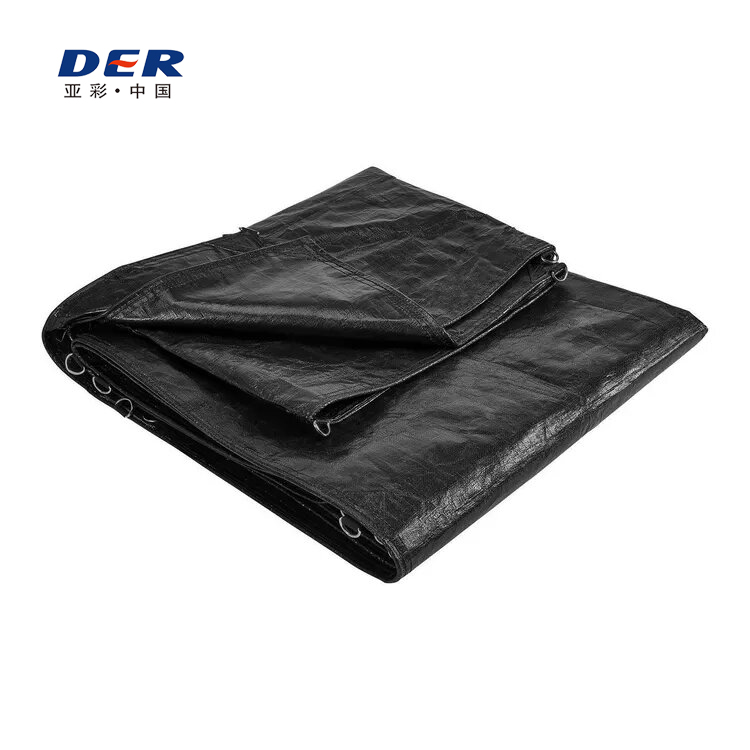
There is no universal safe snow depth.
A tarp has no generic snow-holding capacity. Safe loading depends on the complete installation, including fabric, seams, reinforcement, supports, connections and anchors. Snow depth alone is unreliable because water content varies. Without a documented system rating or engineering assessment, do not assume a suspended tarp can safely support accumulating snow.
How heavy is the snow on your tarp?
Use retained snow water equivalent to estimate weight. A given depth of wet snow can weigh much more than the same depth of fresh, low-density snow.
Snow water equivalent (SWE) is the depth of water produced by melting the snow. One inch of water equivalent weighs approximately 5.2 lb/ft²; one millimetre weighs approximately 1 kg/m². These conversions describe weight, not the allowable load of a tarp. [1]
| Retained water equivalent | Weight per square foot | Mass per square metre | Total snow weight over 200 ft² |
|---|---|---|---|
| 0.25 in / 6.35 mm | 1.3 lb/ft² | 6.35 kg/m² | 260 lb / about 118 kg |
| 0.50 in / 12.7 mm | 2.6 lb/ft² | 12.7 kg/m² | 520 lb / about 236 kg |
| 1.00 in / 25.4 mm | 5.2 lb/ft² | 25.4 kg/m² | 1,040 lb / about 472 kg |
| 2.00 in / 50.8 mm | 10.4 lb/ft² | 50.8 kg/m² | 2,080 lb / about 943 kg |
Calculated examples using the rounded NWS conversion. Uniform loading is assumed; drifts and pockets can create much higher local loads. These figures are not DERFLEX product capacities.
See what water content adds to a cover
Enter the horizontal footprint and the retained water equivalent over that footprint. Enter water equivalent, not snowfall depth.
About 25.4 kg/m² · 0.249 kPa
Weight estimate only. No pass/fail result or safe capacity is assigned.
Two ways to estimate weight
US: total lb ≈ area (ft²) × SWE (in) × 5.2
Metric: total kg ≈ area (m²) × SWE (mm)
kg and kg/m² express mass. Multiply kg/m² by 0.00981 to express gravitational load in kPa.
Why a snowfall forecast is insufficient
A forecast of six inches of snow is not six inches of water equivalent. Snow may drift, compact or mix with rain. Melting alone does not add mass if all the water stays on the cover; retained rainfall adds mass, while drainage removes it.
Capacity must be evaluated separately against the installation’s design and current condition.
The support arrangement changes the question
A tarp resting on a supporting surface behaves differently from one stretched across an open span. Identify where the snow load actually goes before choosing the cover.
| Arrangement | What carries the load? | What must be checked? |
|---|---|---|
| Cover on solid cargo, equipment or a roof deck | The underlying surface carries much of the vertical load where contact is continuous. | Capacity of the surface or equipment, unsupported gaps, sharp edges, abrasion and drainage. A tarp does not strengthen a damaged roof. |
| Cover over a designed frame | The cover spans between supports and transfers force into members, connections and foundations or anchors. | Actual roof-load design, support spacing, panel layout, pre-tension, fastening and installation instructions. |
| Tarp suspended from a rope or a few poles | Fabric, ridgeline, pole tips, tie-outs and anchors share concentrated forces. | No generic safe span or depth applies. A camping or improvised arrangement should not be treated as a snow-rated structure. |
| Pop-up canopy or unverified shelter | A light frame and its connections may govern failure before the fabric tears. | Model-specific instructions. Weather resistance does not establish snow capacity. |
| Purpose-built snow lifting tarp | A dedicated webbing and lifting-loop assembly carries a handling load. | Documented working load, lifting method and restrictions. Its rating does not apply to a roof cover. |
Pulling tighter is not a capacity upgrade
Reducing slack can help maintain the intended drainage profile. Excessive pre-tension, however, can raise forces at seams, hems and anchors. Shorter support spacing may reduce the unsupported area, but capacity still requires a system assessment.
Do not calculate anchor force by simply dividing the total snow weight by the number of eyelets.
GSM is not a snow-load rating
GSM measures fabric mass per unit area. Tensile and tear tests measure specific specimen behaviours. None is a direct rating for a finished tarp roof in lb/ft², kg/m² or inches of snow.
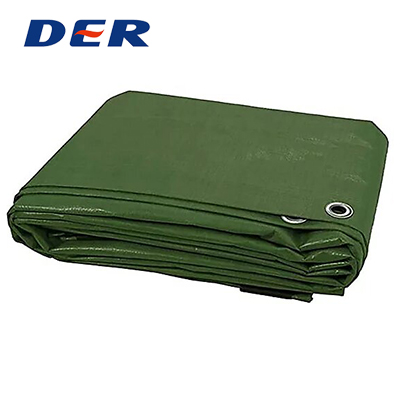
Compare construction and reinforcement in the heavy duty tarp selection range, then evaluate the intended support system separately.
Does a steeper tarp shed snow safely?
A slope can improve runoff and encourage snow to slide, but there is no universal tarp angle that guarantees shedding or makes a cover snow-rated.
Snow can remain attached through freezing, friction, seams or a depression between supports. Drifting and snow sliding from a higher roof can also load a cover unevenly. A structural roof-slope adjustment requires the applicable design method; it is not a simple permission to reduce the weight estimate.
Keep the fall continuous
A high ridge is insufficient if unsupported panels dip below their drainage path. Check the profile under the intended service conditions.
Leave outlets clear
A blocked edge or frozen outlet can retain meltwater. One inch of retained water has approximately the same weight per area as one inch of snow water equivalent.
Allow for sliding snow
Snow leaving a cover can injure people or load adjacent structures. Keep exits, walkways, equipment and lower covers out of the discharge area.
For framed storage and replacement covers, review custom shelter tarp requirements alongside the frame supplier’s installation and structural documentation.
What should a winter tarp specification include?
Specify the weather barrier and its fabrication details around the approved support design. Greater fabric weight alone cannot solve poor geometry, weak hardware or an unrated frame.
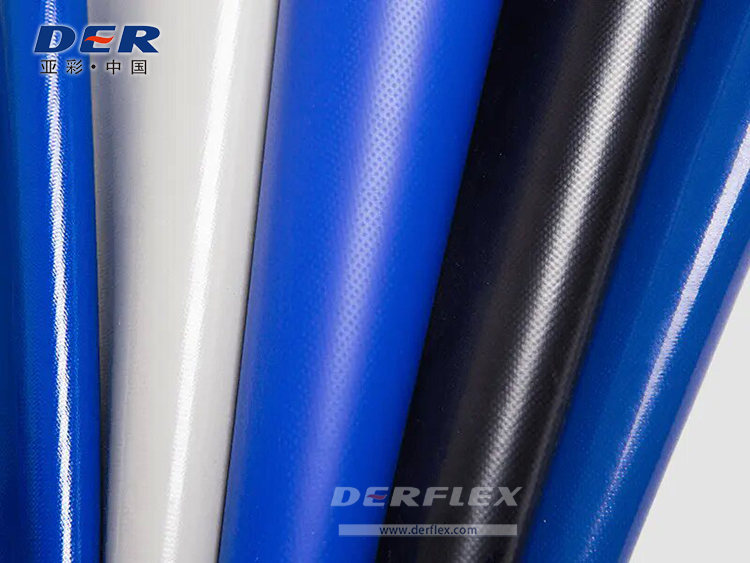
PVC coated polyester tarpaulin is a practical direction for reusable waterproof industrial covers that need welded panels and custom reinforcement. The selected material grade, seam construction and handling temperature must be confirmed for the project.
| Specification item | Ask the supplier to define | Why it matters in snow |
|---|---|---|
| Base fabric, coating and GSM | Material code, reinforcement structure, mass and thickness; confirm values for the selected grade. | Controls the material construction and repeat-order identity. It does not establish system capacity. |
| Low-temperature behaviour | Lowest static and handling temperatures, intended folding/rolling cycle and relevant test evidence. | A cover that remains intact while stationary may behave differently during cold flexing. |
| Seams and panel layout | Welded or sewn construction, seam direction and width, process validation and finished-panel evidence. | Loads cross seams; meltwater exposes seam and penetration details. |
| Contact and wear zones | Frame-contact map, protective interfaces and compatible reinforcement patches. | Snow pressure can press the sheet against rails, corners and frozen edges. |
| Perimeter and attachments | Hem, webbing, D-ring or grommet layout; attachment method, position tolerances and reinforcement. | Fasteners need a load path into reinforced material and the supporting system. |
| Support geometry and tension | Approved drawing, frame profile, support spacing and installation instructions. | Controls unsupported spans, pockets and forces at connections. |
| Evidence and scope | Which records apply to fabric, seam, attachment or the complete installed system. | Prevents a material test report being mistaken for a snow-load certificate. |
Use the cold-weather material and handling guide to distinguish static temperature exposure from repeated winter deployment.
When should snow on a tarp be removed?
Follow the complete system’s documented snow-management plan. There is no safe removal threshold that can be assigned from tarp thickness, appearance or snowfall depth alone.
Stop use and keep people clear if there is unusual sagging, frame movement, tearing, slipping attachments or new cracking sounds. For a structure showing distress, leave the affected area and seek assessment from the responsible system provider or a qualified structural professional. Do not approach underneath to push, tighten or add improvised props.
Plan before accumulation
Define inspection responsibilities, response triggers, weather monitoring and a method compatible with the cover and structure. Where practical, plan removal without people accessing the roof and control the area exposed to falling snow. Removal must avoid creating uneven loading or piles on the structure. [2]
Do not walk on a tarp cover, puncture a loaded pocket to drain it, or strike frozen fabric with sharp tools.
Inspect before returning to service
Check frame alignment, attachment slippage, seam openings, stretched hardware zones, coating damage and permanent pockets. A cover that survives one storm has not demonstrated a repeatable snow-load capacity.
For shape-specific machinery protection, review winter equipment cover options and confirm that the equipment’s surfaces can take the contact and retained load.
Roof covers and snow lifting tarps have different jobs
A snow removal tarp designed for lifting has dedicated load-bearing webbing, loops and documented handling restrictions. For example, Layfield’s technical sheet assigns product-specific ratings and limits use to freshly fallen snow. Those ratings cannot be transferred to an ordinary cover or a shelter roof. [3]
Send the support drawing with the tarp dimensions
A quotation becomes more useful when it defines the cover’s role, the winter duty and the information already approved for the structure.
Winter tarp RFQ checklist
- Application: supported equipment cover, framed shelter, replacement roof skin or another duty.
- Geometry: finished cover dimensions, horizontal footprint, slope/profile, support spacing and installation photos.
- Structural information: project location, engineer-specified snow and wind criteria, frame drawings and existing system rating, if available.
- Material and fabrication: reference sample or grade, seams, contact patches, hems, webbing, grommets, D-rings and any pockets.
- Climate and handling: minimum temperature, folding or rolling frequency, exposure period and planned snow management.
- Supply requirements: quantity, color, printing, packaging, destination and required test documents.
What DERFLEX can discuss
DERFLEX’s custom tarp manufacturing range includes coated-fabric rolls, panels and finished covers with application-specific sizes, welding, reinforced edges and fastening options.
For OEM, wholesale and repeat supply programs, agree a material reference, drawing and approval sample before ordering. Ask DERFLEX to confirm grade-specific test evidence, MOQ, pricing and lead time for the proposed construction.
Cover specification
Material selection, dimensions, seams, reinforcement, hardware and sampling.
Structural specification
The responsible system provider or qualified engineer establishes snow capacity, support spacing, connections, anchoring and local design requirements.
Snow loads and tarp covers: FAQ
How many inches of snow can a heavy duty tarp hold?
There is no universal safe depth. Snow water content, unsupported span, seams, attachments, frame strength and installation all matter. Use a documented rating for the complete system or obtain an engineering assessment; a heavy duty label does not establish snow capacity.
Does a 650 gsm or 900 gsm tarp have a higher snow rating?
GSM is fabric mass per unit area, not a snow-load rating. A heavier tarp may have different construction and handling properties, but its complete installation still needs evaluation. Do not convert GSM, mil thickness or tensile strength directly into a safe roof load.
How much does one inch of snow weigh on a tarp?
One inch of snowfall has no fixed weight because density varies. One inch of retained snow water equivalent weighs approximately 5.2 lb/ft². Over a 10 ft × 20 ft horizontal footprint, that is about 1,040 lb, assuming uniform accumulation. This estimates weight, not tarp capacity.
What tarp slope prevents snow accumulation?
No single angle guarantees that snow will slide off a tarp. Freezing, friction, seams, drifting and sagging can retain snow even on a slope. Use the approved roof profile, maintain runoff paths and follow the system’s snow-management instructions.
Can I use a snow lifting tarp as a snow-rated roof cover?
Not based on its lifting rating. A lifting tarp is rated for a specific handling assembly and method. A roof cover has different support, attachment and loading conditions. Suitability for either use must be confirmed independently by the responsible supplier or engineer.
What should I send DERFLEX for a winter tarp quotation?
Send the application, finished dimensions, support drawing, roof profile, attachment layout, quantity, destination, lowest handling temperature and required documents. Include the complete system’s approved snow and wind criteria if available, plus any existing cover sample or installation photos.
Start with the support. Then specify the cover.
Send DERFLEX your drawing, winter conditions and attachment details to discuss a coated-fabric and fabrication proposal.
Request a specification & quotationUseful first attachments
Dimensioned drawing · Installation photos · Existing cover sample · Material/test requirements
Roll material, custom panels and finished cover requirements can be reviewed for project and OEM supply.