


Builder's material guide · Moisture control
Can a Tarp Be Used as a Vapor Barrier?What Builders Should Check
A tarp can serve as a vapor retarder only when the exact material has suitable, documented water vapor permeance and can be installed as a continuous, sealed layer. A waterproof label, heavy fabric weight or PVC coating alone does not establish suitability for a concrete slab, crawl space or wall assembly.
Use this guide to screen materials before purchasing. DERFLEX supplies coated fabrics and tarps; send your application, dimensions and required test criteria to discuss material options and the evidence needed for approval.
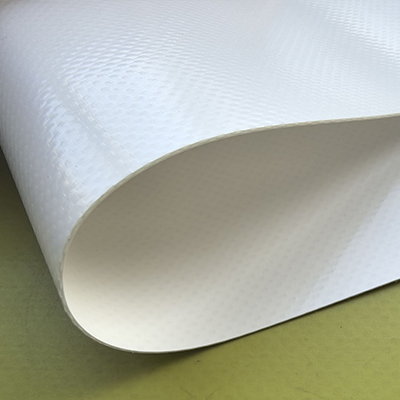
Select for weather exposure, fixing loads and repeated handling.
Require material evidence and a workable sealing system.
Specify within the complete assembly and its drying strategy.
Start with the moisture mechanism
Waterproof does not mean vapor-proof.
A rain cover and a building vapor retarder answer different performance questions. The finished installation must also manage joints, edges and penetrations.
Liquid water
Will rain pass through?
Waterproofing describes resistance to liquid water under stated conditions. A hose test or water held on a tarp cannot establish its water vapor permeance.
Vapor diffusion
Will moisture diffuse through?
Water vapor permeance measures passage through the material under defined test conditions. Lower permeance means less diffusion under those conditions. This is the evidence a vapor-control specification needs.
Air movement
Can moist air bypass it?
An open lap, slit around a pipe or unsealed fixing can interrupt the layer. A low-permeance sheet does not automatically create a continuous air barrier.
What does “Class I” mean? U.S. Department of Energy guidance describes a Class I vapor retarder as having a permeance of 0.1 U.S. perm or less. That classification does not, by itself, establish under-slab suitability, puncture durability or approval for every wall. Source 1.
For a broader material comparison, see tarps versus plastic sheeting for jobsite protection. This guide focuses on the additional evidence needed when the layer must control water vapor.
Choose by assembly
Where will the material be installed?
A tarp that works over stored materials may be a poor choice beneath a permanent floor. Establish the layer's role before comparing price or thickness.
| Application | Material decision | What must be checked | Purchasing implication |
|---|---|---|---|
| Temporary jobsite cover | Cover selection A tarp can be considered for rain, splash or handling protection. | Exposure time, abrasion, tear risk, securing method and drainage. Consider drying of anything enclosed. | Do not describe the cover as a permanent vapor barrier without supporting evidence. |
| Crawl-space ground liner | Evidence required Specify a documented ground vapor retarder with compatible sealing details. | Continuous ground coverage, sealed seams, wall and pier connections, service access and moisture-management design. | A woven PE or vinyl tarp is a candidate only if the exact construction and installation meet the project requirements. |
| Under a concrete slab | Approved submittal Use a purpose-made membrane meeting the specified standard and performance class. | ASTM E1745 where specified; permeance, tensile and puncture data; installation plan and pre-pour inspection. | Reject substitution based only on “heavy duty,” GSM, color or nominal mil thickness. |
| Under finished flooring | System approval Follow the flooring and adhesive manufacturer's approved moisture-control system. | Subfloor moisture condition, underlayment type, compressibility, joints and warranty conditions. | A loose tarp is not a default substitute for a flooring membrane or concrete moisture-mitigation treatment. |
| Inside a wall or roof | Assembly design Select the required vapor-control layer for the climate and complete assembly. | Layer position, inward and outward drying, existing low-permeance layers, insulation and fire requirements. | Do not add an impermeable tarp to both sides of an assembly without a designer's assessment. |
On small screens, swipe the table horizontally. These are selection decisions, not DERFLEX product certifications.
Crawl spaces: continuity matters.
A ground sheet is part of a moisture-control system. Address bulk-water entry and provide the project's drying or humidity-control strategy. Cover the soil and detail each connection, rather than laying a tarp loosely between piers.
PNNL's crawl-space guidance discusses sealed overlaps and foundation connections, with a recommended 12-inch seam overlap in that guide and a cited IRC minimum of 6 inches. Confirm the adopted code and the membrane manufacturer's detail for your project. Source 4.
Slabs: require documented performance.
ASTM E1745 addresses sheet vapor retarders in contact with soil or granular fill under slabs, including permeance, tensile and puncture testing. ASTM E1643 addresses selection, design, installation and inspection. A tarp's appearance cannot prove either requirement. Sources 2–3.
These standards have specific scopes. An under-slab vapor retarder is not a replacement for drainage or waterproofing where water pressure must be managed.
Before approving a substitution
Six checks that belong in the material submittal.
Ask for evidence tied to the supplied product. General claims about polyethylene, PVC or waterproof fabric cannot identify the performance of a particular roll.
Exact material identity
Record product code, polymer, reinforcement, coating construction, thickness and batch identification. Match the test sample to the offered material. A result for another film or another coating is not transferable evidence.
Permeance and test conditions
Request the measured value, units, method, temperature, relative humidity and sample thickness. ASTM E96/E96M may be relevant where specified. Identify dry-cup or wet-cup conditions rather than comparing an unexplained “perm rating.”
Intended-use standard
Write the required standard, edition and class into the purchase brief. ASTM E1745 Classes A, B and C are a separate system from vapor-retarder Classes I, II and III. A claim for one must not be read as approval under the other.
Handling and service durability
Check puncture, tensile and conditioning evidence required for the intended use. Sharp aggregate, rebar supports, tools and service traffic may damage a layer that looks intact when delivered.
Compatible sealing system
Specify how laps, repairs and transitions will be sealed. Confirm tape, sealant or welded-joint compatibility with the exact surface. A reinforced hem or a sewn seam is not a vapor-tight joint specification.
Assembly acceptance
Obtain the project designer's acceptance where required before concealing the material. Record restrictions on exposure, substrate preparation, fixing details and inspection. A supplier's material offer does not replace assembly approval.
Read the units carefully. Water vapor transmission rate, often reported in g/m²/day, is not the same quantity as permeance in U.S. perms. Comparisons require the test conditions and vapor-pressure difference. GSM measures mass per area; it cannot be converted into a reliable vapor-barrier rating.
Procurement screening
Does your candidate have enough evidence?
Use this quick check to identify the next document or detail to request. It does not calculate permeance or certify compliance.
A simple release rule
For permanent vapor control, keep the material on hold until the intended use, product-specific evidence and sealing details align with the approved specification.
For temporary protection, evaluate the cover against exposure and handling requirements. Keep any vapor-performance claim separate.
Prepare a material briefCheck a candidate material
Hold for evidence. Request product-specific vapor and durability data, the specified under-slab class and compatible sealing details before approval.
Screening only. Final acceptance rests with the project specification, adopted requirements and responsible designer.
Material construction
PE film, woven tarps and coated fabrics are different products.
Reinforcement can improve handling strength, but it does not remove the need to measure vapor transmission. Specify the complete sheet construction.
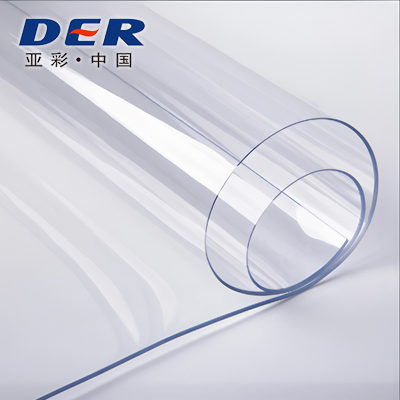
Plain PE film
Compare the actual grade, thickness tolerance, puncture performance and documented intended use. Generic construction film and a purpose-made under-slab membrane should not be treated as interchangeable.
Explore PVC and PE plastic sheeting options when assembling a material shortlist.
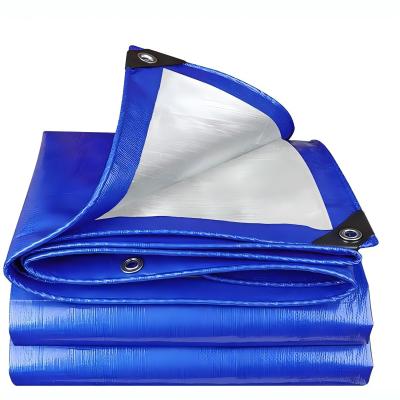
Woven PE tarp
Check the continuity of the laminated surfaces, folds and seam construction. The woven scrim provides reinforcement; the finished coated sheet is what must be evaluated for vapor control.
Compare polyethylene tarp constructions for the cover or liner you plan to fabricate.
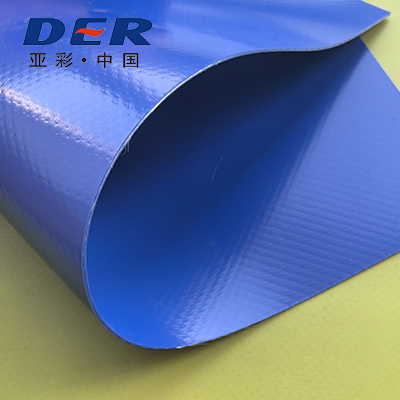
PVC coated polyester
Separate fabric weight, coating thickness and joint design in the enquiry. Weldability may help create sealed panels, but weld quality alone cannot establish the sheet's permeance.
Review PVC tarpaulin roll materials for construction and industrial protection projects.
Thickness is one specification, not the verdict. One mil is 0.001 inch, or 0.0254 mm; 6 mil equals 0.1524 mm. Six mil is not six millimetres. Increasing thickness may change handling and durability, but there is no universal conversion from mil thickness to permeance across different materials.
Installation & fabrication
Inspect the interfaces, not just the sheet.
Turn the installation drawing into a list of connections. Each change in substrate, seam, fixing or penetration needs a defined detail.
| Interface | Typical weak point | Detail to specify | Inspection question |
|---|---|---|---|
| Sheet-to-sheet lap | Overlap left unsealed, contamination or tape bridging wrinkles. | Manufacturer-approved overlap, surface preparation and compatible seal. | Is the seal continuous and in contact with both sheets? |
| Pipe or conduit | Star-shaped cuts and open gaps around the penetration. | Approved boot, collar, patch or sealant detail suited to the substrate. | Is every cut closed using the specified system? |
| Wall, pier or perimeter | Loose edges, dusty masonry or tension pulling the seal away. | Approved termination, compatible bonding and mechanical retention where specified. | Does the connection remain sealed without relying on a loose fold? |
| Fixing or grommet | An open eyelet, screw hole or stitched line within the control layer. | Avoid open hardware in the sealed area; detail necessary penetrations. | Has each opening been eliminated or sealed by an accepted detail? |
| Damage or access route | Punctures beneath chairs, aggregate, tools or maintenance traffic. | Compatible repair patches and specified protection at vulnerable locations. | Has the complete layer been inspected after the last trade activity? |
Welded panels need trial joints.
For a coated-fabric candidate, verify process compatibility using the actual coating and panel construction. Establish welding settings on samples, then inspect seams using the agreed procedure. Visible fusion or high seam strength alone does not prove vapor performance.
Confirm before fabrication
- Finished dimensions, panel layout and joint location.
- Any surface treatment affecting tape adhesion or welding.
- Corner, repair and termination details.
- Acceptance criteria for both the sheet and the fabricated joints.
See the DERFLEX coated fabric range to discuss the substrate and coating before defining a joint system.
Plan the last inspection.
For an under-slab installation, define an inspection point after reinforcement and service work, before the membrane is concealed. Photographs can document repairs and interfaces; they cannot replace a product test report.
Do not mix these functions
- A curing cover above fresh concrete serves a different role from a vapor retarder below it.
- A ground vapor layer does not correct standing water, defective drainage or a plumbing leak.
- Vapor-permeance data alone does not establish radon or chemical-gas barrier performance.
Release the installation in four stages
Locate the layer and set the project's acceptance criteria.
Match material evidence and accessories to the supplied product.
Resolve laps, corners, terminations, penetrations and repairs.
Check the completed layer before concealment; retain the record.
Factory discussion & procurement
Send a specification brief before requesting a price.
A useful quotation starts with the intended role of the material. Distinguish temporary cover supply from a membrane requiring project approval.
What DERFLEX can discuss
DERFLEX's material range includes PVC coated fabrics, PVC tarpaulin and polyethylene tarp products. Contractors, fabricators and distributors can discuss roll goods or finished-cover requirements, dimensions, material construction and bulk supply.
For a proposed permanent vapor-control use, provide the required permeance, testing standard and assembly details first. Ask whether evidence exists for the exact candidate material; do not assume that a general tarp listing establishes compliance.
For exposed, repeatedly installed jobsite covers, explore heavy duty cover and tarp options. Cover strength and vapor performance should remain separate procurement requirements.
Compare the installed cost.
Include sealing accessories, fabrication, wastage, substrate preparation, installation time, protection and inspection. A wider roll can reduce seams but may increase handling difficulty in a confined crawl space. A cheaper sheet may require more joints or repairs.
Confirm MOQ, sample availability, packing and lead time against the actual specification and destination. These terms are project-specific.
Copy your edited brief and paste it into your enquiry.
This page does not submit or store enquiry information. The button opens DERFLEX's enquiry page.
Frequently asked questions
Questions builders ask before choosing a vapor-control layer.
Can a blue polyethylene tarp be used as a vapor barrier under concrete?
Do not approve it from color, thickness or a waterproof label. Require evidence for the exact sheet meeting the project's under-slab specification, plus compatible sealing details. Where ASTM E1745 is required, a generic tarp description does not demonstrate the specified performance class.
Is PVC tarpaulin a vapor barrier?
PVC coated fabric may resist water vapor, but its actual permeance depends on the product construction and test conditions. Treat it as a candidate until product-specific evidence and an acceptable installation detail support the intended use. Waterproofing and weldability are not substitutes for that evidence.
Is 6-mil plastic the same as a tarp?
No. Six mil describes thickness, not construction or certification. It equals 0.1524 mm. A plain film, reinforced membrane and coated woven tarp can have different handling, seam and vapor properties at a similar nominal thickness. Compare test data and intended use.
Can I put a tarp under laminate, vinyl or wood flooring?
Use the flooring manufacturer's approved underlayment and moisture-control instructions. A tarp may introduce unsuitable thickness, compressibility or joints, and it is not a default substitute for a specified flooring membrane. Check the subfloor's moisture condition before installation.
Do tarp overlaps need to be taped or sealed?
For permanent vapor control, a loose overlap does not establish a continuous sealed layer. Use the membrane manufacturer's compatible tape, sealant or approved joint detail, and specify how edges, corners, penetrations and repairs connect to the system. Test compatibility on the exact material surface.
Will a vapor barrier stop condensation beneath a tarp?
Not by itself. Condensation can occur when humid air reaches a surface below its dew point. A low-permeance cover can also restrict drying. Assess temperature, air leakage, ventilation or humidity control, and the drying needs of the enclosed material or assembly.
Put the application first
Tell us what the layer must do.
Send the location, material dimensions and required performance evidence. Start with a clear brief for material selection and quotation.