


Weed control · Material selection
Tarp vs Landscape Fabric: Which Works Better for Weed Control?
Choose an opaque tarp to suppress weeds before planting. Choose suitable landscape fabric when a ground cover needs to stay around crops and admit water. The right choice depends on planting stage, drainage and how often the material will move.
For reusable cover projects, DERFLEX supplies PVC coated polyester materials and custom finished tarps. Define the application first, then confirm opacity, handling weight, reinforced edges and soil-contact suitability.
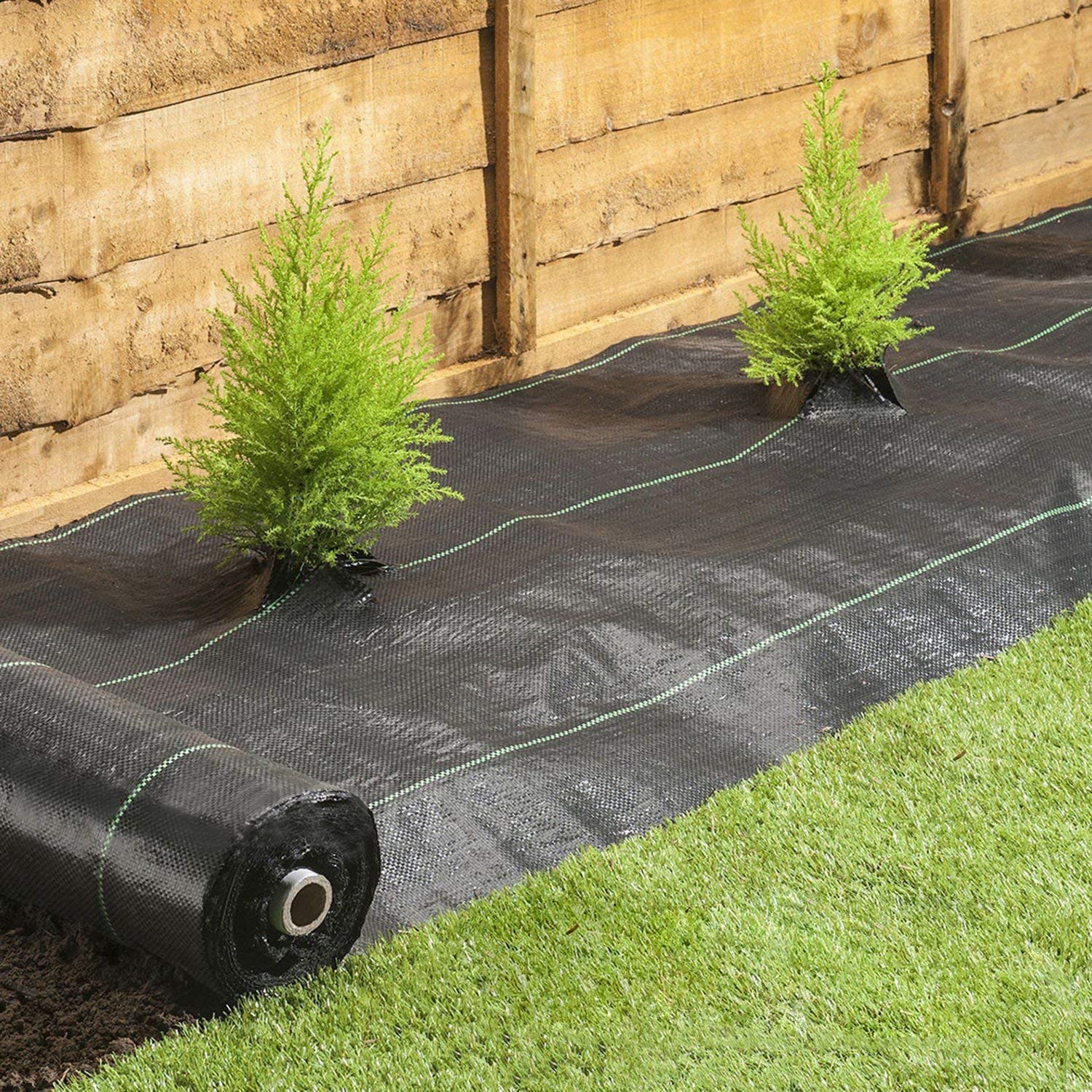
Light / Water / Reuse
Tarp vs landscape fabric at a glancepermeable
This comparison separates an opaque, unperforated waterproof tarp from a horticultural weed mat. The word “tarp” alone does not identify its construction, opacity or drainage behavior.
| Decision factor | Opaque waterproof tarp | Landscape fabric / weed mat |
|---|---|---|
| Primary role | Temporary bed preparation, fallow-area coverage and repeated covering cycles. | Seasonal ground coverage, crop rows, nursery areas and selected paths. |
| Light exclusion | A continuous opaque cover blocks light; pinholes and lifted edges create exceptions. | Depends on weave, density and construction. “Black” does not establish blackout performance. |
| Rainfall | Sheds water toward edges and low points. Plan runoff before covering. | Allows some water through; infiltration can be restricted and runoff can still occur. |
| Growing plants | Normally removed before planting for occultation. | Can remain during crop growth, with suitable openings and irrigation. |
| Existing weeds | Useful for suppressing covered vegetation; results depend on species and conditions. | Prepare a clean site first. Established perennial weeds may persist or penetrate. |
| Anchoring | Use a site-specific ballast or reinforced anchoring plan to maintain coverage. | Secure overlaps, openings and edges using the product's installation guidance. |
| Repeated movement | Panel mass, seam layout, tear resistance and folding behavior affect labor. | Roots and planting holes can complicate lifting and reuse. |
| Under mulch or gravel | A solid tarp can obstruct drainage; do not select it as a default buried layer. | May be useful in appropriate installations. Keep surface debris and emerging weeds managed. |
| Decision factor | Opaque waterproof tarp | Landscape fabric / weed mat |
|---|---|---|
| Primary role | Temporary bed preparation, fallow-area coverage and repeated covering cycles. | Seasonal ground coverage, crop rows, nursery areas and selected paths. |
| Light exclusion | A continuous opaque cover blocks light; pinholes and lifted edges create exceptions. | Depends on weave, density and construction. “Black” does not establish blackout performance. |
| Rainfall | Sheds water toward edges and low points. Plan runoff before covering. | Allows some water through; infiltration can be restricted and runoff can still occur. |
| Growing plants | Normally removed before planting for occultation. | Can remain during crop growth, with suitable openings and irrigation. |
| Existing weeds | Useful for suppressing covered vegetation; results depend on species and conditions. | Prepare a clean site first. Established perennial weeds may persist or penetrate. |
| Anchoring | Use a site-specific ballast or reinforced anchoring plan to maintain coverage. | Secure overlaps, openings and edges using the product's installation guidance. |
| Repeated movement | Panel mass, seam layout, tear resistance and folding behavior affect labor. | Roots and planting holes can complicate lifting and reuse. |
| Under mulch or gravel | A solid tarp can obstruct drainage; do not select it as a default buried layer. | May be useful in appropriate installations. Keep surface debris and emerging weeds managed. |
Material behavior: University of Maine Cooperative Extension [1] and Cornell Small Farms [7]. Landscape installation considerations: UC IPM [4].
For a broader introduction to woven and nonwoven weed barriers, read DERFLEX's existing weed barrier fabric guide. For this project, ask specifically whether the surface will be covered temporarily or planted through.
Start with your site
Which cover fits your weed-control plan?
Use the following decisions as a project shortlist. A material that works for an empty growing bed can create a different problem when buried beneath a path or left around established plants.
Empty beds & new plots
Shortlist an opaque cover that can be removed intact. Allow time for suppression, inspect the vegetation before planting and manage runoff at the perimeter.
Rows & nursery blocks
Shortlist a suitable horticultural ground cover. Confirm water passage, planting-hole layout, UV exposure and access to irrigation beneath or through the cover.
Established ornamental beds
Consider organic mulch and routine weeding before adding a synthetic layer. Frequent replanting and spreading perennials can make fabric removal difficult.
Gravel paths & service areas
Select a permeable separator appropriate to the ground and loads. Weed fabric and engineered geotextiles are not automatically interchangeable. A waterproof tarp is generally a poor substitute where water needs to drain through the base.
Large areas covered in rotation
Check crew size, access lanes, panel dimensions and dry storage. Smaller reusable modules may be easier to move than one large cover, even when they require more overlap and anchoring.
Ornamental-bed and path guidance: Illinois Extension [5] and UC IPM [4]. Panel-sizing considerations are project-planning recommendations.
If weed control is one part of a wider farm-cover program, separate it from rain protection for harvested crops, equipment and storage. Explore agricultural tarpaulin applications to define each cover's actual duty.
Understand the process
How does a tarp suppress weeds?
Opaque tarping is called occultation: covered plants lose access to light. Clear plastic solarization uses solar heating under suitable conditions. A clear rain cover is not a direct substitute for an opaque weed-control tarp.
How long should a tarp stay down?
Plan in weeks, then inspect the result. University of Minnesota Extension describes occultation as typically requiring at least four weeks in its guidance. Cooler weather, mature vegetation and persistent underground growth can extend the process; a single universal removal date is unreliable. [2]
Will it kill every weed permanently?
No. Suppressing visible growth does not prove the soil seedbank or all underground reserves are gone. Virginia Cooperative Extension reports strongly different responses between weed species. Identify difficult perennials before committing an entire area to tarping. [3]
Assess and prepare
Record weed species, slope and drainage. Remove sharp debris that could puncture the cover, and reduce tall growth where practical.
Check soil moisture
Use moist, unsaturated soil for a planned tarping cycle. Water before installation if needed, and route runoff away from erosion-prone ground. [1,3]
Maintain continuous coverage
Keep edges and joins closed against light entry. Use the agreed anchoring arrangement and inspect after wind or heavy rain. Repair holes promptly. [3]
Inspect, remove and follow up
Check for living crowns or shoots before planting. Remove the cover carefully, minimize unnecessary soil disturbance and monitor the next weed flush. [2]
A supplier-ready specification
What should buyers specify beyond color and thickness?
For a custom weed-control tarp, define the job before choosing GSM. Material mass affects handling; light exclusion and installation continuity affect the suppression strategy.
| Requirement | What to put in the inquiry | What to review before bulk supply |
|---|---|---|
| Material construction | Identify PE film, coated polyester or horticultural fabric; state soil-contact and crop-use requirements. | Composition declaration and suitability for the intended use. |
| Opacity | Request an opaque construction and agree how light exclusion will be evaluated. | Sample viewed against light; seams, folds and repairs included. Color alone is insufficient. |
| Finished size | Bed length and width, plus perimeter allowance and joins between panels. | A dimensioned drawing with finished-size tolerance and seam locations. |
| GSM & handling | Target panel mass and the crew or equipment available to move it. | Measured material mass and estimated finished-cover mass, including reinforcement. |
| Outdoor exposure | Location, season, exposure period and storage conditions. | Grade-specific UV information and relevant test evidence; do not infer a service life. |
| Seams & edges | Welded joins where compatible; edge reinforcement and anchoring details. | A fabricated sample showing seam closure, reinforcement and hardware placement. |
| Repeated use | Expected folding, dragging, lifting and cleaning routine. | A practical handling trial and agreed repair method. |
| Order program | Quantity, units, destination, packing and any OEM labeling. | Confirmed MOQ, sample arrangement, quotation and production lead time for the specification. |
When is PE a useful starting point?
UV-treated polyethylene silage film is a common choice for pre-plant tarping. It differs from a woven blue utility tarp. Confirm light exclusion, tear behavior and lifting practices for the actual product. [1]
Where does PVC coated polyester fit?
It can be considered for custom reusable cover programs where reinforcement and compatible welded fabrication matter. DERFLEX's PVC tarpaulin material range provides a basis for discussing construction; approve opacity and ground-use suitability separately.
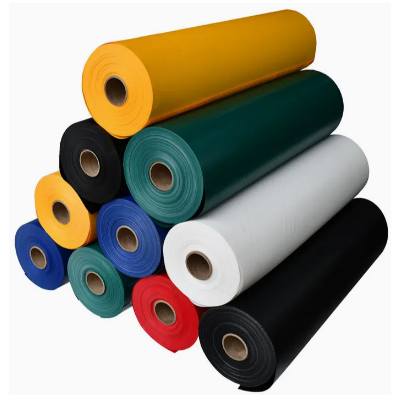
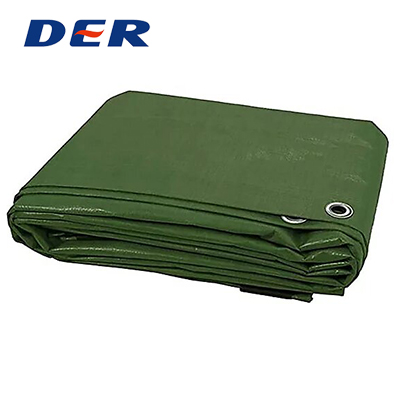
DERFLEX's custom tarp fabrication options include cutting, joining and eyelet work. Put the anchoring layout on the drawing so attachment loads are addressed by the edge construction.
Handling and ownership cost
A heavier tarp is not always easier to use
Compare the complete operation: purchase, anchors, freight, installation, lifting, repairs and replacement. Reuse saves money only when the cover remains practical to deploy and recover.
Calculate panel mass before ordering
For a rectangular panel, approximate material-only mass is length × width × GSM ÷ 1,000 in kilograms. For example, 8 m × 12 m at 450 GSM is 43.2 kg before hems, overlaps, hardware, moisture or attached soil. This is an arithmetic example, not a recommended weed-control grade.
If that load is impractical for the crew, review panel modules before raising material weight. Compare heavy-duty tarp constructions by handling and reinforcement needs, then confirm the actual grade.
Compare cost per treatment cycle
(Landed cover cost + anchors + cumulative handling and repair cost) ÷ completed usable cycles.
For a fair supplier comparison, use the same finished dimensions, reinforcement, packing and destination. Count field downtime as well as material spend.
A claimed reuse count should have evidence relevant to your climate and operation. Do not compare quotes using an assumed service life.
Estimate the dry material mass
Enter your proposed panel dimensions. The estimate helps plan handling; it excludes all fabrication additions.
Formula: length (m) × width (m) × GSM ÷ 1,000. Confirm finished-cover mass with the supplier.
From site plan to quotation
Make your first inquiry specific
Landscape contractors, farms, distributors and OEM buyers need different cover formats. Send a drawing and a short description of the cover's movement, water exposure and intended contact with soil.
Information to send DERFLEX
- Purpose: temporary weed suppression, fallow coverage or a separate weather-protection cover.
- Site: location, slope, soil moisture, exposure season and known weeds.
- Dimensions: finished panel sizes, panel quantity and allowance for overlaps and anchors.
- Construction: material preference, opacity requirement, GSM or handling-mass limit.
- Fabrication: seams, reinforced hems, hardware layout and repair needs.
- Order: quantity, OEM label or printing needs, packing, destination and requested delivery date.
- Use restrictions: certification requirements, crop use and soil-contact documentation.
Avoid these purchasing shortcuts
- Buying “black” without checking opacity. Review a sample, including joins and any perforations.
- Choosing a solid cover where infiltration is needed. Decide how water will reach roots or leave the covered area.
- Adding eyelets without an anchoring design. Agree how loads reach reinforced edges, particularly at corners.
- Assuming a thicker cover guarantees faster weed kill. The plant species, cover continuity and conditions govern the treatment.
Keep crop storage and weed-control inquiries separate. DERFLEX's crop cover tarpaulin options address custom farm-cover construction, including finished covers and reinforcement.
Send your cover requirementsCommon questions
Tarp and weed barrier FAQs
Can I use a regular tarp instead of landscape fabric?
You can use a sufficiently opaque, intact tarp for temporary pre-plant weed suppression. Remove it before planting. An unperforated waterproof tarp does not provide the same water passage as horticultural landscape fabric, so it is generally unsuitable as a permanent layer around growing plants that depend on infiltration.
Is a black tarp better than a clear tarp for killing weeds?
They serve different methods. An opaque black tarp excludes light for occultation. Clear plastic admits solar energy for solarization under suitable hot, sunny conditions. Choose the method for your climate and timing; clear plastic is not a blackout weed barrier.
How long does it take a tarp to suppress weeds?
There is no universal duration. University of Minnesota Extension describes occultation as typically requiring at least four weeks in its guidance. Weed species, weather and maturity change the result. Inspect for living growth before removal, and allow longer or additional treatment for persistent perennials.
Can weeds grow through landscape fabric?
Yes. Weeds can emerge through gaps, planting holes or damaged material, and new seeds can germinate in debris above the fabric. Some persistent weeds can penetrate the cover itself. Prepare the site, maintain overlap and remove young weeds before they become rooted into the material.
Can I put a tarp under gravel to stop weeds?
A waterproof tarp is generally a poor default under gravel because it can obstruct drainage. Use a permeable separator suited to the base, soil and loads. Keep the gravel surface free of accumulated soil and organic debris, which can support new weeds above any buried layer.
What should I request when buying a custom weed-control tarp?
Provide the purpose, location, finished dimensions, quantity, material preference, opacity requirement, handling-mass limit, exposure period, anchoring plan and destination. Confirm seams, reinforcement, soil-contact suitability, sample approval, MOQ and lead time before placing a bulk order.
Custom covers / Roll materials / OEM supply
Specify the cover your operation can use.
Share your site plan, panel dimensions and handling requirements. Ask DERFLEX to review a suitable PVC coated fabric or finished-tarp specification for your reusable cover project.