Rain & Moisture
A laminated PE surface helps stop direct rainfall from reaching electrical housings, control panels, tools, stored components and exposed metal surfaces. Sloped coverage is preferable to flat pooling.



 Equipment Weather Protection Guide
Rain is only one part of outdoor exposure. Sunlight, wind-driven debris, snow, dust, condensation and repeated tie-down stress can also shorten equipment life. A correctly specified waterproof poly tarp creates a practical removable barrier while remaining lightweight enough for routine handling, seasonal storage and fast jobsite coverage.
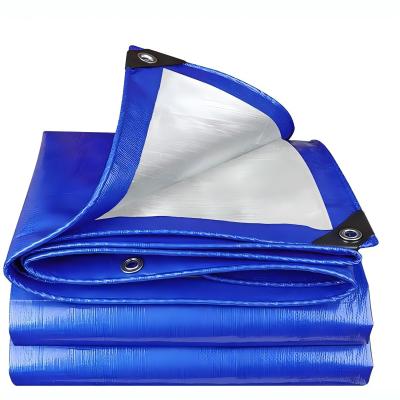
Poly tarps are typically built from woven polyethylene strips with laminated or coated PE surfaces. The woven layer contributes dimensional strength, while the outer film helps resist water and dirt. For equipment protection, however, material alone is not enough: cover shape, drainage, tie-down position, edge reinforcement and ventilation around the asset all influence real-world performance.
This is why a waterproof equipment tarp should be selected around the exposure pattern. A pump stored outdoors for six months, a forklift parked overnight, a palletized motor awaiting shipment and an excavator on an active site do not impose the same requirements on the cover.
When properly sized and secured, a waterproof PE tarp can help shield equipment from direct rain, wet snow, dust, dirt and wind-driven debris. UV-stabilized options can also slow sun-related material degradation of the tarp itself. The cover should be installed with drainage and controlled tension so water does not pool and wind does not repeatedly snap the fabric against sharp equipment edges.
All-weather protection is a system: the material blocks exposure, while the installation determines whether water drains, wind loads are distributed and vulnerable surfaces remain covered.
A laminated PE surface helps stop direct rainfall from reaching electrical housings, control panels, tools, stored components and exposed metal surfaces. Sloped coverage is preferable to flat pooling.
UV-stabilized tarp options are intended for outdoor exposure. A cover also shades the equipment beneath it, helping reduce direct solar exposure to plastics, hoses, seats and painted surfaces.
Reinforced hems, appropriate grommet spacing and balanced tie-down tension help reduce local stress. Loose, flapping fabric can wear faster, especially where it rubs against corners.
Flexible PE covers are useful for seasonal protection, but snow should not be allowed to create excessive standing load. Shape the cover to shed accumulation and inspect after storms.
A fitted or well-secured tarp helps keep airborne dust, leaves and jobsite debris off machinery, tools, stored materials and surfaces that would otherwise require repeated cleaning.
The same tarp grade should not be assumed for every application. Start with what the equipment is, how long it stays outside, how often the cover moves and what can damage the fabric.
| Equipment / asset | Main weather risk | Useful tarp configuration | Installation priority |
|---|---|---|---|
| Generators, pumps and compressors | Rain, dust, direct sun | Waterproof PE cover with reinforced tie-down areas | Do not block required ventilation or hot surfaces; cover only when operating conditions permit. |
| Construction machinery | Storms, dust, wind-driven debris | Heavy-duty poly tarp with reinforced edges and secure grommet layout | Pad sharp corners and keep the tarp tight enough to limit flapping. |
| Agricultural equipment | Seasonal rain, UV, dirt, snow | UV-stabilized PE tarp sized for full top and side coverage | Use a pitched shape for drainage and leave sensible airflow where condensation is a concern. |
| Stored parts, motors and palletized goods | Moisture, dust, warehouse or yard contamination | Light-to-heavy PE grade based on storage duration and handling frequency | Keep the cover off standing water and avoid trapping wet packaging underneath. |
| Rental tools and mobile equipment | Frequent weather changes and repeated handling | Easy-fold poly tarp with reinforced perimeter | Choose a size that crews can install consistently without excessive loose fabric. |
Use a slope, ridge or support so rain and melting snow can run off instead of collecting in a low pocket.
Cover corners, protrusions and rough surfaces that can puncture or abrade the tarp during wind movement.
Secure the tarp at multiple points. Excessive local tension can overload a grommet; insufficient tension can create destructive flapping.
Waterproof coverage can trap humidity around damp equipment. Depending on the asset, leave ventilation paths or allow the equipment to dry before covering.
For stacked materials or irregular machinery, allow sufficient side drop so wind cannot easily lift the cover and rain is directed away from vulnerable areas.
Check grommets, hems, contact points and pooled water after storms. Small installation adjustments can reduce premature wear.
Outdoor service life depends on resin and laminate quality, UV stabilization, fabric density, cover tension, abrasion, temperature, local sunlight intensity and how frequently the tarp is handled. Buyers comparing only color or nominal thickness can miss the details that determine field performance.
For short-term covers and repeat seasonal handling, PE tarps can offer a practical balance of protection and weight. For continuous abrasion, long-distance truck use or severe industrial duty, a heavier super heavy duty tarp or PVC-coated solution may be worth comparing before purchase.
Consider upgrading when the cover stays outside for long periods, sees high wind exposure, rubs repeatedly against equipment edges, spans large unsupported areas, is tensioned frequently, or protects high-value machinery where replacement downtime is costly.
You need economical waterproof coverage, easy handling, many custom sizes, fast seasonal installation, equipment storage protection or high-volume B2B purchasing.
The application involves intense abrasion, repeated highway exposure, hot work, specialized flame-retardant requirements or a long semi-permanent service cycle. Material selection should follow the actual risk profile.
DERFLEX supplies polyethylene tarp solutions for distributors, contractors, agriculture, construction, transport and outdoor storage projects. Available details are confirmed against the intended use and order requirements.
These pages connect the equipment-protection topic with material structure, waterproof performance, UV exposure and construction-site use.
Poly tarps made with continuous polyethylene laminate or coating are commonly used as waterproof covers. Finished performance also depends on seams, holes, damage, edge treatment and installation. Confirm the required construction if your application is sensitive to leakage.
It can be specified for extended outdoor use, particularly with suitable UV stabilization, but service life varies by climate, sun intensity, wind, abrasion, tarp grade and maintenance. “All weather” should be understood as broad weather protection rather than unlimited exposure life.
Reduce loose fabric, use multiple secure tie-down points, protect sharp contact areas and keep tension distributed around the perimeter. Repeated flapping and rubbing can damage both the tarp and sensitive equipment finishes.
Not always. Waterproof covers can trap humidity if damp equipment is sealed without airflow. The correct approach depends on the asset, temperature changes and storage period. Allow drying and ventilation where condensation is a concern.
Heavy-duty grades generally use a stronger woven structure, more robust laminate and more substantial finishing. The exact definition varies by supplier, so compare material structure, weight, thickness, reinforcement and tie-down details rather than the “heavy duty” label alone.
DERFLEX supports custom size, color, reinforcement, grommet spacing, corner treatment, labeling and packaging requirements for B2B and project orders. Final specifications, production details and documentation should be confirmed during quotation.
Send DERFLEX the equipment dimensions, use environment, expected outdoor duration, tie-down method and order quantity. We can discuss a PE tarp configuration and finishing approach for your project or resale program.
Product suitability, performance, dimensions, test requirements and service expectations should be confirmed for the actual application and purchase specification. This page avoids absolute service-life or performance guarantees.