News
Industry News

Industrial Flexible Liquid Storage Tanks | PVC & TPU Bladder Manufacturer | DERFLEX

Update:2026/9/17 15:53:14 Views:
Industrial liquid containment · project specification

Industrial Flexible Liquid Storage Tanks for Temporary & Bulk Containment

DERFLEX supplies industrial flexible tanks and liquid-storage bladders fabricated from reinforced PVC or TPU coated textiles for process water, wastewater and selected industrial liquid containment. The tank is specified around the liquid, temperature, contact time, fittings, site and operating cycle—not around one generic fabric grade.

For an engineering review, send the exact stored liquid or mixture, concentration, pH where applicable, liquid temperature, expected contact duration, capacity, tank footprint, connection sizes, cleaning method and secondary-containment plan.

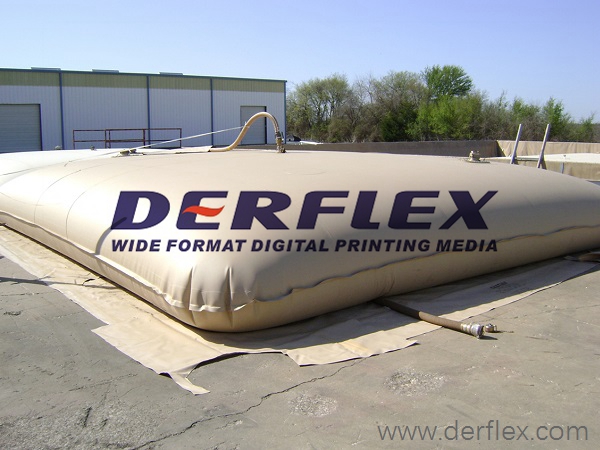
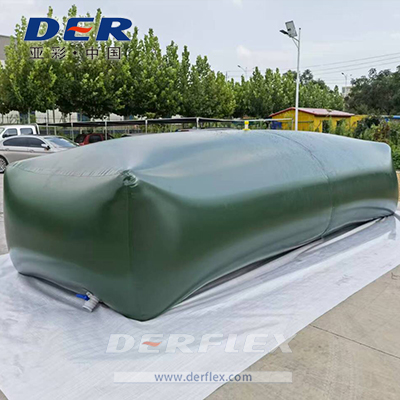
DERFLEX industrial flexible liquid storage bladder tank installed on a prepared groundsheet
Industrial bladder-tank reference: a closed flexible containment system should be reviewed as one assembly—coated fabric, seams, fittings, ground interface and operating conditions.
Stored Liquid FirstName the real liquid or mixture before material selection.
PVC / TPU ReviewChoose coating direction by duty, not by a one-material-fits-all rule.
Fittings MatterValves, seals, hoses and flanges must suit the same liquid exposure.
Secondary ContainmentSite risk can require berms, liners, underlay or other backup containment.
Quick answer

What is an industrial flexible liquid storage tank?

An industrial flexible liquid storage tank is a foldable or supported containment system made from reinforced coated textile, with welded seams and project-selected fittings, for temporary, mobile or space-efficient liquid storage.

Compared with a rigid steel or molded tank, an industrial water bladder or industrial liquid bladder can be compact when empty and deployed near a process, construction site, treatment area or remote project. The correct tank architecture may be a closed pillow/bladder tank, a frame-supported tank or a custom fabricated containment shape.

Terminology varies by industry. Buyers may describe the same project family as an industrial tarpaulin tank, industrial liquid storage tank or temporary liquid storage tank. The engineering decision should still be based on the stored liquid, exposure conditions, tank format and wetted components rather than on the label alone.

For procurement teams comparing an industrial water tank manufacturer or flexible liquid tank manufacturer, a useful supplier review starts with what will be stored and how the tank will be operated—not only its nominal capacity.

The important limitation is equally clear: “flexible” does not mean “compatible with every liquid.” A material that performs well with utility water may not be suitable for a solvent, concentrated chemical, fuel or hot process stream.

Compatibility note: DERFLEX does not recommend treating one standard PVC tank as universally suitable for chemicals, fuels or wastewater. Exact composition, concentration, temperature, contact time and the wetted fitting materials should be reviewed before a grade is approved. Sample testing or project-specific documentation may be required.

Liquid compatibility review

Six inputs determine whether a flexible tank concept is worth approving

pH is useful, but it is not a complete compatibility specification. The coating, reinforcement, seams and fittings are exposed to the real liquid system, not to one number on a datasheet.

01

Stored Liquid

Identify water type, wastewater stream, process liquid, chemical name, mixture or fuel. For wastewater, list known treatment chemicals and major contaminants.

02

Concentration

A diluted cleaning solution and a concentrated chemical can create very different polymer exposure. State normal and worst-case concentration.

03

pH

Use pH as one screening input for aqueous streams, but do not use it as a substitute for exact chemistry, oxidizers, solvents or treatment additives.

04

Temperature

State the liquid temperature at fill, normal storage temperature and expected ambient extremes. Heat can change chemical attack, flexibility and seam behavior.

05

Contact Duration

Temporary buffering, intermittent holding and continuous long-term storage are different duties. Include expected fill-and-drain frequency and idle storage periods.

06

Cleaning Cycle

Cleaning agents, disinfectants, flushing temperature and residue-removal methods can be as important as the stored liquid when selecting the inner contact surface.

Specification framework

Industrial flexible tank specifications should read like an operating brief

The table below is intentionally procurement-driven. It avoids false precision where a project review is required.

Specification Item Available Direction What the Buyer Should Confirm
Tank formatClosed pillow / bladder, frame-supported tank, liner-based or custom geometryAccess, contamination control, footprint, support condition and deployment method.
Coated fabricReinforced PVC coated polyester; TPU coated polyester or nylon for selected projectsLiquid compatibility, folding cycle, abrasion, weld process, documentation and cost target.
CapacityCustom / project-basedRequired usable volume, filled dimensions, available footprint and allowable filled height.
Seam fabricationHF, hot-air or hot-wedge route depending on fabric and designProduction-equivalent seam trial, overlap design, weld window and inspection method.
ConnectionsCustom inlet, outlet, drain, vent, flange, hose or coupling arrangementSize, thread/flange standard, flow rate, hose load and chemical compatibility of every wetted component.
TemperatureProject-specific material directionLiquid fill temperature, continuous storage temperature, ambient minimum/maximum and cleaning temperature.
Ground interfaceGroundsheet, protective underlay, prepared base or framed support as requiredSharp-object risk, slope, drainage, traffic exclusion, settlement and puncture protection.
Secondary containmentBerm, backup liner or site-specific containment plan where requiredStored-liquid hazard, site rules, environmental risk and local regulations.
OEM optionsCustom color, marking, connection layout, accessories and packingApproved drawing, labeling, repeat-order specification and destination market.
DocumentationTDS / test or compliance documentation according to the approved project requirementDo not assume potable-water, food-contact, chemical or fuel approval without the required grade and evidence.

Related material engineering: DERFLEX also publishes a dedicated industrial tank liner fabric guide for buyers sourcing roll goods rather than a finished flexible tank.

PVC vs TPU

Choose the coating route by duty—not by material reputation alone

PVC and TPU are both used in flexible containment, but neither should be presented as universally superior. The correct comparison depends on the liquid, fold cycle, abrasion, welding, temperature and required documentation.

Decision Factor Reinforced PVC Coated Fabric TPU Coated Fabric
Typical starting conversationCommon direction for industrial water tanks, process-water buffering, frame tanks and selected wastewater duties.Often evaluated for highly foldable bladders, mobile tanks and selected demanding liquid-contact programs.
Mechanical structurePolyester reinforcement plus PVC coating can provide a robust, weldable and cost-conscious industrial construction.Polyester or nylon reinforcement plus TPU coating can support flexible, weldable and abrasion-conscious structures.
Folding / deploymentSuitable grades can be designed for collapsible tanks; stiffness depends on construction and temperature.Often considered when repeated folding, soft handling and compact deployment are priorities.
Liquid compatibilityMust be checked against exact liquid, concentration, pH, temperature and duration. Generic PVC is not universal chemical/fuel storage material.Must also be formulation-specific. A TPU used for water is not automatically approved for fuel, solvent or every chemical.
WeldingHF and hot-air / hot-wedge routes may be applicable depending on coating and equipment.HF, hot-air or heat-welding routes may be evaluated depending on TPU grade and fabric construction.
Best procurement actionSend the operating brief and approve the actual grade, seam and fitting system.Send the operating brief and approve the actual grade, seam and fitting system.
Application decision table

Match the industrial tank to the process problem

The strongest page-level distinction from a general flexible water tank is the operating logic: process water and wastewater are defined by chemistry, cycling, cleaning and site risk.

Process Water Tank / Buffering

Temporary storage for wash water, utility water, treated process water or production buffering where portability and project-specific connections matter.

Wastewater & Effluent

A wastewater flexible tank can provide temporary holding before treatment, disposal or transfer. Review pH, suspended solids, treatment chemicals, cleaning agents, odor control and temperature before specifying the material and fittings.

Construction & Site Water

Temporary site supply, wash-down, dust-control or service water where rigid-tank transport is impractical and the installation surface can be prepared.

Maintenance Shutdowns

Short-duration liquid buffering during tank maintenance, line cleaning, equipment service or planned plant shutdowns—subject to liquid compatibility review.

Remote Industrial Projects

Foldable storage can reduce empty transport volume for mining, infrastructure, field-service and temporary operations when site access is constrained.

Selected Industrial Liquids

Custom containment may be possible after exact chemical, concentration, temperature, contact duration and wetted-component compatibility are reviewed.

For a broader finished-tank family covering water, agriculture, emergency use and general liquid storage, compare the heavy duty tarpaulin tank range.

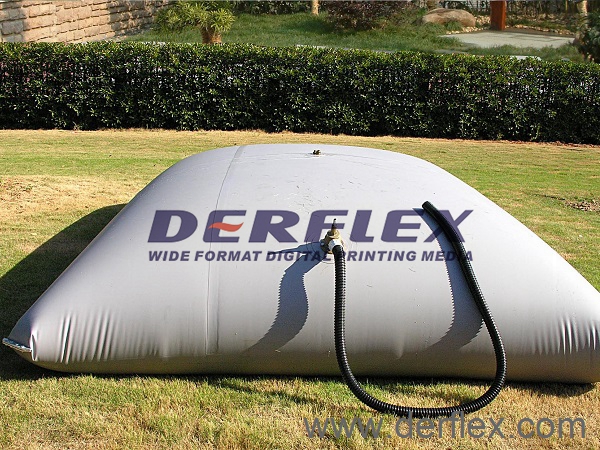
DERFLEX flexible industrial liquid bladder with hose and connection fittings
Fitting compatibility

The tank wall can be compatible while the fitting system is not

Valve bodies, gaskets, O-rings, adhesives, hose liners, clamps, flange plates and thread sealants can each contact the stored liquid. A chemical-compatibility review is incomplete if it evaluates only the coated fabric.

Review every wetted component

Valve bodyPolymer or metal compatibility with the actual medium.
Seal / gasketMaterial selection for temperature, chemistry and compression cycle.
Hose & couplingInner liner, fitting material and mechanical hose load.
Flange zoneReinforcement, bolt load, sealing face and leak path control.

Wetted-component checklist

For a new industrial liquid, ask the supplier to confirm which components actually touch the liquid and which compatibility basis is being used. Avoid approving a tank because only the shell fabric has been discussed.

Secondary containment & site design

A flexible tank is only one layer of the containment plan

For wastewater, treatment chemicals, fuels or environmentally sensitive liquids, project requirements may call for backup containment even when the primary tank is correctly specified.

Primary tank considerations

  • Prepared, level base without sharp debris or protrusions
  • Protective groundsheet or underlay where puncture risk exists
  • Hose support so fittings do not carry continuous external load
  • Defined fill limit and no uncontrolled vehicle traffic near the tank
  • Inspection access for seams, fittings and visible surface condition

Secondary containment considerations

  • Berm, backup liner or curbed area sized for the project risk
  • Drainage plan that does not discharge a spill into soil or stormwater
  • Compatibility of the secondary liner with the same stored medium
  • Site rules, environmental requirements and emergency response plan
  • Separation from ignition, traffic or process hazards when relevant
Engineering workflow

From liquid profile to production-ready tank specification

For a new industrial project, the approval sequence should reduce unknowns before bulk fabrication—not after the tank reaches site.

STEP 01

Define the liquid

Exact medium, concentration, pH, suspended solids, temperature, contact duration and cleaning chemistry.

STEP 02

Define the duty

Capacity, filled footprint, deployment frequency, storage duration, indoor/outdoor exposure and process connections.

STEP 03

Select PVC or TPU direction

Match reinforcement, coating, flexibility, abrasion, weldability and compatibility requirements to the operating brief.

STEP 04

Engineer seams & fittings

Confirm panel layout, welded seams, reinforced penetrations, valve standards, gaskets, hoses and vent/drain configuration.

STEP 05

Approve sample / evidence

Use the required material data, sample welding, compatibility review and project-specific tests before production approval.

STEP 06

Plan site containment

Prepare the base, ground protection, hose support, operating procedure and secondary containment where the project requires it.

DERFLEX image gallery

Flexible tank structures, materials and field configurations

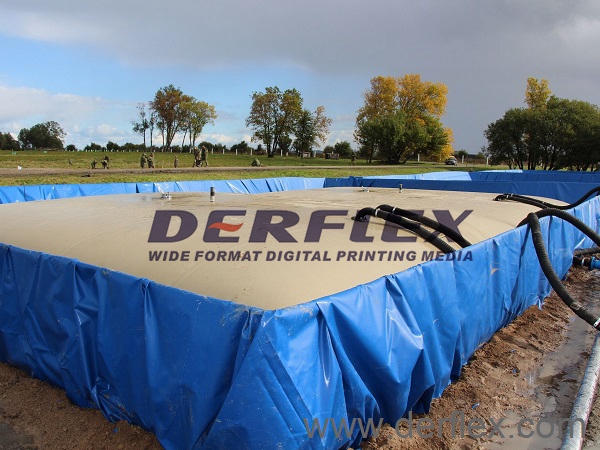
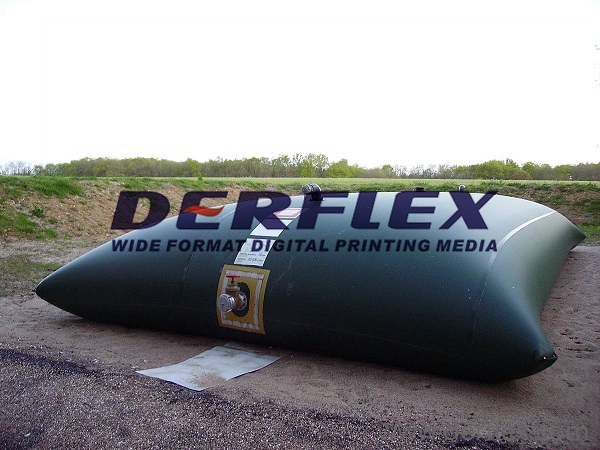
These are existing DERFLEX website images. They show why tank geometry, support condition, fittings and coated-fabric construction must be reviewed together.

Common procurement mistakes

Seven ways an industrial tank specification becomes misleading

Most avoidable errors happen before the purchase order—when the material is approved using an incomplete description of the liquid or operating duty.

Buying “chemical resistant” without naming the chemical

Compatibility depends on the exact medium, concentration, temperature and duration—not a generic marketing label.

Using pH as the only compatibility input

Two liquids with a similar pH can contain very different solvents, oxidizers, salts, surfactants or treatment chemicals.

Ignoring temperature

A material accepted at room temperature may behave differently with warm process liquid, hot cleaning water or cold outdoor folding.

Approving fabric but not fittings

Valve bodies, seals, hoses and flange materials can become the weak point even when the coated textile is appropriate.

Reusing a water-tank spec for fuel or solvents

Fuel, oil and solvent duties require their own material and fitting review. Do not assume a general-purpose PVC water bladder is suitable.

Forgetting cleaning chemistry

The tank may spend fewer hours with the stored liquid than with a concentrated cleaner during maintenance. Include both exposures.

Treating secondary containment as optional by default

Whether backup containment is required depends on liquid hazard, site rules and regulations; assess it during layout planning.

Specifying by GSM alone

Tank reliability also depends on reinforcement, coating, seam design, filled geometry, fitting reinforcement and substrate condition.

Manufacturing & sourcing logic

Why a coated-fabric manufacturer can add value before tank fabrication

DERFLEX works across PVC coated fabric, TPU coated fabric and fabricated flexible-tank directions. That allows the sourcing conversation to connect the roll-material structure with welding, fittings and the finished tank duty.

Material-level decisions

For industrial PVC projects, DERFLEX can discuss reinforcement, coating structure, weight/thickness direction, surface, welding route and project-specific functional requirements. Buyers comparing the base te, xtile can review the industrial PVC coated fabric page.

Finished-tank decisions

For a fabricated tank, the material must be translated into panel layout, welded seams, fitting reinforcement, valve placement, ground protection and operating instructions. DERFLEX's existing PVC coated tarpaulin water tank reference shows the finished-product direction.

FAQ

Industrial Flexible Liquid Storage Tank FAQs

Practical answers for engineering companies, project buyers, procurement teams, tank distributors and OEM programs.

Can a flexible tank store industrial wastewater?

Potentially, yes. Wastewater should be treated as a defined process stream rather than simply “water.” Provide pH, known chemicals, suspended solids, temperature, contact duration, cleaning method and any odor or vapor concerns. The coated fabric, seams, fittings and secondary-containment plan should then be reviewed for that duty.

Is PVC coated fabric suitable for chemical storage?

PVC coated fabric can be suitable for selected liquids, but no generic PVC grade should be described as compatible with every acid, alkali, solvent, oil, treatment chemical or mixture. Exact chemical identity, concentration, temperature and contact time must be reviewed before approval.

When should I consider TPU instead of PVC for an industrial liquid bladder?

TPU is often evaluated when repeated folding, soft handling, abrasion performance or a project-specific liquid-contact formulation is important. However, TPU is not automatically compatible with all fuels or chemicals. The actual TPU grade still needs to be matched to the liquid, seam process and operating environment.

Is pH enough to select a tank material for wastewater?

No. pH is only one data point. Wastewater can contain salts, solvents, surfactants, oxidizers, suspended solids, biological content and treatment chemicals that influence compatibility. Temperature and contact duration also matter.

What information is needed for a liquid compatibility review?

Send the exact stored liquid or composition, concentration, pH where relevant, liquid temperature, ambient temperature, contact duration, fill-and-drain cycle, cleaning chemicals, required capacity, tank format, fittings and destination-market requirements. If available, include an SDS, process data sheet or current tank specification.

Do valves and gaskets need a separate compatibility check?

Yes. Wetted components can use different polymers or metals from the tank shell. Valve bodies, seals, hoses, gaskets, O-rings, flanges and sealants should be checked against the same liquid and temperature exposure.

Does an industrial flexible tank need secondary containment?

It depends on the stored liquid, site rules, environmental risk and local regulations. Wastewater, chemicals, fuels or other sensitive liquids may require a berm, backup liner, curbed area or another secondary-containment system. Confirm this during project planning rather than after installation.

Can the same generic flexible tank be used for process water, chemicals and fuel?

No universal tank should be assumed suitable for all three. Process water, industrial chemicals and fuels can require different coatings, fittings, documentation, seam validation and operating controls. Treat a change in stored liquid as a new specification review.

Industrial project inquiry

Send the liquid profile before asking for a generic tank price

A useful quotation begins with the operating duty. DERFLEX can review the project direction for PVC or TPU coated fabric, tank format, fitting layout and OEM fabrication after the essential inputs are defined.

Include these details

  • Stored liquid / chemical / wastewater composition
  • Concentration, pH and liquid temperature
  • Contact duration and fill-and-drain frequency
  • Required capacity and available footprint
  • Tank style or request for recommendation
  • Inlet, outlet, vent, drain and coupling sizes
  • Cleaning chemicals and sanitation method
  • Indoor/outdoor site conditions and ground surface
  • Secondary-containment requirement
  • Quantity, destination and required documentation
Consulting Services
+86-021-54361792 / 54361798
Email
sales@derflex.com