News
Industry News

Mesh Tarpaulin vs Solid Tarpaulin: Advantages Explained

Update:2026/4/14 17:19:52 Views:
Tarpaulin Comparison Guide

Mesh Tarpaulin vs Solid Tarpaulin: Advantages Explained

Buyers often ask the same practical question: should this project use a mesh tarpaulin or a solid tarpaulin? The answer depends less on trend words and more on how the cover will actually work in the field. A breathable dump truck cover, a site barrier, and a shade screen do not face the same operating pressure as a waterproof pallet cover, a machinery shelter, or an outdoor storage tarp. That is why professional sourcing decisions need a more useful comparison than simply “mesh is lighter” or “solid is stronger.”

mesh tarpaulin vs solid tarpaulin, mesh vs solid tarp, mesh tarpaulin advantages, solid tarpaulin advantages, heavy duty mesh tarp supplier

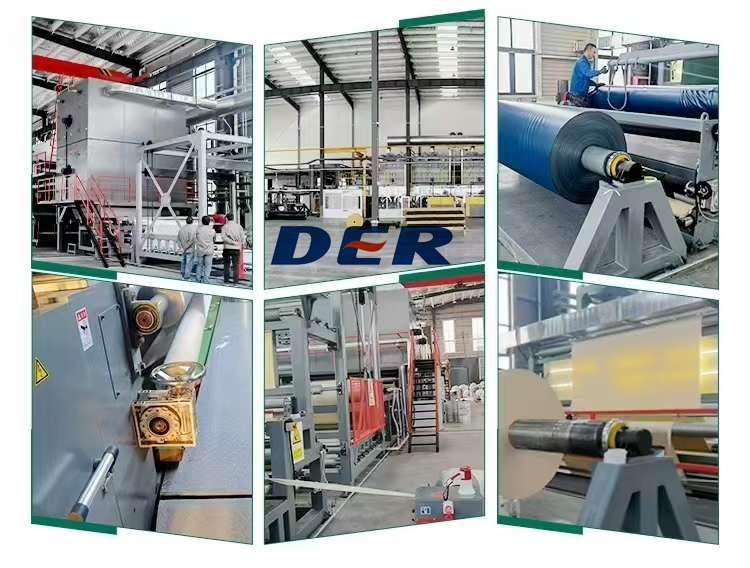
DERFLEX supplies both mesh tarp and solid PVC tarpaulin solutions for buyers who care about performance, OEM customization, stable lead time, repeat-order consistency, and commercial fit. This page explains the real advantages of mesh tarpaulin versus solid tarpaulin, where each structure works best, which risks each one solves, and how a manufacturer can help you avoid choosing the wrong tarp for your market.

Mesh Advantage Best where airflow, reduced wind load, ventilation, debris retention, or shade matter more than a sealed waterproof barrier.
Solid Advantage Best where waterproofing, dust isolation, weather sealing, privacy, and stronger surface protection matter most.
OEM & Custom Custom size, GSM, color, hems, eyelets, seams, reinforcement, webbing, branding, and packaging support.
Commercial Fit Specification matching for transport, construction, waste handling, agriculture, warehousing, and outdoor cover programs.
Application-Driven Choose by use condition, not by generic catalog language.
Factory-Direct Supply Helpful for distributors, project buyers, and private-label programs.
Quality & Documentation Support for performance discussions, test expectations, and market requirement alignment.
Lead Time Planning Structured for repeat orders, seasonal demand, and specification consistency.
What Is the Difference

What Is Mesh Tarpaulin vs Solid Tarpaulin?

The most useful comparison starts with structure. These are not just two looks of the same product. They solve different operating problems.

waterproof solid tarpaulin manufacturer, custom tarp manufacturer, PVC tarpaulin supplier, truck mesh tarpaulins, industrial tarp supplier

Mesh Tarpaulin

Breathable Protection for Airflow, Wind Relief, and Material Retention

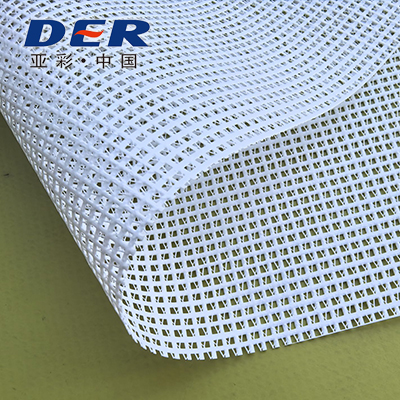
A mesh tarpaulin is a woven or knitted base fabric with open spaces in the structure. In many industrial grades, the mesh is coated with PVC or another polymer system to improve durability, UV stability, handling strength, and weather resistance. Unlike a closed waterproof sheet, a mesh tarp allows controlled airflow. That is its main advantage. When air can pass through the cover, wind pressure drops, trapped moisture is reduced, and the cover becomes more suitable for loads or spaces that should not be sealed tightly.

This makes mesh tarpaulin especially relevant for truck mesh tarpaulins, dump truck covers, trailer debris covers, fence screens, shade structures, construction barriers, ventilation-related coverings, and some agricultural or industrial screening applications. A heavy duty mesh tarp supplier is usually asked to solve problems like flapping reduction, material retention, screening, lower sail effect, and improved breathability rather than complete rain blocking.

Buyers sometimes assume mesh means weak. That is not necessarily true. A well-made PVC coated mesh tarpaulin manufacturer can produce material with strong tensile behavior, good dimensional stability, reliable edge reinforcement, and long service life for transport or outdoor use. The real point is that mesh is chosen because permeability is useful, not because buyers want less protection. In the right application, permeability is part of the protection strategy.

Solid Tarpaulin

Closed-Surface Protection for Waterproofing, Sealing, and Surface Defense

A solid tarpaulin uses a non-perforated surface. It may be based on PVC coated polyester, laminated PE, vinyl-coated fabric, or another closed-surface tarpaulin structure. In commercial and industrial sourcing, solid tarpaulin is typically chosen because buyers need a stronger barrier against rain, dust, dirt, splash, UV, and general weather exposure. A waterproof solid tarpaulin manufacturer is usually expected to deliver consistent waterproofing, stronger cover logic, and better cargo or stock protection.

Solid tarp solutions are common for pallet covers, outdoor storage tarp systems, machinery covers, trailer covers, truck side curtain materials, warehouse protection tarps, construction weather barriers, agricultural stock protection, temporary roofing, and industrial equipment enclosures. When a buyer says “I need a tarp that actually keeps things dry,” the answer is usually in the solid category rather than the mesh category.

That does not mean solid tarpaulin is automatically better. In some cases, a fully sealed cover can create other issues, such as trapped humidity, condensation, heat buildup, or higher wind force on the sheet. That is why comparing mesh tarpaulin vs solid tarpaulin is really about choosing the right protection logic. Solid tarpaulin is better when the environment demands a barrier. Mesh tarpaulin is better when the environment punishes an overly closed cover.

Why Buyers Get This Decision Wrong

Many sourcing mistakes happen because procurement teams compare price before they compare function. A lighter mesh tarp may look cheaper until the application turns out to require waterproof performance. A solid PVC tarpaulin may look stronger until the application experiences severe wind drag or trapped moisture. The better question is not “Which tarp is best?” but rather “Which tarp structure is best for this working condition, frequency of use, and expected service life?”

Core Advantages

Key Features: When Mesh Wins and When Solid Wins

The two tarp types overlap in some markets, but their strongest value appears under different conditions.

Advantages of Mesh Tarpaulin

Why Many Transport and Screening Applications Prefer Mesh

Mesh tarp advantages become clear when the cover must work with airflow instead of fighting it. On dump trucks, trailers, skips, waste transport systems, and debris containment applications, mesh reduces the sail effect that often damages solid covers in windy conditions. It also helps limit trapped moisture around loads that do not need total waterproof isolation.

  • Better airflow: helps lower wind resistance and reduces pressure buildup on moving vehicles or open structures.
  • Breathability: useful where heat, vapor, or moisture should not be trapped under the cover.
  • Good for loose-material containment: sand, green waste, branches, demolition debris, and similar loads often work well with truck mesh tarpaulins.
  • Strong for shade and barrier use: fencing, privacy screening, construction barriers, and sun control are common mesh tarp applications.
  • Lighter handling in many grades: this can improve opening, closing, rolling, folding, and daily operator use.
  • Lower flapping stress in some conditions: because air passes through the material, the tarp may experience less violent movement than a fully solid sheet.

For a mesh tarp manufacturer, the real task is not only making a breathable cover. It is balancing breathability with tensile strength, UV resistance, coating quality, edge finishing, and operational durability. Cheap mesh often fails at the edges first, especially where reinforcement logic is weak. That is why professional buyers usually care about hemming, webbing, eyelets, seam strength, and fabric structure just as much as they care about openness ratio.

Advantages of Solid Tarpaulin

Why Waterproof and Protective Applications Prefer Solid

Solid tarp advantages are strongest when the cover must act as a real barrier. If a buyer needs protection against rain, splash, dust, falling dirt, chemical exposure, or direct weathering, a solid tarpaulin usually performs better than mesh. In warehousing, outdoor stock cover, equipment protection, and construction weather shielding, a closed surface is often the safer choice.

  • Waterproof protection: essential for cargo, machinery, pallets, materials, and outdoor storage that must remain dry.
  • Dust and contamination control: better for indoor-outdoor logistics or industrial environments with fine dirt exposure.
  • Greater privacy and visual blocking: useful for perimeter cover, temporary shelter, and screened storage.
  • Better surface defense: supports stronger protection against splash, grime, and direct weather contact.
  • Wider finishing options: flame retardant, lacquered surfaces, anti-mildew logic, color matching, and other commercial requirements are often easier to manage in solid PVC systems.
  • Broader use range: from heavy duty tarp supplier programs to warehouse cover, transport tarp, trailer curtain, and industrial shelter use.

For a solid tarpaulin supplier, the challenge is not just selling thicker fabric. It is matching weight, base cloth, coating system, tear strength, flexibility, cold resistance, and finishing detail to the customer’s environment. An overbuilt tarp can add unnecessary cost and handling difficulty, while an underbuilt tarp can fail too early. The right solid tarpaulin solves protection needs without creating avoidable commercial waste.

The Most Practical Rule

If your top concern is airflow, reduced wind load, shading, or screened containment, mesh tarpaulin usually makes more sense. If your top concern is waterproofing, dust isolation, weather sealing, or full-surface cover, solid tarpaulin usually makes more sense. Many experienced buyers eventually carry both product lines because different customers ask for different protection logic.

Need Help Deciding Which Tarp Structure Fits Your Market?

Tell DERFLEX your application, dimensions, fabric preference, working environment, and target price range. We can recommend whether mesh tarpaulin, solid PVC tarpaulin, or a custom hybrid approach is more commercially practical for your project or distribution program.

Specification Guide

Technical Specifications Buyers Usually Compare

The table below shows typical comparison logic rather than one single universal standard. Final specification should always match the use condition, required lifespan, and budget target.

Comparison Item Mesh Tarpaulin Solid Tarpaulin Selection Impact
Typical Material Structure PVC coated polyester mesh or similar breathable structure PVC coated polyester, vinyl-coated fabric, or laminated PE closed-surface structure Mesh favors airflow; solid favors barrier protection.
Typical Weight Range Often about 250–450 gsm depending on openness and end use Often about 450–900 gsm or more depending on industrial duty level Higher weight is not automatically better; it must suit handling and service requirements.
Air Permeability High to moderate depending on mesh design None or near none Critical for trucks, screening, shade, and wind-load reduction.
Waterproof Performance Limited or partial in many applications; not a true full barrier Excellent when properly specified and fabricated Choose solid for reliable rain protection and dry storage needs.
UV Resistance Can be good with proper coated construction Can also be excellent with the right PVC system and outdoor formulation Both can work outdoors, but coating quality and formulation matter more than category name alone.
Wind Behavior Usually better in airflow-heavy conditions Usually faces more pressure in wind because air cannot pass through Mesh often performs better on moving vehicles or open windy sites.
Dust / Splash Blocking Limited Strong Choose solid where contamination control matters.
Handling and Roll-Up Use Often easier in daily open-top transport systems Depends on weight and reinforcement; may be heavier Operator convenience matters for fleet use and frequent opening cycles.
Common Finishing Hems, eyelets, webbing, reinforcement patches, rope, pockets Hems, eyelets, hot-air welded seams, webbing, straps, D-rings, reinforced corners Finishing quality often determines field durability more than fabric alone.
Best-Fit Use Cases Dump truck cover, trailer debris cover, fence screen, shade tarp, ventilation cover Outdoor storage tarp, machinery cover, pallet cover, truck cover, industrial shelter Choose by operational environment, not by habit.

What Smart Buyers Ask Beyond GSM

Too many inquiries stop at fabric weight. In reality, a better tarpaulin decision also depends on base-cloth strength, coating adhesion, UV package, reinforcement layout, seam method, eyelet spacing, panel construction, edge folding, and expected duty cycle. For example, a custom tarp manufacturer may recommend one mesh structure for a short-haul debris cover and a different mesh structure for a high-frequency roll system. The same applies to solid tarpaulin: a static outdoor pallet cover does not necessarily need the same construction as a repeatedly tensioned heavy duty transport tarp.

Typical Customization Variables

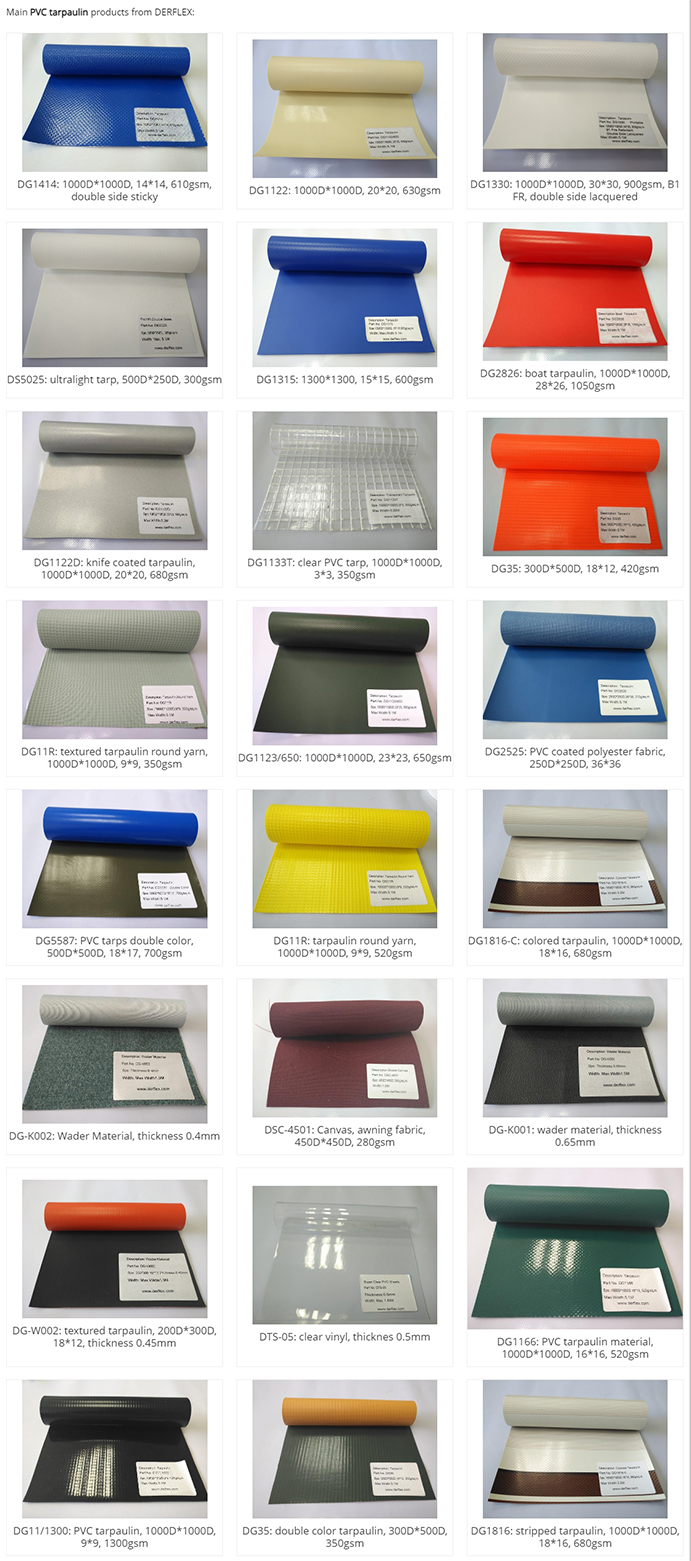
DERFLEX supports specification discussion around size, color, width, material weight, reinforcement, rope or webbing edge, eyelets, hems, cut pattern, finishing method, label or branding, and packaging configuration. Buyers building a channel or project line often need more than a standard sheet. They need a tarp structure that fits installation logic, selling logic, and repeat-order practicality.

Where Each One Works Best

Applications: Choosing the Right Tarp for the Real Job

The biggest mistake in tarp sourcing is assuming that one material family should cover every use case. In practice, each structure has a clearer application advantage.

Best Applications for Mesh Tarpaulin

When Breathability and Reduced Wind Load Matter More Than Sealing

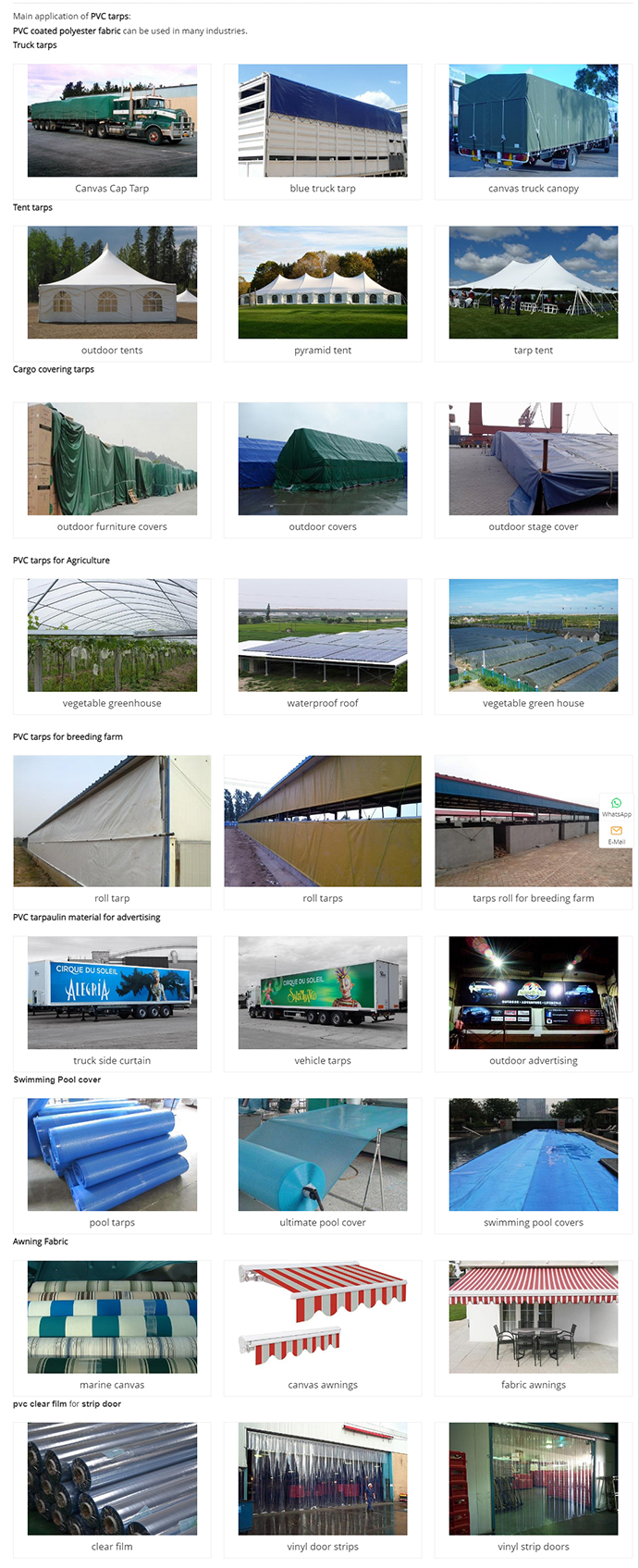
Mesh tarpaulin is usually the smarter option for moving or open applications where air pressure becomes a serious operating issue. This is why truck mesh tarpaulins are widely used on dump trucks, trailers, and haulage systems moving sand, branches, scrap, green waste, and construction debris. The mesh allows the load to stay covered while reducing the stress that a solid sheet can experience at road speed.

Mesh is also widely used for construction site screens, safety barriers, shade covers, scaffold screens, fence privacy screens, sports perimeter screens, and industrial partitions where visibility reduction or partial screening is useful but full waterproof enclosure is not required. In these cases, the buyer values airflow, lower flapping, easier handling, and better environmental comfort.

Agriculture and landscape sectors may also use mesh where crop shading, screening, or controlled ventilation is more important than complete sealing. For many distributors, mesh tarpaulin becomes a practical product line because it fills a different demand category from classic waterproof covers.

Best Applications for Solid Tarpaulin

When Waterproofing, Surface Protection, and Full Cover Are the Priority

Solid tarpaulin performs best in applications where the customer expects a true protective barrier. Outdoor storage tarp systems for pallets, machinery, equipment, building materials, steel stock, wood packs, and industrial inventory usually need a non-perforated cover. The same is true for weather protection in construction, temporary roof shielding, warehouse overflow cover, container-side protection, and agricultural stock cover where rain intrusion would damage value.

Solid PVC tarpaulin is also the more suitable choice for many truck covers, side curtains, trailer weather covers, and industrial barriers where splash protection, dust isolation, or privacy is required. A buyer sourcing from a waterproof tarpaulin supplier is usually buying risk reduction. They want to reduce spoilage, protect surfaces, lower complaint rates, and improve the practical reliability of the cover across repeated exposure.

Where a product needs to act like a shield rather than a screen, solid tarpaulin is often the more commercially defensible choice.

Use Mesh Tarpaulin When the Buyer Says

“I need the load covered, but I do not want high wind drag.” “This is for dump truck or trailer debris cover.” “This application needs screening or shade.” “Airflow matters.” “Moisture should not stay trapped under the surface.” These are classic mesh tarp buying signals.

Use Solid Tarpaulin When the Buyer Says

“I need the product kept dry.” “This cover protects inventory outdoors.” “Dust and rain cannot reach the stored goods.” “The cover needs stronger surface protection.” “This is a waterproof industrial or agricultural tarp.” These are classic solid tarp buying signals.

Building a Tarp Product Line for Distribution or OEM Supply?

Many professional buyers do not choose between mesh and solid forever. They carry both. DERFLEX can help you structure a more complete mesh tarp and solid tarp range for different end users, channels, and project requirements.

Manufacturer Strength

Why Choose DERFLEX as Your Mesh and Solid Tarpaulin Supplier

Buyers usually do not fail because tarpaulins do not exist. They fail because the supply is generic, unstable, poorly matched, or difficult to repeat at scale.

Specification Matching Instead of Generic Selling

DERFLEX approaches tarp supply from the application side. We discuss how the tarp will be used, whether airflow or waterproofing matters more, how often the cover will be opened and closed, whether it needs reinforcement, and what commercial target the buyer must hit. That helps reduce mismatch between catalog language and real use conditions.

OEM / Custom Support

For importers, wholesalers, equipment makers, and private-label programs, custom capability matters. DERFLEX supports custom dimensions, materials, colors, finishing methods, eyelets, hems, reinforcement zones, labels, and packaging logic. A serious custom tarp manufacturer should help the buyer build a repeatable product, not only sell a one-time sheet.

Lead Time and Repeat-Order Consistency

Commercial buyers care about planning, not just quotations. Reliable delivery windows, stable specification logic, and repeat-order consistency matter when the tarp becomes part of a reseller program, equipment package, seasonal stock build, or field replacement cycle.

Quality Control and Documentation-Oriented Thinking

Professional tarp sourcing often requires more than a sample swatch. It requires clear discussion of material behavior, outdoor exposure logic, reinforcement, workmanship expectations, and documentation alignment for target markets or projects. DERFLEX supports that kind of conversation.

Broad Tarpaulin Experience

Mesh tarp, waterproof tarp, truck tarp, heavy duty PVC tarpaulin, and industrial protective cover categories are closely related. That broader manufacturing perspective helps buyers compare one tarp family against another and make more commercially practical decisions.

Better for Buyers Who Need a Supply Partner

The best supplier for B2B buyers is often not the one offering the lowest visible unit price. It is the one that reduces complaint risk, supports faster decision-making, improves consistency, and makes future orders easier. That is the value of a factory-oriented tarpaulin manufacturer.

Comparison

Mesh Tarpaulin vs Solid Tarpaulin vs Basic Low-Cost Cover Options

Buyers are not only comparing mesh and solid against each other. They are often comparing both against cheaper low-end alternatives.

Mesh Tarpaulin vs Solid Tarpaulin

This is the main decision point. Mesh wins where the environment punishes closed surfaces. Solid wins where the environment punishes open surfaces. Put more simply: mesh solves wind and ventilation problems, while solid solves weather and contamination problems. That is why a mesh tarpaulin supplier and a solid tarpaulin manufacturer may both be right, depending on the load, site, and protection goal.

In transport, mesh often works better for loose material containment and roll tarp systems. In outdoor storage, solid usually works better because inventory protection depends on rain blocking. In screening and shade, mesh is more practical. In full enclosure, solid is more practical. The correct answer follows the operating logic.

Solid Tarpaulin vs Low-Grade PE Commodity Cover

Some buyers compare a proper solid PVC tarpaulin with a low-cost commodity PE sheet. That is usually not a like-for-like comparison. A basic commodity cover may work for short-term, light-duty, or highly price-sensitive use, but it often does not offer the same tear resistance, handling strength, finishing quality, repeatable fabrication, or longer-life commercial value as an industrial PVC tarpaulin solution. For buyers who want fewer complaints and better durability, a factory-grade solid tarp often makes more sense over time.

Mesh Tarpaulin vs Uncoated Light Mesh

Not all mesh covers are the same. A low-grade uncoated mesh may be suitable for very basic shading or short-term screening, but it can underperform in abrasion, UV stability, edge durability, and commercial life. For transport or industrial use, buyers usually need stronger coated mesh with more reliable reinforcement and fabrication quality.

Which Option Is More Profitable for Resellers?

The more profitable option is usually the one that fits the customer’s need more accurately. Wrong-fit low-cost products can create returns, complaints, damaged reputation, and repeat business loss. Resellers often earn better long-term results when they carry a small but properly segmented tarp range: breathable mesh tarps for airflow-heavy use, and waterproof solid tarps for protection-heavy use.

Need OEM, Private Label, or Made-to-Measure Tarp Supply?

DERFLEX supports buyers who need custom mesh tarpaulin, waterproof solid tarpaulin, heavy duty tarp development, and factory-direct supply planning for distribution or project use.

Representative Buyer Scenario

Case Study: One Distributor, Two Different Tarp Problems

This representative example reflects a common B2B sourcing situation rather than a one-size-fits-all claim.

The Initial Question

A regional distributor serving waste transport and construction customers wanted to simplify its product line. The first idea was to use one heavy duty tarp category for everything: trailer debris cover, open-top waste hauling, pallet protection, and site material storage. At first glance, that looked easier for purchasing. In practice, it created a mismatch.

The transport customers needed a cover that handled road wind better and was easier in daily roll-up use. The storage customers needed a cover that actually kept materials dry. One product could not solve both needs equally well.

The Improved Solution

Instead of forcing one tarp logic across every application, the distributor split the range into two clearer categories: a mesh tarp line for debris, transport, and airflow-heavy applications, and a solid waterproof tarp line for pallet cover, equipment protection, and outdoor storage use. That made quotation easier, reduced confusion for sales staff, and improved end-user fit.

This kind of segmentation is often more commercially practical than trying to make one universal tarp satisfy customers with opposite performance priorities.

Why This Matters

The best tarp sourcing strategy is often not “pick the stronger product.” It is “pick the right product family for the right use condition.” That is exactly why comparison pages like mesh tarpaulin vs solid tarpaulin help buyers make better purchasing decisions and build better product lines.

Related DERFLEX Solutions

Internal Links for Buyers Comparing Related Tarpaulin Categories

These related pages help buye, rs move from general comparison to specific product or application routes.

Frequently Asked Questions

FAQ About Mesh Tarpaulin vs Solid Tarpaulin

These are the questions buyers most often ask when comparing breathable and waterproof tarp structures.

Which is better, mesh tarpaulin or solid tarpaulin?

Neither is universally better. Mesh tarpaulin is usually better where airflow, reduced wind load, debris retention, screening, or shade matter more than complete sealing. Solid tarpaulin is usually better where waterproofing, dust blocking, surface protection, and full weather cover are the priority. The correct choice depends on the application.

Is mesh tarpaulin waterproof?

Mesh tarpaulin is not a true full waterproof barrier in the same way a solid PVC tarpaulin is. Some coated mesh structures can improve weather behavior, but they still allow more passage than a closed-surface tarp. If the buyer needs dependable rain protection for outdoor storage or cargo cover, a solid tarpaulin is usually the safer choice.

Why is mesh tarp commonly used on dump trucks and trailers?

Because dump truck and trailer applications often need loose-material containment without excessive wind drag. Mesh lets air move through the cover, which can reduce flapping, pressure buildup, and stress during transport. That is why truck mesh tarpaulins are widely used for debris, green waste, and similar haulage applications.

When should I choose solid tarpaulin for outdoor storage?

Choose solid tarpaulin when the stored goods must stay dry, cleaner, and better shielded from weather. Pallets, machinery, tools, raw materials, and finished goods stored outdoors usually benefit more from a solid waterproof tarp than from a breathable mesh tarp.

Can both mesh and solid tarpaulin be UV resistant?

Yes. UV resistance is influenced by the material system, formulation, coating quality, and outdoor-grade construction rather than by the words mesh or solid alone. Both can be made for outdoor use, but the actual performance level depends on specification and manufacturing quality.

What does a custom tarp manufacturer usually customize?

Typical customization includes dimensions, fabric weight, openness or solid structure choice, reinforcement, hems, eyelets, webbing, seams, color, logo or label, and packaging. A custom tarp manufacturer may also help buyers align tarp design with installation method, handling frequency, or resale positioning.

Is a heavier tarp always the better tarp?

No. Heavier material can improve certain durability aspects, but it may also reduce handling convenience and add unnecessary cost if the application does not need that level of construction. The right tarp is the one that fits the duty cycle, protection goal, and commercial target most accurately.

Can DERFLEX supply both mesh and solid tarpaulin for one product line?

Yes. DERFLEX supports buyers who need breathable mesh tarpaulin and solid waterproof tarpaulin within the same sourcing plan. This is often useful for distributors, equipment suppliers, and OEM programs serving multiple end-use markets.

Ready to Source the Right Tarpaulin Structure?

Whether you need a mesh tarpaulin manufacturer for transport and screening use, a solid tarpaulin supplier for waterproof protection, or a custom tarp manufacturer for OEM and made-to-measure development, DERFLEX is ready to review your requirement.

  • Support for mesh tarp and solid tarp comparison by real application
  • OEM / Custom options for size, weight, finishing, and branding
  • Lead time planning, quality control thinking, and documentation support
  • Suitable for distributors, project buyers, traders, and industrial users

Suggested URL: /mesh-tarpaulin-vs-solid-tarpaulin.html

Consulting Services
+86-021-54361792 / 54361798
Email
sales@derflex.com