News
Industry News

Outer Membrane for Biogas Holder | PVC/PVDF Fabric | DERFLEX

Update:2026/8/25 17:28:22 Views:
Weather-protection membrane · Biogas storage

Outer Membrane for Biogas Holder

Reinforced PVC/PVDF coated polyester membrane developed for the exposed shell of double-membrane biogas holders—where UV, rain, wind, snow, temperature cycling, seam quality and surface durability must be considered together.

DERFLEX supplies roll goods and project-specific outer membrane fabric for gas-holder manufacturers, EPC contractors, membrane fabricators, wastewater equipment companies and replacement membrane programs. Final material values should be matched to the holder geometry, support-air pressure, local climate, structural calculation, welding process and approved project specification.

PVC / PVDF Direction Surface system selected by climate and durability target
High-Tenacity Polyester Reinforcement direction for load distribution and fabrication
HF / RF / Hot-Air Welding compatibility can be matched to the converter process
OEM Project Supply Roll width, color, coating, labels and packaging by agreement
Outer membrane engineering

The Outer Membrane Is the Gas Holder’s Environmental Shield

In an air-supported double-membrane gas holder, the outer membrane is the visible shell that stays inflated while the gas volume changes inside the system. Its job is different from the inner gas membrane: it must maintain the designed external form and protect the storage layer from sunlight, precipitation, wind, airborne dirt, temperature variation and other outdoor exposure.

That makes “outer membrane for biogas holder” a structural-material question rather than a simple tarp selection. Fabric reinforcement, coating adhesion, surface treatment, seam design, low-wick details, roll consistency and compatibility with the fabricator’s welding process all influence how reliably the finished dome can be produced and maintained.

DERFLEX approaches this product from the coated-fabric level. Buyers can define an exposed-shell material separately from the gas-contact layer, allowing the outer membrane to emphasize weather resistance and mechanical stability without forcing one generic membrane grade to perform every function in the system.

Engineering note: the membrane material does not replace the gas-holder designer’s static calculation. Wind, snow, shape, anchoring, air pressure and local code requirements should be verified by the system engineer before the final fabric specification is released.
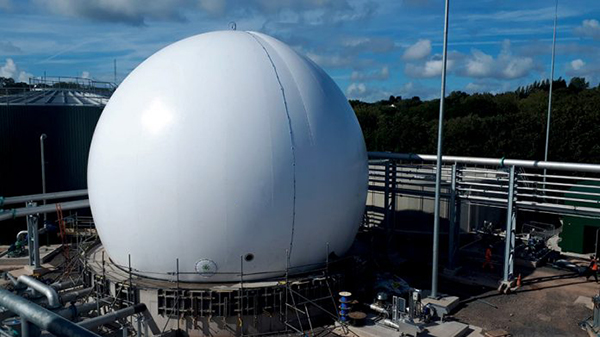
DERFLEX outer membrane for biogas holder in a double membrane gas storage project
DERFLEX biogas membrane application image. Outer membrane geometry, panel design, anchoring and operating pressure are project-specific.
What the outer layer must do

Three Jobs, One Exposed Membrane

A stronger specification separates the outer membrane into three practical engineering duties: carrying the membrane’s share of mechanical loads, resisting the outdoor environment, and remaining fabrication-friendly for large welded panels.

Maintain the Designed Shell

The outer membrane works with the support-air system to retain the dome profile. Reinforcement, elongation behavior, seam layout and anchoring zones should be reviewed together with the gas-holder geometry and operating pressure.

Take Outdoor Exposure

UV, rain, dust, heat, frost, wind and snow are outer-layer concerns. Surface formulation and optional PVDF treatment can be selected to improve exposed weathering, cleanability and appearance retention.

Fabricate into Reliable Panels

Large gas-holder shells depend on repeatable welded seams. Coating consistency, roll flatness and weld behavior should be aligned with HF/RF, hot-air or hot-wedge equipment used by the membrane converter.

Material construction

A Layered Outer Membrane Architecture

The following construction is a project-development direction rather than a fixed universal recipe. The coating formula, reinforcement and surface finish should be confirmed through the buyer’s drawings, environmental data and approved technical data sheet.

PVDF / Weather Surface Optional exposed top-surface direction for UV resistance, dirt release, cleanability and longer appearance retention where the project requires an upgraded finish.
PVC Functional Coating Provides the flexible coated layer needed for weather resistance, seam fabrication, coating adhesion and controlled membrane handling.
Polyester Reinforcement High-tenacity woven base fabric supplies tensile and tear strength, dimensional control and load distribution during fabrication, installation and service.
Back / Welding Surface Coating and finish can be coordinated with the fabricator’s welding route so panel seams, reinforced edges and connection zones can be developed consistently.
Performance priorities

What Buyers Should Evaluate Before Approving Outer Membrane Fabric

Competitive biogas system suppliers consistently emphasize weather protection, membrane strength, controlled pressure and reliable welded construction. DERFLEX translates those system-level concerns into material-level checkpoints for OEM buyers.

01

UV & Weathering Direction

Outdoor formulations can be selected around sunlight, rain, temperature cycling and the expected exposure profile of the project location.

02

PVDF Surface Option

For exposed shells, a PVDF or upgraded lacquer direction can be considered where cleanability, surface protection and appearance retention are procurement priorities.

03

Tensile & Tear Strength

Base fabric yarn, weave and coating balance can be developed to meet project-defined warp/weft strength and tear targets rather than relying on GSM alone.

04

Pressure-Retention Support

The outer shell works with the blower system, so coating continuity and welded seam integrity should fit the designer’s support-air concept and pressure range.

05

Low-Wick Edge Direction

Anti-wicking or edge-protection options can be discussed where cut edges, reinforced connection areas and long outdoor exposure create moisture-management concerns.

06

Repeatable OEM Supply

Roll width, shade, coating system, batch identification, labels, packing and inspection items can be standardized for repeat gas-holder production programs.

RFQ-ready framework

Outer Membrane for Biogas Holder — Specification Direction

These values are a starting framework for technical discussion. Final numerical properties, tolerances and test methods should be confirmed after the gas-holder type, structural loads, climate and fabrication process are known.

Specification Item DERFLEX Custom Direction Why It Matters to the Buyer
Product Role Outer weather-protection membrane / external shell for double-membrane gas holders, tank-mounted gas storage roofs and selected biogas domes. Keeps the RFQ focused on exposed-shell performance instead of mixing inner and outer membrane requirements.
Base Reinforcement High-tenacity polyester woven fabric; yarn denier, weave density and strength direction can be customized by project. Controls tensile, tear, dimensional behavior and welded-panel handling.
Coating System PVC coated polyester with optional PVDF / weather-resistant top-surface direction. Balances flexibility, weldability, weather exposure and surface durability.
Weight Direction Common project discussion range approximately 900–1500 g/m2; final GSM should follow structural and fabrication requirements. Prevents weight from being treated as the only indicator of mechanical performance.
Surface Finish Lacquered PVC, PVDF top surface, anti-aging or dirt-resistant direction by agreed specification. Useful for exposed domes where UV, dust, rain and clean appearance are relevant.
Mechanical Properties Project-defined tensile strength, tear strength, elongation and dimensional-stability targets in warp and weft. Allows the material to match holder diameter, panel geometry, support pressure and calculated loads.
Welding Route HF/RF welding, hot-air welding, hot-wedge welding or project-specific process, subject to formulation and trial approval. Supports repeatable seams for large fabricated shell panels.
Outdoor Package UV, weathering, cold-flexibility, anti-mildew, anti-wicking or flame-retardant options can be discussed where required. Lets the material specification follow the actual climate and compliance package.
Color White, grey or project colors subject to formulation, quantity and approval. Supports visual integration, surface heat management strategy and OEM identity.
Supply Format Roll goods, project-specific cut material or fabricated panel direction by agreement. Fits system builders, membrane converters, replacement projects and regional fabrication workflows.
Quality Documents Approved TDS, batch identification, agreed inspection items and relevant test documents according to the purchase specification. Creates a repeatable basis for incoming inspection and future orders.
Selection by site condition

Match the Outer Membrane to the Climate, Not Just the Diameter

The same gas-holder size can require a different membrane direction in a hot desert, a cold continental climate, a high-snow region or a coastal industrial site. These factors should be raised before sample approval.

High UV / Hot Review UV package, surface finish, color, heat exposure and long-term coating behavior.
High Wind Review tensile/tear targets, seam design, anchoring interface and structural calculation together.
Snow / Ice Confirm design loads, dome geometry, membrane strength and low-temperature performance with the system engineer.
Cold Climate Check low-temperature flexibility, handling during installation and the selected welding process.
Dust / Industrial Consider cleanability, surface durability, dirt-release direction and maintenance access.
Procurement logic

Outer Membrane vs. Inner Membrane: Do Not Buy Them by the Same Checklist

An inner gas membrane and an outer weather membrane can share the same general coated-textile platform, yet their priorities differ. Separating the RFQ reduces the risk of over-specifying one layer while leaving another performance gap.

Outer membrane procurement focus

  • UV exposure and weathering
  • Wind / snow load compatibility with system design
  • Tensile and tear strength
  • PVDF or durable exposed surface option
  • Support-air pressure retention
  • Dirt release and appearance stability
  • Welding and reinforced perimeter fabrication

Inner membrane procurement focus

  • Low gas permeability
  • Methane, CO?, H?S, moisture and condensate exposure
  • Cyclic flexibility as storage volume changes
  • Gas-tight welded seams
  • Controlled elongation and dimensional behavior
  • Compatibility with the pressure-control system
  • Gas-contact test requirements defined by project
For the gas-contact layer, see DERFLEX’s inner membrane for biogas holder page. It separates gas-barrier and chemical-exposure priorities from the outdoor demands covered on this page.
OEM & replacement workflow

From Existing Drawing to Repeatable Outer Membrane Specification

Gas-holder builders and replacement membrane buyers often already know the system geometry. DERFLEX can use that project information to structure material sampling and repeat supply around an approved outer-shell specification.

Step 01

Send the Project Data

Provide holder type, diameter/height, pressure range, location, wind/snow data, drawings and the membrane position.

Step 02

Define Material Direction

Align base reinforcement, coating system, surface finish, color, GSM, roll width and required test items.

Step 03

Approve Weld & Sample

Evaluate representative material with the fabricator’s welding route and confirm the approved technical data.

Step 04

Standardize Repeat Supply

Lock batch identification, inspection points, packing, labels and agreed project tolerances for future production.

Where this membrane is used

Outer Membrane Supply for Biogas and Renewable-Gas Projects

The outer membrane is relevant anywhere an exposed flexible gas-storage shell needs weather protection and stable fabrication. Final system configuration remains the responsibility of the holder designer or EPC contractor.

Freestanding Double-Membrane Holders

External shell material for slab-mounted flexible storage serving agricultural, municipal and industrial anaerobic digestion projects.

Tank-Mounted Gas Storage Roofs

Outer weather membrane for digesters where the gas-storage system is installed directly on a concrete or steel tank.

Wastewater Treatment Plants

Membrane material direction for sludge digestion gas storage, buffering and CHP or upgrading systems.

Agricultural Biogas

Weather-exposed shell fabric for manure, crop-residue and farm-based anaerobic digestion gas-storage systems.

Food & Organic Waste Digestion

Outer membrane direction for gas holders serving food-processing waste, source-separated organics and other high-organic feedstocks.

Replacement Membrane Programs

Material matching for existing holders when legacy drawings, fabric samples, coating data or performance requirements are available.

Why DERFLEX for the material layer

A Coated-Fabric Partner for Gas-Holder Builders and Membrane Fabricators

Complete gas-holder suppliers compete on structural design, blowers, controls, anchoring and installation. DERFLEX adds value from another direction: defining and supplying the coated technical textile that system builders convert into the finished outer shell.

Buyers can discuss PVC coated polyester, PVC/PVDF surface direction, custom reinforcement, roll width, color, welding behavior, anti-wicking, flame-retardant options and export packaging within one material program.

For recurring OEM projects, the practical goal is not a one-time roll purchase. It is a repeatable specification: approved sample, controlled coating structure, stable fabrication behavior, agreed inspection points and consistent identification for future orders.

DERFLEX can also support buyers comparing outer membrane material with a broader biogas holder membrane system, a complete double membrane biogas holder material framework, or a dedicated PVDF biogas membrane direction for exposed applications.

Related DERFLEX resources

Continue the Material Selection Journey

These pages cover adjacent gas-storage, digester and membrane roles for engineers, buyers and fabrication teams.

Buyer questions

Outer Membrane for Biogas Holder FAQ

Answers are written for material selection and procurement. Final engineering values should follow the approved gas-holder design and project standards.

What is the outer membrane in a double-membrane biogas holder?

The outer membrane is the exposed, air-supported shell that maintains the holder’s external profile and protects the inner gas-storage membrane from sunlight, rain, wind, snow, dust and temperature changes. Its specification therefore foc, uses strongly on weather resistance, mechanical strength, surface durability and welded-panel fabrication.

What is the difference between an outer membrane and an inner membrane?

The outer membrane is primarily a weather-protection and structural shell, while the inner membrane is the variable-volume gas-contact layer. Outer membrane selection emphasizes UV/weathering, surface durability and load-related mechanical properties; inner membrane selection emphasizes low gas permeability, chemical resistance, flexibility and gas-tight seam behavior.

Is PVC/PVDF coated polyester suitable for the outer membrane?

PVC coated high-tenacity polyester is a common material platform for flexible gas-holder membranes. A PVDF or upgraded weather-resistant surface can be considered for exposed outer shells where the project calls for stronger UV/weathering direction, improved cleanability or longer appearance retention. The final coating system should be approved against the project specification.

Can DERFLEX supply replacement outer membrane fabric for an existing gas holder?

DERFLEX can review replacement-material requirements when the buyer can provide existing drawings, membrane dimensions, current material data, a physical sample, welding method and required performance criteria. The replacement fabric should still be confirmed against the original holder design and current operating conditions.

Can the color, roll width and surface finish be customized?

Yes, project-based customization can include color, roll width, base reinforcement, coating structure, surface finish, PVDF direction, anti-wicking, flame-retardant options, labeling and packing, subject to formulation, quantity and sample approval.

What information should I send for a quotation?

Send the gas-holder type, outer membrane position, holder diameter and height, support-air or operating pressure range, project location, wind/snow requirements, preferred material or GSM, color, welding process, roll width, quantity, drawings and any required test standards. If it is a replacement project, include the existing material specification or a sample when available.

Define Your Outer Membrane Before You Lock the Fabric Grade

Send DERFLEX the holder geometry, local climate, membrane position, welding process and required material data. We can help structure a practical PVC/PVDF coated-fabric direction for quotation, sampling and OEM repeat supply.

  • ? Gas holder type and membrane position
  • ? Diameter, height and pressure range
  • ? Project location and wind / snow data
  • ? Welding process and fabrication method
  • ? Material, GSM, color and surface preference
  • ? Quantity, drawing and required test documents
Product statements describe selectable material directions and typical procurement considerations. Final suitability, dimensions, loads, compliance and performance values must be confirmed by the project engineer and approved technical specification.
Consulting Services
+86-021-54361792 / 54361798
Email
sales@derflex.com