


 Architectural PTFE Roofing Material
PTFE Membrane Material for Long-Life Architectural Roofing
DERFLEX supplies PTFE-coated fiberglass membrane material for roofing projects where service life planning, visual stability, daylight control, weather exposure and project documentation must be considered before fabrication begins.
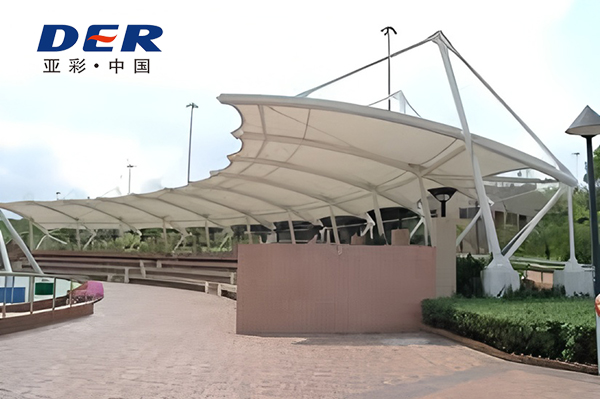
Material-first support for roof fabricators, contractors and project buyers
For long-life tensile roofing, the membrane should be selected by structural form, exposure, translucency target, surface cleanability, fire route and roll supply consistency—not by weight alone.
A long-life membrane roof starts before the material is cut.
Architectural PTFE roofing is often specified for public buildings and visible structures where replacement is difficult, access is limited and appearance matters for many years.
DERFLEX approaches the product as a roof envelope material, not only as a coated fabric roll. The goal is to help buyers choose a practical specification direction before cost, fabrication and installation decisions are locked.
What is PTFE membrane material for architectural roofing?
PTFE membrane material is commonly built from woven fiberglass fabric coated with polytetrafluoroethylene. The fiberglass base gives the membrane dimensional stability and tensile strength direction, while the PTFE surface helps resist weathering, UV exposure, dirt adhesion and many environmental contaminants.
In architectural roofing, this material becomes the visible and functional skin of a tensioned roof system. It works with steel frames, cables, masts, edge clamps and drainage design to create lightweight roofs, canopies, atriums, fa?ades and public shade structures.
DERFLEX supports buyers who need roll-goods membrane material, specification discussion, sample review, export packaging and repeatable supply for project-based procurement.
Why PTFE is considered for long-life architectural roofing
In demanding roof projects, buyers usually compare more than price. They review exposure, geometry, code direction, daylight needs, maintenance access and visual expectations.
Weather aging resistance
The PTFE surface is selected for roof skins exposed to sunlight, rain, wind, pollution and temperature cycling. Project-specific outdoor performance should be confirmed with samples and documentation.
Dimensional stability
Fiberglass reinforcement supports roof panels where tension, curvature and edge loads must remain controlled during fabrication and service.
Low-maintenance surface behavior
PTFE has low surface adhesion. In many outdoor projects, rainfall can help remove ordinary surface deposits and reduce frequent manual cleaning pressure.
Diffused daylight
Translucent PTFE roofing can create softer interior daylight for terminals, halls, atriums and public gathering areas while limiting direct glare.
Lightweight structural expression
Compared with many rigid roof directions, membrane roofing can support curved, long-span forms with less visual heaviness and more architectural freedom.
Fire-performance documentation route
Public structures often need clear fire-related testing direction. DERFLEX can discuss target standards and document needs according to market and project requirements.
DERFLEX architectural membrane roofing references
The images below use actual DERFLEX website material and application visuals. Final membrane grade should be matched with engineering drawings, local standards and fabrication method.
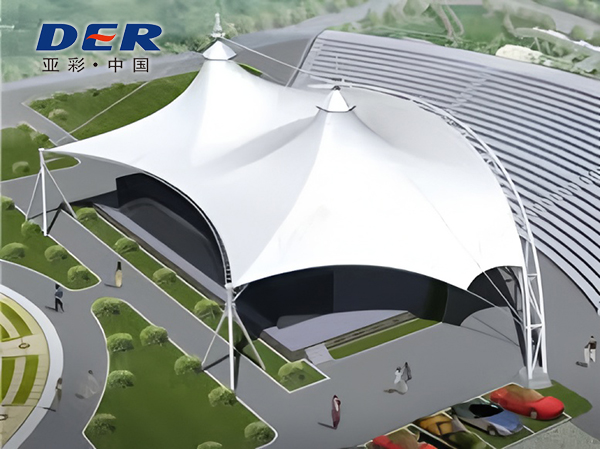
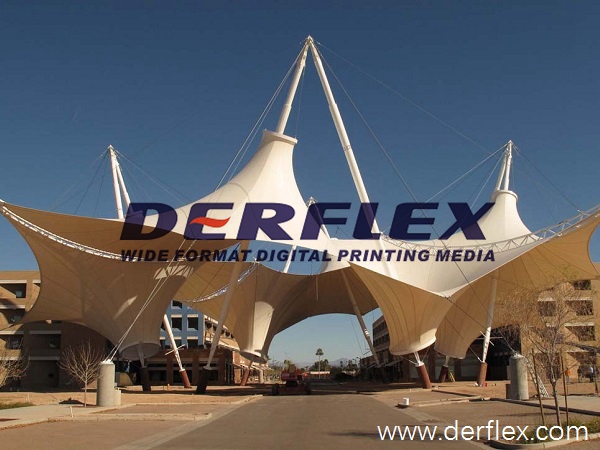
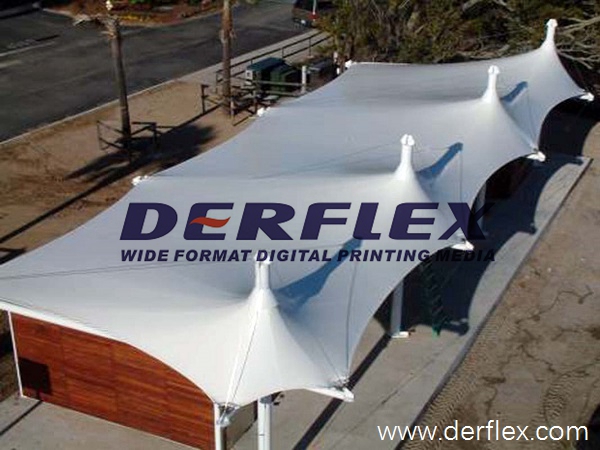
PTFE roofing membrane specification direction
This table is written for early procurement discussion. Final values should be confirmed by drawing review, sample testing, fabrication trial and applicable local project standards.
| Product direction | PTFE membrane material for long-life architectural roofing; PTFE-coated fiberglass roofing membrane; architectural PTFE tensile membrane material. |
| Base reinforcement | Woven fiberglass fabric selected for dimensional stability, tensile performance direction and roof panel support. |
| Coating system | PTFE coating designed for weather exposure, UV resistance direction, low dirt adhesion and long-term surface appearance. |
| Supply form | Roll goods for tensile membrane fabricators, roof contractors, architectural material distributors and OEM project buyers. |
| Visual direction | White or project-defined surface appearance; translucency can be discussed according to daylight and shading targets. |
| Project variables | Weight, width, roll length, panel size, cutting plan, seam layout, packing method and document requirements can be reviewed before quotation. |
| Key selection factors | Span, pre-tension, wind load, snow load, edge detail, drainage, access for maintenance, fire route, climate exposure and expected service plan. |
| Typical applications | Stadium roofs, transit terminals, airport canopies, commercial atriums, civic pavilions, public walkways, entrance roofs and landmark tensile structures. |
Note: PTFE architectural membrane is a project-sensitive material. DERFLEX avoids fixed universal claims because each roof design, climate and compliance route may require different testing and confirmation.
PTFE, PVC/PVDF and ETFE: choose by roof objective
Long-life roofing selection is not only a material-name decision. It should connect performance, fabrication, cost plan and architectural intent.
PTFE membrane
Often considered for specification-driven roofs where long-term appearance, weather exposure and public-building performance requirements are central.
- Fiberglass + PTFE structure
- Good for landmark and permanent roof directions
- Useful when low maintenance is a priority
PVC / PVDF membrane
A practical direction for commercial canopies, shade structures and projects needing flexible color, welding and budget control.
- Polyester + PVC coating
- Optional PVDF surface direction
- Strong cost-performance route
ETFE foil
Often used where transparency, cushions, skylights or lightweight envelope design are more important than traditional fabric membrane behavior.
- Transparent fluoropolymer foil
- Single layer or cushion systems
- Different engineering and installation logic
Where long-life PTFE membrane roofing fits well
DERFLEX supports material discussions for visible, exposed and specification-driven roof projects where replacement planning and visual quality are part of the buying decision.
Stadiums and arenas
Grandstand roofing, spectator shade, entrance canopies and long-span roof surfaces that require consistent visual presentation.
Transport hubs
Airport terminals, railway stations, bus terminals and covered walkways exposed to weather, pollution and high public use.
Commercial atriums
Retail plazas, hotel entrances, leisure zones and semi-open public spaces requiring daylight, shade and architectural identity.
Civic and cultural buildings
Exhibition halls, parks, schools, community pavilions and municipal projects where fire route and maintenance planning matter.
Walkway and entrance roofs
Lightweight roof covers for transitions between buildings, public corridors and entrance structures.
Architectural fa?ades and screens
PTFE-related membrane directions can be discussed for visible skin, shading or screening applications depending on project geometry.
How to prepare a useful PTFE membrane roofing inquiry
A detailed inquiry helps DERFLEX recommend a clearer material direction and reduces the risk of mismatched specifications.
Define roof type
Stadium, canopy, atrium, terminal, pavilion, fa?ade or walkway cover.
Share drawings
Span, panel size, pre-tension logic, edge detail and fixing method.
Confirm exposure
UV, wind, rain, snow, dust, coastal climate, pollution and cleaning access.
Set material target
Weight, width, translucency, surface, color, fire route and documents.
Review fabrication
Cutting, seam layout, roll length, packing, sample test and delivery plan.
Built for buyers who need more than a material name
Many roofing buyers already know the term PTFE membrane, but they still need a supplier who can help translate project requirements into a workable material direction.
DERFLEX focuses on coated fabric production, roll-goods control, project specification communication, customization discussion and export-ready packaging for contractors, fabricators and distributors.
- Material structure discussion before quotation
- Custom roll width, packing and document coordination
- Support for sample review and project comparison
- Supply direction for repeated procurement programs
Selection points DERFLEX reviews with project buyers
A long-life architectural roof can be affected by choices made at procurement stage. DERFLEX encourages buyers to evaluate membrane grade, roof geometry and compliance route together.
- Substrate tensile strength and dimensional behavior
- Surface finish, dirt adhesion and daylight target
- Fire-performance route for destination market
- Roll consistency and fabrication compatibility
- Climate exposure and maintenance plan
- Export packing, labeling and shipment protection
Explore architectural membrane material options
Use these pages to compare roof systems, membrane structures, tensile fabrics and architectural material directions across DERFLEX.
Questions about PTFE membrane material for long-life roofing
These answers are written for architects, contractors, membrane fabricators, distributors and project purchasing teams.
What is PTFE membrane material used for in architectural roofing?
PTFE membrane material is used as a tensile roof skin for stadiums, terminals, public canopies, atriums, walkways, civic pavilions and other lightweight architectural structures that need weather protection, visual quality and project-specific performance review.
Why is PTFE often selected for long-life membrane roofing?
PTFE-coated fiberglass is often considered when a roof requires long-term weather exposure resistance, low-maintenance surface behavior, dimensional stability, daylight diffusion and a stronger documentation route for public or high-visibility projects.
Is PTFE roofing membrane the same as ordinary waterproof fabric?
No. PTFE roofing membrane is an architectural coated textile designed for tensioned roof structures. It should be selected according to engineering drawings, roof geometry, climate exposure, translucency target, fire route and fabrication process.
Can DERFLEX customize PTFE membrane material specifications?
Yes. DERFLEX can discuss project-based directions for roll width, surface appearance, translucency, packing, documentation and performance route after reviewing application details and project requirements.
What information should I send before requesting a quotation?
Please send roof type, drawings, membrane area, target width, color, translucency, fire standard, climate exposure, fabrication method, roll packing request, quantity and any reference project images or technical documents.
How should I compare PTFE membrane with PVC/PVDF or ETFE?
PTFE is usually considered for long-life, high-visibility and specification-driven roof projects. PVC/PVDF may be more practical when welding, color flexibility and budget are important. ETFE is often used when transparency or cushion envelope design is the main goal.
Need PTFE membrane material for a long-life architectural roof?
Send DERFLEX your project drawings, application, climate exposure, expected material direction and documentation needs. Our team will help review the membrane specification route and prepare a project-oriented quotation.