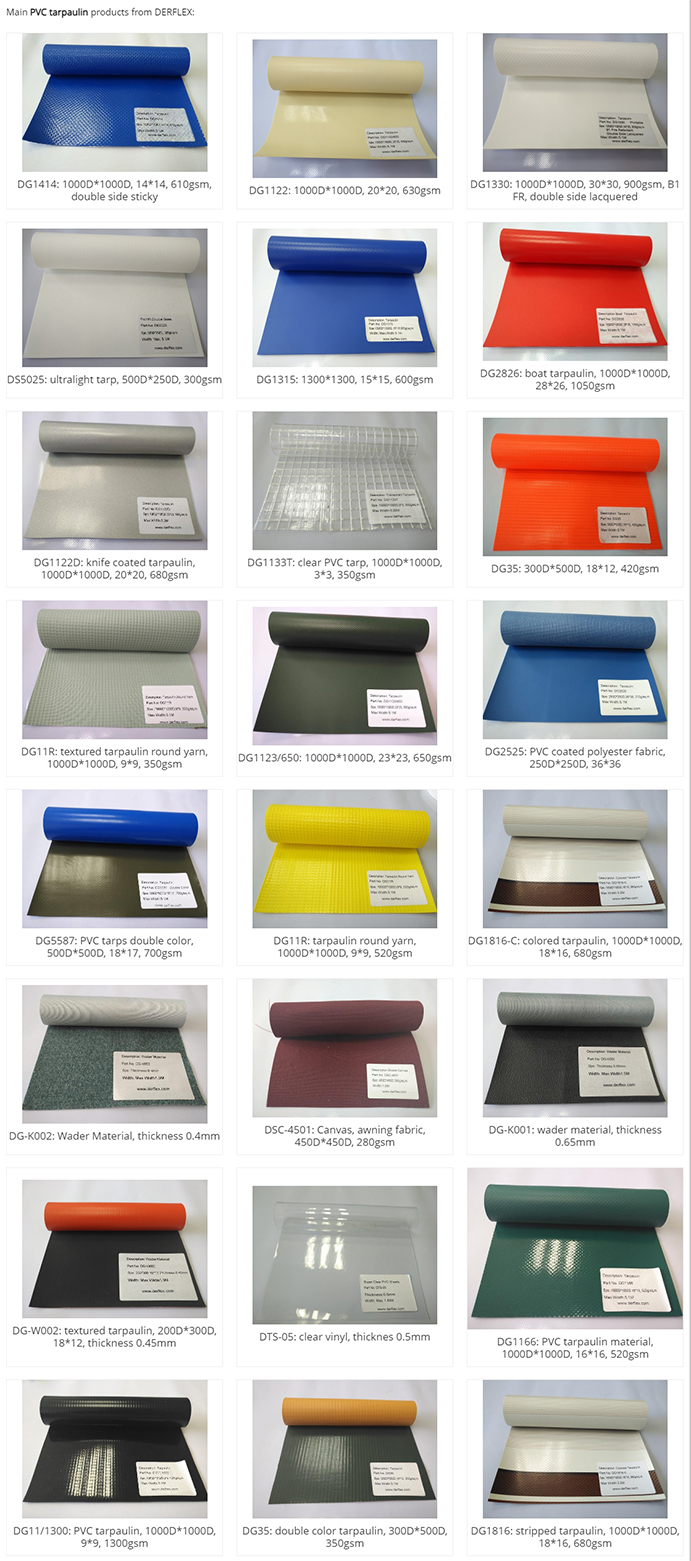
Material Swatch Sample
Best for an early comparison of PVC tarpaulin color, gloss or matte appearance, embossing, flexibility, approximate thickness direction and surface feel. Useful when the geometry and fabrication method are already proven.
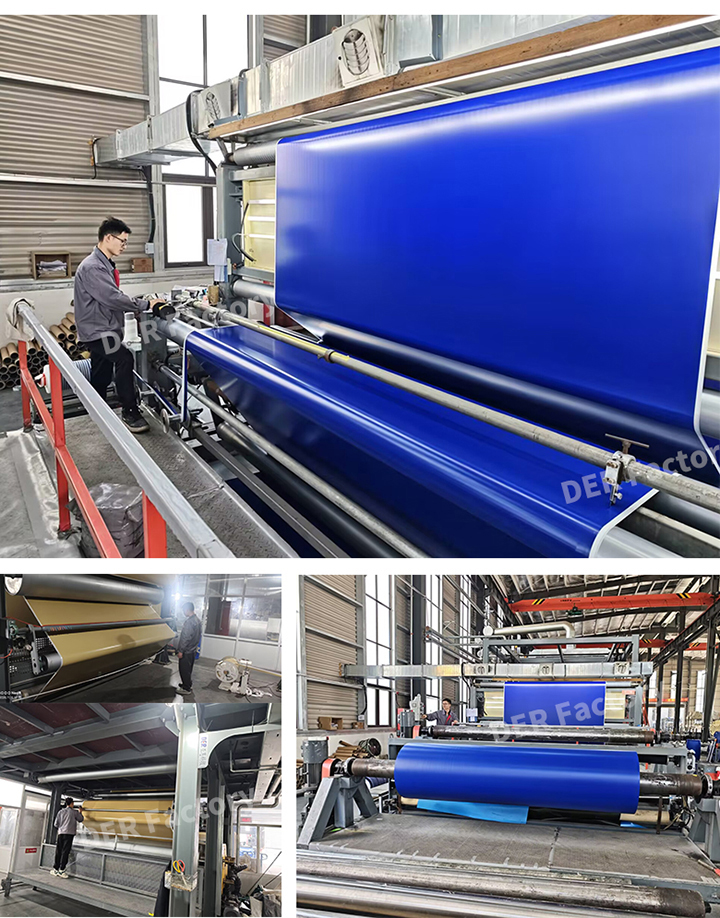
PVC Coated Fabric & Tarpaulin Manufacturing
A tarpaulin sample should answer more than “Do I like this color?” It should help your purchasing, engineering and production teams confirm the material construction, surface, weight, flexibility, welding behavior and approval reference that the bulk order will follow. DERFLEX supports PVC tarpaulin sample evaluation for distributors, converters, tarp fabricators, OEM buyers and industrial projects.
Best for an early comparison of PVC tarpaulin color, gloss or matte appearance, embossing, flexibility, approximate thickness direction and surface feel. Useful when the geometry and fabrication method are already proven.
Used when the buyer needs a closer match to a target GSM, polyester base fabric, yarn density, coating structure or performance direction. This is more useful for comparing supplier proposals than a random showroom swatch.
Recommended for tarp shops, converters and OEM manufacturers that need to test hot-air welding, high-frequency welding, sewing, printing, edge folding, eyelets or other processes with their own equipment before committing to roll quantities.
A partial or full construction sample can be appropriate when reinforcement, hems, webbing, D-rings, grommets, welded seams or logo placement need approval. The goal is to verify how material and fabrication work together.
For new custom tarp programs, private-label products or repeat procurement, the most valuable sample is the production-intent reference tied to a drawing, material code, color, hardware layout and packaging revision. It becomes the physical benchmark used alongside the written specification.
Use the table as a procurement starting point. Final sample format, cost, courier terms and lead time should be confirmed for the requested material and customization level.
| Sample Type | What It Helps Confirm | Best For | What It Does Not Prove by Itself | Recommended Next Step |
|---|---|---|---|---|
| Standard material swatch | Color family, surface, hand feel, opacity, finish and basic material direction. | Distributors, designers, early sourcing comparison. | Finished tarp dimensions, reinforced edges, weld strength or exact bulk-batch consistency. | Shortlist material, then confirm technical specification. |
| Target-spec material sample | GSM, base fabric direction, coating build, texture and project-specific selection. | Tarp fabricators, roll buyers, OEM sourcing. | Performance outside the agreed test scope or behavior in the buyer's actual conversion process. | Run process trials and document acceptance values. |
| Color / finish sample | Visual color target, gloss/matte direction, embossing and print surface. | Private label, fleets, branded covers, tents and retail programs. | Strength, durability or finished-cover performance. | Approve a color reference under agreed lighting / tolerance method. |
| Fabrication coupon | Welding window, seam appearance, printing behavior, eyelet or reinforcement technique. | Converters and factories using their own production equipment. | Full-size fit or complete load behavior. | Freeze the fabrication method before bulk roll release. |
| Finished / pre-production sample | Dimensions, seams, hems, hardware, printing, labels, packing and installation logic. | Custom tarps, OEM brands, equipment-fit covers, fleet systems. | Automatic acceptance of all future units without production inspection. | Release a controlled revision and first-off / inspection plan. |

Appearance is only one part of approval. For bulk procurement, combine physical inspection with the technical data and tests that matter to the end use.
Confirm whether the sample is PVC coated polyester, PVC laminated polyester or another construction. Record the product code and intended production route so the swatch is not separated from its specification.
Measure or verify finished mass and thickness where these affect handling, fabrication or product design. GSM is not a substitute for tensile strength, yarn structure or coating adhesion.
For demanding PVC tarp programs, review polyester denier, yarn density and the role of the textile reinforcement. Two materials with the same GSM can behave differently if the reinforcement differs.
Check color direction, gloss, matte or embossed surface, lacquer or specialty finish where applicable. For branded programs, define how color will be compared in repeat orders.
Run hot-air, RF/HF, thermal or sewing trials according to your actual process. Review seam appearance, peel behavior, edge folding, grommet installation and printing where these are part of the finished product.
Where required, define tensile, tear, coating adhesion, UV, low-temperature, abrasion, mildew or flame-retardant requirements with a test method and acceptance criterion rather than relying on a marketing label.
A sample creates value only when the information behind it follows the order. DERFLEX's buyer workflow can connect material selection, specification, sample approval and production release rather than treating sampling as a separate sales step.
Truck, tent, industrial cover, agriculture, roll conversion and equipment-fit products fail in different ways. Start with the job.
Link the physical piece to material code, GSM, color, finish, construction and any performance route being discussed.
If a sample changes after welding, printing, color matching or hardware review, issue a new revision instead of overwriting the old decision.
Use the approved sample as a visual and tactile reference, while dimensions, strength, tolerance and inspection requirements remain written and measurable.
DERFLEX publishes PVC coated polyester fabric programs for truck tarps, tents, industrial covers, awnings, curtains and custom OEM applications. Its product information covers custom GSM, roll width, base fabric, color, surface finish, functional options and fabrication compatibility.
For sample approval, that manufacturing context matters because the buyer is ultimately purchasing a repeatable production specification. The right question is not only whether the sample looks acceptable today, but whether its construction and processing route can be reproduced for the order quantity and future reorders.
The sample plan should follow the risk of the final product. Below are practical directions for common B2B tarpaulin programs.
Review coated fabric strength direction, surface, repeated folding, welding, reinforcement zones, edge construction and attachment details. Wind flap and cargo-edge abrasion make a small decorative swatch insufficient for a new finished-cover design.
Best sample: material + weld / construction panelCheck color, translucency / opacity, surface finish, welding, cleaning behavior and any required flame-performance direction. Large panels also make roll width and seam planning commercially important.
Best sample: target-spec material + seam trialStart from the equipment environment: abrasion points, oils or dirt, outdoor exposure, lifting frequency and fastening loads. Finished reinforcement can matter more than adding material weight everywhere.
Best sample: construction detail + prototype if fittedEvaluate weather exposure, UV direction, repeated covering cycles, cleaning, cold conditions and edge anchoring. A sample should support the expected season length and handling method, not only the required color.
Best sample: application-matched material swatchRoll buyers should focus on weldability, cutting yield, usable width, surface behavior and batch consistency. A converter sample is most useful when it is processed on the buyer's own machine settings.
Best sample: larger fabrication couponIn addition to the tarp material, approve logo placement, print method, labels, barcode, folding, carton marks and pack quantity. The physical sample should be linked to the commercial SKU and revision.
Best sample: pre-production / golden sampleThese six internal resources are selected to help buyers move from a physical tarp sample to a clearer bulk-order decision.
A clear sample request helps the supplier narrow the material family and avoids sending generic pieces that do not answer the buyer's actual question.
Application: truck cover, tent, industrial cover, agriculture, roll conversion, equipment cover or other use.
Material direction: PVC coated / laminated polyester, or send a reference sample if unknown.
Target specification: GSM / oz, thickness, denier or existing TDS where available.
Color and finish: RAL / Pantone / physical reference, glossy, matte, embossed or lacquer direction where relevant.
Processing: HF / RF welding, hot-air welding, sewing, printing, eyelets, webbing or other conversion method.
Performance: UV, cold, mildew, flame, abrasion, anti-static or other project-specific requirement.
Bulk plan: estimated quantity, roll or finished product format, destination and expected purchasing schedule.
Evidence needed: technical data, test report scope, packing review, inspection or approved-sample record.
Short answers for importers, distributors, converters, tarp fabricators and OEM buyers preparing a bulk order.
Yes. A material sample can be used to review color, surface, flexibility and specification direction before a bulk order. For custom projects, a larger fabrication coupon, construction sample or pre-production prototype may be more useful than a small swatch. Final sample availability and commercial terms should be confirmed for the requested material.
For B2B evaluation, the useful information usually includes the material code, nominal GSM or oz, thickness where relevant, base-fabric direction, color / surface finish and any performance or processing information tied to that sample. The approved sample should not become separated from its written specification.
Compar, e like-for-like constructions under the same criteria. Review material type, GSM, thickness, polyester reinforcement, surface, coating adhesion, tensile / tear data, welding behavior and the application-specific properties you actually need. A heavier sample is not automatically stronger or more suitable.
DERFLEX publishes custom color, surface finish and coated-fabric options for PVC tarpaulin programs. Custom sample feasibility depends on the material, color target, process and order plan, so the required reference and acceptance method should be discussed before development.
Not always. A swatch can confirm the material direction, but it does not prove finished dimensions, installed fit, seam layout, hardware position, reinforcement or packing. For new custom tarp designs, a construction panel or production-intent prototype may be more appropriate.
A golden sample is an approved physical reference retained with the corresponding material / product specification and revision. It helps control color, surface, construction and workmanship in later production, but measurable requirements such as dimensions, strength or test values should remain documented in writing.
That is often a useful step for converters and OEM manufacturers. Ask for a sample large enough for the intended process trial, record machine settings and confirm the same material construction is planned for bulk supply before treating the result as an approval reference.
Send DERFLEX your application, target material, GSM or reference, color, fabrication method, expected quantity and destination. The next useful step may be a swatch, a larger process coupon or a production-intent prototype depending on what your team needs to approve.