



Roll Up Patio Tarp Curtains for Repeated Seasonal Use
Roll up patio tarp curtains make covered terraces, restaurant patios and seasonal hospitality spaces easier to open, protect and reconfigure. For recurring installation cycles, the specification must go beyond film transparency: plan the rolled bundle, retention straps, lower bar, clear-panel crease management and removal method as one assembly. DERFLEX can review PVC material and custom panel requirements; finished panel and hardware supply must be confirmed against your drawing.
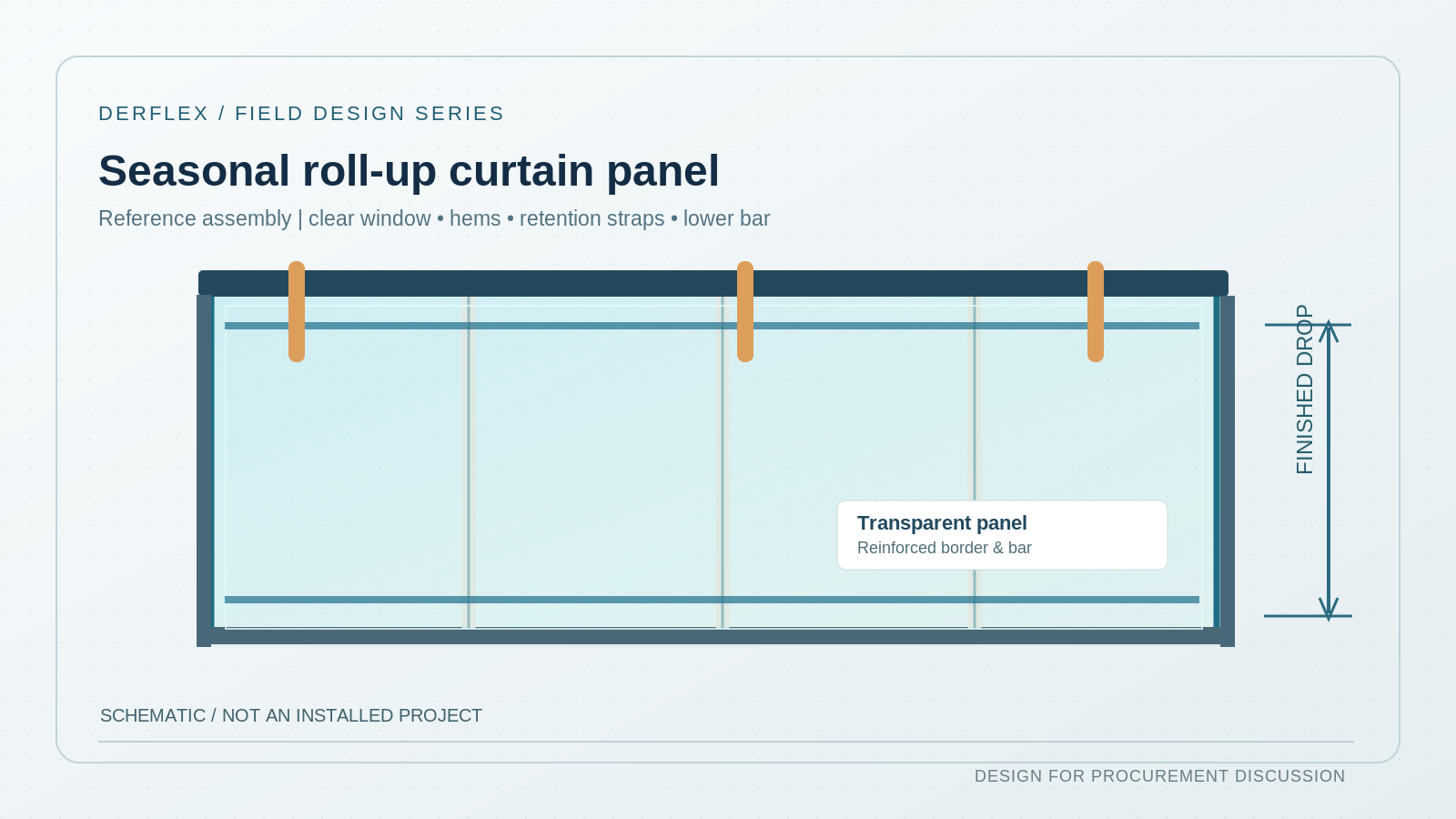
What is different about a seasonal roll-up curtain?
Unlike a fixed clear screen, a seasonal roll-up curtain is handled repeatedly: opened in good weather, secured when raised, lowered for wind-driven rain, and sometimes removed completely between operating seasons. A suitable specification therefore manages movement, appearance retention and component serviceability rather than selecting a PVC sheet by thickness alone.
Define the duty before you size the panel
Record whether a curtain is rolled a few times per season or moved frequently during daily service. Note who operates it, at what height, in which temperature range and whether the roll will be exposed to sunlight while parked overhead. These factors influence material softness, reinforcement and the practical bay width.
Keep the supply boundary clear
Clear PVC roll goods, a cut-and-weld curtain panel, retention hardware, and a complete installed roller assembly are different deliverables. DERFLEX can discuss materials and custom conversion requests; the commercial quote must identify which components and tests are actually included. Structural anchoring, motorization and local code compliance are not implied by fabric supply.
For general clear-window thickness and fastening options, see the separate clear vinyl patio curtain sizing guide. This page concentrates on use through successive operating seasons.
Plan the roll diameter before reserving headroom.
For a flat sheet wound without gaps around a circular core, an approximate outer roll diameter is D ≈ √(d² + 4Lt/π), where core diameter d, winding length L, and film thickness t are all in millimeters. This is an idealized starting point, not a finished-curtain capacity rating.
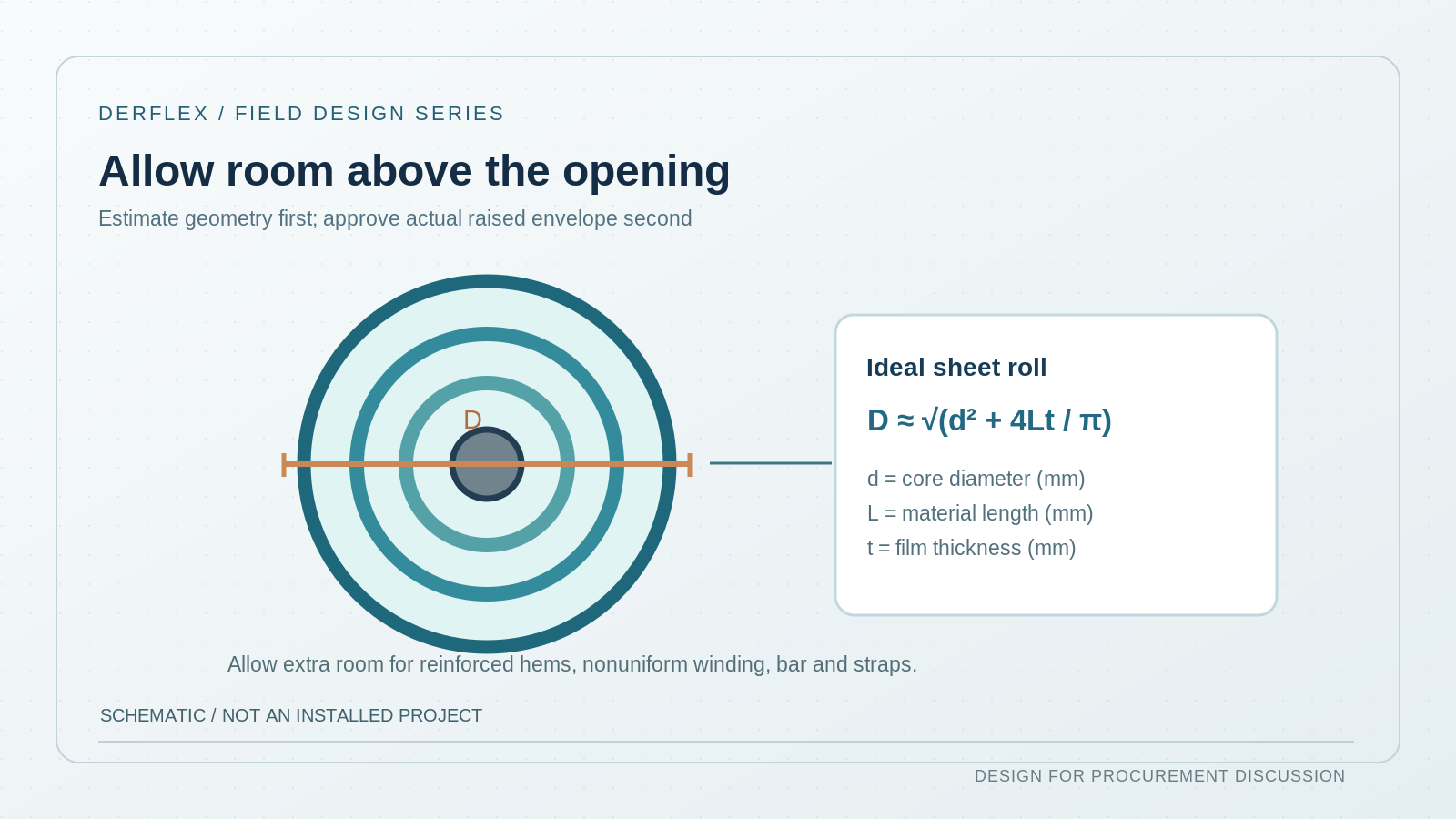
Quick winding estimate
Enter the clear film portion only. The result is a geometric estimate; do not use it to order a cassette or bracket.
For example, the default fields in the calculator produce an ideal roll of roughly 60 mm. This does not mean the installed bundle will occupy only 60 mm: folded borders can stack locally, the bar may not fit inside the roll, and hanging straps can project below it. Agree a maximum raised envelope in the first-article drawing, then check doors, sprinklers, lighting and accessible operating reach.
Design straps and bottom bars for repeated handling.
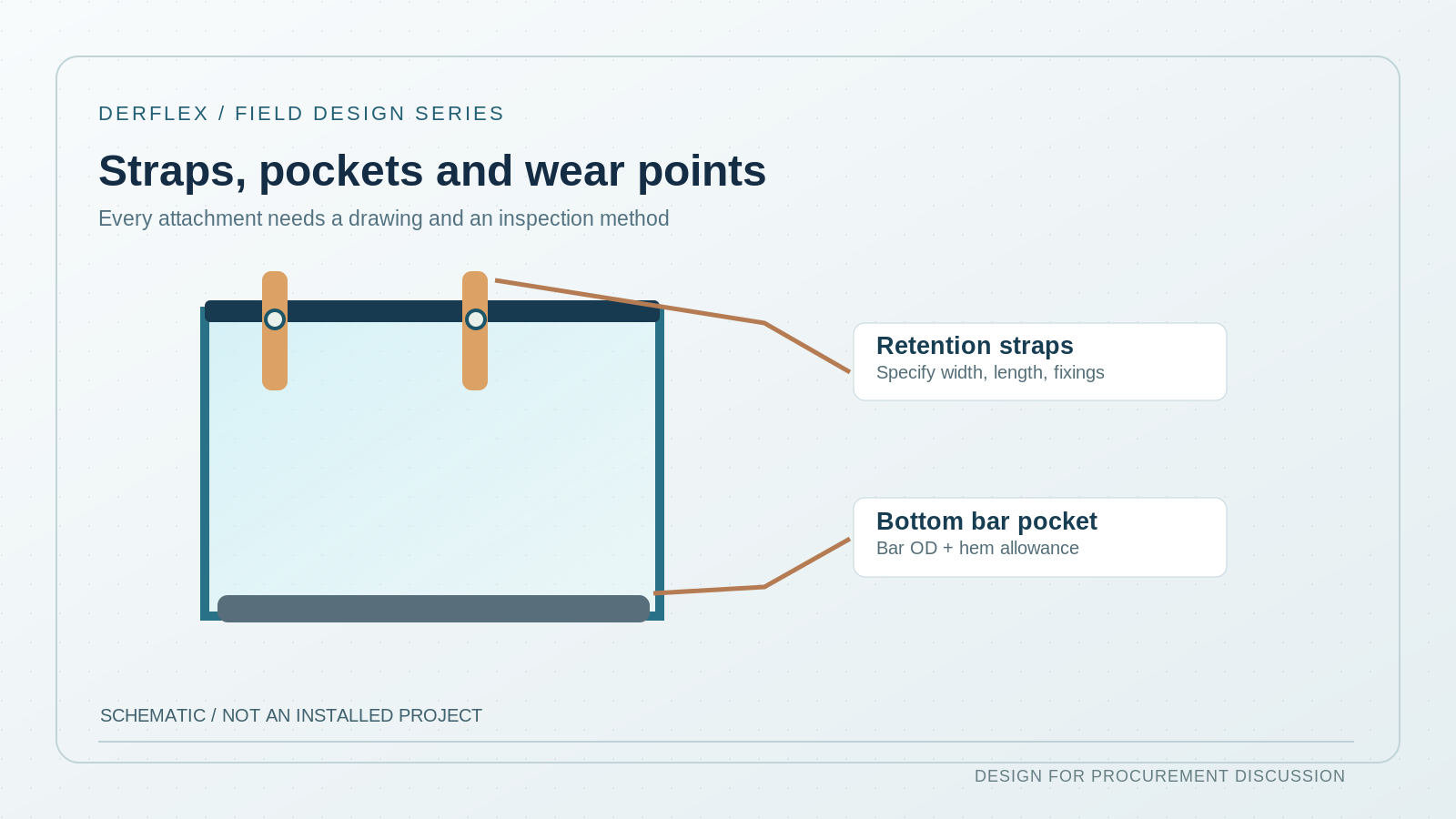
When roll-up curtains are handled each season, failures often begin at an interface: an over-tight strap, a bar that shifts inside its pocket, or a corner rubbed against a timber post. Record those interfaces on the bill of materials instead of treating them as unnamed accessories.
Retention strap layout
Specify quantity and spacing against the full rolled assembly, with extra attention to wide or heavy panels. Approve strap length after checking the actual raised roll, not merely the flat drawing. Mark attachment type, strap orientation, buckle accessibility and safe parking positions. Strap locations should avoid pressing hard hardware against transparent areas.
Lower bar and pocket
The bar can help the curtain hang and create a consistent bottom-up rolling core. Confirm outside diameter, end caps, corrosion environment, pocket internal clearance, drain or ventilation provisions and how the bar can be removed for service. A bar is not a substitute for rated side restraints or structural design.
| Interface | Specify on drawing | First-article check |
|---|---|---|
| Top header | Fixed reference line, fastening pattern, local support | No tearing, puckering or interference when lowered |
| Retention straps | Positions, width, buckle, length and stitch/weld zone | Raised roll holds level and does not rub clear film |
| Bottom bar | Material, outside diameter, pocket and removable ends | Correct travel and no bar migration at pocket ends |
| Side edges | Overlaps, fastening access, wind-use operating rule | Edges release before rolling where required |
| Transparent window | Clear height, seam location, visible surface orientation | Clear zone does not contact abrasive fasteners |
Minimize crease marks, rub lines and haze over repeated seasons.
Flexible clear PVC is not rigid glazing. Its visual appearance can change through tight folding, contact pressure, rough cleaning, heat, sunlight and cold-weather manipulation. The original film grade and surface formulation matter, but panel handling and packing decisions also deserve written acceptance criteria.
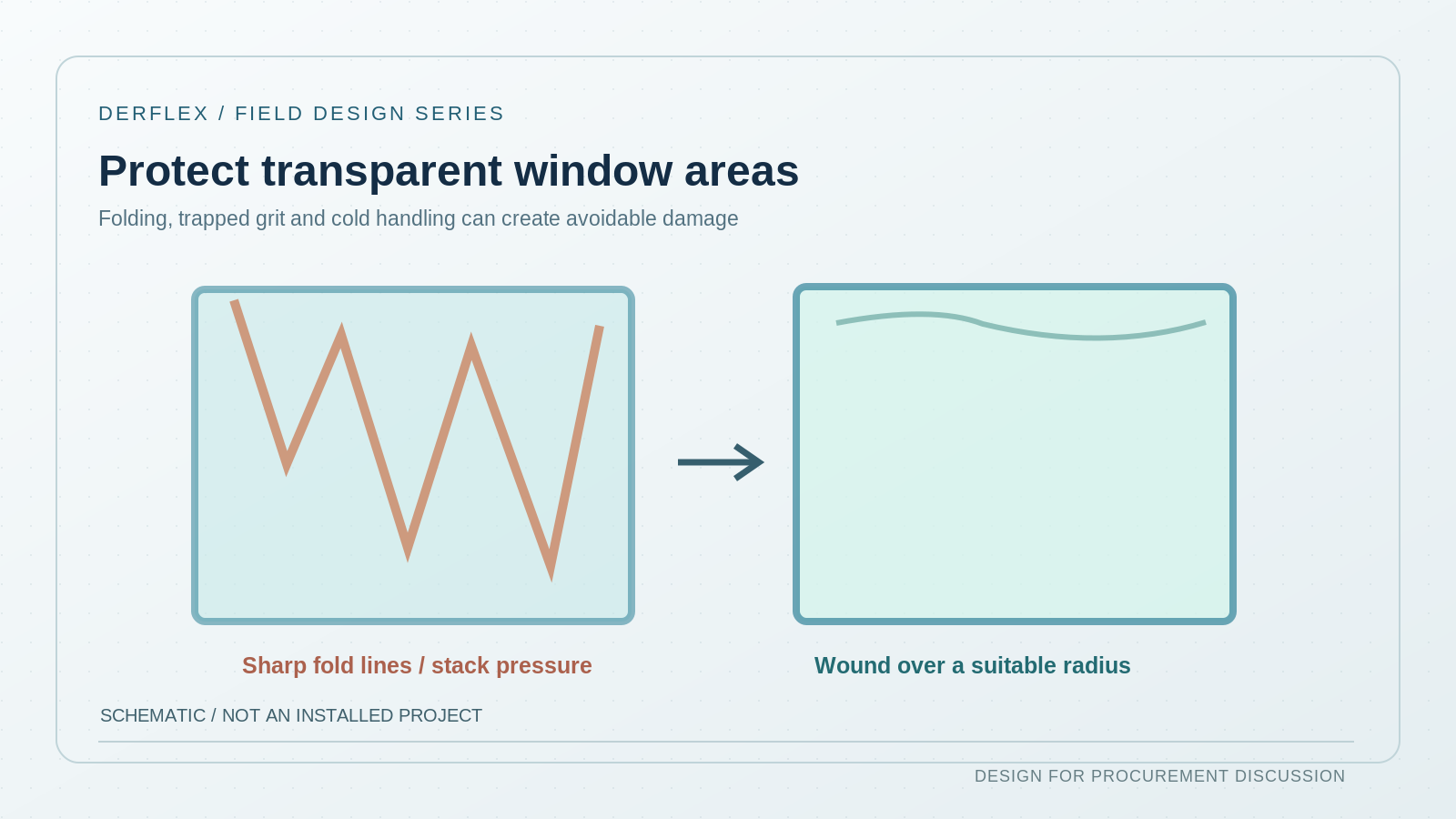
Three practical controls
- Clean contact surfaces before rolling.Sand, grit and metal burrs trapped between film layers can produce scratches under bundle pressure.
- Wind rather than force a sharp fold.Agree a minimum practical roll diameter with the film supplier; do not assume every film gauge tolerates the same tight radius.
- Control temperature and storage pressure.If the panel stiffens in cold conditions, stop forcing it and follow grade-specific guidance. Avoid heavy objects on stored rolls.
The RFQ should distinguish cosmetic tolerance from functional failure: a minor temporary surface impression is not the same as permanent opaque folding, delamination, cracked film, open seams or damaged restraints. Review the chosen outdoor clear PVC formulation and compare transparent roll material options before locking a repeat-use specification. Neither a generic UV label nor a roll-film data sheet establishes the finished system's service life.
Specify one service routine for every bay.
Seasonal removal is a designed use case, not an afterthought. An enclosure may have eight nominally similar panels but different attachment heights, post spacing and strap lengths. Treat each opening as a traceable bay so that the right component can be reinstalled without stretching a clear window to fit.
Before removal
Photograph the installed bay. Inspect the clear surface, welds, strap roots and pocket ends; document damage rather than hiding it in a packed roll.
Clean and dry
Use only cleaners suitable for the selected clear PVC film and any printing or border fabric. Rinse residues and dry thoroughly before packing.
Label and wind
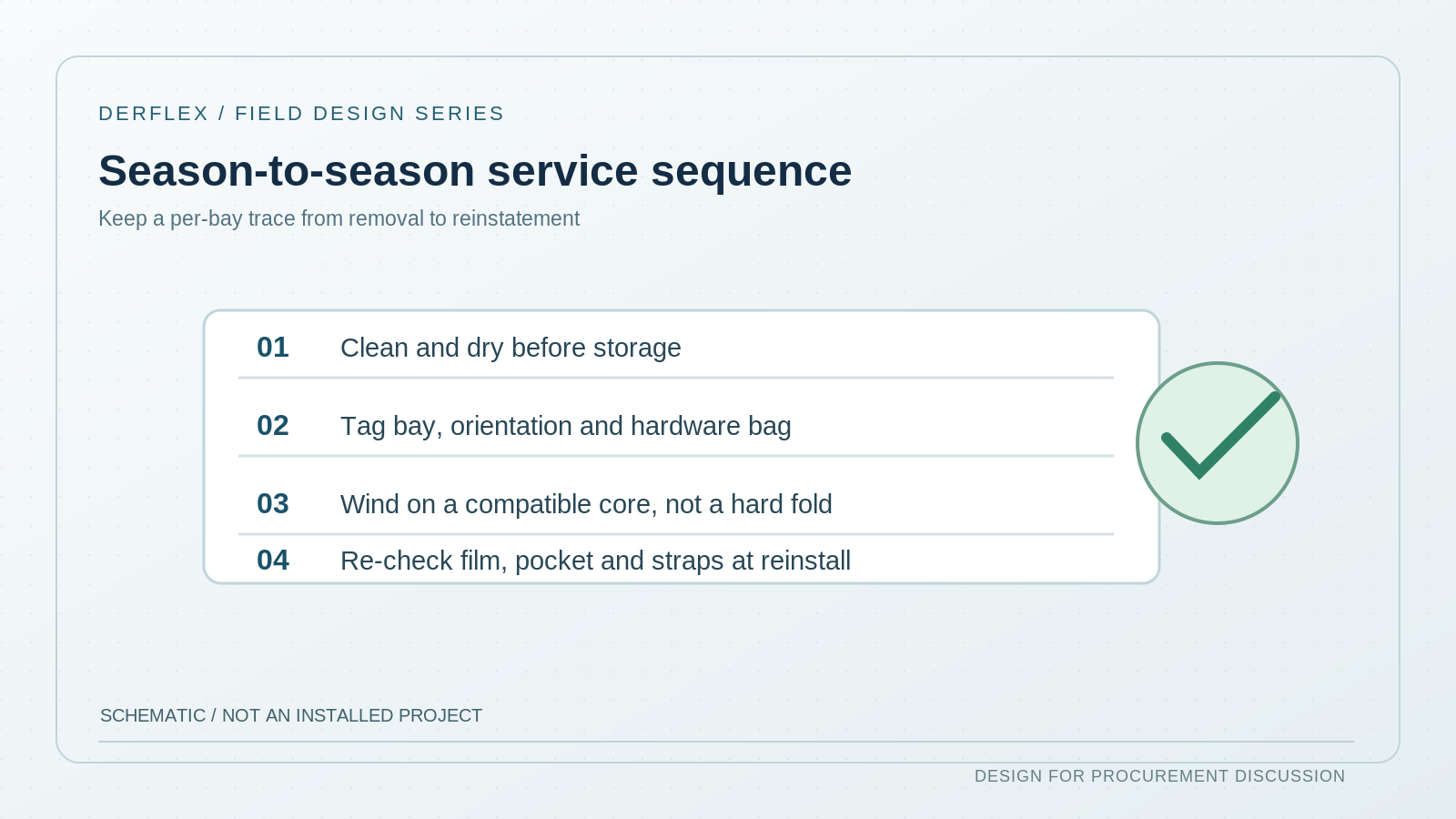
Attach a legible bay and orientation label to a non-viewing zone. Wind on a clean suitable core, separate hardware, and protect from crushing or hot storage.
Reinstall and check
Compare the recorded bay dimensions, inspect hardware and stress zones, lower the panel without forcing, and test the approved roll-and-retain sequence.
What should an OEM buyer ask DERFLEX to quote?
A useful tender identifies the material and interfaces that can actually be manufactured, plus the evidence needed before repetition. The table below is a specification framework, not a claim that every option is an in-stock DERFLEX finished SKU.
| Field | Buyer to provide | Approval needed |
|---|---|---|
| Supply format | Film roll, precut film, fabricated curtain panel or complete system | Written scope and exclusions |
| Bay schedule | Opening width, header-to-floor drop, post positions, site photographs | Finished size and tolerances |
| Operation | Bottom-up hand roll or defined alternate method, expected usage frequency | Approved physical operating sample |
| Film and border | Clarity expectation, outdoor exposure, cleaning regime, color, edge zone | Sample grade, thickness and appearance standard |
| Stowage | Core/bar concept, rolled bundle limit, accessible headroom | Measured raised envelope |
| Accessories | Strap positions, bar pocket, release closures, replaceable parts | Assembly drawing and accessory list |
| Seasonal logistics | Panel IDs, labeling, packing, expected disassembly and destination | Storage and reinstallation instructions |
| Evidence | Any specified material tests, photos or applicable documentation | Grade-specific available reports and first-article checks |
At the material level, clear vinyl tarp conversion and transparent PVC film roll sourcing provide two distinct starting points. For overhead roofing rather than operable sidewalls, use the separate patio roof-cover tarp guide. This avoids asking one product to meet incompatible roof, sidewall and roller duties.
Test a finished bay before placing a repeat order.
Material certificates and fabric swatches cannot reveal every problem in the completed opening. A first-article curtain should use the actual reinforcement, straps, bar pocket and expected rolling direction. Agree pass/fail criteria with the installer and panel fabricator before the sample is made.
Appearance when lowered
Check clear-film view under the intended lighting, seam position, panel shape and edge alignment. Record acceptable optical marks.
Rolling and raised clearance
Observe skew, uneven bundle build-up, hard-spot friction and whether retention straps land clear of transparent areas.
Serviceability and storage
Verify the bar can be handled as designed and that fittings can be identified, cleaned and packed for seasonal reuse.
Reinstallation
Confirm panel and fastener alignment after removal, and document conditions requiring repair or replacement.
Before you order: confirm local building and fire code obligations for commercial patios, required egress, wind-use limits, safe cord management where applicable, drainage and emergency access. These are system responsibilities; an approved PVC sheet is not approval for the full enclosure.
Turn your patio drawing into a repeatable seasonal curtain specification.
Send one sample bay and the intended operating cycle. DERFLEX can review the material direction and discuss whether custom panels and selected accessories are feasible for the requested quantity and destination.
Include in your enquiry
- Bay count, widths and drops, fixing photographs
- Frequency of rolling and seasonal removal
- Clear area layout and climate conditions
- Strap, bar, side closure and packed-size preferences
- Supply scope: rolls, finished panels or system
- Quantity, destination, target schedule and evidence needs
Approve the grade and one operating assembly before bulk conversion. Ask for a quotation that identifies exclusions and any samples or tests needed.
Request a Custom QuoteRoll-up patio curtain FAQ
Can clear PVC patio curtains be repeatedly rolled and unrolled?
Yes, when the selected clear PVC grade, roll radius, temperature, panel size and retention hardware are designed and approved for that duty. Repeated rolling can still cause scuffing or optical marks; test a complete representative bay rather than relying only on a film swatch.
How do I calculate the space required for a rolled-up curtain?
The ideal sheet winding diameter can be estimated from the core diameter, curtain drop and film thickness. It does not include thick hems, straps, the bottom bar, uneven winding or brackets. Confirm the actual raised bundle height and opening clearance on a first-article assembly.
Should I fold clear vinyl curtains before winter storage?
For clear viewing panels, winding around a suitable clean core is generally preferable to creating sharp folds. Clean and fully dry the curtain, keep grit away from contact surfaces, and confirm storage temperature and handling recommendations for the chosen PVC grade.
Does a weighted bottom bar make the curtain wind rated?
No. A bottom bar supports handling, hanging and rolling, but complete wind behavior depends on the frame, fasteners, side restraints, panel span and operating condition. Obtain system-level engineering limits from the installer or system supplier.
Can the retention straps and bottom bar be replaced separately?
Potentially. Design removable sleeves, accessible strap fixings and documented bar sections into the initial panel specification. Replacement compatibility must be checked against the actual stitched or welded construction and approved sample.
What details should be included in an OEM seasonal curtain quote?
Provide bay IDs, opening sketches, target finished sizes, operation frequency, clear film grade, climate exposure, roll method, strap locations, bar pocket, side closures, quantity and destination. State whether you need raw film, fabricated panels or a complete installed system; available scope must be confirmed.