Puncture
A projecting point concentrates force in a small area. Record the point shape and contact location, then review loading practice, clearance and reinforcement together.



Scrap hauling · recycling yards · OEM replacements
Sharp offcuts, rough container rails and repeated cover cycles call for more than a heavier sheet. Specify a scrap metal tarp around the material being covered, the points it touches and the mechanism that moves it.
DERFLEX supplies coated mesh and solid PVC-coated polyester, with custom finished dimensions, pockets, reinforced edges and attachment layouts for recycling tarp projects. Send a drawing, an existing cover or photos of recurring damage to start a material and fabrication review.
For fleet buyers, scrap processors, fabricators and equipment distributors.
A direct answer
A scrap metal tarp is a reinforced cover used over metal recycling loads, open containers or stored scrap. Mesh provides a breathable containment surface; solid PVC-coated fabric provides a closed rain-shedding surface. Performance depends on the fabric, local reinforcement, load profile and attachment geometry together.
In this application, “recycling tarp” means a cover for recyclables. It does not establish that the tarp itself is made from recycled material or accepted by a particular recycling process.
Material selection
Use mesh when airflow and loose-material coverage are the priorities. Use solid PVC when rain shielding is needed. Neither choice is automatically suitable for every sharp scrap load. The size of the pieces, snagging potential and fines must be considered before approving the fabric.
| Operating condition | Material direction | What decides the specification? |
|---|---|---|
| Dry, coarse ferrous scrap in an open-top body | Coated mesh, subject to sharp-contact assessment | Mesh opening size, tear propagation, snag points and actual system travel. Open mesh admits rain. |
| Sheet-metal offcuts or irregular sharp pieces | Review the load profile first; then a reinforced project-specific cover | Prevent direct sliding over exposed points. Assess localized cut and puncture damage rather than choosing on GSM alone. |
| Sorted metal stored outside with a rain-shielding requirement | Solid PVC-coated polyester over a suitable supported profile | Runoff, overlap, seams, ground clearance and underside condensation. A cover cannot guarantee dry metal in all conditions. |
| Metal fines, small chips or dust-prone mixed recycling | Closed surface may be needed; evaluate the complete enclosure | Small pieces may pass through mesh. Check side gaps and openings; a top tarp alone is not a sealed dust-control system. |
| Swarf with cutting fluid, oil or other residues | Cover selection plus a separate containment review | Confirm the actual chemical and exposure conditions. A top cover is not a liquid-retaining liner or a spill containment berm. |
Compare DERFLEX truck mesh material options for breathable coverage and solid PVC-coated tarpaulin for closed-surface construction. Published general-purpose ranges are starting references, not approval for a scrap-specific grade.
Specify the failure you need to prevent
“Puncture resistant” needs a defined test and acceptance value. A tensile-strength figure describes a different loading mode; extra coating weight does not, by itself, prove resistance to a sharp metal edge.
A projecting point concentrates force in a small area. Record the point shape and contact location, then review loading practice, clearance and reinforcement together.
A rail or load edge can wear a narrow band during every cycle. A smooth contact surface and correctly located wear strip may matter more than extra weight across the entire sheet.
A small opening can spread under deployment tension. Evaluate the damaged fabric’s behavior and inspect reinforcement boundaries where stiffness changes.
Repeated bending affects pockets, folds and seams. Verify retraction with the finished cover, including the bulk created by patches and edge webbing.
Reinforcement layout
Photograph the old cover laid flat and mark where damage repeats. The useful specification is a location, a contact mechanism and a proposed correction—not simply “make it stronger.”
A procurement-ready specification
There is no universal scrap-tarp thickness, mesh weight or safe load rating. Use the following fields to compare quotations on the same basis. DERFLEX should confirm the proposed material, fabrication and project-specific acceptance criteria before order approval.
| RFQ field | Buyer should provide | Confirm in the quotation |
|---|---|---|
| Scrap stream and operation | Coarse scrap, offcuts, small chips, mixed recycling; transport or yard storage; photos of typical load profiles. | Coverage objective, limitations and the selected fabric construction. |
| Material and weight | Mesh or solid preference, current fabric reference, target GSM if known, temperature and exposure conditions. | Proposed grade, base construction, weight tolerance and any evidence required. No inferred sharp-scrap rating. |
| Finished geometry | Deployed width and length, drops, overlaps, pocket flat width and usable internal dimensions. | Finished measurement points, agreed tolerances and drawing revision. Distinguish finished size from cut-panel size. |
| System interface | System make/model, roller and bar photos, attachment method, clearances and equipment limits. | Cover mass, pocket and patch bulk, deployment path and sample fit. Mechanical hardware supply is a separate scope. |
| Seams and reinforcement | Damage map, contact bands, edge layout, eyelet or strap positions and weather-barrier requirements. | Seam process appropriate to the material; patch locations, webbing, backing and inspection criteria. |
| Quality and supply | Order quantity, size mix, destination, required documentation, private label and packing preference. | Sample plan, MOQ, price, production timing and packing after technical review; do not assume stock availability. |
Solid PVC can be fabricated with welded seams where compatible; mesh finishing may use sewn and reinforced construction. The process should follow the selected grade and seam requirements, rather than a blanket “all welded” or “all sewn” specification.
Sample approval
Define tensile, tear, puncture or cut assessment, abrasion and flex requirements as applicable. Record the method, specimen direction, conditioning and acceptance limit. Results from different methods are not automatically comparable.
Include seam and coated-surface integrity; mesh should not be assessed as a waterproof sheet.
Measure the nominated reference points; inspect hems, pockets, patches and attachment backing. Check closure and retraction on the actual system using the equipment supplier’s operating procedure.
Look for binding, abrupt stiffness changes, uneven winding and concentrated contact at patch edges.
Use representative, safely prepared loads. Log cover cycles, repeated wear locations, repairs and conditions. A successful sample supports that evaluated configuration, rather than proving an unrestricted lifetime claim.
Retain the approved sample, fabric reference, inspection plan and current drawing revision.
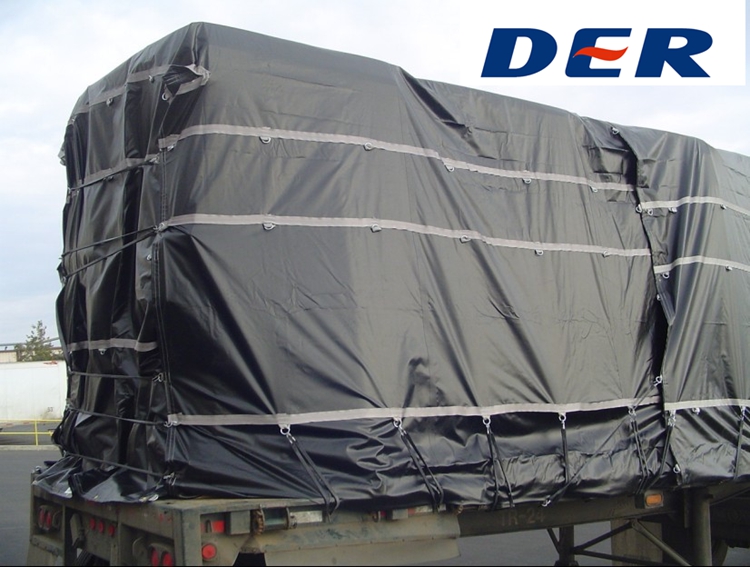
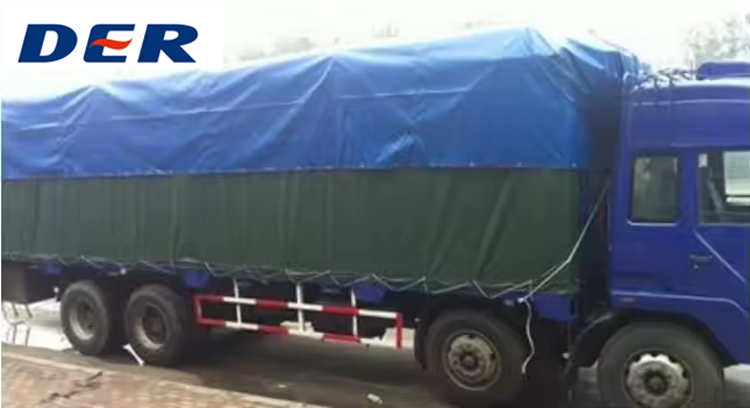
Actual DERFLEX product imagery
These transport-cover images illustrate reinforcement and closed-surface coverage. They are representative product photos, not evidence of a particular scrap-hauling installation or a verified puncture rating.
Custom manufacturing & replacement programs
DERFLEX’s coated-fabric and finished-cover offering supports different purchasing routes: roll goods for fabricators, custom covers for fleets, and repeat-order programs for distributors or equipment brands. Confirm the supply format and technical scope at quotation.
Price and lifecycle value
Fabric construction, finished area, pocket details, local patches, seam work, labels, quantity and packing all affect a custom scrap metal tarp quotation. Compare like-for-like specifications first, then use your own operating records to assess replacement value.
Compare similar loads, handling and exposure periods. This is a purchasing calculation, not a projected service-life claim. Track whether the same location keeps failing: unresolved sharp contact may outweigh a change in fabric grade.
Buyer questions
Coated mesh is a starting option for dry coarse loads needing airflow. Solid PVC-coated polyester is a starting option when rain shielding matters. For sharp offcuts, assess the load profile, contact points, tear and puncture behavior, reinforcement and system fit before approving either material.
Open mesh is not waterproof. Solid PVC-coated fabric can provide a waterproof sheet surface, but seams, overlaps, side gaps and attachment openings determine the installed cover’s rain protection. A rain-shedding tarp is not a sealed container or a liquid containment liner.
There is no universal value. Weight and thickness describe only part of the construction and do not establish cut or puncture performance. Specify the scrap stream, contact conditions, target tests and mechanism limits; confirm the proposed grade and finished cover in a sample review.
No ordinary flexible cover should be treated as immune to sharp metal. Any puncture-resistance claim needs a defined method and value. Keep exposed points out of the cover path, correct repeated contact and inspect damage; do not substitute heavier fabric for suitable load preparation.
DERFLEX can review custom finished covers using drawings, samples and measured system details. Supply the working width and length, roller attachment, bar or pocket dimensions, reinforcement layout and operating limits. Confirm fit and retraction on the actual equipment before repeat ordering.
Send the scrap type, covering objective, dimensions, system photos, material reference, damage locations, reinforcement details, quantity, destination and required documentation. DERFLEX should confirm the proposed specification, sample plan, MOQ, price and production timing in the project quotation.
Bring the worn cover into the conversation
Share photos of the scrap, the cover fully deployed and retracted, and the places that fail. DERFLEX can review material direction, custom geometry and reinforcement for your recycling tarp program.