


Commercial roof materials · Procurement guide
TPO vs PVC
Roofing Membrane
Specify for the exposure. Compare on the same basis.
TPO vs PVC roofing is a choice between two heat-weldable single-ply membrane families for commercial low-slope roofs. TPO is often shortlisted for general roofing and initial cost; PVC or PVC-KEE is often evaluated more closely where grease, oils or chemical discharge may reach the roof.
For contractors, distributors and OEM buyers, the useful comparison is the exact sheet, compatible accessories and roof assembly. DERFLEX can discuss membrane roll supply, thickness, reinforcement, color, packaging and your required documentation.
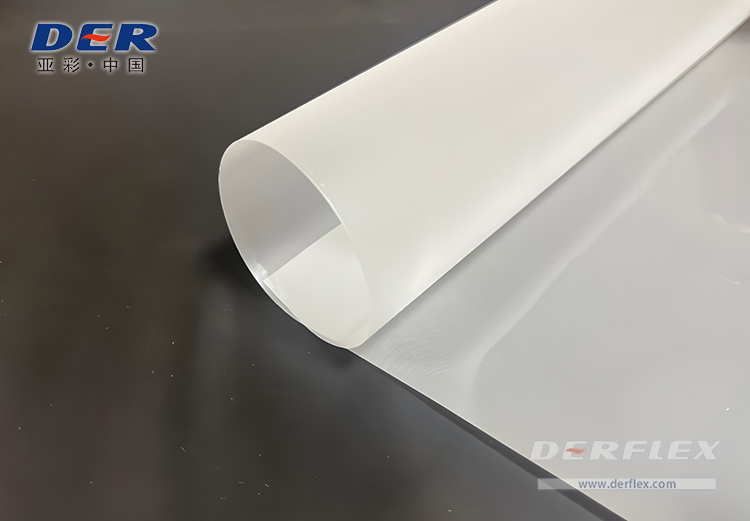
The direct answer
Which roofing membrane should you shortlist?
Start with TPO for a general commercial roof when initial cost matters and chemical exposure is limited. Review PVC or PVC-KEE more closely where grease, oils or industrial contaminants are credible exposure risks. Neither material name proves a service life, fire classification or wind-uplift rating. The final choice must match the offered product, installation system and project requirements.
What is TPO roofing?
TPO roofing membrane is a polyolefin-based thermoplastic sheet. Reinforced roofing products use an internal scrim; flexibility does not depend on the conventional liquid plasticizers used in flexible PVC. Field seams are commonly hot-air welded.
Review the DERFLEX TPO roll-supply options when specifying thickness, surface and reinforcement.
What is PVC roofing?
PVC roofing membrane is a flexible thermoplastic sheet formulated with PVC resin and a plasticizing system. Reinforcement and surface treatments vary. PVC-KEE formulations use a different modifier system and should be evaluated as specific products.
See the DERFLEX PVC roofing material overview; confirm the current offered grade and supporting documents.
| Decision factor | TPO membrane | PVC / PVC-KEE membrane | What to verify |
|---|---|---|---|
| Typical purchasing fit | General commercial roofs; cost-focused specifications. | General roofs and projects needing closer chemical-exposure review. | Roof-use brief and exact product designation. |
| Oil, grease & chemicals | Some exposures can stain or accelerate deterioration. | Often shortlisted for stronger chemical resistance; grade and exposure still matter. | Written compatibility assessment, contaminant details and warranty exclusions. |
| Seams & flashing | Hot-air welding with compatible TPO details. | Hot-air welding with compatible PVC details. | Accessory compatibility, trial-weld procedure and transition details. |
| Reflective surface | White reflective products are available. | White reflective products are available. | Product-specific initial and aged reflectance and emittance. |
| Durability & puncture | Formulation, gauge, reinforcement and support matter. | Formulation, gauge, reinforcement and support matter. | Comparable test methods, specimen construction and cover-board design. |
| Fire & wind uplift | Require an assembly appropriate to the project. | Require an assembly appropriate to the project. | Applicable classification or listing for the complete assembly. |
| Initial cost | Often lower; confirm with a current quotation. | May carry a premium, especially for specialty grades. | Same gauge, backing, accessories, delivery terms and installed scope. |
| Service life & warranty | Product- and project-specific. | Product- and project-specific. | Relevant field history, aging data and written coverage. |
Material background and chemical-exposure guidance: [1], [2], [3]. Sheet specifications and their assembly limitations: [4], [5]. Reflectivity evaluation: [6]. This comparison is a selection aid; it is not a DERFLEX performance certificate.
Application decision matrix
Let the roof’s operating conditions drive the decision
A building label alone is insufficient. A warehouse with clean roof exposure differs from one with process exhaust, frequent equipment service or planned solar installations.
| Roof condition | Shortlist direction | Specification priority | Before ordering |
|---|---|---|---|
| Warehouse, office or retail; limited chemical exposure | Compare TPO with an equivalent PVC system. | Gauge, weathering, attachment and drainage. | Keep the complete roof build-up identical in the tender. |
| Restaurant or food-processing exhaust | Review a suitable PVC or PVC-KEE grade. | Actual fats, oils, cleaning agents and exposure pattern. | Agree grease containment, protection zones and cleaning instructions. |
| Industrial discharge or unknown contaminants | Keep selection open until compatibility is reviewed. | Chemical identity, concentration and operating temperature. | Request a written assessment; arrange exposure testing if needed. |
| Solar equipment or frequent maintenance access | Evaluate either family as an engineered assembly. | Walkways, point-load protection, penetrations and maintenance routes. | Review how equipment supports and new details affect the roof. |
| Existing roof recover | Consider TPO or PVC only after roof-condition review. | Moisture, deck condition, separation, attachment and allowable roof layers. | Document the existing system and resolve incompatible contact conditions. |
Give chemical exposure a measurable brief
Record the chemical or mixture, concentration, peak temperature, contact duration, frequency and cleaning method. PVC is not universally resistant: some exposures can extract plasticizers and harden conventional grades. Prevent or contain discharge even when a chemically suitable membrane is selected. [1]
A comparable material specification
Match thickness and construction before comparing price
60 mil equals 1.524 mm; it is not exactly 1.5 mm. One mil is one thousandth of an inch. Write the nominal gauge and acceptance tolerance in the purchase specification; avoid treating rounded metric and inch-pound descriptions as identical.
Overall thickness
Define the sheet gauge, measurement method and minimum acceptance value. Separate membrane thickness from fleece or other backing.
45 mil = 1.143 mm
60 mil = 1.524 mm
80 mil = 2.032 mm
Conversions only; these are not a DERFLEX stock list.
Thickness above scrim
For reinforced sheets, request the relevant polymer thickness above the reinforcement. Total gauge alone does not describe how the exposed layer is distributed.
Backing & reinforcement
Specify reinforced, fleece-backed or another required construction. Ask for a section description and identify the approved attachment method.
| Item | Information to agree | Acceptance evidence |
|---|---|---|
| Material & construction | Exact TPO, PVC or PVC-KEE designation; reinforcement; backing; intended roof use. | Current product data sheet and representative sample. |
| Thickness & tolerance | Nominal gauge, agreed unit system, minimum thickness and backing treatment. | Documented measurement method and offered tolerance. |
| Roll width & length | Dimensions, tolerances, net area, roll mass and weld-edge arrangement. | Roll schedule, packing list and agreed quantity basis. |
| Color & surface | Color reference, exposed face, surface finish and required reflective performance. | Approved sample; matching radiative-property report where required. |
| Weldability & strength | Compatible accessories, seam method and required mechanical properties. | Relevant test reports identifying the product, direction and method. |
| Project documentation | Required standard and edition; assembly approvals; labeling and destination requirements. | Review documents for the offered grade before order approval. |
| Commercial conditions | Quantity, MOQ, packaging, delivery basis, sample approval and production schedule. | Written quotation and agreed order specification. |
Use the TPO technical-specification guide to organize your brief. DERFLEX’s offered values and available options must be confirmed for the selected grade before production.
White does not automatically mean a rated cool roof
Compare the actual product and color using initial and aged solar reflectance, thermal emittance and SRI where relevant. Insulation, climate and operating conditions also affect building energy use. The TPO color and reflectivity guide helps frame the material discussion. A code or program requirement needs matching documentation. [6]
Installation & evidence
Similar seam methods. Different material systems.
Both membrane families can use hot-air welded seams, but TPO and PVC are not interchangeable at the weld. Specify compatible field sheet, flashings, coated metal and accessories. Obtain an approved transition detail wherever different roof systems meet. [9]
Set a seam-quality hold point
- Check the selected system. Confirm membrane identification, compatible components and current installation instructions.
- Prepare trial welds. Establish settings for the actual sheet and job conditions; do not reuse a temperature or speed solely because another membrane welded successfully.
- Check completed seams. Follow the specified inspection and sampling procedure, document defects and verify repairs.
Do not publish one universal welding temperature. Equipment, nozzle, speed, ambient conditions, cleanliness and product construction affect the process. [9]
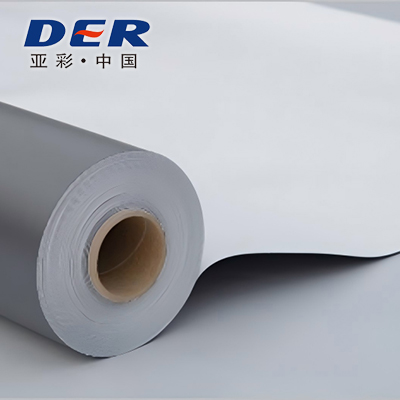
Sheet testing is one part of approval
ASTM D6878/D6878M addresses TPO sheet roofing; ASTM D4434/D4434M addresses PVC sheet roofing. Their scope does not establish every in-place roof-system design requirement.
Request product evidence
Check thickness, reinforcement, strength, dimensional change, aging and relevant seam information. Confirm the specified edition and that reports apply to the offered grade. Use the ASTM D6878 buyer checklist to structure the request. [4] [5]
Review the complete roof assembly
Deck, insulation, cover board, attachment, perimeter details and membrane work together. Fire and wind-uplift evidence must match the system specified for the project.
For a recover project
Check moisture and deck condition, existing materials, separation layers, drainage and attachment. A fleece backing may be useful in a specified recover system; it does not make every existing roof suitable to cover. [7]
TPO vs PVC roofing cost
Compare a purchasing scope, not a headline price
TPO often has a lower initial cost. The actual gap changes with grade, gauge, roof layout, installation method and market conditions. A useful tender compares the same system boundary and delivery basis. [3] [8]
Build a like-for-like comparison
- Membrane, with stated gross and net coverage
- Compatible flashings, details and accessories
- Required insulation, cover board and attachment
- Freight, packaging, handling and applicable import costs
- Installation, inspection and agreed protection measures
- Maintenance and replacement assumptions over the same study period
Compare the resulting cost per net covered m².
Keep supply-only prices and installed-system estimates separately identified.
Roll area is not net roof coverage
Overlaps, end laps, cut-offs, perimeter details and penetrations reduce usable coverage. Wider rolls can change seam count and handling needs; they do not automatically minimize the delivered or installed cost.
Plan the layout using the membrane roll-size and handling guide. Ask each bidder to state gross supplied area, assumed waste and net coverage.
Keep lifecycle assumptions visible
Use the same study period and state maintenance, repairs, replacement timing and discount assumptions. Do not infer a universal lifespan from TPO or PVC alone. Separate material-defect coverage, workmanship and full-system coverage when reviewing warranties.
Common procurement errors to remove from the tender
Comparing different gauges; counting fleece as membrane gauge; accepting generic test reports; assuming all white sheets have the same reflectivity; mixing incompatible accessories; treating a material warranty as an installed-system guarantee; and comparing gross roll area with net roof area.
Move from comparison to a material brief
Send DERFLEX a specification that can be quoted
Discuss TPO or PVC membrane roll supply for your contractor, distribution or OEM program. Align the offered construction, thickness, color, roll planning and export packaging with the project brief. Confirm current availability, documentation, MOQ and lead time in the quotation.
Define the purchasing boundary
State whether you need membrane rolls, a private-label supply program or materials for an already specified roof assembly. Add any required accessory list separately.
Check the sample before a bulk order
Ask for a sample representing the quoted grade. Review the appearance, offered gauge, label and packing specification; agree any weld trials or independent testing needed for approval.
Identify required approvals early
Attach the project standard, assembly requirement and destination-market documentation list. Material supply does not by itself establish local system approval or an installed-roof warranty.
Copy your completed brief into the enquiry form.
This checklist prepares your enquiry. It does not submit information automatically.
Questions buyers ask
TPO vs PVC roofing FAQ
Membrane compatibility and transition background: [10].
Which is better: TPO or PVC roofing?
TPO is often a practical starting point for general commercial roofs with limited chemical exposure and a cost-focused brief. PVC or PVC-KEE deserves closer review around grease, oils or industrial discharge. Choose the exact product and roof assembly using exposure information, tested performance, installation requirements and comparable quotations.
Is TPO roofing cheaper than PVC?
TPO often has a lower initial membrane or installed cost, but the difference varies by product, market and project. Compare the same thickness, backing, insulation, cover board, attachment, details, freight and warranty scope. A roll-only quotation cannot be compared directly with an installed roof-system price.
Does PVC roofing last longer than TPO?
There is no reliable universal lifespan winner based on the polymer name alone. Formulation, thickness, weather exposure, roof design, installation and maintenance all affect service life. Compare product-specific aging evidence, relevant field history and written warranty terms; a warranty duration is not a guaranteed service life.
Can TPO and PVC roofing membranes be welded together?
Do not specify a direct hot-air weld between TPO and PVC. They are different polymer systems. Use compatible field membrane, flashing and accessories, and obtain an approved transition detail where systems meet. Trial welds confirm the selected material process; they do not make unlike polymers interchangeable.
Is PVC better for a restaurant roof?
PVC or PVC-KEE is often shortlisted where kitchen exhaust can expose a roof to grease or animal fats. This does not establish resistance to every contaminant. Give the supplier the chemical identity, concentration, temperature and exposure pattern, and review grease control, cleaning procedures and chemical-exposure warranty exclusions.
Is 60 mil TPO the same thickness as 1.5 mm PVC?
Not exactly. One mil is 0.001 inch, so 60 mil equals 1.524 mm; 1.5 mm is about 59.1 mil. State the required unit system, nominal thickness, minimum acceptance value and tolerance. Also compare reinforcement, thickness above scrim and any backing separately.
Are TPO and PVC both suitable for a cool roof?
White products in both families can provide reflective roof surfaces. Compare the actual product and color using initial and aged solar reflectance, thermal emittance and, where required, Solar Reflectance Index. White appearance alone does not prove a rating, local-code compliance or a fixed energy saving.
What should I send DERFLEX for a membrane quotation?
Send the roof application, destination, roof area, preferred material, thickness and tolerance, reinforcement or backing, roll dimensions, color, quantity, chemical exposure and required documentation. Add packaging, delivery terms and sample needs. Confirm the offered specification, MOQ, production schedule and any testing before placing an order.
Compare the exact membrane for your next order
Send the roof-use brief, thickness, roll dimensions, quantity and destination. Include chemical exposure and required documents so DERFLEX can discuss an appropriate material-supply direction.