Fleet Replacement
Standardize finished dimensions, material direction, pocket construction and identification across multiple trailers so replacement inventory is easier to manage.



DERFLEX manufactures custom side dump trailer tarp covers for replacement, dealer inventory, fleet maintenance and OEM programs. Mesh and solid PVC/vinyl directions can be developed around the trailer tub, side-roll travel path, roller or stationary tube pockets, reinforcement zones and the material being hauled.
Send the existing tarp, system photos, finished dimensions and cargo details. DERFLEX focuses on the tarp cover and coated-fabric side of the system; final compatibility should be confirmed against the actual hardware and operating geometry.
A side dump trailer tarp is a mesh or solid fabric cover made to travel across the open tub of a side dump trailer, typically as part of a side-to-side roll system. A correct replacement tarp must match the covered opening, roller and stationary-edge geometry, travel path and cargo. Mesh is commonly selected for airflow and bulk-load containment; solid PVC/vinyl is used when stronger weather and fine-material shielding are required.
Side dump buyers usually arrive with an existing trailer and tarp system. The practical job is to reproduce or improve the fabric component without changing the hardware geometry.
Standardize finished dimensions, material direction, pocket construction and identification across multiple trailers so replacement inventory is easier to manage.
Build repeatable replacement tarp specifications for distributors, repair shops and equipment suppliers that need labeled, reorderable covers rather than one-off fabrication.
Develop the tarp around the side-roll system drawing, tub dimensions, attachment method, material choice and expected duty cycle before serial production.
The better choice depends on what the trailer carries and what the cover needs to do. Do not select by color or price alone.
| Decision Factor | Coated Mesh Side Dump Tarp | Solid PVC / Vinyl Side Dump Tarp |
|---|---|---|
| Primary job | Breathable containment of loose bulk material | More complete shielding from rain, dust and wind-driven fines |
| Airflow / billowing | Higher airflow can reduce wind loading on the cover | Low airflow; system and tensioning must manage a larger solid surface |
| Typical loads | Aggregate, gravel, landscape debris, recyclables and similar bulk loads | Fine or moisture-sensitive loads where more closed coverage is preferred |
| Rain protection | Not waterproof because of the open mesh | Material surface is designed for waterproof coverage; final protection also depends on seams and system closure |
| Handling | Generally lighter and easier to move across the tub | Usually heavier; useful when weather shielding matters more than airflow |
| DERFLEX supply direction | Custom mesh weight/openness, pockets, hems and reinforced wear areas | Custom PVC/vinyl weight, welding, pockets, reinforcement and finishing |
Very fine material can pass through an open mesh structure. Final material choice should be confirmed from cargo size, moisture sensitivity, route conditions, system design and local load-cover requirements.
Side dump covers repeatedly roll, unwrap, travel across a heaped load and return to the stowed side. Fit errors can create rubbing, uneven winding, excessive tension or premature wear even when the fabric itself is strong.
The pocket or attachment edge must match the roller tube diameter, insertion method and required rotational behavior. An oversized or undersized pocket can change how the cover tracks.
Confirm whether the opposite edge uses a tube, clamp, bead, rope, webbing, fixed rail or another attachment method. Replicating the old tarp only by outside dimensions is not enough.
These areas often see repeated movement near arms, guides and end structures. Local reinforcement can be more useful than adding weight across the entire tarp.
The finished width, edge thickness and reinforcement layout should let the tarp clear top rails, bows, guides and the load profile without unnecessary snagging or folding.
DERFLEX supplies the tarp material and custom finished cover. It does not claim to manufacture every motor, arm, spring, roll tube or control system. Send the actual system photos or drawings so the cover can be reviewed as a system-compatible component.
The fastest path is to combine the old tarp with trailer measurements and system photos. Use the existing cover as a pattern only after confirming that it actually fit and operated correctly.
Record trailer make/model if available, side-dump body length, side-roll direction, manual/electric operation and any known tarp-system brand or part number.
Measure the opening the tarp must cover, including the actual distance between front/rear limits and across the tub. Do not assume the nominal trailer size equals the tarp size.
Record finished width and length with the tarp laid flat and relaxed. Note any asymmetry, taper, shaped end, cutout or intentionally extended sealed section.
Measure roller pocket circumference or flat width, opposite-edge attachment, bead/rope size, hem width, webbing width and all reinforcement layers.
Photograph arm clearances, guide bars, end plates, clamps and high-wear contact points. Mark every location where the tarp must bend, tuck, roll or clear hardware.
State whether you haul gravel, sand, fines, waste, landscape material or another load, plus route exposure and expected cycles per day or week.
Final values should be confirmed from the trailer system and requested service environment. The table below is a sourcing framework, not a blanket performance promise.
| Specification Item | DERFLEX Available Direction | Why It Matters |
|---|---|---|
| Product type | Side dump replacement tarp, side-roll tarp cover, mesh cover, solid PVC/vinyl cover, OEM finished tarp | Keeps the project focused on the fabric component rather than unrelated hardware. |
| Mesh structure | Heavy-duty woven/coated mesh selected by required airflow, containment and duty; related DERFLEX truck-mesh programs commonly discuss roughly 200–420 gsm directions | Mesh openness, weight and reinforcement influence airflow, handling and wear. |
| Solid PVC / vinyl | PVC coated polyester / vinyl tarp directions; related DERFLEX trailer-tarp programs offer multiple heavy-duty weights, including 550–1100 gsm directions | Useful when rain shielding, fines containment or a closed surface is preferred. |
| Finished size | Made to drawing, sample or measured system dimensions | Side-roll systems depend on travel geometry and edge attachment, not just nominal tub size. |
| Pockets & edges | Roller pockets, stationary-edge pockets, reinforced hems, webbing, rope/bead directions or project-defined attachment details | These features transmit motion and tension from the hardware into the fabric. |
| Wear-zone reinforcement | Double layers, reinforcement strips, webbing, local patches and heavier edge builds where required | Targets recurring stress points without making the entire cover unnecessarily heavy. |
| Branding / inventory | Color direction, part-number marking, logo/label discussion, carton/bale/pallet packing | Helps dealers and fleet operators control replacement SKUs and repeat ordering. |
| Supply format | Finished tarp cover, cut/semi-finished panel or roll material according to buyer capability | Supports OEMs, fabricators, distributors and fleet maintenance programs with different conversion models. |
A heavier fabric does not automatically solve a system problem. Many failures begin at repeated-motion zones, edges and attachment transitions.
Repeated wrapping can concentrate abrasion at the pocket mouth and along the tube contact line. Pocket fit and reinforcement should be treated as a functional dimension.
The fixed or clamped side carries opposing tension. Edge stiffness should be high enough for control without preventing smooth deployment.
Arm movement, guide contact and load profile can create localized wear. Photos of old damage are useful because they show where reinforcement actually belongs.
Overfilled or sharp material can puncture or abrade any tarp. Material choice should be combined with proper load profile and correct system operation.
| Hauling Application | Practical Tarp Direction | Selection Priority |
|---|---|---|
| Gravel / aggregate / crushed stone | Heavy-duty mesh is a common starting direction | Airflow, edge abrasion, pocket durability, protection from exposed sharp material |
| Sand / powdery fines | Consider tighter coverage or solid PVC/vinyl depending on material size and moisture needs | Containment of fines and weather protection |
| Construction debris | Reinforced mesh or project-specific heavy-duty cover | Tear risk, protruding edges, perimeter reinforcement and disciplined loading |
| Landscape / mulch / yard material | Breathable mesh is often practical | Wind relief, lighter handling and containment |
| Recycling / waste | Mesh or solid tarp selected by the actual waste stream | Containment, repeat-cycle durability and fleet replacement consistency |
| Rain-sensitive bulk material | Solid PVC/vinyl cover direction | Closed surface, seam construction and system seal geometry |
The page uses real DERFLEX-hosted images so the product story connects replacement tarp design with material and manufacturing capability.
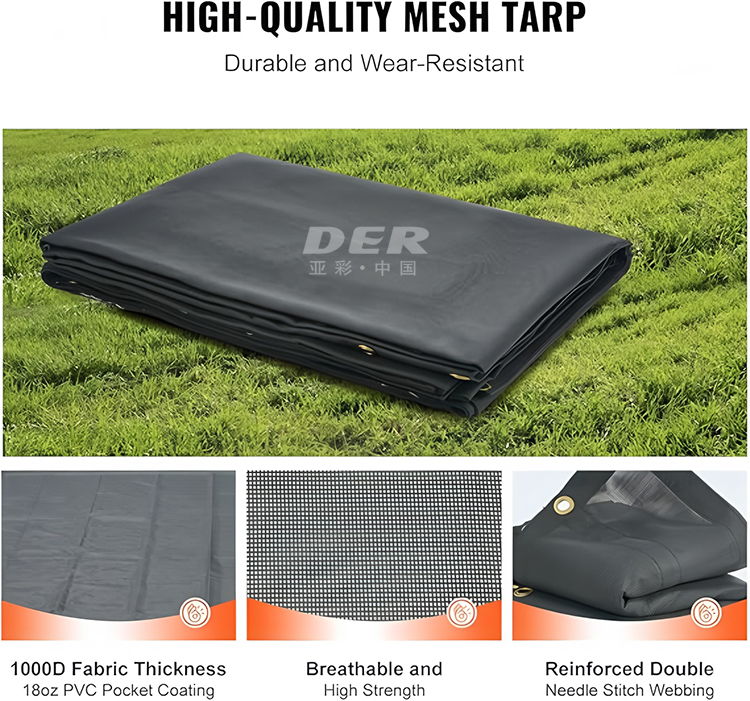
Breathable mesh direction for side dump, dump truck and other loose-load tarp applications. Final mesh openness and reinforcement are project-specific.
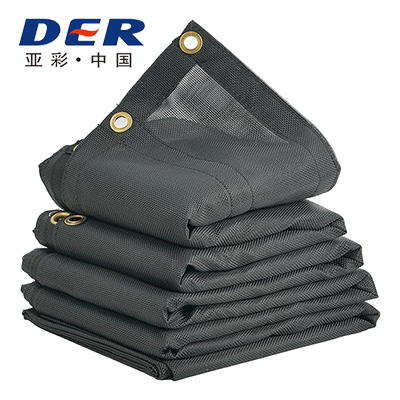
Finished cover details can include reinforced edges and hardware-ready zones according to the actual side-roll system.
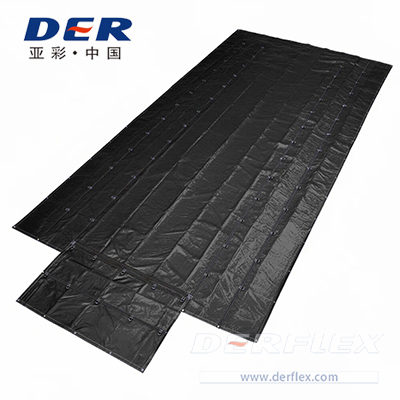
Finished dimensions, long-edge construction and reinforcement can be reproduced from a drawing, measured old tarp or approved sample.
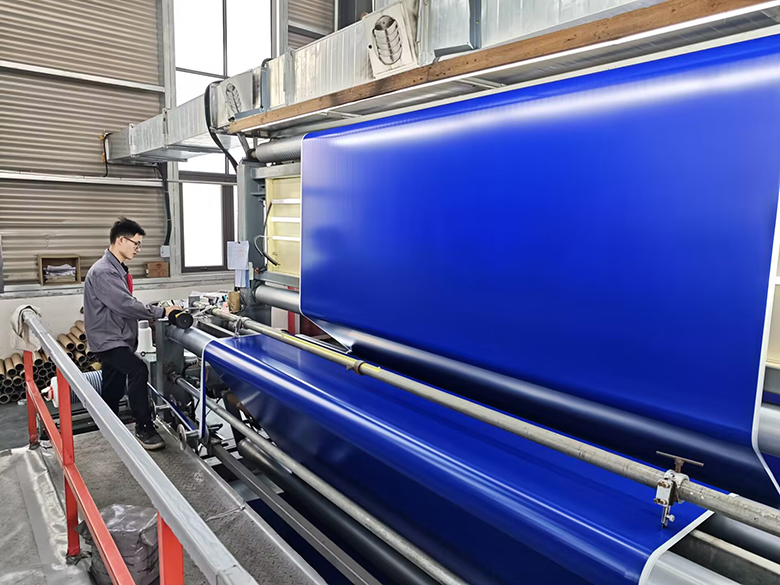
DERFLEX supports tarp-material development as well as finished-cover programs, useful for distributors, converters and OEM replacement channels.
These errors create more trouble than simply choosing the “wrong GSM.”
The tarp must match the working coverage and attachment geometry. Nominal trailer dimensions rarely capture pockets, end allowances and travel path.
If every old tarp wears in the same spot, reproducing the same reinforcement layout may repeat the same problem.
Open mesh can allow fines or rain through. Select the cover structure around the actual load rather than assuming mesh works for every side dump.
More weight can change rolling behavior. Local wear-zone reinforcement may be a better solution than unnecessary full-surface weight.
Roll tube, fixed tube, bead, clamp or pocket details determine installation. A single overall width does not communicate these interfaces.
For a new replacement SKU, a physical sample or pilot fit can confirm the working geometry before a larger fleet or distributor order.
The real B2B value is turning an existing side dump tarp into a documented, reorderable specification.
Trailer/system type, old tarp, cargo, failure points, quantity and destination are reviewed.
Material, finished size, pocket geometry, reinforcement and identification details are documented.
For new geometry, a sample or pilot order can be used to verify installation and movement.
Approved details can be standardized for fleet replacement, dealer inventory or OEM purchasing.
These verified DERFLEX pages cover adjacent system, material and replacement intents without duplicating this side-dump-specific page.
Short, direct answers for replacement buyers, fleets, dealers and trailer-equipment programs.
Mesh is commonly used when airflow and loose-load containment are the priority. Solid PVC/vinyl is more suitable when better rain shielding or containment of fine material is needed. The final choice should be based on cargo, system geometry and duty cycle.
Yes. Provide the old tarp, finished dimensions, roller/stationary-edge details, photos of the complete system and the material being hauled. A drawing or physical sample can reduce assumptions before production.
Measure the actual working coverage, old finished tarp size, roller pocket, opposite-edge attachment, front/rear details and any clearances around arms or guides. Do not order only from the nominal trailer length or tub width.
No. Mesh allows air and water through the openings. It is selected for breathable containment and reduced wind loading. Use a solid PVC/vinyl direction when waterproof surface protection is required.
DERFLEX can configure covers for selected manual and electric side-roll arrangements, but final compatibility must be confirmed from the actual system geometry, pockets, travel path and attachment details.
Yes, when you provide the verified dimensions and construction details for that part number. Because different systems use different pocket and reinforcement layouts, DERFLEX should not rely on a part number alone without a drawing, sample or measurement confirmation.
Material structure matters, but service life is also affected by load profile, exposed sharp material, roller pocket fit, edge abrasion, reinforcement layout, system adjustment, UV exposure and operating frequency.
DERFLEX supports B2B tarp programs with repeat dimensions, material specifications, labels, packaging and batch production. Confirm quantity, destination and required replacement SKU structure during quotation.
Send DERFLEX the existing tarp, trailer and system photos, finished size, roller/stationary-edge details, cargo type, quantity and destination. The team can review a practical mesh or solid PVC/vinyl cover direction for sampling, fleet replacement or OEM production.