


 Tarpaulin Buyer Decision Guide
How to Choose a Tarpaulin: GSM, Mil, Thickness & Weight Guide
A tarpaulin should be selected by the job it must survive—not by a single “heavy duty” label. This guide helps importers, distributors, fabricators, fleet operators, contractors and OEM buyers compare material, GSM, mil thickness, finished handling weight, reinforcement and exposure in one decision process.
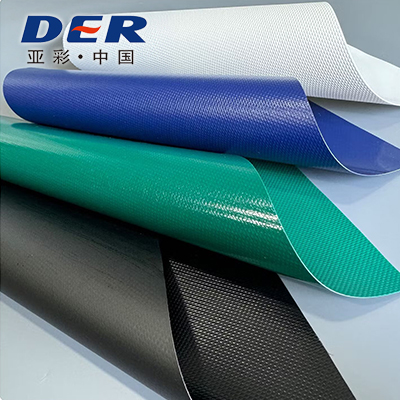
How to Choose a Tarpaulin Without Overbuying or Under-Specifying
The most reliable sequence starts with failure risk, not with the biggest GSM number. A lighter, well-reinforced construction can be a better working solution than an unnecessarily heavy cover that is difficult to lift, fold or tension.
Define the Job
Truck cover, construction protection, equipment cover, agriculture, storage, shelter or temporary dust control.
Choose Material
PE for lighter economical coverage; PVC coated polyester for weldable, repeated industrial use; canvas or mesh for special needs.
Set Duty Band
Use GSM / oz for area weight and mil / mm for thickness. Keep these measurements separate.
Control Weak Points
Check tear strength, seams, hems, webbing, eyelets, D-rings, abrasion zones and UV exposure.
Approve Evidence
Confirm sample, tolerance, test method, finished size, packing and repeat-order reference before scaling.
What GSM Means—and What It Does Not Tell You
GSM means grams per square meter. It tells you how much one square meter of tarp material weighs. It is useful for comparing mass within a similar material family, estimating handling weight and controlling repeat orders. It is not a direct rating of tear strength, waterproofness, UV life or finished-cover durability.
GSM
Useful for metric purchasing, roll-material comparison, shipping estimates and production control.
oz/yd2
Measures the same type of property as GSM and can be converted mathematically.
mil
One thousandth of an inch. A 20 mil sheet is 0.020 inch thick.
mm
Metric physical thickness, common on technical data sheets for PVC coated materials.
| Material / Market Language | Practical Starting Direction | Common Buying Situation | What to Verify |
|---|---|---|---|
| Light woven PE tarp | Approx. 80–120 GSM | Short-term dust cover, indoor protection, temporary weather shielding. | Weave density, lamination quality, UV treatment, grommet spacing and expected exposure. |
| General / heavier PE tarp | Approx. 150–250+ GSM | Outdoor storage, agriculture, construction protection and repeat general covering. | Finished weight, mil thickness, edge reinforcement and tear behavior. |
| PVC coated polyester tarp | Approx. 450–650 GSM | Industrial covers, truck / trailer covers, equipment protection and fabricated covers. | Base fabric, tensile / tear values, coating adhesion, weldability and UV package. |
| Heavy PVC coated polyester | Approx. 650–900 GSM | Repeated transport use, higher abrasion, long outdoor cycles and frequent handling. | Duty cycle, weld / seam design, cold flexibility, surface finish and hardware loads. |
| High-mass PVC program | Approx. 900–1200+ GSM | Demanding industrial covers, containment and application-specific heavy fabrication. | Whether extra mass solves the actual failure mode, plus handling, foldability and fabrication method. |
These ranges are selection directions rather than universal industry grades. “Heavy duty” is not standardized across PE, PVC, canvas and mesh tarp categories.
Mil and GSM Answer Different Procurement Questions
A frequent sourcing error is trying to convert GSM directly into mil. GSM measures mass per area; mil measures physical thickness. There is no universal one-to-one conversion because a tarp can redistribute weight between textile reinforcement, PVC coating, lamination and surface treatment.
Conversions You Can Make
Equivalent units describing the same physical property can be converted directly:
GSM ÷ 33.9057 = oz/yd2
1 mil = 0.0254 mm
mil × 0.0254 = mm
Example: 18 oz/yd2 is about 610 GSM. That conversion compares area weight only.
Conversions You Should Not Force
Do not claim that a given GSM always equals a fixed mil thickness. Two 650 GSM materials may have different thickness because of:
- different polyester scrim denier or yarn density;
- different PVC coating-to-fabric ratios;
- different resin / plasticizer density and formulation;
- laminated versus coated construction;
- surface lacquer, embossing or other finishing.
Calculate Finished Handling Weight Before You Choose a Heavier Tarp
GSM affects more than durability direction—it affects lifting, deployment, folding, container payload and installation labor. On large covers, a small increase in GSM can create a large increase in total material weight.
Base Material Weight Formula
This estimates the fabric mass before additional weight from hems, webbing, eyelets, D-rings, ropes, patches, seams, repairs or absorbed surface moisture.
Example: a 10 m × 8 m cover made from 650 GSM material has an estimated base material weight of 52 kg. A 900 GSM version of the same area is about 72 kg before hardware.
Tarp Weight Estimator
Use it as a planning tool for material handling and quotation preparation.
Estimator excludes finished hardware and fabrication additions. Final shipped weight should be confirmed from the approved product.
What Mil Thickness Do You Need?
Mil is especially common in retail poly tarp and vinyl tarp descriptions. It is useful for understanding physical thickness, but it should not be treated as a complete quality grade. For PVC coated polyester, industrial buyers usually benefit from reading mil or mm together with GSM, yarn structure, coating adhesion and reinforcement.
| Thickness Band | Approx. Metric | Typical Duty Direction | Common Use | Buyer Check |
|---|---|---|---|---|
| 5–8 mil | 0.13–0.20 mm | Light / temporary | Dust control, short-term storage, painting and low-risk temporary cover. | Do not assume long UV life or high tie-down strength. |
| 10–12 mil | 0.25–0.30 mm | General outdoor | Seasonal equipment, moderate outdoor cover and temporary shelter. | Check material family, UV treatment, seams and wind exposure. |
| 14–20 mil | 0.36–0.51 mm | Commercial / heavier | Construction, transport protection, machinery covers and repeat outdoor use. | Check tear strength, abrasion points and edge reinforcement. |
| 20+ mil | 0.51 mm+ | Heavy industrial direction | Truck covers, abrasive work, long-term outdoor storage and demanding custom covers. | Confirm handling weight, flexibility, welding method and hardware design. |
The Tarp Usually Fails Where the Specification Is Weakest
A good tarpaulin weight guide should answer more than “what GSM is heavy duty?” The more useful question is: what is most likely to damage this cover in the real job?
Wind & Flapping
Focus on tear margin, hem construction, tie-down spacing, webbing and load distribution. Extra GSM alone will not fix weak attachment points.
Reinforcement firstSharp / Abrasive Cargo
For steel, timber, rubble or machinery edges, consider coating durability, patch zones, anti-abrasion finish and local protection.
Abrasion controlLong UV Exposure
Ask for an outdoor formulation suitable for the target climate and service expectation. Color, top treatment and exposure angle also matter.
Weather packageDaily Manual Handling
Too much GSM can make large covers slow or unsafe to deploy. Balance durability with the number of people and frequency of handling.
Weight mattersCold Folding
Low-temperature flexibility can matter more than extra thickness where a tarp is repeatedly folded or rolled in cold climates.
Cold-flex requirementSeam / Hardware Loading
Large covers often fail around eyelets, D-rings, straps or seams. Specify reinforcement layout and fabrication method together with fabric.
Finished designChoose a Tarpaulin by Use Case
The ranges below are purchasing starting points. Final construction should be confirmed against the real finished size, climate, tension, abrasion and required evidence.
Truck & Trailer Covers
Repeated pulling, folding, road wind and cargo contact create combined tear and abrasion loads.
Typical direction: PVC coated polyester, often 450–900+ GSM depending on duty cycle.Construction Protection
Jobsite edges, wind, debris and repeated installation mean that reinforcement can matter as much as sheet thickness.
Typical direction: medium to heavy PE or PVC depending on reuse and exposure.Equipment & Machinery
Fit, sharp corners, abrasion zones and access frequency should be mapped before choosing the material.
Typical direction: PVC coated polyester for repeat outdoor industrial covers.Agriculture & Storage
Large area, sun exposure and seasonal handling make weight economics important.
Typical direction: PE for economical seasonal use; PVC for longer repeat cycles.Tents & Shelters
Panel welding, dimensional stability, appearance and any project-specific flame requirement should be defined early.
Typical direction: weldable coated polyester selected by structure and compliance need.Temporary Indoor Cover
Low stress and short service usually do not justify industrial-weight material.
Typical direction: lighter PE or other economical sheet where exposure is limited.How to Check Whether a GSM or Thickness Claim Is Useful
A precise-looking number is not automatically a controlled specification. Before ordering, make sure the quoted figure can be verified and reproduced.
Confirm What the GSM Refers To
Ask whether the figure is for the finished coated / laminated material or only the base fabric.
Ask for a Tolerance
Production materials should have an agreed allowable range instead of a single perfect-looking number with no control method.
Cross-Check Sample Weight
For a known sample area, measured mass should be broadly consistent with the nominal GSM after accounting for test method and tolerance.
Keep Mil Separate from GSM
Do not accept a supplier conversion table that treats all tarp materials as having one fixed density.
Request Strength Data
For industrial jobs, ask for tensile, tear and—where relevant—coating adhesion with units, directions and test methods.
Approve the Finished Construction
Seams, hems, grommet spacing, webbing, D-rings and corners can decide service performance even when raw fabric is strong.
State Cut vs Finished Size
Large purchasing disputes can come from measurement conventions rather than material quality. Define finished dimensions and tolerance.
Freeze the Approved Reference
Use a product code, sample, color reference and specification revision so repeat orders are compared against the same target.
From “What GSM?” to a Reproducible Tarpaulin Specification
DERFLEX supplies PVC coated tarp material for transport, industrial covers, construction, agriculture and OEM fabrication. Instead of relying on a general heavy-duty label, buyers can discuss material weight, base fabric, color, finish, fabrication and application requirements as one specification.
Continue the Tarpaulin Selection Research
These six related pages deepen the weight, thickness, technical specification and material questions without forcing one page to repeat every topic.
Tarpaulin RFQ Checklist
Use these fields to turn “I need a heavy tarp” into comparable supplier quotations.
Tarpaulin GSM, Mil, Thickness & Weight Questions
What GSM tarpaulin should I choose?
Choose GSM after you identify the material family and application. Light PE covers may be below 150 GSM, while industrial PVC coated polyester often starts much higher. For repeated truck, construction or industrial service, buyers commonly evaluate roughly 450–900+ GSM PVC constructions, but the final decision should also consider tensile strength, tear resistance, abrasion, reinforcement and handling weight.
Is a higher GSM tarp always better?
No. Higher GSM means more material mass per square meter, which usually increases total weight and can increase cost. It does not automatically guarantee stronger seams, better grommets, better UV stability or higher tear strength. A balanced construction matched to the real failure risk is usually more useful than buying the heaviest option available.
Can I convert tarpaulin GSM directly to mil?
No universal conversion should be used. GSM measures area weight and mil measures physical thickness. The relationship changes with the material density, textile reinforcement, coating quantity, lamination method and surface finish. Compare GSM with oz/yd2 and mil with mm; ask the supplier for both weight and thickness if both are important.
What is the difference between 18 oz and 22 oz vinyl tarp material?
Both figures describe area weight in ounces per square yard. Using the standard unit relationship, 18 oz/yd2 is about 610 GSM and 22 oz/yd2 is about 746 GSM. The heavier grade generally contains more material, but buyers should still compare base fabric, thickness, tensile and tear data, coating quality and finished reinforcement rather than judging from ounce weight alone.
How do I estimate the total weight of a tarpaulin?
For metric dimensions, multiply length in meters by width in meters to get square meters, multiply by GSM, then divide by 1000 to estimate base fabric weight in kilograms. Finished weight will be higher after hems, webbing, eyelets, D-rings, ropes, patches and other hardware are added.
What should I send DERFLEX for a tarp recommendation?
Send the application, roll or finished-cover requirement, size, target weight or thickness if known, climate, abrasion and handling conditions, expected fabrication method, reinforcement details, color, quantity, destination and any required test or compliance standard. A reference sample, drawing or existing technical data sheet can make matching more precise.