News
Industry News

Tennis Court Cover Tarp | Custom Waterproof Covers | DERFLEX

Update:2026/8/23 17:22:53 Views:
DERFLEX logo Sports Facility Cover Solutions

Tennis Court Cover Tarp Built Around Your Court, Crew and Weather Plan

DERFLEX supplies custom tennis court cover tarp solutions for clubs, schools, academies, stadium operators, sports contractors and distributors. Instead of treating a court cover as a generic sheet, we help buyers match PVC coated polyester weight, panel layout, seam direction, edge reinforcement and fastening details to the way the cover will actually be deployed, anchored, removed and stored.

  • Custom court dimensions
  • Waterproof PVC coated polyester
  • Reinforced hems & fixing options
  • Heavy duty grades available
  • OEM / wholesale programs
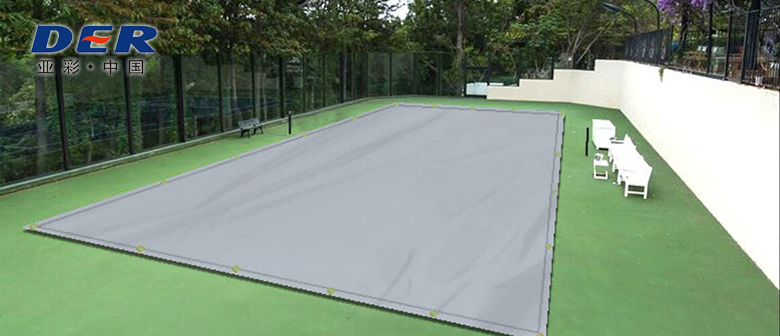
DERFLEX tennis court cover tarp protecting an outdoor court
DERFLEX sports tarp application image — court-size protective cover with perimeter fixing points.
Court protection, not just a sheet

What a Tennis Court Cover Tarp Should Solve

A tennis court cover tarp is a removable protective membrane used to limit direct exposure of the playing surface to rain, wind-driven debris, dust, leaves and prolonged outdoor weather. For facility operators, the useful question is not simply whether the tarp is “waterproof”; it is whether the complete cover can be deployed quickly, stay controlled at the perimeter, avoid unnecessary water ponding and return to storage without becoming difficult for the maintenance crew.

For a standard tennis court, the playing lines alone do not define the finished cover size. ITF rules list a doubles court at 23.77 m long by 10.97 m wide, but a practical cover may need to protect additional run-off or maintenance area. DERFLEX therefore recommends quoting from the actual protection footprint, not only from playing-line dimensions.

For buyers searching for a waterproof tennis court cover tarp, the material is only one part of the system. Seam layout, perimeter reinforcement, fixing distance, safe water run-off and the expected number of deployment cycles should be discussed before production.

Coverage FitMeasure the area that really needs protection, including any run-off zone or maintenance margin.
Handling WeightBalance durability with the number of staff available to move, fold or roll the cover.
Water ControlWaterproof material should be paired with a practical drainage or dewatering plan to limit ponding.
Wind SecurityFixing points and perimeter reinforcement should match the site and safe operating procedure.
Procurement logic

Choose the Cover by Operating Method, Not by GSM Alone

Search results commonly emphasize fixed sizes, lightweight handling, eyelets or general weather resistance. For professional procurement, those features are useful but incomplete. A reliable specification starts with how the facility will use the tarp.

1

How often will the tarp move?

Occasional seasonal protection and frequent rain-delay deployment create different fatigue on seams, hems and fold lines. Frequent handling generally benefits from stronger edge design and a material weight the crew can still manage safely.

2

How many people will handle it?

A heavier cover may improve robustness but increase deployment effort. For school or club maintenance teams, panel size, grab handles, fold pattern and storage method can matter as much as tensile strength.

3

Where can water go?

A waterproof flat sheet can collect significant rainwater. The site should have a safe plan for slope, pumping, controlled drainage or staged removal. The cover is not a structural roof and should not be specified as one.

4

How will the perimeter be secured?

Grommets, D-rings, webbing tabs, weighted tubes or other restraint systems should be chosen according to the court surface and site procedure. Pulling loads should be spread through reinforced zones rather than concentrated into plain fabric.

5

What surface is being protected?

Hard court, synthetic surface, clay and natural grass have different moisture and maintenance concerns. Surface contact, underside finish and operational procedure should be confirmed with the court operator.

6

Is this a repeat wholesale program?

For a tennis court cover tarp wholesale program, repeatability matters: same color direction, fixing layout, labeling, packaging and bill-of-material logic should be documented for subsequent orders.

Practical note: Do not rely on the tarp alone for severe wind events. Large covers can develop substantial uplift. Site-specific anchoring, weather monitoring and safe deployment procedures should be managed by the facility operator.
Custom specification

Custom Tennis Court Cover Tarp Specification Guide

DERFLEX custom tarp programs support a broad PVC coated tarpaulin range. The values below are procurement directions for tennis and multi-sport court projects; final material and construction should be confirmed from samples, drawings and application conditions.

Specification Item Typical Direction Why It Matters on a Tennis Court Customization Notes
Base MaterialHigh-tenacity polyester fabric with PVC coatingCombines flexible handling with tear and tensile support for repeated deployment.Base fabric denier and coating formula can be matched to target duty.
Material WeightApprox. 300–450 gsm light/medium; 500–680 gsm frequent-use; heavier options for demanding handlingHigher weight can improve robustness, while lower weight can reduce crew handling effort.Final GSM should balance service duty, panel size and manpower.
Finished SizeMade to actual protection footprintAvoids assuming that playing-line size equals required cover size.One-piece, multi-panel or sectional layout can be discussed.
Seam MethodHot-air / HF welded seams or application-matched constructionLarge court covers usually require joined panels; seam direction affects water tightness and handling.Seam map should be planned before cutting large formats.
PerimeterReinforced hem, webbing, rope-in-hem or reinforced fixing zonesSpreads local loads from pulling, anchoring and repeated removal.Reinforcement width and layers can be adjusted.
Fixing HardwareBrass, stainless or aluminum grommets; D-rings; webbing loops; handlesControls how crews secure, pull and remove the tarp.Spacing should match the actual restraint system.
SurfaceGlossy, matte, easy-clean or application-matched finishSurface finish affects cleaning, drag and appearance.Discuss underside requirements for the specific court surface.
Outdoor OptionsUV-resistant, anti-mildew, cold-resistant or FR directions where requiredHelps match the tarp to exposure, storage humidity and local specification needs.Testing standard should be stated before quotation.
BrandingCustom color, logo, text, identification marks, private labelUseful for clubs, tournaments, distributors and multi-site facility programs.Artwork, print area and color reference should be supplied.
PackagingFolded bundle, protective bag, palletized or buyer-specified packingLarge covers need a clear storage and return-to-service method.Panel numbering and storage labels can be added.
Material & fabrication

How a Heavy Duty Tennis Court Cover Tarp Is Built

The finished product is a combination of textile structure, coating, welding and reinforced load paths. For large court covers, weak details often appear at seams and perimeter fixing points before they appear in the center fabric.

TopPVC weathering surface selected for outdoor water and UV exposure.
CorePolyester base fabric carries tensile and tear loads across the large cover.
BottomPVC layer supports water blocking and a cleanable surface; finish should suit the court-contact requirement.
SeamsLarge panels can be welded to create the required finished dimensions and water-resistant joint direction.
EdgesReinforced hems, webbing and hardware zones distribute pulling and anchoring loads.
Product image display

DERFLEX Sports Tarp Applications & Manufacturing

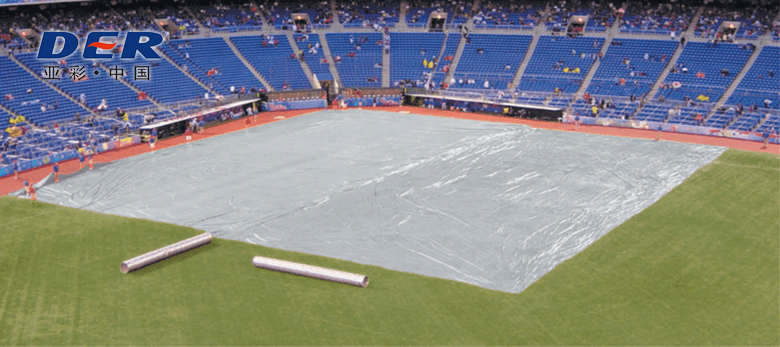
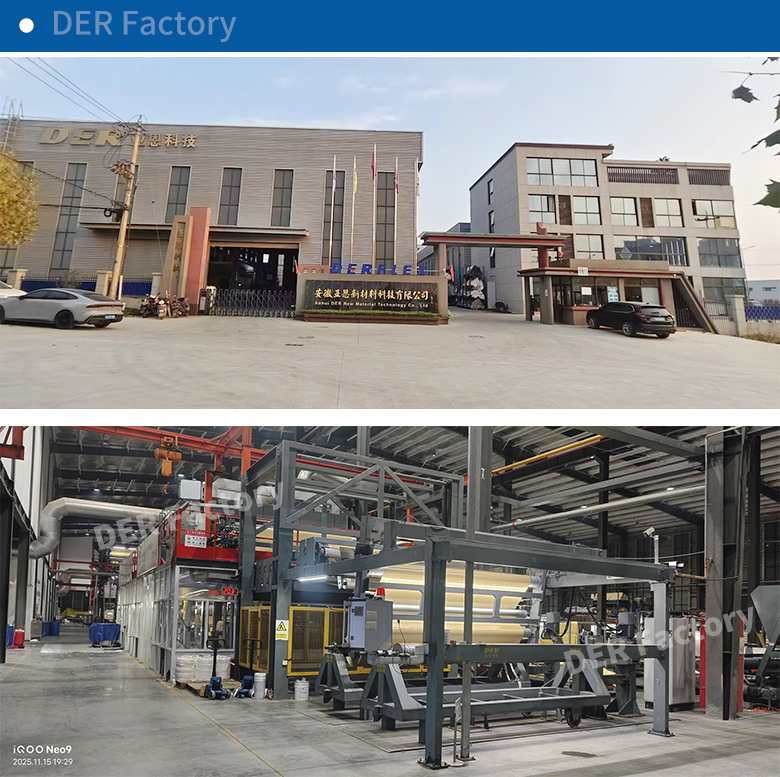
The images below are from DERFLEX website assets and show court, stadium and factory-related tarp applications rather than generic stock photography.

Target buyers & use cases

Where Tennis Court Cover Tarps Are Commonly Specified

The same “court tarp” keyword can represent very different procurement needs. DERFLEX supports project, OEM and bulk supply discussions for multiple buyer types.

Tennis Clubs & Academies

Rain-delay protection, seasonal closure, debris control and maintenance planning for outdoor courts.

Schools & Universities

Durable covers with straightforward handling, clear panel identification and repeatable storage procedures for facilities teams.

Sports Complexes

Custom dimensions for tennis, pickleball, multi-sport and adjacent court areas with coordinated colors or labeling.

Tournament & Event Operators

Rapid-deployment covers, branded colors or markings and planned panel layout for event crews.

Sports Contractors

Project-specific specifications, drawing-based cover sizes and hardware details coordinated with site requirements.

Distributors & Private Labels

Tennis court cover tarp wholesale and OEM programs with repeat specifications, custom labels, packaging and product-grade differentiation.

From measurement to delivery

A More Useful Customization Process for Large Court Covers

A custom tennis court cover tarp manufacturer should collect more than length and width. DERFLEX recommends a specification workflow that reduces avoidable changes after production starts.

Define Coverage

Send the actual protection footprint, court type and photos or drawing.

Define Handling

State crew size, deployment frequency, folding/rolling method and storage location.

Define Restraint

Confirm grommets, webbing, D-rings, weighted edges or other planned fixing method.

Confirm Material

Select the fabric weight, color, surface and performance options from the real use environment.

Approve Details

Confirm seam map, panel numbering, logos, labels, packaging and order quantity before mass production.

For faster quotation: provide finished coverage size, quantity, court surface, desired fabric weight if known, color, fixing method, grommet spacing, reinforcement preference, logo requirement, packing requirement and target delivery schedule.
Supplier evaluation

What to Check Before Choosing a Tennis Court Cover Tarp Supplier

Price per square meter is only one part of the buying decision. For a large-format cover, fabrication consistency and the agreed specification can have a direct effect on handling, fit and repeat orders.

Before Production

  • Confirm finished dimensions and whether measurements refer to playing lines or the full protection footprint.
  • Confirm PVC coated polyester weight, color and surface direction by sample where needed.
  • Review the panel and seam layout for extra-large finished dimensions.
  • Confirm perimeter reinforcement, hardware type and fixing spacing.
  • State any requested UV, FR, anti-mildew or market-specific testing direction.

Before Shipment

  • Check overall dimensions and panel identification against the approved drawing.
  • Inspect visible seams, hems, grommets and reinforced fixing zones.
  • Confirm logo, label and packaging details for OEM or wholesale programs.
  • Use packing that supports the intended storage and handling method at destination.
  • Keep the final specification record for future repeat orders or replacement panels.
Buyer questions

Tennis Court Cover Tarp FAQ

Answers are written for facility managers, distributors and project buyers preparing a specification or RFQ.

Can DERFLEX make a custom tennis court cover tarp to my exact dimensions?
Yes. DERFLEX supports made-to-measure finished covers and large-format panel layouts. For a useful quotation, send the actual area you want to protect rather than only the court playing-line dimensions. Photos, drawings, run-off area and planned fixing points help clarify the design.
What material is suitable for a waterproof tennis court cover tarp?
PVC coated polyester is a practical option where buyers need waterproof protection, weldability, tear strength and reusable outdoor performance. The appropriate weight depends on the cover size, handling frequency, manpower, wind exposure and storage method. Final material should be confirmed against the real application.
Is a heavier tarp always better for a tennis court?
Not necessarily. A heavier fabric can improve robustness but also increases the effort required to pull, fold, roll and store a large cover. Facility managers should balance durability with crew size and deployment speed. In some cases, sectional panels or a medium-weight reinforced design can be more practical than one very heavy sheet.
How should rainwater on a tennis court cover be managed?
A waterproof flat cover can collect water, so the facility should plan safe slope, pumping, controlled drainage or staged removal. Avoid allowing deep ponding to develop. The tarp should not be treated as a structural roof, and the site operator should use a weather and wind procedure appropriate to the court.
Can a heavy duty tennis court cover tarp include grommets, handles or reinforced webbing?
Yes. Depending on the design, DERFLEX can discuss reinforced hems, webbing, rope-in-hem, grommets, D-rings, handles, straps and other fixing details. The location and spacing should be based on the actual deployment and restraint method so loads are not concentrated into unreinforced fabric.
Do you support tennis court cover tarp wholesale and OEM supply?
DERFLEX supports bulk and OEM discussions for distributors, sports suppliers and private-label programs. Custom color, logo, technical markings, labels, packaging and repeat-order specifications can be planned according to order requirements and the selected material program.

Send the Court Size. Get a Specification-Based Quote.

If you are sourcing a custom, heavy duty or waterproof tennis court cover tarp, send the actual protection area and operating details. DERFLEX can discuss material weight, panel layout, reinforcement and OEM requirements before quotation.

  • Finished coverage length × width
  • Quantity and destination market
  • Court surface and intended protection use
  • Deployment frequency and crew size
  • Fixing / anchoring method
  • Color, logo, label and packaging requirements
Consulting Services
+86-021-54361792 / 54361798
Email
sales@derflex.com