


Tensile Membrane Structure Fabric Manufacturer for Architectural, Roofing, Canopy, and Large-Span Projects
DERFLEX supplies tensile membrane structure fabric for buyers who need more than a general-purpose coated fabric. We support architects, membrane fabricators, EPC contractors, steel structure partners, façade specialists, distributors, and project procurement teams looking for high-performance architectural membrane materials with reliable strength, weather resistance, fabrication compatibility, and commercially dependable supply. 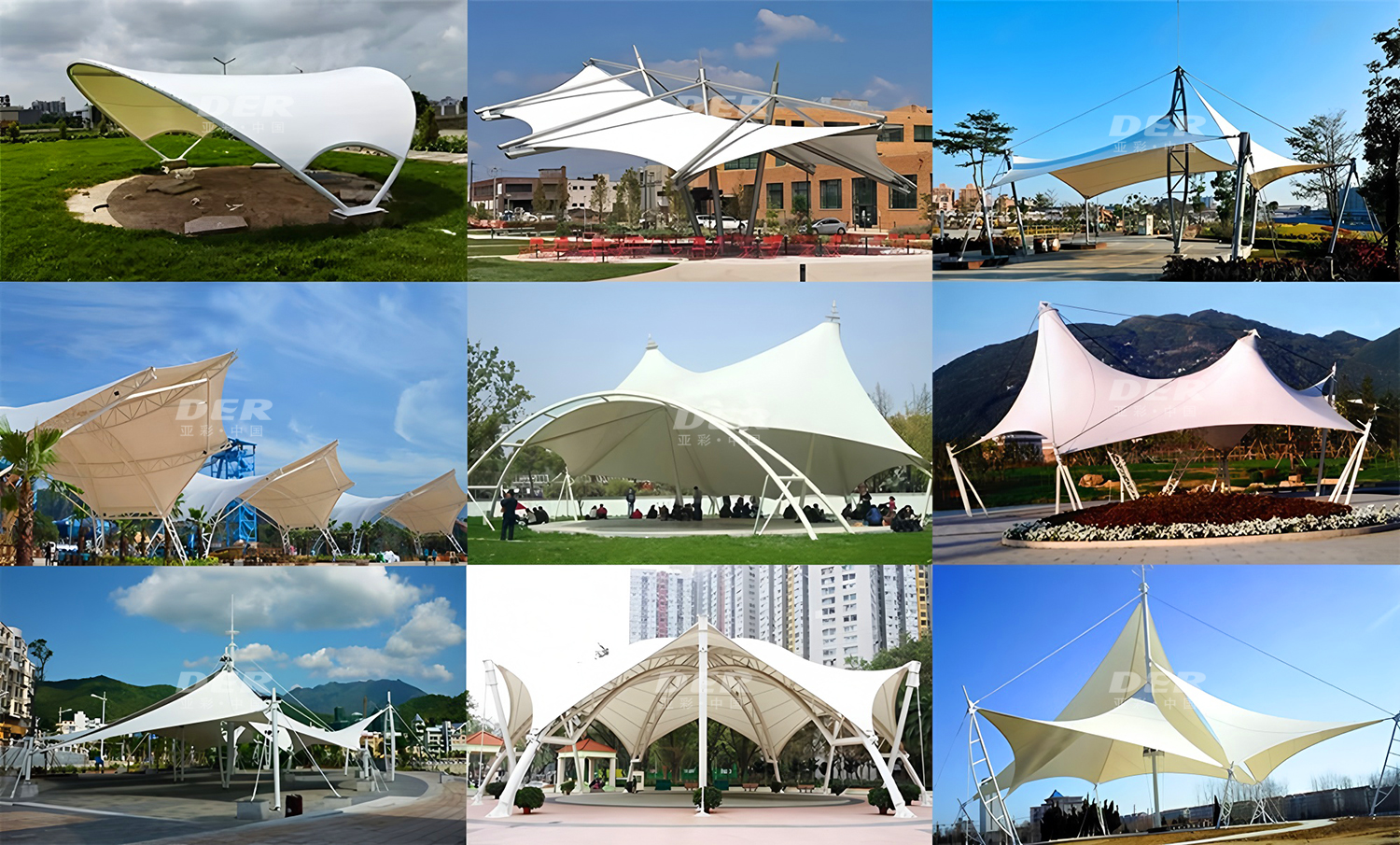
Whether the project involves a stadium roof, transportation hub canopy, shopping mall entrance cover, public plaza shade structure, exhibition hall membrane, walkway shelter, or landmark tensile architecture program, buyers usually compare the same core factors: structural performance, coating route, surface durability, fire pathway, weldability, service stability, visual effect, lead time, and whether the supplier can support a real engineering workflow rather than only offer a generic fabric roll.
What Is Tensile Membrane Structure Fabric?
Tensile membrane structure fabric is a high-performance architectural textile designed to work as the tensioned skin of a structural system. Unlike traditional rigid building materials that primarily resist loads through compression or mass, tensile membrane fabrics are selected to perform under tension, allowing architects and engineers to create lightweight, large-span, and visually distinctive structures with fewer supporting elements and stronger design freedom.
In the commercial market, the keyword tensile membrane structure fabric covers a category that can include PVC coated polyester architectural membranes, PVDF top-coated systems, PTFE fiberglass membranes, and other engineered materials used in tensile architecture, membrane roofs, canopies, façade features, and iconic public structures. Although many buyers begin with a broad search, the real sourcing decision usually depends on the performance pathway of the membrane: strength, flexibility, translucency, fire behavior, surface cleanliness, environmental durability, fabrication compatibility, and project budget.
A serious tensile membrane fabric supplier should therefore help buyers compare membrane type, coating structure, expected service conditions, fabrication method, and installation logic before material selection is finalized. For permanent and semi-permanent architectural use, the membrane is not a decorative afterthought. It is part of the performance system of the building envelope itself.
DERFLEX positions this page for buyers searching tensile membrane structure fabric manufacturer, architectural membrane fabric supplier, tensile fabric material, membrane structure fabric, tensile architecture fabric, and related commercial and engineering terms that combine material performance with project delivery needs.
Why Buyers Search for Tensile Membrane Structure Fabric Instead of General PVC Fabric
- You need a membrane material engineered for architectural and structural use rather than only cover or tarp use.
- You need better control over tensile strength, tear behavior, coating stability, and outdoor performance.
- You need a membrane that can support real fabrication, patterning, welding, and installation requirements.
- You need a supplier who understands canopies, roofs, façades, large-span systems, and public-space structures.
- You need OEM or custom support around color, topcoat, width, base cloth, and project-specific membrane direction.
- You need stable quality, lead-time coordination, and commercial clarity for project-based procurement.
Need Architectural Membrane Fabric for a Canopy, Roof, or Tensile Structure Project?
Send your application, span concept, membrane preference, target performance, quantity, and delivery schedule. DERFLEX can recommend a more suitable tensile membrane structure fabric direction for engineering, fabrication, and project quotation.
Key Features Buyers Expect from Tensile Membrane Structure Fabric
Buyers do not choose membrane architecture fabric by appearance alone. They choose it by whether the material supports structure, longevity, fabrication, and design performance in a commercially workable way.
1. High Strength-to-Weight Ratio
A tensile membrane roof or canopy system depends on the membrane carrying loads efficiently while remaining lightweight enough to support long spans and cleaner structural expression. This is one of the main reasons membrane fabrics are selected instead of heavier rigid roofing materials in many contemporary architectural projects.
2. Weather Resistance for Outdoor Use
Tensile structure fabric is expected to handle rain, UV exposure, wind, dust, temperature fluctuation, and general environmental aging. Buyers evaluating membrane structure fabric therefore care about long-term surface performance, coating stability, and how well the fabric maintains appearance and function over time.
3. Fabrication Compatibility
Even a strong membrane can create problems if it does not weld well, pattern well, or behave predictably during fabrication. Good architectural membrane fabrics are selected not only for engineering performance but also for fabrication practicality, including joining, edge reinforcement, detailing, and installation coordination.
4. Design Flexibility
One of the main commercial advantages of tensile membrane structure fabric is that it supports complex geometries, elegant curvature, lightweight spans, and iconic visual forms. This makes it attractive for architects and developers who need performance plus visual differentiation.
5. Surface Options and Aesthetic Control
Depending on project type, buyers may need bright white surfaces, translucent effect, dirt-resistant topcoats, matte or gloss finishes, special branding colors, or membranes that align with premium architectural language. The membrane is often a visible design surface, so finish quality matters.
6. OEM and Project Customization
Commercial tensile fabric projects often require custom width direction, color, topcoat, fabric weight, coating route, fire pathway, and packaging logic. Buyers sourcing from a real tensile membrane fabric manufacturer usually expect project-oriented customization, not only standard stock supply.
Technical Specifications
Tensile membrane structure fabric covers multiple material families and project levels. The table below is designed as a practical commercial and technical framework rather than a one-SKU-only datasheet.
| Product Category | Tensile membrane structure fabric / architectural membrane fabric / tensile structure fabric |
|---|---|
| Typical Material Systems | PVC coated polyester, PVDF top-coated membrane, PTFE fiberglass membrane, and related architectural membrane directions |
| Typical Base Fabric | High-tenacity polyester or project-specific structural reinforcement substrate |
| Typical Weight Range | Medium to heavy architectural grades depending on span, loading, form, and project specification |
| Surface Finish | Glossy, matte, lacquered, PVDF top-coated, easy-clean, bright white, translucent, or project-custom finish |
| Color Options | Standard architectural whites and selected custom colors for branding or design alignment |
| Functional Options | Waterproof, UV-resistant, flame-retardant, dirt-resistant, anti-mildew, high-strength, weldable, and weather-stable configurations |
| Fabrication Compatibility | Patterning, hot air welding, HF welding where applicable, edge reinforcement, and project detailing support |
| Project Use | Canopies, stadium roofs, walkways, public shade systems, commercial entrances, plazas, transportation hubs, façades, and landmark membrane structures |
| Supply Model | Factory-direct supply, OEM customization, architectural membrane recommendation, and project-oriented quotation support |
| Commercial Focus | Stable quality, lead-time coordination, repeat-order consistency, and custom support for engineering and fabrication buyers |
For broad commercial search intent, this type of page performs best when it remains technically credible while still helping distributors, contractors, and project buyers move efficiently toward inquiry and specification discussion.
Need a Membrane Recommendation for PVC, PVDF, or PTFE Direction?
If your project brief already includes span, location, budget, desired finish, or fire pathway, DERFLEX can help narrow the most suitable tensile membrane structure fabric route for your fabrication and installation workflow.
Applications of Tensile Membrane Structure Fabric
High-intent architectural buyers often begin with a broad membrane fabric search and then narrow by project type. A strong product page should therefore cover the real use environments where membrane structure fabric creates commercial value.
Stadium and Sports Facility Roofs
Tensile membrane roof fabric is widely used in sports architecture where large-span coverage, lighter structural load, and strong visual identity are required. Stadium roofs and sports coverings often demand a balance between scale, weather resistance, and construction efficiency.
Commercial Canopies and Entrance Covers
Shopping centers, hotels, office parks, retail entrances, and mixed-use developments use membrane canopies to create premium arrival experiences while also providing practical sun and rain protection.
Transportation Hubs
Airports, metro stations, bus terminals, rail platforms, and public mobility spaces often use tensile structure fabric because it supports efficient spans, lighter roof systems, and contemporary public architecture language.
Walkways and Public Shade Systems
Covered walkways, public plazas, school courtyards, outdoor waiting areas, and civic landscapes use membrane fabrics for shade, weather protection, and visual refinement with relatively low visual heaviness.
Exhibition, Event, and Landmark Structures
Tensile architecture fabric is often selected for event venues, exhibition buildings, visitor centers, and statement architecture where design expression and engineering efficiency need to coexist.
Façades and Building Envelope Features
Certain membrane fabrics are used in façade features, shading skins, and semi-enclosed architectural systems where surface quality, visual effect, and environmental response are part of the design intent.
Why Choose DERFLEX as Your Tensile Membrane Fabric Supplier
Buyers searching for tensile membrane structure fabric manufacturer are usually comparing more than membrane names. They are comparing technical understanding, project communication, manufacturing discipline, lead-time control, and whether the supplier can support the commercial reality of architectural procurement.
Architectural Material Focus
DERFLEX positions this product line around architectural membrane requirements rather than general-purpose outdoor fabric logic. That matters because tensile structures require different performance priorities from standard industrial covering materials.
OEM and Custom Support
Many tensile fabric projects need custom color direction, finish preference, coating structure, topcoat selection, fire pathway, and packaging arrangement. DERFLEX supports project-oriented customization to help buyers align membrane choice with design and engineering needs.
Lead-Time Awareness for Projects
Construction and fabrication timelines are highly sensitive to material readiness. That is why membrane fabric sourcing must consider quotation speed, production planning, and shipment coordination, not only product description.
Quality and Repeat-Order Stability
Architectural buyers and fabricators usually care about batch consistency, surface appearance, coating stability, and predictable fabrication behavior. Stable repeat performance is essential for project confidence and long-term supplier trust.
Certification and Performance Direction
Membrane projects often involve requirements around fire behavior, weathering, surface cleanliness, and durability targets. DERFLEX supports more technically informed material discussions so buyers can move faster toward suitable membrane selection.
Commercially Practical Communication
Strong membrane supply is not only about physical performance. It also depends on whether the supplier can communicate clearly with architects, membrane makers, project managers, and procurement teams working across real deadlines and budget constraints.
Tensile Membrane Structure Fabric vs Other Roofing and Cover Materials
Buyers often compare tensile membrane fabric with conventional roofing, general coated fabrics, and rigid systems. This comparison helps clarify where membrane architecture fabrics create stronger project value.
Tensile Membrane Structure Fabric
- Designed for lightweight, large-span, and expressive architectural forms
- Supports tension-based structural systems and cleaner visual profiles
- Useful where shade, weather protection, and design freedom matter together
- Better aligned with canopies, membrane roofs, and modern public architecture
Rigid Roofing Materials
- Suitable for many fixed roofing systems
- Often heavier and less visually flexible
- May require more structural mass and different architectural logic
- Less suitable when lightweight span efficiency is a priority
Standard PVC Fabric
- Can perform well in many outdoor cover applications
- Not always optimized for architectural membrane use
- May lack the surface, project, and design positioning needed for structure-grade applications
- Better for general protection than premium tensile architecture in many cases
Higher-End Membrane Systems
- Can offer stronger long-term performance and project prestige
- Often selected for airports, iconic buildings, and landmark structures
- May involve higher budget and stricter project expectations
- Selection depends on performance target, service condition, and cost logic
Representative Case Study
This example is designed to reflect how buyers usually evaluate architectural membrane fabric for real commercial and project use.
Architectural Membrane Fabric Supply for Commercial Canopy and Public Walkway Project
A project team needed tensile membrane structure fabric for a mixed commercial environment that included an entrance canopy, a covered pedestrian connection, and a public outdoor gathering zone. The buyer was not simply comparing price per square meter. They needed a membrane direction that could support visual consistency, weather resistance, reliable fabrication, and a commercially realistic lead time under a staged construction program.
The challenge was balancing architectural appearance with practical project delivery. The team needed clearer guidance on whether a standard PVC architectural membrane, an upgraded surface system, or a higher-tier membrane route would provide the best mix of cost efficiency, finish quality, fabrication behavior, and long-term maintenance expectations.
Project Review
Span concept, environmental exposure, visual target, fabrication method, and scheduling needs were reviewed before material direction was recommended.
Membrane Matching
Different tensile membrane fabric routes were compared according to performance pathway, finish behavior, and commercial practicality.
Customization Alignment
Surface finish, color preference, packaging method, and project coordination details were aligned with the buyer’s fabrication and installation sequence.
Supply Confidence
The outcome was a more dependable sourcing path with clearer specification logic, reduced material uncertainty, and stronger confidence in project execution.
Have a Canopy, Stadium, Plaza, or Membrane Roof Project in Progress?
Share your drawing stage, span requirement, target material direction, quantity estimate, and delivery window. DERFLEX can help you move from broad membrane search to a more precise tensile membrane structure fabric recommendation.
Frequently Asked Questions
These questions help architects, contractors, distributors, and project buyers compare tensile membrane structure fabric suppliers more efficiently.
What is tensile membrane structure fabric?
Tensile membrane structure fabric is an architectural membrane material used in tension-based structural systems such as canopies, stadium roofs, walkways, shade systems, and other lightweight membrane structures. It is selected for strength, flexibility, weather resistance, and design efficiency.
What materials are commonly used for tensile membrane structures?
Common tensile membrane material directions include PVC coated polyester, PVDF top-coated membranes, PTFE fiberglass systems, and other engineered architectural membrane solutions selected according to project goals, budget, durability targets, and design intent.
Where is tensile membrane structure fabric commonly used?
It is commonly used in stadium roofs, commercial canopies, transportation hubs, public plazas, walkways, exhibition centers, shade systems, façades, and landmark architectural projects where lightweight performance and visual impact are both important.
Can DERFLEX provide custom tensile membrane fabric?
Yes. DERFLEX supports OEM and custom tensile membrane structure fabric programs including color, finish, coating direction, packaging, and project-oriented recommendation based on application and commercial requirements.
How do I choose the right architectural membrane fabric supplier?
Buyers should compare technical understanding, material range, fabrication awareness, customization ability, quality consistency, communication speed, lead-time coordination, and whether the supplier can support real project needs rather than only general material sales.
What information should I send when requesting a membrane fabric quote?
A stronger quote usually starts with project type, span concept, location, preferred material direction, finish expectation, quantity estimate, fabrication method, delivery timeline, and any fire or performance requirements already defined in the project brief.
Why is tensile membrane structure fabric attractive for modern architecture?
Because it allows architects and project teams to create lightweight, large-span, visually distinctive structures with practical weather protection, design freedom, and material efficiency compared with many heavier conventional solutions.
Talk to DERFLEX About Your Tensile Membrane Structure Fabric Requirements
From membrane roofs and canopies to façades, plazas, transport hubs, and engineered tensile projects, DERFLEX supports buyers who need a more dependable architectural membrane material supply path.