What Is TPU Film? Buying Guide: Materials, Sizes & Uses | DERFLEX
Update:2026/8/21 17:44:34 Views:
TPU Film Buying Guide
What Is a TPU Film? Materials, Sizes & Uses Buying Guide
TPU film is a flexible thermoplastic polyurethane sheet supplied in roll form for applications that may require elasticity, abrasion resistance, waterproof or airtight sealing, lamination, welding, or clear protective performance. This guide explains how to choose the right TPU chemistry, thickness, width, hardness and processing route before placing a production order.
DERFLEX TPU film roll materialPolyether / Polyester options
0.02–1.0 mmTypical thickness direction
Up to 2.1 mWidth direction by grade
70A–95AHardness options
OEMSurface, color & roll options
Quick Definition
What Is TPU Film?
TPU
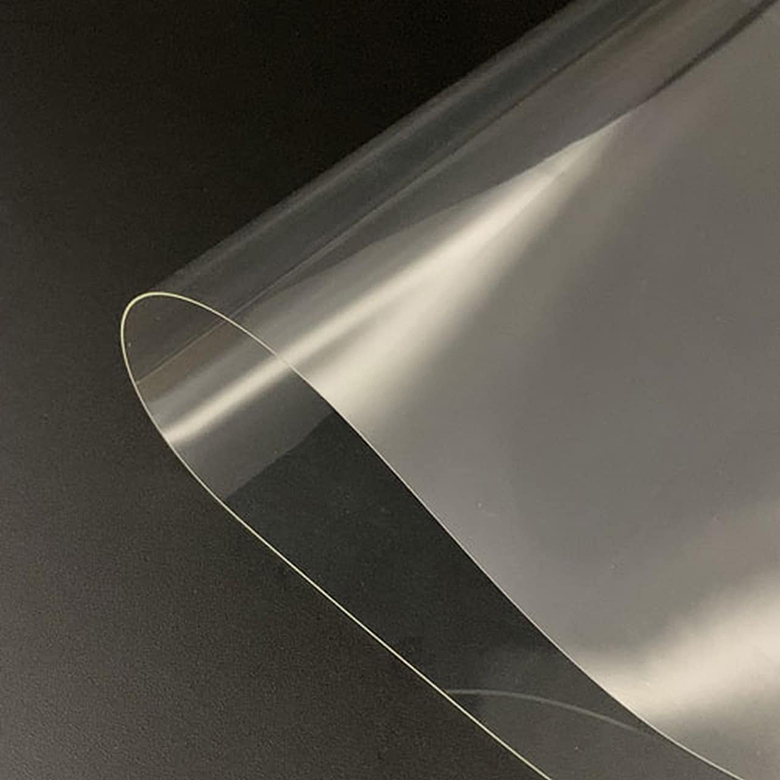
TPU film is a thin, flexible film made from thermoplastic polyurethane, an elastomer that combines rubber-like flexibility with thermoplastic processing. Depending on its formulation, TPU film can be clear or colored, soft or relatively firm, breathable or barrier-oriented, and designed for welding, lamination, bonding or surface protection.
For buyers, “TPU film” is not one universal grade. Performance changes with the polymer chemistry, hardness, thickness, additives, surface finish and production method. The correct purchasing specification therefore begins with the end use, not simply with a request for “transparent TPU film.”
Material Selection
TPU Film Materials: Polyether, Polyester, Aliphatic and Aromatic
The chemistry terms used in TPU purchasing describe different parts of the polymer system. Polyether and polyester commonly refer to the polyol family; aliphatic and aromatic refer to the isocyanate family. They are not always mutually exclusive categories, so request the supplier's exact grade description when performance matters.
Water / Hydrolysis Direction
Polyether TPU Film
Polyether TPU is commonly considered when the finished product faces repeated moisture, water contact, hydrolysis risk or low-temperature flexing. Typical project directions include hydration bladders, waterproof bags, inflatable air chambers, outdoor equipment and selected medical or hygienic constructions.
Ask about: hydrolysis testing, cold-flex behavior, weldability, film clarity and the real service environment.
Abrasion / Mechanical Direction
Polyester TPU Film
Polyester TPU is frequently evaluated where abrasion resistance, mechanical strength, oil contact or firm lamination performance is important. It can be suitable for protective layers, footwear components, industrial membranes and technical textile lamination.
Ask about: oil and chemical exposure, abrasion test method, tensile/tear data and moisture conditions.
Optical / Weathering Direction
Aliphatic TPU Film
Aliphatic TPU grades are often chosen for applications where long-term appearance, light stability and optical clarity are priorities, including clear protection and selected automotive or outdoor uses. Exact UV and yellowing performance should be confirmed with the grade-specific test data.
General-Purpose / Cost-Performance Direction
Aromatic TPU Film
Aromatic TPU can be a practical option for many industrial and textile applications when the film is not selected primarily for long-term exterior optical clarity. It is widely used across flexible film and bonding programs, but outdoor color stability should be checked before specification.
Buyer shortcut: choose the chemistry after defining water exposure, oil/chemical contact, sunlight, transparency, skin-contact requirements, service temperature and expected processing method. A sample trial on the actual downstream equipment is usually more useful than choosing from a generic brochure description alone.
Size & Gauge Guide
How to Choose TPU Film Thickness, Width and Roll Format
Thickness influences flexibility, puncture resistance, weight, transparency, heat response and handling. The correct gauge depends on the finished product and should be validated with the actual lamination, welding or forming process.
Clear windows, air chambers, protective layers, reinforced textile composites and OEM components
Crease behavior, puncture resistance, sealing parameters, surface finish, roll flatness
0.30–1.00 mm
12–39 mil
Heavy-gauge flexible parts, industrial sealing, demanding membranes and abrasion-exposed components
Forming/welding heat, stiffness, weight, cooling time, dimensional tolerance
Width
DERFLEX TPU film programs can be discussed up to approximately 2.1 m wide depending on grade, thickness and production arrangement. Choose a width that reduces trim waste while remaining compatible with your laminator, cutter or welding table.
Roll Length
Roll length should be confirmed together with thickness, core, winding tension and packaging. A thicker or softer film may require a different roll length than a thin lamination film to maintain handling stability.
Tolerance
Do not buy by nominal thickness alone. Ask for the permitted thickness tolerance, width tolerance, roll-to-roll consistency and the measurement method used by the supplier.
Hand Feel & Handling
TPU Film Hardness, Transparency, Color and Surface Finish
Two films at the same thickness can behave very differently if their Shore hardness, surface finish or formulation changes. For OEM products, these parameters can affect folding, stretch, clarity, sealing and the perceived feel of the finished product.
Approx. 70A–80A
Softer Film Direction
Useful where drape, touch, conformability or repeated folding is important. Softer grades may require more attention to blocking, winding and dimensional handling.
Approx. 80A–90A
Balanced Film Direction
A common working range for flexible technical products that need a balance of softness, recovery, processing stability and mechanical performance.
Approx. 90A–95A
Firmer Film Direction
Considered where a firmer hand, dimensional stability or higher resistance to deformation is useful. Confirm that the grade still meets the required low-temperature and welding behavior.
Specification
Available Direction
Buyer Question
Appearance
Clear, translucent, tinted or colored
Is optical clarity functional, cosmetic, or not required?
Surface
Glossy, matte, frosted, textured or project-specific
Will the surface be laminated, printed, bonded, welded or directly exposed?
Hardness
Typical DERFLEX direction 70A–95A
Does the finished product need softness, recovery or dimensional firmness?
Functional additives
UV, antimicrobial, flame-retardant, hydrolysis-resistant or other project directions may be discussed
Which property is required, and which test standard will be used?
Conversion & Fabrication
Can TPU Film Be Welded, Laminated or Heat Bonded?
Yes, many TPU film grades are compatible with thermoplastic fabrication methods, but the correct processing window depends on chemistry, thickness, hardness, additives, substrate and equipment. Confirm the exact grade before production.
RF / HF Welding
Common for selected TPU films and TPU-coated textiles when strong sealed seams are required.
Hot-Air Welding
Useful for fabricated bags, inflatable products and technical textile assemblies when grade and seam geometry are compatible.
Heat Bonding
Applied to film-to-film or film-to-textile structures depending on melting/softening behavior and bonding target.
Lamination
TPU film can be combined with woven, knitted or nonwoven substrates to create waterproof, breathable or protective composites.
Cutting & Converting
Rolls can be slit, cut or converted for downstream assembly; winding and dimensional stability should match the process.
Recommended trial: test seam peel/strength, air or water leakage, visual appearance and repeated flexing on the actual substrate before releasing a production specification.
Applications
What Is TPU Film Used For?
TPU film is selected across industries because its properties can be tuned for very different product requirements. The end-use environment determines which grade is appropriate.
Waterproof Bags & Outdoor Gear
For dry bags, backpacks, clear windows, hydration systems and flexible outdoor components.
Water and fold exposure
Hot-air/HF welding compatibility
Low-temperature flexibility
Inflatable & Airtight Products
For bladders, cushions, air chambers, inflatable structures and flexible containment systems.
Air retention
Seam integrity
Puncture and fatigue resistance
Textile Lamination
As a functional film layer for waterproof, breathable, elastic or protective textile composites.
Bond strength
MVTR or barrier target
Hand feel and stretch
Medical & Hygienic Components
Selected grades may be used in cuffs, cushions, covers, barrier layers and skin-adjacent components.
Grade-specific compliance
Biocompatibility where required
Cleaning/chemical exposure
Automotive & Surface Protection
Clear or engineered TPU films are used in paint protection and other flexible protective structures.
Optical clarity
Weathering/yellowing data
Coating and adhesive compatibility
Footwear, Apparel & Transfer
TPU film can support reinforcement, decorative transfer, labels and flexible bonding constructions.
Soft hand feel
Stretch recovery
Wash and bonding validation
Material Comparison
TPU Film vs PVC Film vs PE Film
No single film is the correct choice for every project. Use the comparison below as a screening tool, then confirm the final choice with grade-specific samples and test data.
Buying Factor
TPU Film
PVC Film
PE Film
Elastic recovery
Typically strong; grade-dependent
Flexible, but recovery depends on formulation/plasticizer system
Generally lower for commodity grades
Abrasion / puncture direction
Often selected for demanding flexible protection
Good for many curtains, covers and flexible sheet uses
Suitable for many packaging and lower-demand uses
Cold flexibility
Selected grades can remain flexible at low temperatures
Depends strongly on formulation
Varies by PE grade
Welding / fabrication
RF/HF, hot air or heat bonding depending on grade
Widely used for RF/HF and hot-air fabrication
Heat sealing is common; RF suitability differs
Clear premium applications
Strong option when elasticity and abrasion resistance are needed
Practical and cost-effective for many clear sheet uses
Common where optical and elastic requirements are less demanding
PVC-free requirement
Yes, by material family
No
Yes
Cost direction
Usually higher than commodity PE/PVC film
Often economical for general flexible sheet
Often the lowest-cost direction for basic film uses
Purchasing Checklist
How to Buy TPU Film Without Over-Specifying or Under-Specifying
A useful RFQ should describe the finished product and the required test conditions. This reduces sample rounds and makes quotations easier to compare.
Define the end product. State whether the film becomes a bladder, bag, laminate, clear window, protective layer, medical component or transfer film.
Describe the service environment. Include water, humidity, oil, UV, skin contact, temperature range, abrasion and cleaning chemicals.
Choose the TPU chemistry. Ask for polyether or polyester; if optical/weathering matters, clarify aliphatic/aromatic grade information.
Set thickness and tolerance. Give target gauge plus acceptable variation instead of only a nominal thickness.
Confirm width and roll format. Include finished width, slit width, core, roll length, winding preference and packing limits.
Specify hardness and surface. State Shore A target, clear/matte/frosted finish, color and any texture requirements.
Identify the processing method. RF/HF welding, hot air, lamination, adhesive bonding, heat transfer, cutting or thermoforming may require different grades.
Ask for test methods. Compare tensile, tear, abrasion, hydrolysis, MVTR, UV or biocompatibility data only when the test method and grade are clear.
Validate a sample. Run the film on the real machine and substrate; inspect bonding, seam strength, appearance and repeated-use performance.
Plan repeat supply. Confirm batch identification, packaging, lead-time expectations and what parameters are controlled from lot to lot.
DERFLEX Supply Approach
Choose the Film Around the Finished Product
DERFLEX supports TPU film and TPU technical textile projects with application-based discussion of material chemistry, thickness, hardness, width, surface and processing method.
For OEM buyers, converters and distributors, this approach is intended to make sample evaluation and specification confirmation more practical before bulk production.
Support for TPU film, TPU coated fabric and TPU laminated fabric helps buyers evaluate the complete material system.
Custom Specification
Thickness, width, hardness, surface, color and functional directions can be discussed against the application.
Processing-Oriented Selection
Welding, lamination, bonding and downstream conversion requirements are considered before grade confirmation.
Sample-to-Production Workflow
Buyers can use samples to verify real processing and end-product performance before moving to repeat supply.
Product ranges and performance depend on TPU grade, thickness, additives, processing conditions and end-use design. Values on this page are selection directions rather than universal guarantees. Confirm the final specification, test method and acceptance criteria in the quotation/sample approval process.
Related DERFLEX Resources
Continue Your TPU Material Selection
These six internal pages connect TPU film chemistry with transparent film, coated textiles, clear roll goods, coating/lamination systems and transfer applications.
TPU film is made from thermoplastic polyurethane, a segmented polymer whose properties can be tuned through its polyol, isocyanate, hardness, additives and processing. Buyers commonly encounter polyether and polyester TPU film, plus aliphatic or aromatic grade descriptions.
Is TPU film waterproof?
Many non-porous TPU films are used as water-barrier layers and can be welded into waterproof structures. However, some TPU films are intentionally breathable, so waterproofness, hydrostatic pressure and seam performance should be verified for the specific grade and construction.
Which is better for water exposure: polyether or polyester TPU film?
Polyether TPU is commonly evaluated for repeated moisture and hydrolysis exposure, while polyester TPU is often selected for abrasion, mechanical strength and oil-resistance directions. The actual choice should be based on the service environment and grade-specific test data.
What TPU film thickness should I buy?
There is no universal thickness. Thin films may suit textile lamination or breathable structures, medium gauges may suit bags and flexible protection, while thicker gauges may suit industrial sealing or heavy-duty components. Start from the finished product, then test the selected gauge on the actual process.
Can TPU film be RF welded?
Many TPU grades are receptive to RF/HF welding and may also be processed by hot-air welding or heat bonding. Compatibility depends on chemistry, thickness, additives and the substrate, so production settings should be established through trials.
Is TPU film the same as polyurethane film?
TPU film is a type of polyurethane film, specifically thermoplastic polyurethane. The broader term “polyurethane film” can also be used for other polyurethane systems, so a technical purchase order should identify TPU chemistry and the exact grade rather than rely on the general PU label.
Start With Your Application
Need a TPU Film Specification for Your Project?
Send DERFLEX your end use, target thickness, width, hardness, surface, color, processing method, service environment and test requirements. The quotation can then be built around a more relevant TPU film direction rather than a generic roll specification.