News
Industry News

TPU vs PVC Coated Fabric: Differences, Uses & Buyer Guide | DERFLEX

Update:2026/8/31 19:30:48 Views:
Coated Fabric Comparison · Buyer Guide

TPU vs PVC Coated Fabric: Which Material Should You Choose?

TPU coated fabric is usually the stronger starting point for premium welded products that need repeated folding, low-temperature flexibility, abrasion resistance, or a PVC-free material direction. PVC coated fabric is usually the more practical choice for large-area heavy-duty covers, tarpaulins, tents, curtains, and industrial programs where cost efficiency, wide roll options, established fabrication, and scalable supply matter most.

The correct choice is not decided by polymer name alone. Compare the full fabric construction, base textile, coating formulation, welding process, service temperature, chemical exposure, finished-product geometry, target market, and qualification test plan.

TPU vs PVC waterproof fabric Weldability & seam qualification Cold-flex & folding Abrasion & puncture Cost per finished product
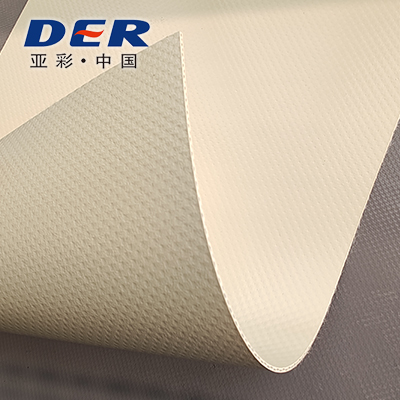
DERFLEX TPU coated fabric sample showing flexible coated textile surface
DERFLEX TPU coated fabric sample. Final selection should be confirmed against the intended welding process and finished-product test conditions.
Quick Answer

Choose TPU when performance justifies a premium material route: soft folding, repeated flexing, low-temperature use, abrasion-sensitive gear, welded air-holding products, or a buyer specification that requires a PVC-free coating. Choose PVC when the project prioritizes cost-efficient heavy-duty protection: truck tarps, large covers, tents, industrial curtains, broad outdoor use, and high-volume roll supply. For either material, qualify the actual grade and seam—not just the chemistry name.

TPU Coated Fabric vs PVC Coated Fabric

Buyer Comparison Matrix

This matrix shows typical procurement tendencies. It is not a universal ranking: base fabric, coating formulation, additives, coating weight, and fabrication quality can change the result.

Decision Factor TPU Coated Fabric PVC Coated Fabric Buyer Takeaway
Typical Positioning Premium technical products, foldable gear, inflatables, bladders, specialty welded structures Heavy-duty covers, tarps, tents, curtains, membranes and broad industrial roll programs Start with the finished product, not the polymer label.
Flexibility & Repeated Folding Often preferred where soft handling and elastic recovery matter Can be flexible, but heavier constructions are commonly stiffer Test fold radius and repeated flexing at the actual service temperature.
Low-Temperature Use Strong option with a suitable TPU grade Highly formulation-dependent; plasticizer system matters Request a cold-flex test at the lowest real operating temperature.
Abrasion / Puncture Direction Frequently selected for abrasion-sensitive and high-flex products Strong heavy-duty performance is available with the right scrim and coating weight Compare actual abrasion and puncture results for the proposed construction.
Waterproof / Airtight Construction Well suited to welded waterproof and air-holding structures when grade and seam are compatible Widely used for waterproof welded products; airtight suitability depends on formulation and construction Material waterproofness does not replace finished seam and leakage testing.
HF / Hot-Air Welding Compatible grades can be HF welded, hot-air welded, heat sealed or ultrasonically processed Mature HF and hot-air welding routes are widely used in industrial fabrication Requalify machine settings whenever material changes.
Weight & Hand Feel Can support lighter, softer product designs depending on base textile and coating Often selected in medium-to-heavy constructions where ruggedness and cost matter Compare finished-product mass and handling—not only gsm in isolation.
Outdoor UV & Weathering Grade and stabilizer dependent Grade, stabilizer and surface finish dependent Do not assume either chemistry is automatically UV-superior; require the relevant aging evidence.
Chemical / Oil Exposure Can be engineered for demanding chemical or oil exposure, but TPU chemistry must be selected correctly Can be formulated for many industrial environments; plasticizer and coating system influence resistance Provide the exact fluid, concentration, temperature and contact time in the RFQ.
PVC-Free Requirement Appropriate direction when the specification explicitly excludes PVC Not suitable when the product or brand specification requires PVC-free materials “PVC-free” is a material requirement, not proof of recyclability or overall environmental impact.
Material Cost Usually higher, especially for specialized performance grades Usually more cost-efficient for large-area industrial programs Compare cost per approved finished product, including yield, scrap, welding speed and service requirements.
Large Roll / Wide Fabric Programs Available by grade; current DERFLEX TPU page lists common widths around 1.4–3.2 m with custom options Current DERFLEX PVC manufacturer page lists widths from 1.02–5.10 m depending on construction PVC may reduce seams for some large-cover programs; confirm actual width for the selected structure.

Reference ranges above reflect current DERFLEX product-page information and are not a blanket specification for every grade. Final data should be confirmed against the selected material and approved sample.

Material Structure

Why TPU and PVC Behave Differently

The coating chemistry matters, but the reinforcement and manufacturing route can be just as important.

TPU Coated Fabric

TPU coated fabric combines a woven or knitted textile reinforcement—commonly nylon or polyester—with a thermoplastic polyurethane layer. DERFLEX offers single-side and double-side TPU coating directions for waterproof, airtight and weldable products.

For buyers evaluating TPU coated fabric specifications, the critical variables include base denier, TPU chemistry, coating side, thickness, hardness, surface finish, welding route and target service conditions.

  • Often chosen for repeated flexing and soft folding
  • Suitable for welded air- or liquid-holding designs when qualified
  • Available on nylon or polyester reinforcement
  • Hydrolysis resistance should be specified for hot/wet long-term use

PVC Coated Fabric

PVC coated fabric typically uses a reinforced polyester scrim encapsulated or coated with a plasticized PVC system. The construction is widely used for waterproofing, weather protection, abrasion resistance, color, surface finishing and fabrication.

DERFLEX's PVC coated fabric manufacturing page covers custom weight, width, color, finish, outdoor treatments and roll-supply options for industrial fabrication.

  • Mature, scalable route for large waterproof covers
  • Broad weight, finish and roll-width directions
  • Widely compatible with HF and hot-air welding in suitable grades
  • Cold behavior depends strongly on formulation and plasticizer package
Application Decision

Where TPU Usually Wins—and Where PVC Usually Makes More Sense

These are starting-point recommendations for sourcing. The final grade still needs application-specific qualification.

Application Typical Starting Point Why What to Verify
Dry Bags & Waterproof Backpacks TPU for premium programs; PVC for price-led programs TPU can support soft folding, abrasion resistance, low-temperature handling and premium feel Weld appearance, fold cycles, surface scuffing, color and total bag weight
Packrafts, Inflatable Boats & Air Bladders TPU often preferred Air retention, repeated folding, seam reliability and abrasion are central to the product Pressure, seam strength, puncture route, coating peel and repair method
Medical Air Cushions / Pressure Systems TPU grade selected to required regulatory and cleaning needs Soft surface and welded air containment can be important Exact compliance documentation, disinfectant exposure and validated cleanability
Flexible Water / Liquid Tanks TPU or PVC depending liquid, folding, cost and compliance Both can be engineered for containment; TPU may be attractive for foldability and abrasion-sensitive designs Liquid compatibility, seam test, pressure, fittings, migration/compliance requirements
Truck Tarps & Trailer Covers PVC usually practical Large surface area, robust weather protection, established fabrication and cost efficiency GSM, scrim strength, UV package, cold-crack requirement, lacquer, weld/sew method
Industrial Curtains & Equipment Covers PVC usually practical Wide range of weights, finishes, colors and heavy-duty constructions FR requirement, abrasion points, edge reinforcement, cleaning chemicals and panel width
Large Tents & Temporary Structures PVC usually practical Wide roll programs and cost-effective heavy-duty weatherproof construction FR standard, UV/weathering, weld strength, coating adhesion and outdoor design life
Fuel / Oil Bladders Specialty TPU may be evaluated; never select by generic TPU label Some TPU systems are developed for demanding fluid-contact applications Exact fuel/oil chemistry, temperature, permeation, seam compatibility and required certification
Featured-Snippet Decision Rules

Choose TPU or PVC in 30 Seconds

Use these rules as a shortlist before requesting samples.

Choose TPU Coated Fabric When…

  • The product will be folded, rolled or flexed repeatedly.
  • Cold-temperature flexibility is a key product requirement.
  • Airtight welded construction is central to the design.
  • Abrasion or puncture exposure is unusually important.
  • The brand or project specification explicitly requires PVC-free material.
  • The performance gain can justify a higher material cost.

Choose PVC Coated Fabric When…

  • The project uses large areas of heavy-duty waterproof fabric.
  • Cost efficiency is important for bulk roll programs.
  • Wide material and mature tarp/tent fabrication routes are valuable.
  • The product is a truck tarp, curtain, industrial cover, tent or general outdoor sheet.
  • You need broad options for surface finish, color and heavy-duty construction.
  • A PVC-free requirement does not apply.
Do not switch a proven PVC product to TPU—or TPU to PVC—without requalification. Welding temperature, pressure, dwell time, overlap width, cooling behavior, seam peel, surface friction, hardware reinforcement and shrink/relaxation can all change when the material system changes.
Information Gain

Six Questions Generic “TPU Is Better” Charts Usually Miss

A serious B2B material comparison should address the full production system, not just a short list of polymer properties.

1. Which TPU Chemistry?

“TPU” is not one grade. Hydrolysis resistance, softness, yellowing, chemical compatibility and processing behavior can vary. Hot and humid service should trigger an explicit hydrolysis-resistance discussion.

2. Which PVC Formulation?

PVC flexibility, cold behavior, migration, UV performance and regulatory profile depend on the plasticizer, stabilizer and additive package. “PVC” alone is not a complete specification.

3. What Base Textile?

Nylon and polyester can behave differently in tear, dimensional stability, moisture response and hand feel. Compare the complete coated textile rather than only the outer polymer.

4. How Will It Be Welded?

HF, hot-air, heat sealing and ultrasonic routes have different process windows. A material change requires machine-specific seam trials and approved welding parameters.

5. What Is the Real Cost?

Price per square meter is incomplete. Include cutting yield, roll width, seam count, welding speed, reject rate, packing volume, repairability and expected service requirement.

6. What Evidence Is Required?

Food contact, medical use, flame retardancy, chemical exposure, drinking-water use, migration limits and restricted substances need grade-specific documents. Chemistry names do not prove compliance.

Fabrication Engineering

How to Qualify a TPU-to-PVC or PVC-to-TPU Material Change

Use a controlled sample approval process before changing production material.

1

Freeze the Finished Product

Define dimensions, load/pressure, fold pattern, hardware, seam layout, environment and expected handling before comparing materials.

2

Run a Welding Window

Test multiple temperature / power, pressure, dwell and speed combinations. Record seam appearance and repeatability.

3

Test the Finished Joint

Evaluate seam peel/shear, leakage or pressure retention, reinforcement zones and performance after cooling and repeated flexing.

4

Approve a Golden Sample

Freeze fabric construction, color, surface, width, roll format and critical test criteria before bulk production.

For inflatable projects: review DERFLEX's TPU inflatable fabric page, then qualify the selected grade on your actual valve, seam design, pressure and welding equipment rather than using a generic material sample.
Cost Engineering

Compare Cost per Finished Product, Not Only Fabric Price

TPU usually starts at a higher material cost, but the correct sourcing decision depends on how material choice changes the entire manufacturing and product-value equation.

Cost Inputs Buyers Should Model

  • Material price per m² or kg
  • Usable roll width and cutting yield
  • Number and length of welded seams
  • Welding cycle time and operator throughput
  • Scrap / rework after seam qualification
  • Reinforcement and hardware requirements
  • Packaging volume and finished-product weight
  • Target retail / project positioning

When Higher TPU Cost Can Be Rational

TPU can make commercial sense when lower mass, soft folding, premium product positioning, cold-flex performance, abrasion demand or a PVC-free specification creates enough finished-product value to offset the higher material price.

For large static covers and general industrial protection, PVC often remains the stronger economic baseline because performance can be achieved with mature, broad, heavy-duty constructions.

Sustainability & Compliance

Is TPU More Environmentally Friendly Than PVC?

The safest procurement answer is: sometimes in a specific program, but not automatically.

TPU is a PVC-free thermoplastic route, which can be valuable when a brand or market specification excludes PVC. However, a TPU-coated textile is still a multi-material composite, and recyclability depends on actual construction, collection and recycling infrastructure. Likewise, a PVC coated fabric should be judged by its formulation, restricted-substance compliance, service life and end-of-life route—not by a generic label. Ask suppliers for the documentation required by your destination market and product category.

DERFLEX's recent application guide, what TPU coated fabric is used for, is useful when the material is being evaluated for dry bags, inflatables, marine safety, flexible tanks or welded technical components.

DERFLEX Reference Specifications

Current TPU and PVC Roll-Supply Directions

These are current DERFLEX published reference ranges and options, not a promise that every combination is available in one construction.

Specification Area TPU Coated Fabric Reference PVC Coated Fabric Reference
Base Textile Polyester or nylon High-tenacity polyester; optional special substrates by request
Published Weight Direction Approx. 90–1500 gsm depending on construction 350–1200 gsm standard on the current manufacturer page; heavier custom structures may be discussed
Published Width Direction Common 1.4–3.2 m, custom width available 1.02–5.10 m depending on structure, process and order requirement
Surface / Finish Matte, glossy, embossed or textile texture Glossy, matte, semi-matte, lacquered, printable and other application-specific finishes
Processing HF welding, hot-air welding, heat sealing and ultrasonic welding by compatible grade HF welding, hot-air / thermal welding, sewing, cutting and reinforced fabrication
OEM Variables Base denier, coating side, coating thickness, hardness, color, width, roll length, surface and packaging GSM, base fabric, color, width, surface finish, treatment package, roll length, label and packaging

For a current China sourcing view of TPU roll goods and program controls, see TPU coated fabric in China.

Image SEO Pack

DERFLEX TPU and PVC Coated Fabric Images

Real DERFLEX-hosted material and application images are used below so the page can support both product understanding and image-search visibility.

TPU coated fabric sample with flexible textured surface
TPU coated fabric: flexible technical textile for welded waterproof and airtight products.
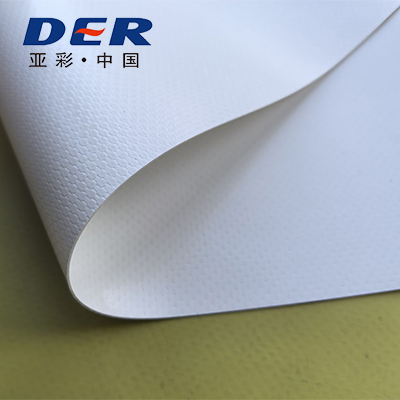
White PVC coated fabric sample showing reinforced coated textile structure
PVC coated fabric: reinforced coated textile widely used for industrial covers, tarps and fabricated structures.
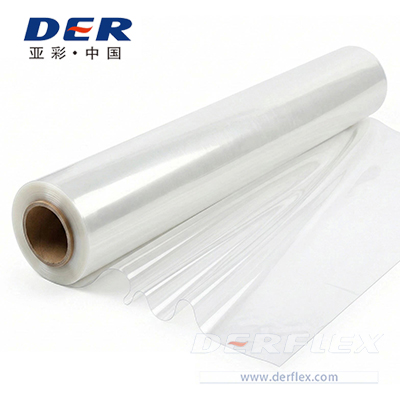
Clear TPU film roll used in lamination and technical waterproof material construction
TPU film: a related thermoplastic layer used in laminated and specialty flexible material constructions.
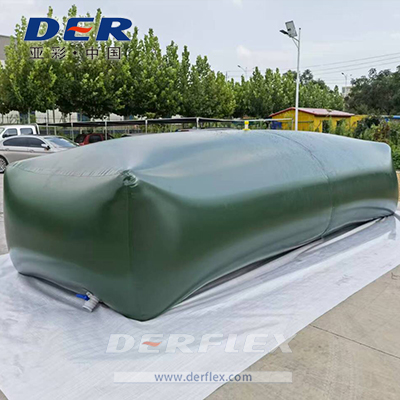
Large flexible bladder made from coated technical fabric
Flexible bladder application: illustrates why seam qualification, pressure and fluid compatibility matter beyond the coating name.
Common Procurement Mistakes

What Buyers Should Avoid

Comparing Only GSM

GSM does not reveal base yarn, coating distribution, adhesion, stiffness, weld behavior or puncture performance. Two fabrics with similar weight can behave very differently.

Assuming TPU Is Always “Better”

TPU can outperform in specific flex, cold and abrasion-driven applications, but it may add unnecessary cost to large static covers where a qualified PVC structure already meets the duty.

Assuming PVC Is Always the Cheapest Finished Route

Material price may be lower, but seam count, width utilization, labor, product weight, handling and reject rate can change the finished-unit economics.

Skipping Weld Trials

Using old welding settings on a new polymer or coating thickness can cause weak seams, burn-through, edge curl or inconsistent appearance.

Making Unsupported “Eco” Claims

Ask for material declarations and market-specific restricted-substance documents. PVC-free does not automatically mean recyclable, bio-based or low-impact.

Ignoring Repeat-Order Controls

Freeze the approved fabric structure, color, surface, weight, width, roll length, welding reference and critical tests so later batches are compared to the same baseline.

Send the Right Data for a TPU vs PVC Recommendation

DERFLEX can compare both material routes more usefully when the RFQ describes the finished product instead of only asking “TPU or PVC?”

  • Finished product / application
  • Base textile preference
  • Target GSM or thickness
  • Coating side
  • Roll width / cut size
  • Color and surface finish
  • Welding equipment / process
  • Pressure or airtight requirement
  • Lowest / highest service temperature
  • UV / outdoor exposure
  • Chemical or liquid contact
  • Required declarations / tests
  • Estimated quantity
  • Destination market / port
Request Material Comparison & Samples

For OEM programs, ask for a trial roll or representative sample large enough to validate your actual welding, folding and finished-product test sequence.

Related Questions

TPU vs PVC Coated Fabric FAQ

Short, direct answers to the questions buyers most often ask during material selection.

Is TPU coated fabric better than PVC coated fabric?

Not universally. TPU is often the stronger option for repeated folding, low-temperature flexibility, abrasion-sensitive products, airtight welded structures and PVC-free programs. PVC is often the more practical option for large heavy-duty covers, tarpaulins, tents, curtains and cost-sensitive industrial roll supply.

Is TPU more waterproof than PVC?

Both TPU and PVC coated fabrics can be engineered to be waterproof. For finished products, seam design and welding quality often determine leakage performance. Air-holding or liquid-containment products should be evaluated with finished seam, pressure and leakage tests rather than only a fabric waterproof rating.

Which is better for inflatable products, TPU or PVC?

TPU is frequently preferred for premium inflatable products that require soft folding, abrasion resistance, air retention and low-temperature performance. PVC can still be suitable for cost-driven inflatables or large structures when the formulation, base fabric and welding process are correctly engineered.

Which is better for truck tarps and heavy-duty covers?

PVC coated polyester is usually the practical starting point because it offers mature heavy-duty constructions, broad roll widths, weather protection, established fabrication routes and strong cost efficiency for large areas.

Can TPU and PVC coated fabrics both be RF welded?

Compatible grades of both materials can be processed with high-frequency welding, and both may also be suitable for hot-air or other thermal joining methods. The exact welding window depends on coating chemistry, thickness, base fabric, machine setup and seam design, so sample trials are required.

Is TPU coated fabric more environmentally friendly?

TPU provides , a PVC-free thermoplastic route, which can support projects that exclude PVC. That does not automatically make every TPU coated textile recyclable or lower-impact. Buyers should evaluate the full material construction, restricted substances, product life, repairability and actual end-of-life route.

Does TPU last longer than PVC coated fabric?

There is no universal service-life ranking. Durability depends on the actual TPU or PVC formulation, coating adhesion, base textile, UV exposure, temperature, abrasion, chemicals, seam design, maintenance and application. Compare the proposed grades using the tests that represent your real duty cycle.

What should I send a supplier to compare TPU vs PVC for my product?

Send the application, product dimensions, base textile direction, target weight or thickness, width, color, surface, welding method, fold cycle, working temperature, UV exposure, liquids or chemicals, pressure or airtight requirements, required compliance documents, quantity and destination. That information allows a supplier to recommend a testable material construction rather than a generic polymer.

Related DERFLEX Materials

Continue Your Material Evaluation

Use these related pages as the next step after the comparison.

TPU Coated Fabric

Review TPU coated nylon, polyester, single-side and double-side directions for waterproof and welded technical products.

Review TPU coated fabric →

PVC Coated Fabric

Compare heavy-duty PVC coated polyester roll supply for tarps, covers, tents, curtains and OEM fabrication.

Review PVC coated fabric →

Technical Coated Fabrics

See the broader coating portfolio when TPU and PVC are not the only material options under consideration.

Explore technical coated fabrics →
Consulting Services
+86-021-54361792 / 54361798
Email
sales@derflex.com