



Why Do Tarps Shrink?Heat, Fabric Structure and Size Stability
A tarp that no longer fits needs a better diagnosis than “add extra material.” Identify the role of heat, moisture, fabric construction and measurement before changing your order.
For tarp fabricators, equipment-cover OEMs and project buyers, this guide turns a fit problem into measurable requirements. DERFLEX supplies PVC coated polyester materials and custom tarp options for size, GSM, color, seams and reinforcement. Send the installation drawing and exposure conditions for a specification review.
Tarps can shrink when heat allows stretched synthetic components to relax, moisture changes a cotton fabric’s structure, or manufacturing tension is released. The result depends on the complete material and its exposure. An apparently undersized tarp may instead reflect hems, folds, measurement conditions or a cut-size label. Confirm a permanent dimensional change before treating it as shrinkage.
Is the tarp shrinking, or does it only look smaller?
Actual tarp shrinkage is a reduction between comparable measurements of the same material. A difference between the advertised size and a folded delivery does not establish shrinkage.
| What you observe | Possible explanation | What to check next |
|---|---|---|
| Short from the first delivery | Nominal cut size, hem consumption, seam overlap or a fabrication error. | Compare the order’s finished-size definition with the approved drawing and delivery measurements. |
| Looks short while folded or wrinkled | Creases or a curved measurement path can hide usable span. | Unfold, condition and lay flat without pulling it to the nominal size. Measure between defined reference points. |
| Fit changes between hot and cool conditions | Temperature response, restraint or a changing applied load. | Compare after returning to the same reference conditions and tension state. Check whether the change remains. |
| Smaller after wetting, drying or heat exposure | Residual shrinkage or relaxation of the textile or film structure. | Measure length and width separately after reconditioning; compare with an unexposed control where available. |
| Puckering mainly beside a welded seam | Local heating, seam geometry or differential behavior of fabric and reinforcement. | Inspect the seam and nearby material separately. Do not infer whole-sheet shrinkage from a curled edge. |
Separate two purchase requirements: finished-size tolerance at delivery and dimensional change after an agreed exposure. The DERFLEX guide to tarp production tolerances covers the first; this page focuses on the second.
Why the material changes the answer.
Cotton canvas, woven PE and PVC coated polyester are different systems. “Waterproof,” “heavy duty” and a high GSM do not, by themselves, define dimensional stability.
Can heat make a tarp shrink?
Yes, if the material retains stresses that can relax at the exposure temperature. Drawn synthetic components can shorten as their structure relaxes. Polyester research shows that earlier heat-setting conditions affect later thermal shrinkage.[1]
A warm sheet may also expand or soften. Temporary temperature response and shrinkage remaining after cooling are different effects; their balance in a reinforced tarp must be checked on the actual construction.
Why does cotton canvas shrink?
Water swells cotton fibers and changes how yarns sit in the fabric. Wetting, drying and relaxation can change yarn crimp and the fabric’s dimensions. It is more accurate to consider the fabric structure than to assume every fiber simply becomes shorter.[2]
The finish and previous conditioning matter. Treated or preshrunk canvas can still have residual dimensional change; obtain data for that canvas grade and the intended wet/dry conditions.
Why do length and width behave differently?
Warp and weft yarns can differ in structure and processing tension. Coating, finishing and restraint during manufacture also affect composite behavior. Tension control during coating is one documented route to improved dimensional stability.[3]
Check both directions. “High-tenacity polyester” describes strength; it does not establish a particular shrinkage limit. Confirm the base fabric and exposure requirements when selecting PVC coated polyester tarpaulin.
PVC tarp vs PE tarp vs canvas: compare the cause, not a generic percentage.
Use this matrix alongside the DERFLEX tarp material and application range. These are material selection considerations, not measured shrinkage ratings for a specific product.
| Material system | Size-stability consideration | What the buyer should request |
|---|---|---|
| PVC coated polyester / vinyl tarp | The reinforcing textile, coating and production history work together. Waterproofing does not remove the need to evaluate residual thermal change. | Exact base fabric and coating reference, length/width change under agreed exposure, plus a check of the welded finished assembly. |
| Woven polyethylene / poly tarp | Low water absorption does not prove heat stability. Oriented PE components can have thermal shrinkage; tape processing and lamination must be considered.[4] | Data for the actual laminated fabric, intended surface temperature and exposure duration. Avoid substituting shrink-wrap film data. |
| Cotton canvas tarp | Wetting and drying can alter the weave. Treatment and prior relaxation influence the remaining change. | Canvas composition and finish, previous conditioning, directional wet/dry change and an agreed finished-size basis. |
What does “low-shrink tarpaulin” actually mean?
A usable claim needs a material reference, test method, temperature, time, restraint, measurement condition and limits for both directions. A service-temperature rating alone does not promise size retention. Results for an unreinforced PVC film also do not establish the result for a polyester-reinforced tarp.
How to measure tarp shrinkage.
Compare like with like: the same reference points, units, conditioning and applied tension. Measure the overall cover for fit and marked spans within the material to help distinguish field change from edge or seam effects.
Condition and record.
Unfold the tarp and let it reach the agreed reference condition. Record the material/lot, finished dimensions, ambient conditions and measurement state. Do not stretch it until it matches the label.
Mark two directions.
Define repeatable length and width reference points. Record the original spans L₀ and W₀. Identify warp and weft from the roll direction or supplier records; do not assume they match the finished cover’s long and short sides.
Use an agreed exposure.
For qualification, have the supplier or laboratory apply the selected heat, water or use simulation. Define temperature, duration, cycles and whether the specimen is free or restrained. Retain a control specimen where practical.
Recondition and compare.
Return to the original measurement conditions and load state. Record L₁ and W₁, calculate the change in each direction and inspect seams and hardware. A repeat exposure can help determine whether the change has stabilized.
Tarp dimensional-change calculator
Enter your baseline and final measurements. This calculates an observed change; it does not predict future shrinkage or establish a pass/fail limit.
- Length change
- 1.00%Shrinkage · 60 mm shorter
- Width change
- 0.50%Shrinkage · 20 mm shorter
- Area change
- 1.50%Shrinkage · calculated from both dimensions
Worked example: 6000 × 4000 mm becomes 5940 × 3980 mm. Length loss is 1.00%, width loss is 0.50% and area loss is 1.495% (displayed as 1.50%). These are illustrative inputs, not a tested DERFLEX specification.
Choose a method that matches the material and exposure.
- ISO 3759 addresses preparation, marking and measurement for textile dimensional-change assessments; it does not supply a universal tarp acceptance limit.[5]
- ISO 7771 addresses dimensional changes from cold-water immersion. A water-immersion result does not establish heat stability.[6]
- ASTM D1204 addresses elevated-temperature linear change of nonrigid thermoplastic sheeting or film. Its scope must be reviewed before applying it to a reinforced coated textile or finished tarp.[7]
Agree the applicable procedure with the supplier and testing laboratory. Method references here explain scope; they do not claim DERFLEX certification or a completed test for any offered material.
What to specify for a size-stable tarp.
Replace “must not shrink” with a material reference, a reproducible exposure and measurable limits. Define the delivered fit and the permitted change during qualification separately.
| Requirement | Include in the purchase specification | Why it matters |
|---|---|---|
| Material identity | Coating/lamination route, polyester base fabric reference, GSM, finish and lot identification. | A heavier material or a similar-looking replacement is not automatically equivalent. |
| Delivery dimensions | Finished drawing, units, reference points, seam and hem layout, critical attachment coordinates and size limits. | Cut dimensions do not define the usable cover or its hardware interfaces. |
| Exposure | Expected surface temperature, duration, cycles, moisture conditions and contact with hot equipment, if applicable. | Air temperature alone may not represent the actual fabric exposure. |
| Test configuration | Applicable method, specimen and gauge layout, free/ restrained state, conditioning and remeasurement conditions. | A loose sample and a restrained assembly can behave differently. |
| Acceptance limits | Separate length and width limits, permitted expansion where relevant, and post-exposure fit limits for critical interfaces. | A single area percentage can hide a problem in one direction. |
| Qualification & repeat supply | Approved material and assembly samples, agreed sampling plan, recorded results and approval of relevant construction changes. | A new base cloth, coating or seam process can require renewed review. |
Match the requirement to the way the cover is used.
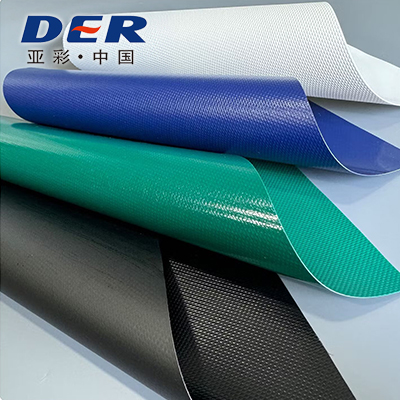
Roll goods for tarp fabricators
Qualify the material in both directions, then make a representative welded panel. Review cutting, seam overlap and edge reinforcement before adding a size allowance to the pattern.

Truck curtains & repeated fitting
Check attachment pitch, tensioning travel and fit after representative conditioning. A stretched reading during installation cannot be compared directly with an unloaded reading after removal.
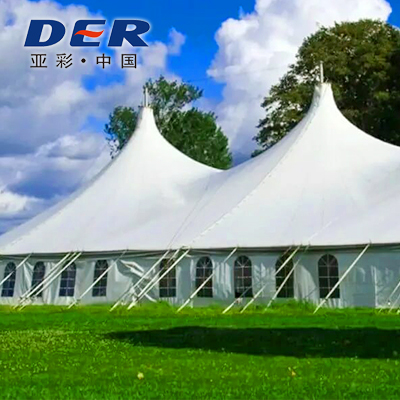
Frame-mounted tents & canopies
Supply the frame drawing and fixing details, then validate the assembled cover. For tent tarpaulin and canopy fabric, membrane fit and tension require review as a system.
How to reduce shrinkage-related fit problems.
Define the heat exposure.
Keep the cover within its confirmed service conditions. Do not use a flame, heat gun or hot-water treatment as an improvised way to restore dimensions.
Control fabrication tension.
Use repeatable handling and cutting conditions. Measure representative panels after seam fabrication and conditioning, rather than only checking fabric before welding.
Allow adjustment where the design needs it.
Discuss fastening travel and fit allowances for repeated installation. Over-tensioning to recover lost span can overload seams and attachments.
Keep material and assembly records.
Retain the approved reference, baseline measurements and exposure results. Investigate a change in fit before adding a blanket percentage to the next bulk order.
Put the required fit in the next quotation.
DERFLEX’s PVC coated fabric and custom tarp supply scope lets OEM buyers, importers and distributors discuss the base material, finish and finished construction together. Options include custom GSM, width, color, welded seams, reinforced edges and attachment details, subject to the selected product and production feasibility.
The DERFLEX quality-control program includes dimensional checks for material weight, thickness, width and roll length. If residual shrinkage is critical, request a specific qualification and reporting scope before sample approval.
Review custom PVC tarp fabrication options, then send, your drawing, exposure profile, quantity and destination. Ask for the proposed material, sample route, test feasibility, price, MOQ and lead time.
Dimensional-change limits and any testing must be confirmed in the agreed specification. A generic “low shrink” description is not an approved acceptance criterion.
Copy the outline, complete the details and include it with your quotation request.
Tarp shrinkage FAQ
Do PVC tarps shrink in the sun?
PVC coated polyester tarps can undergo dimensional change under heat, but sunlight does not produce one predictable shrinkage rate. The reinforcement, coating, previous thermal processing, restraint and exposure all matter. Compare dimensions after returning to the same reference conditions, and request test data for the exact material.
Does rain make every tarp shrink?
No. Cotton canvas can change dimensions through wetting, drying and structural relaxation. PE and PVC coated fabrics have different moisture behavior, so a canvas shrinkage allowance should not be transferred to them. Water resistance alone does not establish dimensional stability for any material.
What is an acceptable tarp shrinkage percentage?
There is no universal percentage for every tarp. Agree the material, exposure method, temperature, duration, restraint, conditioning and separate length and width limits. A fitted curtain or canopy may need tighter fit control than a loosely draped storage cover. The supplier must confirm feasibility.
Does a heavier tarp shrink less?
Not necessarily. GSM measures mass per unit area, rather than residual dimensional change. Two tarps of similar weight can use different base fabrics, coatings and manufacturing conditions. Select the complete construction and its qualification data, rather than using weight as a shrinkage guarantee.
Should I order an oversized tarp to allow for shrinkage?
Use a validated dimensional-change result and the installation drawing to decide any allowance. First confirm finished size, hems, seam overlap, required drop and attachment coordinates. Adding an arbitrary percentage can cause loose fabric or misaligned fixings without solving the material problem.
Can a shrunken tarp be stretched back to its original size?
If the apparent loss comes from folds or different measurement conditions, conditioning and careful flattening may improve the measured span. Permanent material shrinkage cannot be assumed to recover reliably. Avoid forced stretching or improvised heating; document the change and review repair or replacement with the supplier.
& exposure reviewRequest a Quote ↗