


Why Truck Tarps Tear at Highway Speed
A truck tarp that looks secure in the yard can begin snapping, billowing or tearing once road speed turns small areas of slack into repeated aerodynamic loading.
The failure rarely comes from “wind” alone. Highway tearing usually develops through a chain of movement, abrasion and concentrated load at grommets, D-rings, hems, seams, corners or cargo contact points. This guide shows how to read that chain and specify a better replacement.
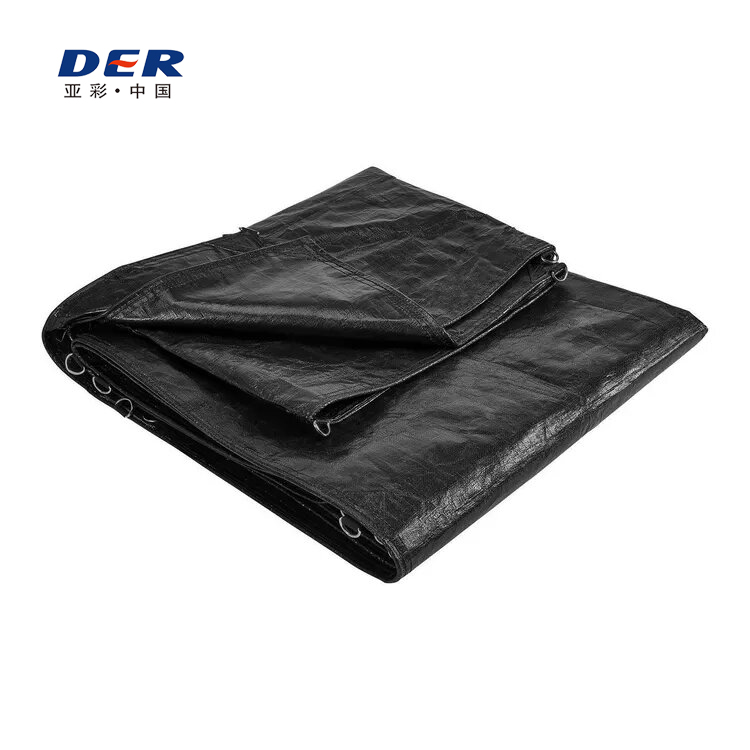
Truck tarps tear at highway speed because relative airflow creates pressure, suction and flutter that repeatedly cycles load through weak or moving parts of the cover. A loose span can billow, snap back and rub against cargo; the resulting force concentrates at hems, grommets, D-rings, seams and corners. Once a small cut or abrasion point forms, continued flapping can propagate that defect into a long tear. A heavier tarp may help some wear conditions, but it will not correct poor fit, uncontrolled slack, sharp contact or weak reinforcement.
Why Speed Changes the Failure Mechanism
At road speed, a truck tarp stops behaving like a stationary cover and becomes a flexible aerodynamic surface. The faster the relative air moves, the faster wind-related loading grows. That is why a tarp can look acceptable at 20–30 mph yet begin flapping violently at highway speed.
Dynamic pressure is proportional to the square of relative air velocity. If relative airspeed doubles, the aerodynamic loading potential rises by roughly four times before vehicle shape, tarp geometry and local flow effects are considered. For broader design context, see the DERFLEX tarpaulin wind load guide.
| Relative Air Speed | Approx. Dynamic Pressure* | What the Tarp May Experience |
|---|---|---|
| 40 mph | 196 Pa / 4.1 psf | Loose edges begin to flutter; small geometry issues become visible. |
| 50 mph | 306 Pa / 6.4 psf | Billowing and cyclic edge loading increase if wind can enter under the cover. |
| 60 mph | 441 Pa / 9.2 psf | Unsupported spans and weak attachment zones can see repeated shock loading. |
| 70 mph | 600 Pa / 12.5 psf | Existing cuts, abrasion lines or weak hems can propagate much faster. |
| 80 mph | 783 Pa / 16.4 psf | High relative flow strongly magnifies fit, hardware and reinforcement problems. |
*Illustrative dynamic pressure values using standard sea-level air density and steady relative flow. They are not a finished tarp or vehicle rating.
Seven Failure Mechanisms Behind Highway-Speed Tarp Tears
The first damaged location is usually more useful than the overall age of the tarp. Read the tear pattern before simply ordering a heavier replacement.
Wind Flapping & Flex Fatigue
Loose material repeatedly snaps in the airflow. Every cycle bends the coated textile, pulls the edge and can accelerate fatigue at folds, hems and attachment zones.
Billowing from Wind Entry
When air gets under a front, side or rear edge, the cover can inflate like a shallow sail. The larger the unsupported pocket, the more force must be transferred to discrete anchors.
Sharp-Edge Abrasion
Steel corners, lumber bands, trailer rails and machinery protrusions create a local weak point. Highway movement then rubs the tarp against that point until the coating and scrim are cut.
Grommet Pull-Out
A metal eyelet does not make the surrounding fabric stronger by itself. Poor backing, diagonal pull, excessive local tension or wide unsupported spacing can turn one grommet into the start of a tear. DERFLEX explains the full test logic in its grommet pull-out strength guide.
D-Ring / Webbing Overload
A D-ring can distribute directional load better than a bare eyelet only when the webbing, patch and parent fabric are designed as one load-transfer zone.
Seam & Hem Stress
Panel joins and reinforced edges have different stiffness from the center fabric. Poor overlap, process control or seam placement can make a joint the weakest part of the highway load path. Compare joint choices in the DERFLEX welded vs sewn seam strength guide.
07 · The Hidden Multiplier: Poor Fit
An oversized tarp may seem safer because it provides extra coverage, but excess material creates unsupported spans that can flap and abrade. An over-tightened tarp creates the opposite problem: too much load is forced into a few grommets or corners. The goal is controlled geometry and distributed tension—not maximum tightness. For truck-specific finished geometry, review custom truck tarp construction.
Read the Damage Pattern Before Replacing the Tarp
Failure diagnosis should start at the first visible damage point. The same “torn tarp” complaint can have completely different root causes and therefore needs a different replacement specification.
| Observed Damage | Most Likely Mechanism | What to Inspect | Better Specification Direction |
|---|---|---|---|
| Tear begins directly beside a grommet | Point loading, weak hem/backing, diagonal pull or flapping between fixing points | Pull direction, hem depth, reinforcement layer, grommet position, anchor spacing | Spread load with stronger backing, aligned anchors, reinforced webbing or an improved hardware map |
| Diagonal tear from a corner | Multiple tension directions converge into a small area | Corner patch geometry, seam intersections, strap routing, cargo shape | Larger reinforcement patch, cross-webbing or revised attachment geometry |
| Long polished/scuffed line before tearing | Abrasion against steel, rail, banding, timber edge or hardware | Recurring contact line on cargo and trailer | Edge protectors plus local wear strip or sacrificial patch |
| Seam opens while center fabric remains intact | Joint design/process weaker than parent fabric | Overlap width, weld/sew method, process window, seam direction | Qualified seam construction and revised location away from concentrated stress |
| Large loose panel shreds without obvious sharp contact | Wind flutter / billowing / repeated impact | Finished size, front edge, unsupported spans, tie-down balance | Closer fit, shorter spans, better windward-edge control and distributed tension |
| Same location fails on every replacement | Recurring geometry, contact or load-path problem | Vehicle hardware, cargo profile, fixed anchor map, local abrasion source | Change the design around that recurring stress zone instead of cloning the old tarp |
Does a Heavier Truck Tarp Stop Highway Tearing?
No—not by itself. Higher fabric weight can help in selected abrasion, puncture and handling conditions, but finished GSM does not tell you how force moves through the tarp.
Two truck tarps with similar weight can use different yarn sizes, weave densities, coating add-on, seam construction and reinforcement. A loose heavy tarp can still flap, and a high-strength center panel can still fail around an under-reinforced grommet.
Increase Fabric Weight When…
- The existing center panel is being punctured or abraded in broad areas.
- The duty cycle requires more robust handling and repeated folding.
- The stronger grade also improves the required tear/tensile behavior.
Do Not Use Weight to Mask…
- Excess slack and wind billowing.
- Sharp cargo edges or exposed trailer hardware.
- Weak hems, poor seam placement or concentrated attachment load.
What a Highway-Duty Truck Tarp Specification Should Control
The road-performance question is not “How thick is the vinyl?” It is “Can the complete cover move aerodynamic load from the panel into the truck without allowing uncontrolled flutter, cutting or local overload?” The main DERFLEX truck tarpaulin page covers the broader finished-cover and OEM product family.
Material Structure
Review polyester reinforcement, warp/weft behavior, tear resistance, tensile strength, coating adhesion, flexibility and abrasion exposure as a package.
Panel & Seam Layout
Keep unnecessary seam intersections out of high-load zones. Qualify welded or sewn joins for the actual fabric and expected load direction.
Windward Edge
The front exposed edge needs controlled fit, continuous reinforcement and usable fixing points so airflow cannot easily lift the cover.
Reinforced Perimeter
Folded hems, webbing, rope-in-hem, patches or additional coated-fabric layers can spread force into a wider area of sound parent fabric.
Hardware Load Path
Grommets, D-rings, buckles and straps should match the real vehicle anchors and intended pull direction. Hardware spacing should not be copied blindly from a generic tarp.
Finished Fit
Finished length, width, drop, flap geometry and cargo profile determine how much unsupported fabric can move at speed.
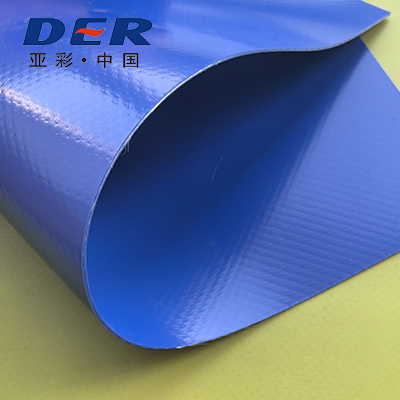
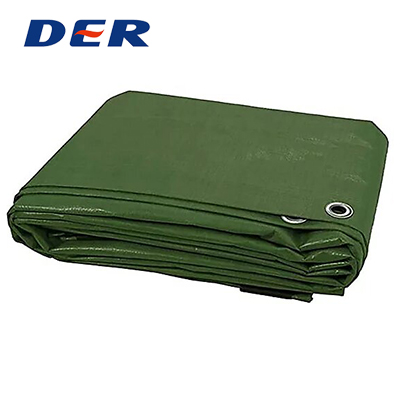
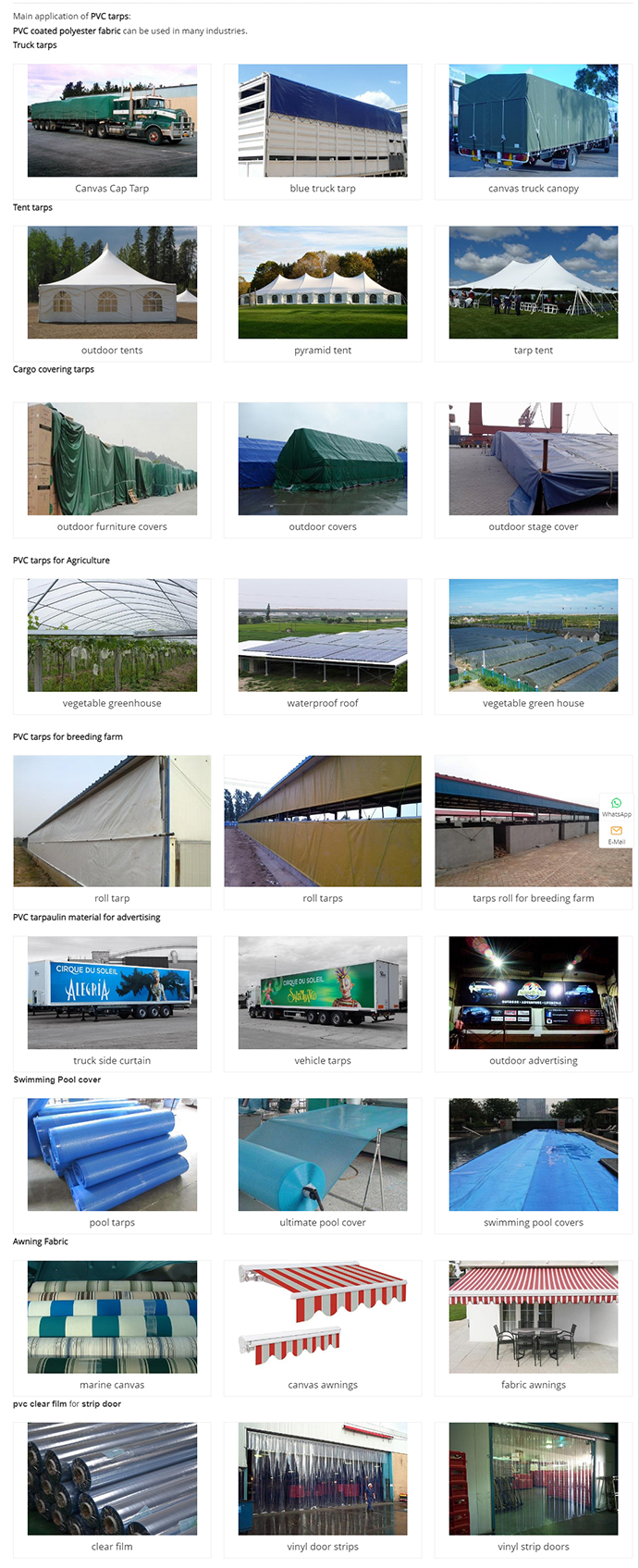
DERFLEX Image Reference: Material, Finished Tarp and Road Applications
Real product imagery helps procurement teams connect material construction with finished cover details and transportation use.
Highway Application Decision Matrix
Use the application to decide where to spend engineering effort. These are specification directions, not universal wind ratings.
| Truck / Load | Dominant Highway Risk | Priority Details | Buyer Should Send |
|---|---|---|---|
| Flatbed lumber | Large drops, flutter, banding and rough edges | Deep-drop fit, multiple attachment rows, abrasion protection, reinforced corners | Loaded profile, drop depth, strap layout, recurring wear zones |
| Flatbed steel / machinery | Sharp contact + wind movement | High tear resistance, sacrificial wear patches, corner protection, controlled slack | Photos of steel corners, chains, brackets and previous tear locations |
| Side-curtain trailer | Broad panel tension, vibration, buckle/strap cycles | Balanced strength, dimensional control, strap reinforcement, weld quality | Curtain size, buckle spacing, rail system, climate and print needs |
| Dump / roll tarp | Repeated rolling, edge movement, airflow around heaped loads | Flex durability, pocket/roller reinforcement, correct system tension | Body dimensions, roller system, tarp path, containment requirement |
| Hotshot / mixed freight | Frequent changes in load geometry | Modular fit, manageable finished weight, adaptable D-ring rows, local reinforcement | Common cargo types, trailer size, preferred tarp set and handling method |
60-Second Pre-Highway Tarp Check
A durable tarp can still fail if installed with an obvious wind-entry point. Before dispatch, inspect the cover as a moving system. For more field-focused setup guidance, see how to stop a tarp from flapping.
- Front/windward edge is closed and cannot scoop air easily.
- No large loose pockets or unsupported flaps are visible.
- Grommets and D-rings share tension instead of one or two points carrying the load.
- No tarp surface is rubbing directly on an unprotected sharp edge.
- Seams and repaired areas are not positioned across a high-tension line.
- Hooks, bungees and straps pull in the intended direction and are not damaging the tarp.
- After the first driving interval, recheck for new flapping, slack or shifting.
Small Tear? Treat It as a Warning, Not Just a Repair Job.
At highway speed, a small cut can become a crack starter. Patch the damage promptly, but also identify why it appeared: abrasion, diagonal pull, wind flutter, seam transition or incorrect fit. A repair that ignores the root cause often fails again beside the patch.
What to Send DERFLEX for a Better Replacement Specification
The fastest way to improve a repeated highway failure is to turn the old damage into usable engineering input.
Vehicle & Route
- Truck / trailer type
- Typical highway speed
- Long-haul or short-haul duty
- Crosswind / exposed route conditions
- Climate and temperature range
Cover Geometry
- Finished length, width and drops
- Loaded cargo profile
- Front / rear flap layout
- Anchor positions
- Grommet / D-ring / strap map
Failure Evidence
- Photos before and after tearing
- Exact first tear location
- Contact points with cargo / trailer
- Age and approximate duty cycle
- Previous material or sample
If a project requires a declared highway wind-speed capability, the claim should be tied to a defined installed configuration and validation method. Fabric GSM alone is not sufficient evidence for an mph or km/h rating.
Frequently Asked Questions
Why does a truck tarp tear only after reaching highway speed?
Because aerodynamic loading rises rapidly with relative airspeed. Slack that is harmless at low speed can begin lifting, flapping and shock-loading attachment points on the highway. Existing abrasion, cuts or weak reinforcement are then exposed to many repeated load cycles.
Can tarp flapping really rip a heavy-duty vinyl truck tarp?
Yes. Repeated flutter can flex the coated fabric, increase rubbing against cargo or rails and repeatedly load hems, grommets, D-rings and seams. Heavy material can still fail if movement is not controlled.
Why do truck tarps rip around the grommets?
The usual causes are concentrated point load, insufficient hem or backing reinforcement, diagonal pull, uneven tension or excessive flapping between widely spaced attachment points. The complete attachment zone should be reviewed, not only the metal eyelet.
Is a 900 gsm truck tarp automatically better for highway use than a 650 gsm tarp?
No. Higher GSM can indicate a more substantial construction, but it does not define yarn structure, tear behavior, seam strength, coating adhesion, reinforcement or fit. A lighter well-engineered tarp can outperform a heavier cover with poor geometry or weak attachment zones.
How tight should a truck tarp be?
Tight enough to control loose panels and prevent wind entry, but not so tight that a few grommets or corners carry excessive point load. Balanced tension and correct finished dimensions are more important than pulling one or two straps as hard as possible.
What causes a tarp to tear in the same place every trip?
Repeated-location failure usually indicates a fixed cause such as a sharp contact point, anchor geometry, seam location, hardware interaction or recurring fold line. The replacement design should change that local load path rather than duplicate the old tarp exactly.
Should I choose grommets or D-rings for a high-wind truck tarp?
Either can work when properly reinforced. D-rings can suit defined directional loads because they can connect to webbing or larger patches. Grommets can work well for distributed edge fastening. The surrounding reinforcement and pull direction matter more than the hardware name alone.
What information does DERFLEX need to recommend a highway-duty truck tarp?
Send the truck or trailer type, loaded cargo profile, finished tarp dimensions, route and climate, typical speed, anchor positions, hardware layout, material preference, quantity and photos of any previous damage. These details help match material and fabrication to the real failure mechanism.
Turn the Failed Tarp Into a Better Specification
Send DERFLEX the first tear location, truck dimensions, cargo profile, attachment layout and operating conditions. We can review the failure pattern and discuss PVC-coated polyester material, reinforcement, seams, hardware and finished fit for your next truck tarp program.