


Architectural Fabric Supplier for Tensile Structures, Membrane Roofs, Canopies, and Custom Building Envelope Projects
DERFLEX is an architectural fabric supplier and manufacturer serving buyers who need more than a generic coated fabric source.
We support architects, membrane structure contractors, fabricators, EPC teams, distributors, and OEM buyers looking for a more dependable partner for architectural membrane fabric,
tensile architecture fabric, membrane roofing fabric, and project-oriented custom development.
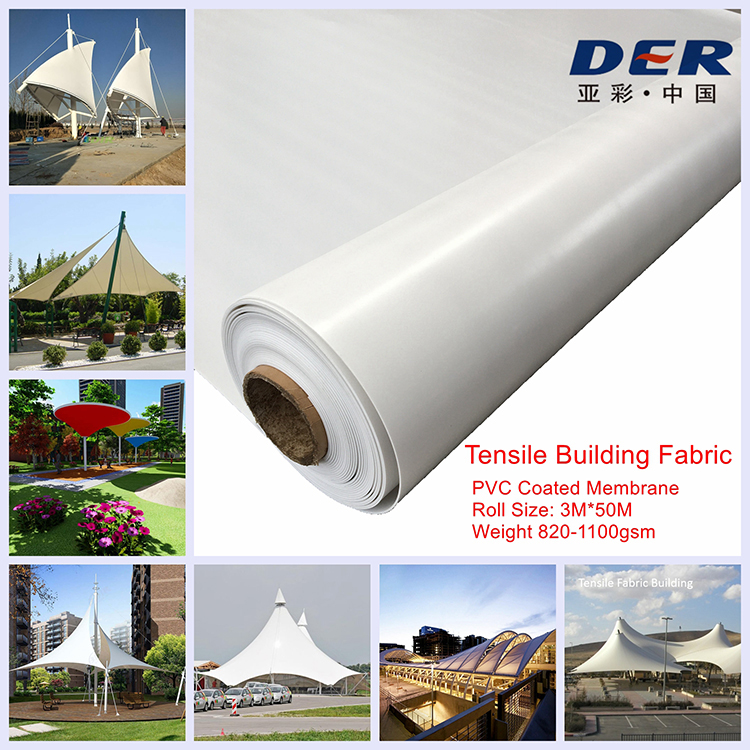
Whether the requirement is a stadium canopy, commercial walkway cover, transportation hub roofing system, façade membrane, shade structure, or long-span public-space enclosure, buyers usually care about the same fundamentals: material logic, structural compatibility, finish stability, welding performance, fire pathway, delivery control, export readiness, and a supplier that understands how real projects are specified, quoted, and executed.
- PVC / PVDF / PTFE / ETFE Options
- OEM & Custom Development
- Project-Oriented Specifications
- Quality Control & Certification Support
- Export-Ready Supply
- Request for Quote Friendly
Architectural fabric is a structural membrane material used where design freedom and engineered performance need to work together.
Architectural fabric, also called architectural membrane fabric, tensile membrane material, or structural membrane fabric, is a high-performance textile system developed for roofs, canopies, façades, atriums, walkway covers, sports structures, exhibition halls, transit projects, and public architectural spaces. Unlike ordinary industrial fabric, it is selected in relation to span, tensioning method, light transmission, coating system, fire expectations, visual finish, maintenance strategy, and long-term weathering behavior.
For this reason, a serious architectural fabric supplier has to do more than offer one catalog item. The supplier has to understand material families, fabrication logic, project categories, and how different membrane systems behave in permanent, semi-permanent, landmark, or commercial applications.
A supplier page built for decision-makers, not only for broad traffic.
This page is structured for buyers who are already comparing architectural fabric manufacturers, membrane roofing fabric suppliers, and custom tensile membrane material partners. Instead of presenting a shallow overview, it organizes the topic around selection criteria that influence real purchasing decisions: material type, OEM flexibility, welding and fabrication fit, quality consistency, lead time management, and project communication efficiency.
It also reserves room for specification review and deeper internal exploration, so a buyer can move from general interest to technical inquiry without leaving the DERFLEX ecosystem too early.
What buyers typically expect from a professional architectural fabric manufacturer
Performance value in this category is rarely created by one property alone. It is created by the balance between engineering, fabrication, appearance, and commercial reliability.
High Tensile Strength
Architectural membrane materials must perform under tension with stable strength retention, dimensional behavior, and reinforcement compatibility for the intended structural system.
Weather & UV Resistance
Outdoor architectural projects require materials that can handle UV exposure, rain, wind, temperature shifts, and environmental aging without fast visual or mechanical decline.
Surface Finish Strategy
PVC, PVDF-oriented finishes, PTFE systems, and ETFE solutions each create a different balance of cleanability, lifespan, gloss control, and architectural effect.
Fabrication Compatibility
A strong architectural fabric supplier should understand weldability, patterning, edge detailing, seam behavior, and downstream fabrication requirements before quoting too aggressively.
Project-Specific Customization
Custom width, color direction, coating logic, weight class, fire pathway, and packaging format matter when the buyer is not purchasing for a simple stock resale program.
Commercial Repeatability
Beyond lab performance, serious buyers want supply continuity, batch consistency, response speed, and documentation support that can hold up under repeat orders.
Typical architectural fabric specification direction
The exact construction should be selected according to project span, structural design, service-life target, fabrication process, and local code pathway.
| Item | Architectural Fabric / Architectural Membrane Fabric |
|---|---|
| Base Reinforcement | High-tenacity polyester fabric or fiberglass fabric depending on the membrane system |
| Material Families | PVC coated polyester, PVDF-finished membrane directions, PTFE coated fiberglass, ETFE architectural film systems |
| Typical Weight Range | Approx. 650–1350 g/m² for many PVC-based architectural membrane directions; exact selection depends on project category |
| Typical Tensile Range | Approx. 3000–8000 N / 5 cm for common tensile architecture fabric ranges; higher-end systems vary by construction |
| Surface Options | Gloss, matte, self-cleaning-oriented, anti-mildew, anti-UV, project-defined color and finish options |
| Fire Direction | Project-based fire and compliance pathways can include standards such as NFPA 701, DIN 4102, B1, M2, or other applicable requirements depending on target market |
| Fabrication | Designed for patterning, welding, cutting, seaming, edge detailing, and membrane fabrication workflows depending on the selected membrane system |
| Applications | Stadium roofs, airport canopies, atriums, façades, walkway covers, exhibition structures, commercial shading, landmark tensile projects |
| Customization | OEM / custom programs for weight, color, finish, packaging, order format, and project-related performance priorities |
Need a quote based on your actual project brief?
Send span information, intended application, climate conditions, finish preference, fire requirement, and quantity expectation. DERFLEX can recommend a more suitable architectural membrane direction instead of pushing a one-size-fits-all material.
Quotation notes buyers often overlook
- Permanent and semi-permanent projects should not be quoted with the same membrane logic.
- Fabrication method affects material recommendation.
- Visual finish and self-cleaning expectations should be clarified before price comparison.
- Lead time depends on color, coating route, order size, and project complexity.
- Certification requests should be confirmed at the inquiry stage, not after order approval.
Where architectural membrane fabric is commonly used
A strong supplier page should show breadth of fit without pretending every membrane type is ideal for every architectural brief.
Stadium & Sports Roofing
Large-span membrane roofs for sports venues, courts, training halls, and audience-cover systems that demand lightweight structural efficiency.
Transportation Hubs
Airport canopies, terminal connectors, station entrances, covered walkways, and transit shading systems requiring durable weathering behavior and strong visual presence.
Commercial Canopies
Shopping centers, hotel entrances, car park covers, retail frontage elements, and public passageways where appearance and cost discipline both matter.
Façades & Building Skins
Architectural fabric can also function in façade screening, solar shading, and membrane envelope concepts where airflow, light modulation, and visual identity are priorities.
Exhibition & Event Structures
Exhibition halls, pavilions, temporary-to-semi-permanent event covers, and signature structures that need fast deployment with strong visual impact.
Public Space Shading
Urban plazas, landscape installations, amphitheater covers, school gathering areas, and civic architecture projects with strong public-use requirements.
Industrial & Logistics Covers
Selected architectural membrane materials can also support industrial covers and warehouse-linked structures where span, light weight, and fast installation matter.
Landmark Tensile Projects
High-visibility projects often require more advanced finish, longer service-life strategy, and closer coordination between material supply and structural intent.
Why buyers shortlist DERFLEX as an architectural fabric supplier
In this category, supply confidence is created by the combination of technical communication, manufacturing logic, and commercial clarity.
Material range that matches different project levels
Some buyers need a cost-efficient PVC architectural fabric supplier. Others are evaluating PVDF-oriented membrane routes, PTFE architectural membrane directions, or ETFE architectural film options for higher-end applications. DERFLEX can support a broader membrane discussion rather than forcing one material across every project.
That is important because architectural fabric purchasing is often a process of narrowing the right system, not simply finding the cheapest roll material.
OEM / custom programs built for project buyers
DERFLEX supports OEM and custom development for membrane buyers who need project-based finishing logic, color direction, packaging preference, sampling, quotation alignment, and commercial repeatability.
This is especially useful for distributors, fabricators, and membrane brands that want a more controlled manufacturing partner behind their own market-facing program.
Lead time and order communication that respects project schedules
Architectural procurement is often tied to contractor sequencing, design approval, and fabrication windows. A better supplier helps reduce wasted cycles by clarifying what is standard, what is custom, and what affects lead time before production planning becomes a problem.
Quality control and certification support
Buyers in the architectural membrane sector expect more than basic shipment inspection. They may need support around physical performance, fire direction, coating consistency, and documentation alignment for target markets.
DERFLEX positions this category around disciplined quality expectations and certification-aware communication rather than afterthought compliance.
Looking for a custom architectural fabric manufacturer instead of a generic trader?
That is usually the right direction when the order is tied to engineering review, fabrication performance, branding requirements, or repeatable project supply. DERFLEX can support inquiry workflows for custom membrane materials and OEM architectural fabric programs.
Architectural fabric supplier vs generic coated fabric seller
The gap is not only product price. It is usually selection logic, communication quality, and project execution reliability.
| Comparison Point | Professional Architectural Fabric Supplier | Generic Fabric Seller |
|---|---|---|
| Material Guidance | Discusses PVC, PVDF-oriented, PTFE, ETFE and application fit based on project intent | Focuses mainly on stock availability or generic fabric categories |
| Project Understanding | Considers span, structural system, finish expectation, fabrication route, and service-life logic | Usually limited to thickness or weight discussion |
| Customization | Supports OEM, custom finish, packaging, and order-format alignment | Customization often limited or not clearly managed |
| Documentation | More likely to support certification and project-related document needs at inquiry stage | Documentation often reactive and incomplete |
| Commercial Reliability | Built around repeat supply, buyer communication, and quotation clarity | Can be acceptable for low-complexity orders, less reliable for structured projects |
| Long-Term Value | Better fit for membrane brands, contractors, distributors, and engineered project workflows | More suitable only for simple trading or price-first transactions |
Example of a project-oriented inquiry path
Below is a realistic case-style scenario showing how architectural membrane material selection often happens in practice.
Commercial walkway canopy and plaza-cover package
A regional contractor needed an architectural membrane fabric supplier for a mixed-use commercial site with a covered pedestrian connector, retail frontage canopy, and public gathering zone. The buyer did not simply want a “PVC fabric price.” They wanted help deciding between a cost-controlled PVC system and a longer-life upgraded surface route that would look cleaner over time.
- Application included public-facing commercial architecture, so appearance mattered.
- Fabrication team needed membrane material with stable welding performance.
- Project timeline required predictable delivery and early sampling.
- Buyer needed a clean quotation structure for comparison across alternatives.
Material recommendation focused on balance, not just lowest unit price
In a scenario like this, DERFLEX would typically organize the quotation around material route, finish logic, service expectation, and fabrication fit. That makes it easier for the buyer to review not only cost, but also maintenance implications, visual consistency, fire direction, and commercial repeatability for future phases.
- Recommended options can be separated into value-engineered and upgraded membrane paths.
- Sampling can be aligned with finish and color review.
- Lead time communication can be clarified before order approval.
- OEM / branded supply format can be discussed when required by the buyer.
Explore related DERFLEX membrane material pages
Core related pages
- Tensile Architecture Fabric for buyers comparing broader structural membrane solutions.
- Architectural Membrane Materials for a more material-family-driven overview.
- Tensile Fabric Roof Structures for roofing-specific project interest.
Advanced material directions
- Architectural PVC Membrane for commercial and cost-efficient tensile applications.
- ETFE Architectural Film for transparent lightweight building-envelope projects.
- Membranes for Tensile Architecture for buyers reviewing PTFE and higher-end membrane directions.
Frequently asked questions about architectural fabric supply
These questions are written to support both buyer evaluation and richer search understanding.
What is the difference between architectural fabric and ordinary coated fabric?
Architectural fabric is selected for structural, environmental, visual, and project-specific performance. It is evaluated in relation to span, tensioning system, finish strategy, fire pathway, weather durability, and fabrication compatibility, not only by thickness or basic waterproofing.
Is DERFLEX an architectural fabric manufacturer or only a supplier?
DERFLEX positions itself as both a manufacturer and supplier for architectural membrane materials, supporting project-oriented supply, OEM programs, and custom requirement communication for membrane-related applications.
Which material is better for architectural membrane projects: PVC, PTFE, or ETFE?
There is no universal answer. PVC-based systems are often chosen for balanced cost and flexibility, PTFE systems are frequently preferred for higher-end long-life projects, and ETFE is especially attractive when transparency and ultra-lightweight design are important. The right choice depends on project intent, budget, appearance target, and structural logic.
Can DERFLEX support OEM or custom architectural fabric orders?
Yes. DERFLEX supports OEM and custom development for architectural membrane materials, including project-driven discussions on construction, finish, color direction, packaging, and commercial order format.
What information should I provide when requesting an architectural fabric quote?
It is best to provide intended application, climate or market, preferred material direction, fire requirement, approximate quantity, width or fabrication preference, color needs, and any target service-life expectations. Better input usually leads to a better material recommendation.
Does architectural fabric always need certification or fire documentation?
Not every project requires the same pathway, but architectural membrane buyers commonly care about fire direction, compliance expectations, and supporting documents. These requirements should be clarified early, because they can affect material selection and quotation structure.
Why should I choose a custom architectural fabric manufacturer instead of a low-price trading source?
When the order is tied to real project execution, the lowest initial number is often not the lowest total-risk option. A more capable manufacturer can help reduce selection mistakes, clarify lead time, support documentation, and improve repeatability across future orders.