


Architectural Membrane Fabric Manufacturer for Tensile Roofs, Canopies, Facades, Stadiums, and Custom Membrane Structures
DERFLEX supplies architectural membrane fabric for buyers who need more than a standard coated textile. We support architects, membrane structure contractors, EPC teams, facade specialists, tensile fabricators, distributors, and OEM buyers looking for a more dependable path to structural membrane material that balances design freedom, weather durability, engineering suitability, fabrication efficiency, and long-term project value.
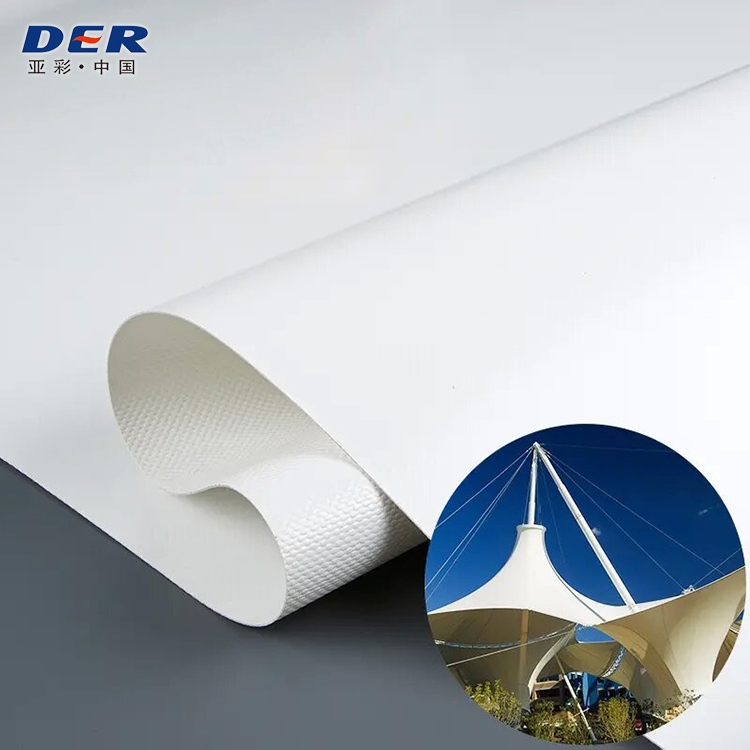
Whether the project involves a tensile roof, transportation canopy, stadium cover, walkway shelter, public plaza shade, membrane facade, landmark entrance structure, or a custom architectural envelope, buyers usually care about the same fundamentals: material type selection, service life direction, fire pathway, weldability or fabrication logic, UV and weather performance, light transmission, cleanability, color consistency, certification support, lead time control, and a supplier that understands that architectural membrane is not just a roll material. It is a project-critical structural skin.
What Is Architectural Membrane Fabric?
Architectural membrane fabric is a high-performance technical textile developed for structural, architectural, and large-span covered environments where conventional rigid building materials may be too heavy, too visually restrictive, or less efficient for the intended design. In the market, this material is also described as tensile membrane fabric, architectural fabric membrane, structural membrane material, membrane roofing fabric, tensile architecture fabric, or membrane structure fabric. The wording changes, but the buying logic stays similar: the membrane must carry more responsibility than an ordinary coated fabric.
In real projects, architectural membrane fabric acts as a visible and functional building skin. It has to tolerate wind, sun, rain, temperature variation, and ongoing outdoor exposure while also supporting the architectural language of the structure. That means it is chosen for performance and for visual effect at the same time. Buyers may need a bright white membrane for daylight control, a PVDF-coated architectural PVC membrane for better surface durability and cleanability, a PTFE membrane for premium permanent structures, or a system-oriented custom development path that fits a specific canopy, facade, or stadium program.
This is why buyers searching for architectural membrane fabric usually go beyond one simple keyword. They may also search for architectural membrane manufacturer, structural membrane supplier, canopy membrane fabric, facade membrane material, stadium membrane fabric, architectural PVC membrane, PVDF tensile membrane, PTFE architectural fabric, or membrane material for tensile architecture. These search variations reflect different project priorities, but all of them point to the same core challenge: choosing a membrane that fits design, engineering, fabrication, compliance, and project delivery needs together.
Key Features of a High-Quality Architectural Membrane Fabric
Buyers evaluating architectural membrane material are usually balancing engineering concerns, architectural aesthetics, installation practicality, and commercial deliverability at the same time. A good product page should reflect that decision logic rather than flatten everything into a single performance claim.
High Tensile Strength and Structural Suitability
Tensile architecture works because the membrane carries loads through tension rather than behaving like a traditional rigid roof. That means membrane quality, base reinforcement, and coating integrity all matter. A professional architectural membrane should support stable performance under real environmental and structural conditions.
UV, Weather, and Outdoor Durability
Architectural membrane systems live outdoors, often in demanding public or commercial environments. The membrane needs a coating system that helps resist UV exposure, weather cycling, dirt accumulation, and premature aging so the project keeps its visual and functional value longer.
Fire Pathway Awareness
Public-facing and project-spec membrane systems usually require clearer fire-performance planning. Different regions and project types may ask for different standard directions, so a serious supplier should be ready to support that selection logic rather than treating fire behavior as an afterthought.
Design Flexibility
One of the biggest advantages of architectural membrane fabric is design freedom. Color, translucency, surface finish, and membrane form all influence the architectural effect. The right material should help the architect or contractor move closer to the intended visual result instead of forcing design compromise.
Fabrication and Installation Practicality
Membrane projects are not won or lost only in material testing. They are also shaped by cutting, welding, finishing, edge treatment, panel coordination, and installation efficiency. A membrane supplier should understand fabrication realities, not just material descriptions.
Service Life and Maintenance Logic
Project owners often care about long-term cost as much as purchase cost. Surface cleanability, finish durability, replacement cycle, and maintenance expectations all influence whether a membrane choice remains commercially smart over time.
Need a Custom Architectural Membrane Instead of a Generic Roll Good?
DERFLEX supports architectural membrane development for tensile roofing, facades, canopies, stadium projects, walkway covers, and other project-based systems. Share the structure type, preferred material family, expected service-life direction, and destination market, and we will recommend a suitable membrane path.
Technical Specifications of Architectural Membrane Fabric
In this category, a useful specification section should help the buyer compare material families and project-fit logic rather than pretending that one universal construction is ideal for every building. Architectural membrane sourcing typically involves several related directions such as PVC-coated polyester membrane, PVDF-coated PVC membrane, PTFE fiberglass membrane, and project-adjacent ETFE system discussions. The table below is designed as a practical evaluation guide for supplier discussion and project screening.
| Item | Typical Range / Direction | Commercial Relevance |
|---|---|---|
| Material Type | PVC architectural membrane, PVDF-coated PVC membrane, PTFE fiberglass membrane, and project-oriented special membrane options | Controls cost structure, appearance, service-life direction, fire pathway, and fabrication behavior |
| Base Reinforcement | High-tenacity polyester for mainstream PVC/PVDF systems; fiberglass for PTFE membrane systems | Influences strength, dimensional stability, and structural performance logic |
| Typical Weight Direction | Many PVC architectural membranes are selected within medium-to-heavy structural ranges; numerous project-grade PVC products are commonly discussed around 650–1350 g/m² | Helps balance handling, durability, and structure type suitability |
| Tensile Strength Direction | Project grade varies by construction and membrane family; selection should follow engineering requirement rather than generic assumptions | Critical for structural reliability and long-span behavior |
| Surface Finish | Standard PVC, acrylic finish, PVDF lacquer, matte, glossy, anti-dirt, custom visual finish | Affects cleanability, aging behavior, and project appearance |
| Optical Performance | Translucent, blockout, diffuse-light, bright white, custom color and light-control directions | Important for comfort, daylight strategy, and architectural effect |
| Fire Performance Pathway | Project and region dependent; often planned around standards such as B1, M2, DIN 4102, or NFPA direction where relevant | Important for tender alignment and public-use projects |
| Weather Resistance | UV-resistant, rain-resistant, anti-aging, fungus-resistant, low-maintenance surface direction depending on finish system | Supports longer service life and lower maintenance pressure |
| Customization | Custom weight, coating system, width, color, membrane family, finish, and fabrication compatibility | Useful for OEM, EPC, fabricators, and project-specific supply programs |
Material Families Often Compared in Architectural Membrane Projects
PVC architectural membrane is widely chosen because it offers a strong balance of cost, flexibility, fabrication practicality, and broad applicability across commercial tensile structures. PVDF-coated PVC membrane is frequently selected when the project wants an upgraded surface with better cleanability, visual retention, and more stable outdoor behavior. PTFE membrane is usually considered for premium, permanent, or landmark structures where a higher-end solution is needed and the project is willing to invest more for performance positioning. ETFE enters the discussion for certain advanced architectural systems, especially when transparency or special envelope behavior is part of the design concept, though it belongs to a different system logic than many conventional fabric membranes.
The right choice depends on what the project is actually trying to optimize. Cost alone will not answer that question. Buyers need to weigh lifespan direction, fire expectations, visual quality, fabrication method, structural logic, maintenance planning, and lead time feasibility together.
Applications of Architectural Membrane Fabric
Architectural membrane fabric serves a much wider set of use cases than many buyers first assume. Its commercial relevance comes from how effectively it bridges engineering needs, architectural freedom, and practical construction logic.
Tensile Roofing Systems
Used for large-span roofing, entrance structures, public gathering spaces, and commercial complexes where the membrane must combine structural efficiency with a clean architectural presence.
Canopies and Walkway Covers
Architectural membrane fabric is widely used in transportation hubs, schools, retail environments, parks, campuses, and outdoor circulation zones where shelter and lightness are both valued.
Stadium and Sports Facility Structures
Sports-related structures often require higher attention to span logic, weather stability, visual identity, and public-use expectations, making membrane choice especially important.
Facades and Building Skins
Membrane facades can contribute shading, identity, airflow behavior, light control, and a more dynamic exterior language, especially in custom architectural projects.
Public Spaces and Landmark Architecture
Membrane materials are often selected for plazas, cultural spaces, transportation landmarks, civic installations, and urban shade structures where visual effect matters almost as much as function.
OEM and Project-Based Fabrication Programs
Fabricators, contractors, and membrane specialists may need custom architectural membrane supply for repeated panel production, tender-specific development, or branded structural systems.
Looking for an Architectural Membrane Supplier That Understands Project Delivery?
A suitable architectural membrane is not selected by keyword only. It should match the structure type, project image, installation method, fire pathway, maintenance expectation, and delivery schedule. DERFLEX supports that wider project conversation.
Why Choose DERFLEX as Your Architectural Membrane Fabric Manufacturer
Manufacturer-Oriented Supply
DERFLEX is built for buyers who want a production-based conversation rather than a generic resale conversation. That matters when architectural membrane selection needs customization, process understanding, and consistent product direction over time.
Project-Specific Development
Architectural projects are rarely identical. We support custom membrane development for material family, weight direction, finish type, color tone, optical behavior, and market-specific project requirements.
Quality, Documentation, and Certification Awareness
Buyers in this sector increasingly expect clearer quality control, more stable material logic, and better understanding of architectural compliance pathways. A serious supplier should support those needs as part of the sourcing process.
Lead Time with Commercial Realism
Architectural membrane projects often work against tender schedules, installation windows, and site sequencing. Material supply must be discussed with real lead time awareness, not as an afterthought.
Broader Product Understanding
Good membrane decisions require context: tensile membrane fabric, membrane roofing fabric, facade membrane, canopy membrane, PVDF architectural membrane, PTFE structural membrane, and project-oriented OEM fabric development all connect to the same material logic.
Long-Term Cooperation Potential
Many buyers are not sourcing for a single one-off quotation. They are looking for a dependable architectural membrane supplier that can support multiple projects, repeat specifications, and future product development.
Why Architectural Membrane Buyers Look Beyond Price
In this market, a membrane that appears cheaper at the beginning can become significantly more expensive when it creates trouble in fabrication, surface quality, maintenance burden, or specification approval. That is why experienced buyers do not only ask, “What is the price per square meter?” They also ask: Is the material right for the structure? Is the finish suitable for the project image? Does the membrane family match the expected lifespan? Will the supplier communicate clearly about fire direction, weather resistance, and customization? Can repeat orders stay consistent?
DERFLEX positions architectural membrane fabric as a strategic project material rather than a commodity roll. That helps buyers move closer to a selection process that protects engineering outcome, architectural presentation, and commercial delivery at the same time.
Comparison: PVC / PVDF / PTFE Architectural Membrane Directions
PVC and PVDF Architectural Membrane
- Often chosen for strong cost-to-performance balance across many commercial architectural membrane projects
- Usually easier to fabricate and more practical for a wide range of tensile roofs, canopies, and shade structures
- PVDF-coated variants can offer upgraded surface performance, cleaner visual retention, and stronger outdoor presentation logic
- Commonly relevant for canopies, public-space roofs, walkway covers, sports structures, and custom commercial membrane systems
- Frequently preferred when the project needs customization, practicality, and commercial flexibility
PTFE and Higher-End Permanent Directions
- Often considered for premium or landmark permanent structures where life-cycle expectations are higher
- Can be more suitable when the project values stronger long-term positioning and premium technical image
- Usually involves a different commercial level and project decision path than mainstream PVC architectural membranes
- May be favored in large civic, transportation, or high-visibility landmark architecture programs
- Requires more deliberate evaluation of budget, structure type, and project intent
Case Study: Better Material Selection for a Public Canopy Program
A representative architectural membrane sourcing situation often starts with a project team comparing options that sound similar on paper but behave differently in real delivery. In one common scenario, a contractor or fabricator receives a public-space canopy project that needs a clean white membrane appearance, dependable outdoor performance, realistic fabrication timing, and a specification pathway acceptable to the client and design team. The team may begin with a simple request for “architectural membrane fabric,” but quickly realizes that the real choice is more nuanced.
The initial concern may be cost, but the deeper questions come next: should the project stay with a mainstream PVC architectural membrane, move toward a PVDF-coated surface for improved cleanability, or evaluate a higher-end direction that may exceed the project budget but align better with lifespan expectations? The answer depends on the specific role of the structure, its visual importance, expected maintenance conditions, and the procurement model.
In a practical supplier conversation, the membrane recommendation is shaped by intended span, project image, local environment, finish preference, fire pathway expectations, and installation schedule. Once those parameters are clarified, the buyer can often avoid both overbuying and underbuying. That is where a manufacturer-oriented supplier becomes valuable: not because it forces a more expensive choice, but because it helps the project choose a more suitable membrane direction.
This case-study logic is relevant far beyond one canopy. It applies equally to tensile roofs, facade membranes, sports structures, transportation shelters, and branded architectural installations. The strongest membrane decision is not the one with the most technical words. It is the one that creates a better project outcome.
Already Have a Drawing, Material Target, or Tender Requirement?
Send the project type, membrane family preference, expected finish, fire pathway notes, or current reference specification. DERFLEX can help you compare material directions and move toward a more project-fit architectural membrane solution.
Frequently Asked Questions About Architectural Membrane Fabric
What is architectural membrane fabric used for?
Architectural membrane fabric is used for tensile roofs, canopies, facades, stadium covers, walkway shelters, shade structures, public-space installations, and custom membrane architecture projects where lightweight structural performance and visual impact are both important.
What is the difference between PVC, PVDF, and PTFE architectural membrane?
PVC membrane is widely used for its strong cost-performance balance and fabrication practicality. PVDF-coated PVC membrane is often selected for improved surface behavior and visual retention. PTFE membrane is more commonly considered for premium permanent projects with higher long-term positioning expectations.
How do I choose the right architectural membrane fabric supplier?
Choose a supplier that understands material family selection, project application, customization, fire pathway planning, quality control, and realistic lead time. A supplier should help align the membrane with the actual structure, not just provide a price.
Can architectural membrane fabric be customized?
Yes. Architectural membrane can be customized in material family, weight direction, coating type, finish, color, translucency, and project-oriented specification details depending on the application and market requirement.
Is architectural membrane fabric suitable for permanent structures?
Yes, but the most suitable membrane family depends on the project. Some commercial projects use PVC or PVDF-coated architectural membrane effectively, while premium permanent landmark structures may evaluate PTFE directions.
Do you support OEM or project-based supply?
Yes. DERFLEX supports custom and OEM architectural membrane supply for contractors, fabricators, brands, distributors, and project teams requiring repeatable specifications or tailored membrane development.
What certifications or fire pathways should be considered?
The relevant pathway depends on the destination market and project use. Many buyers plan around standards or directions such as B1, M2, DIN 4102, or NFPA-related requirements where applicable, and the final membrane recommendation should reflect that project context.
Related DERFLEX Pages
To improve topic depth and buyer navigation, the following internal links are highly relevant to this page’s main keyword and adjacent search intent.
Ready to Source Architectural Membrane Fabric from DERFLEX?
If you are comparing architectural membrane fabric manufacturers for tensile architecture, canopies, facades, stadium roofs, walkway covers, or custom structure projects, DERFLEX is ready to support the next step. Share your project type, preferred membrane family, expected finish, fire direction, and target lead time, and we will recommend a suitable material path.