Plan Width Around Curtain Height
Use roll width to reduce unnecessary vertical seams where practical. Fewer seams can simplify conversion, but wider or heavier panels increase hanging load and handling weight.



Two-side silicone rubber coated fiberglass roll material for welding curtain factories, hot-work barrier fabricators, industrial safety brands and OEM converters that need heat-resistant reinforcement with protected surfaces on both faces.
DERFLEX can discuss base fiberglass construction, silicone coating amount, total weight, thickness, roll width, color, roll length and conversion requirements. Final suitability must be matched to the real welding process, curtain orientation, spark/spatter severity, working distance and required test method.
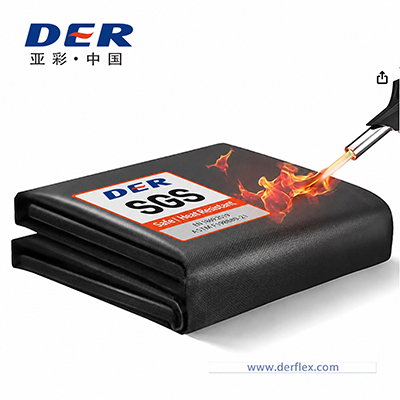
Double sided silicone coated fiberglass fabric is a woven glass textile coated with silicone rubber on both faces. For welding curtains, the two coated surfaces are mainly selected for balanced handling, abrasion, moisture/oil resistance and repeated-use durability; two-side coating does not by itself create a higher welding temperature rating.
DERFLEX publishes a broad silicone coated fiberglass family. The welding-curtain grade should be selected inside that family according to curtain geometry, handling cycle and actual hot-work exposure.
DERFLEX’s current silicone coated fiberglass material page discusses selected constructions around approximately 230–287°C continuous exposure at the silicone surface, while the fiberglass substrate can tolerate higher temperatures. Do not copy the bare-fiberglass temperature into the finished curtain specification; confirm the exact grade, duration and test route.
The fiberglass core provides heat-resistant reinforcement and dimensional stability. Silicone rubber creates a flexible coated face that can improve handling, abrasion resistance and resistance to moisture, oils and repeated contact.
For a vertical welding curtain, both sides may be touched, folded, dragged, stored, cleaned or exposed to workshop contamination. A double-sided construction can therefore make sense even when the primary spark source is on only one side.
“For welding” is too broad for a reliable specification. Orientation, distance, dwell time, curtain movement and optical-screening requirements change the correct material direction.
| Use Condition | Starting Material Direction | Why It May Fit | Confirm Before Ordering |
|---|---|---|---|
| Reusable vertical spark / spatter curtain | Double sided silicone coated fiberglass | Balanced surface protection, heat-resistant reinforcement, repeated handling and converter-friendly roll form. | Distance from arc, spatter severity, curtain height, hanging load, test requirement, seams and grommet reinforcement. |
| Mobile curtain or folding hot-work barrier | Flexible double-side silicone fiberglass grade | Both faces may contact frames, floors, equipment and operators during repeated relocation. | Drape, fold radius, abrasion, panel size, attachment system and coating stiffness. |
| Close-proximity heavy spark / slag zone | Heavier coated fiberglass or higher-temperature specialty fabric to be evaluated | Higher exposure may require more than a light curtain construction. | Molten-metal behavior, peak temperature, dwell time, burn-through test, edge/binding system and safety approval. |
| Horizontal welding blanket | Blanket-specific coated fiberglass / high-silica direction | Hot particles can remain on a horizontal surface longer than on a vertical curtain. | Do not assume a curtain grade is automatically suitable as a blanket; validate the finished blanket duty separately. |
| Transparent arc-viewing screen | Separately specified welding-grade PVC or tested optical screen material | Silicone fiberglass is normally an opaque heat barrier, not a visibility product. | Required optical radiation standard, light transmission, color/shade, welding process and completed screen system. |
Use two-side silicone when both surfaces need protection. Use a different material family when the dominant problem is higher thermal demand, optical screening or a lower-cost directional barrier.
Best starting direction when both faces need coating protection, the curtain is reused or folded often, and surface durability matters together with heat-resistant reinforcement.
Useful when exposure is clearly directional and the buyer wants to reduce coating mass, weight, stiffness or cost. The uncoated face and seam behavior still need review.
Can be suitable where the priority is basic fiberglass heat resistance and cost control, but handling may expose more glass fibers and the surface has less protection from liquids and abrasion.
Consider when the thermal demand is beyond the practical range of the selected silicone-coated construction. Final grade and welding exposure still require validation.
A separate curtain family for visual separation and arc-screening programs. It should not be substituted for a high-temperature opaque barrier based only on appearance or price.
Not the same buying question as roll fabric. Finished blankets add edge construction, grommets, seams, dimensions, labels and completed-product testing requirements.
These are purchasing directions based on DERFLEX’s published silicone coated fiberglass family. The exact welding-curtain construction should be fixed on an approved sample and technical data sheet.
| Product Name | Double Sided Silicone Coated Fiberglass Fabric / Double Side Silicone Fiberglass Cloth / Welding Curtain Fiberglass Fabric |
|---|---|
| Base Substrate | Woven fiberglass cloth; E-glass or project-matched fiberglass construction depending on flexibility, textile strength and heat requirement. |
| Coating Structure | Silicone rubber coated on both faces. Coating weight, surface feel and finish are grade dependent. |
| Weight Direction | Approx. 260–2000 g/m2 across the wider DERFLEX silicone coated fiberglass family. Select curtain weight by panel size, hanging load, exposure and handling. |
| Thickness Direction | Approx. 0.25–3.0 mm across the wider material family. Do not select by thickness alone. |
| Common Width Directions | 1000 mm / 1200 mm / 1500 mm are published common directions. Other widths depend on construction and order plan. |
| Color Direction | Red, grey, black, white, yellow and project-defined colors depending on coating formulation and order quantity. |
| Temperature Selection | Selected silicone-coated constructions are discussed around approx. 230–287°C continuous silicone-surface exposure. Exact continuous/peak limits must be confirmed for the ordered grade and finished curtain. |
| Supply Format | Roll goods, slit rolls, cut pieces and OEM conversion direction subject to project requirements. |
| Typical Converting | Cutting, sewing, hemming, binding, punching, grommeting and curtain assembly after the actual fabrication method is validated on the selected grade. |
| Testing / Documentation | Provide the exact project, customer, ASTM, EN, DIN, NFPA or other required method before sampling. Generic “fireproof certification” is not a sufficient specification. |
A roll fabric can meet the material requirement and still fail early if the finished curtain concentrates load at the top edge, grommets, seams or fold lines.
Use roll width to reduce unnecessary vertical seams where practical. Fewer seams can simplify conversion, but wider or heavier panels increase hanging load and handling weight.
The top hem often carries repeated load from hooks, rings, track carriers or grommets. Specify reinforcement with the finished suspension system, not as an afterthought.
Grommet spacing should be matched to curtain weight, panel width and movement frequency. Trial the actual reinforced edge and hardware before bulk production.
Thread, needle, stitch density, seam overlap and binding must be selected for the temperature and mechanical duty. A good roll fabric does not compensate for a weak seam.
Vertical sparks may fall away quickly; a horizontal blanket can retain hot particles. Use different qualification logic when one material program covers both products.
If the curtain also serves as an arc-radiation screen for nearby personnel, validate the required optical protection standard for the finished assembly rather than assuming opaque fabric alone is sufficient.
Existing DERFLEX-hosted images are used for product-image SEO and buyer context. The hero image loads immediately; gallery images below are lazy-loaded.
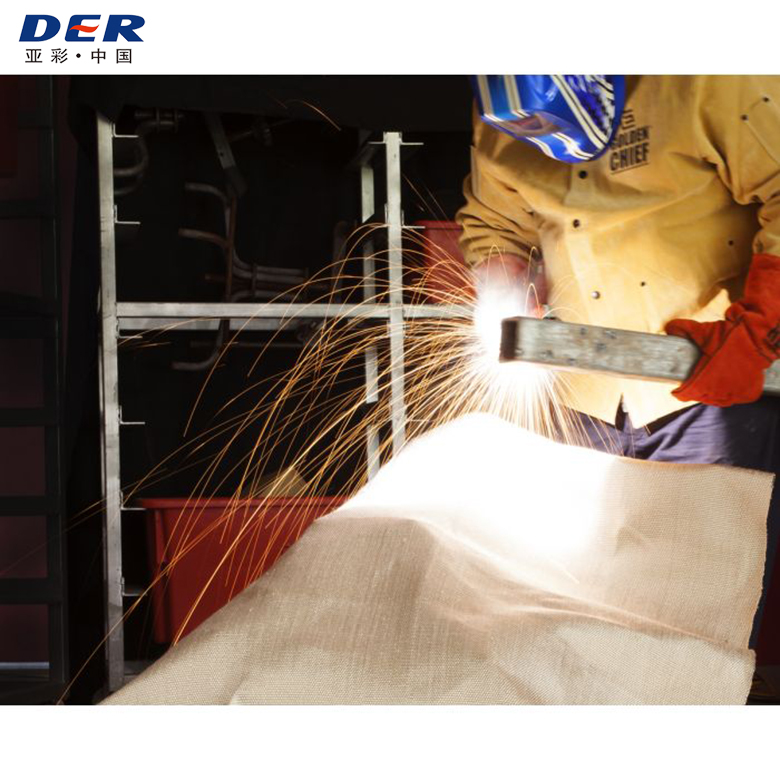
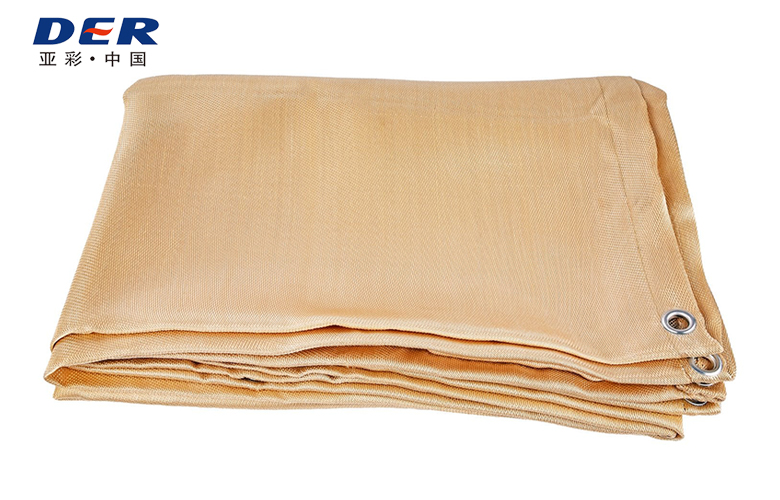
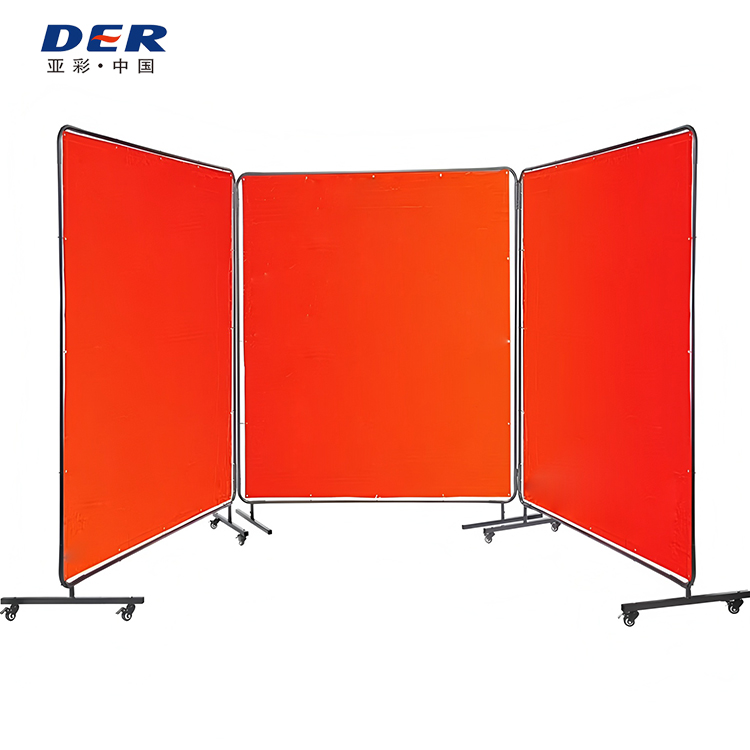
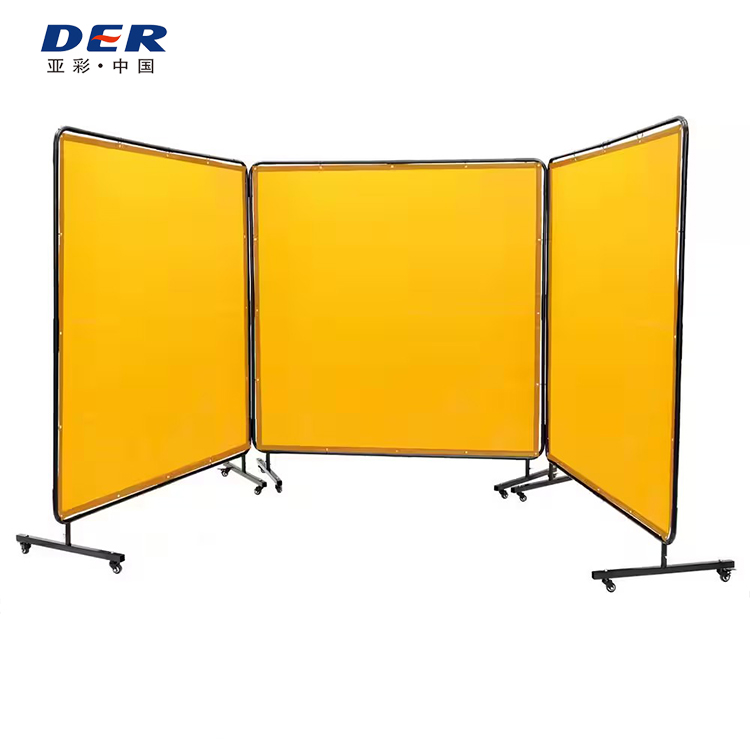
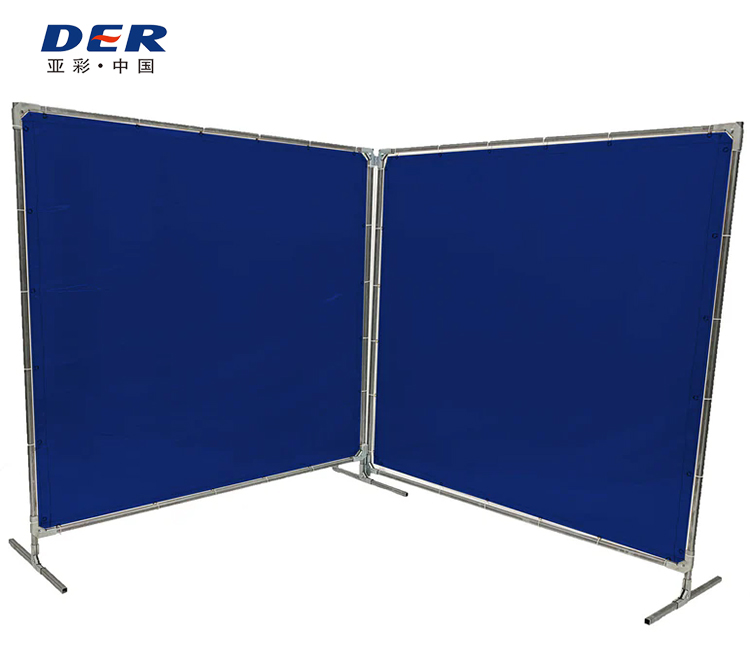
These are avoidable specification problems that frequently matter more than choosing one nominal GSM number.
Silicone coating, fiberglass substrate, seams and the finished curtain can have different thermal limits. Always specify continuous, peak and exposure duration separately.
Two-side coating mainly changes surface protection, weight, stiffness and handling. It does not automatically increase the silicone chemistry’s usable temperature.
A vertical curtain and horizontal blanket experience hot particles differently. Orientation should be stated in every technical inquiry.
Large curtains can fail around grommets or seams long before the field fabric is worn out. Include the hanging system in the sample review.
Opaque silicone fiberglass and transparent welding PVC solve different problems. Define optical protection, visibility and heat/spatter exposure as separate requirements.
Provide the exact test standard, buyer specification or project requirement so the proposed grade and report scope can be matched correctly.
A complete inquiry lets DERFLEX compare fabric constructions and avoids the common “send any welding cloth sample” loop.
DERFLEX’s useful role here is material specification and repeatable coated-fabric supply—not a generic claim that one stock roll fits every welding environment.
Discuss curtain orientation, heat, spark/spatter, abrasion, liquids, folding and finished-product geometry before the material direction is frozen.
Base cloth, silicone coating side, coating amount, total weight, thickness, width, color, roll length and packing can be discussed by project.
Approved construction details can be retained as part of the purchasing specification to improve repeat-order consistency for converters and distributors.
These verified DERFLEX pages connect this narrow double-sided curtain-fabric topic with the broader material, finished-product and adjacent industrial use cases.
Direct answers for welding curtain factories, industrial textile converters, procurement teams and OEM safety-product brands.
It is woven fiberglass cloth coated with silicone rubber on both faces. The fiberglass supplies dimensional stability and heat-resistant reinforcement, while the two silicone surfaces improve handling protection, flexibility, abrasion resistance and resistance to moisture or oil contact. The exact performance depends on base cloth, coating formula, coating amount and total construction.
Two coated faces are useful when a curtain is folded, moved, touched or exposed from either side. The construction can give more balanced surface protection than a one-side coating, which is valuable for reusable industrial curtains and mobile hot-work barriers.
Not automatically. Double-side coating is better when both faces need protection or cleanability. Single-side coating can be lighter, more flexible and more economical when exposure is directional. The choice should be based on the finished curtain duty rather than a general “better” label.
There is no single universal temperature for every grade. DERFLEX’s current silicone coated fiberglass range discusses selected constructions around approximately 230–287°C continuous exposure at the silicone surface, while fiberglass itself can tolerate higher temperatures. Peak heat, direct flame, spark/spatter, dwell time and finished-curtain design can change suitability.
“Fireproof” is too broad for a technical specification. Fiberglass is a heat-resistant reinforcement, and silicone-coated constructions can be developed for flame-resistant applications, but the required performance must be tied to the exact material grade and test method. For a regulated curtain system, verify the selected fabric and finished assembly against the project requirement.
Yes, it can be converted into curtains and barriers by cutting, sewing, hemming, binding, punching and grommeting when the selected grade and fabrication system are validated. Thread, reinforcement, grommet pull-out and edge design should be tested on the real curtain construction before bulk production.
They serve different purposes. Silicone fiberglass is normally an opaque heat-resistant barrier used where hot-work exposure and surface durability are major concerns. Transparent or tinted welding PVC is a separate material family used when visibility and specified optical radiation screening are required. Do not treat them as interchangeable without reviewing the complete safety function.
DERFLEX can discuss project-based customization for base fiberglass construction, double-side silicone coating, coating amount, total weight, thickness, width, color, roll length, packing and conversion direction. Availability depends on the exact specification and production plan.
Send DERFLEX the welding process, curtain orientation, working distance, continuous and peak heat, spark/spatter severity, target weight or thickness, roll width, color, panel dimensions, fabrication method, required test route, quantity and destination. The team can review a practical double-sided silicone fiberglass fabric direction for sampling and quotation.