Fleet Replacement
Turn a successful fit into a controlled specification with finished dimensions, pocket layout, reinforcement map and part-number identification for repeat maintenance purchasing.



DERFLEX develops custom end dump trailer tarps for worn-cover replacement, fleet standardization, dealer inventory and OEM programs. Choose breathable PVC-coated mesh for loose-load containment and airflow, or solid PVC/vinyl when the hauled material needs stronger rain and fine-particle shielding.
The replacement cover is built around the actual trailer and tarp mechanism: finished travel length, roller or front pocket, rear pull-bar pocket, arm clearance, tailgate geometry, reinforcement zones and the cargo being hauled.
An end dump trailer tarp is a retractable mesh or solid fabric cover used over the open top of a trailer that unloads through the rear gate. The cover may work with a front-to-back arm system, roller assembly, manual mechanism, electric mechanism or a trailer-specific side-roll arrangement.
A replacement tarp must fit the mechanism through its complete deployment and retraction path. Overall trailer length alone does not define the correct tarp size.
Roller-pocket dimensions, rear crossbar position, arm spacing, cab shield, tailgate hinges, rear overlap and hardware clearances can all affect finished construction.
DERFLEX therefore recommends supplying the old tarp, finished measurements, system photos and cargo details before an approved repeat specification is established.
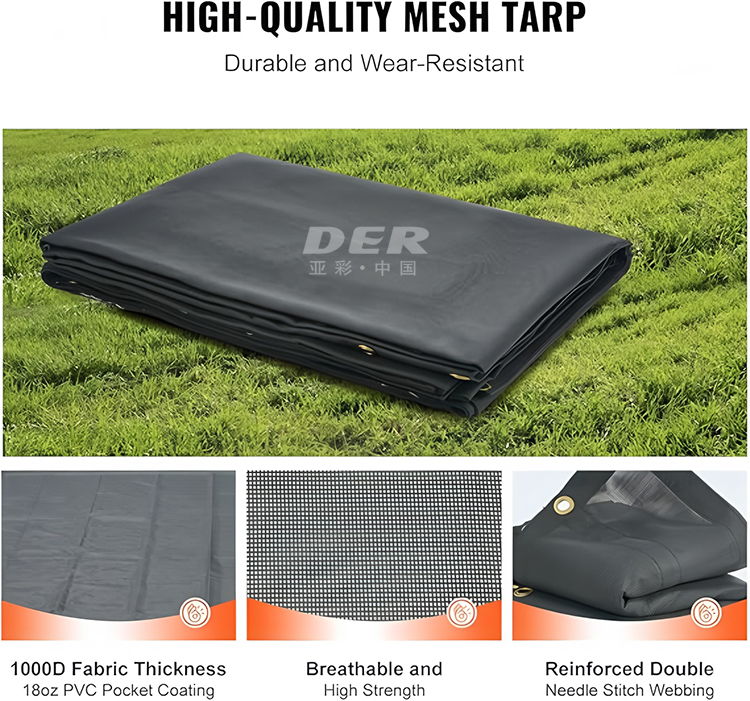
Many buyers searching for an end dump tarp already own the trailer and tarp mechanism. Their real purchasing problem is reproducing a proven fit, correcting a failure point or standardizing a replacement cover across multiple trailers.
Turn a successful fit into a controlled specification with finished dimensions, pocket layout, reinforcement map and part-number identification for repeat maintenance purchasing.
Create reorderable mesh and vinyl replacement SKUs for trailer dealers, repair shops and tarp-system distributors that require repeat dimensions and packaging.
Develop the tarp from system drawings, travel length, bar/pocket interfaces and intended duty cycle before serial production.
Use mesh when airflow and loose-load containment matter more than water protection. Use solid PVC/vinyl when the load needs a more closed weather barrier, subject to the actual tarp system, seams and operating conditions.
| Decision Factor | PVC-Coated Mesh End Dump Tarp | Solid PVC / Vinyl End Dump Tarp |
|---|---|---|
| Primary function | Breathable containment of loose bulk material | More complete shielding from rain, road spray, dust and fine material |
| Airflow | Open mesh lets air pass through and can reduce billowing compared with a solid cover | Low airflow; system and tensioning must manage a larger solid wind surface |
| Typical starting applications | Aggregate, gravel, landscape material, construction debris and selected recycling loads | Moisture-sensitive bulk products, fine material and loads requiring more closed coverage |
| Rain protection | Not waterproof because water passes through the mesh openings | PVC/vinyl material provides a waterproof surface; finished protection also depends on seams and system closure |
| Handling | Generally easier to roll and manage where breathable coverage is sufficient | Often heavier and more sensitive to wind loading |
| Fabrication priority | Pocket strength, webbing, mesh openness, stitched reinforcement and edge abrasion | Pocket reinforcement, weld/seam design, weather surface, flexing and edge construction |
| DERFLEX supply direction | Custom coated mesh, finished covers, panels or roll supply | Custom PVC/vinyl weight, color, pockets, reinforcement and finishing |
DERFLEX focuses on tarp material and finished covers. Motors, arms, bows, springs, roller tubes and control hardware vary by manufacturer, so final compatibility should be confirmed from the actual system.
Confirm front roller width, deployed travel length, arm spacing, rear crossbar or pull-bar pocket, cab-shield position and required rear coverage. The tarp should retract without folding into hardware or rubbing the trailer body.
Some end dump trailers use side-to-side rolling. In that case, tarp width, long-edge pocket construction and tailgate transitions become more important. See the DERFLEX side dump trailer tarp guide for dedicated side-roll geometry.
A replacement tarp should deploy with controlled resistance and predictable tracking. A heavier material is not automatically preferable if its mass or wind behavior changes how the existing system operates.
Use an existing tarp as a pattern only after confirming it operated correctly. Recurring abrasion marks, pocket failure or edge damage should be documented before reproducing the old construction.
The most reliable method combines the old finished tarp, working coverage measurements and clear photos of the complete mechanism. Do not order only from nominal trailer length or body width.
Record trailer make/model if known, body length, tarp-system type, front-to-back or side-roll travel, manual/electric operation and any known part number.
Measure the actual distance the tarp must travel and the opening that must be covered, including front roller/cab-shield position and rear termination.
Lay the old tarp flat and relaxed. Record finished width, length, taper, flap, shaped ends, cut-outs and any intentionally extended section.
Record roller-pocket flat width or circumference, rear crossbar or pull-bar pocket size, bar diameter, insertion direction and reinforcement dimensions.
Photograph the rear of the trailer with the tarp deployed. Mark tailgate hinges, raised hardware, crossbar position and every potential rubbing or snag point.
State the material hauled, particle size, sharpness, moisture sensitivity, loading method, route exposure and approximate tarp deployment frequency.
Final specifications should be confirmed from the trailer, tarp system, cargo and customer requirements. The following is a sourcing framework, not a universal performance guarantee.
| Specification Item | DERFLEX Available Direction | Why It Matters |
|---|---|---|
| Product type | End dump replacement tarp, mesh tarp, solid PVC/vinyl tarp, front-to-back cover or selected side-roll replacement | Defines the actual mechanical use before material selection |
| Mesh structure | Heavy-duty woven/coated mesh selected according to airflow, containment, handling and duty | Mesh construction affects airflow, loading behavior and wear |
| Solid PVC / vinyl | PVC-coated polyester / vinyl tarp structures selected according to weather shielding and fabrication requirements | Useful when a closed surface is required instead of mesh |
| Finished size | Made to drawing, verified old tarp or approved sample | System travel matters more than nominal trailer size |
| Front / rear pockets | Roller pockets, pull-bar pockets, crossbar sleeves and project-specific attachment edges | These areas transfer system force into the fabric |
| Reinforcement | Webbing, double layers, reinforcement strips, patches and local wear zones | Targets recurring failure areas without unnecessarily increasing total weight |
| Rear / tail detail | Straight edge, extended overlap, shaped or tapered detail where the verified system requires it | Tailgate hinges and hardware may change the rear geometry |
| Branding / inventory | Color, part-number marking, logo/label discussion and export packing | Useful for fleet and distributor replacement-SKU control |
| Supply format | Finished tarp, cut panel, semi-finished panel or tarp material | Supports fleets, fabricators, distributors and OEM channels |
Material strength matters, but many premature failures begin where the tarp repeatedly bends, wraps, rubs or transfers tension into system hardware. Photos of the worn tarp can reveal where reinforcement actually belongs.
Repeated wrapping can concentrate abrasion at the pocket mouth and along the roller contact line.
Crossbar movement and repeated pulling can fatigue a sleeve edge if its construction is not matched to the actual bar.
Incorrect tarp width or arm alignment can drag the cover over top rails and create predictable abrasion.
Hinges, latches and protruding rear hardware can become snag or rubbing points during deployment.
Overfilled or sharp material can puncture any tarp. Correct loading remains part of tarp service life.
Cargo characteristics should be established before a replacement tarp material is selected.
| Hauling Application | Practical Starting Direction | Selection Priority |
|---|---|---|
| Gravel / aggregate / crushed stone | Heavy-duty mesh is a common starting direction | Airflow, abrasion and pocket durability |
| Sand / fine bulk material | Tighter coverage or solid PVC/vinyl depending on particle size | Fine-material containment and moisture exposure |
| Construction / demolition debris | Reinforced mesh or project-specific heavy-duty construction | Puncture risk and perimeter reinforcement |
| Landscape material / mulch / soil | Breathable mesh is often practical | Wind relief and loose-load containment |
| Agricultural bulk material | Mesh or solid cover depending on product sensitivity | Moisture, contamination and ventilation |
| Waste / recycling | Mesh or solid tarp according to the actual waste stream | Containment, sharp objects and repeat-cycle durability |
| Hot asphalt / elevated-temperature load | Application-specific material confirmation required | Actual tarp-contact temperature and verified material capability |
The images below are hosted on DERFLEX and connect replacement-tarp selection with material and manufacturing capability.
Breathable mesh direction for end dump, dump truck and trailer load-covering applications.
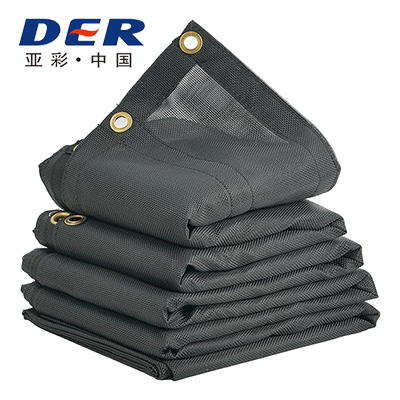
Reinforced perimeter details and repeatable construction for replacement and distribution programs.
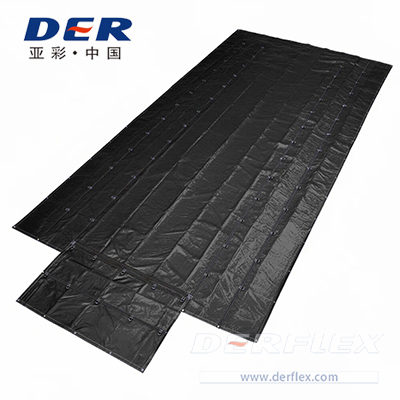
Finished tarp geometry can be reproduced from verified measurements, a drawing or an approved sample.
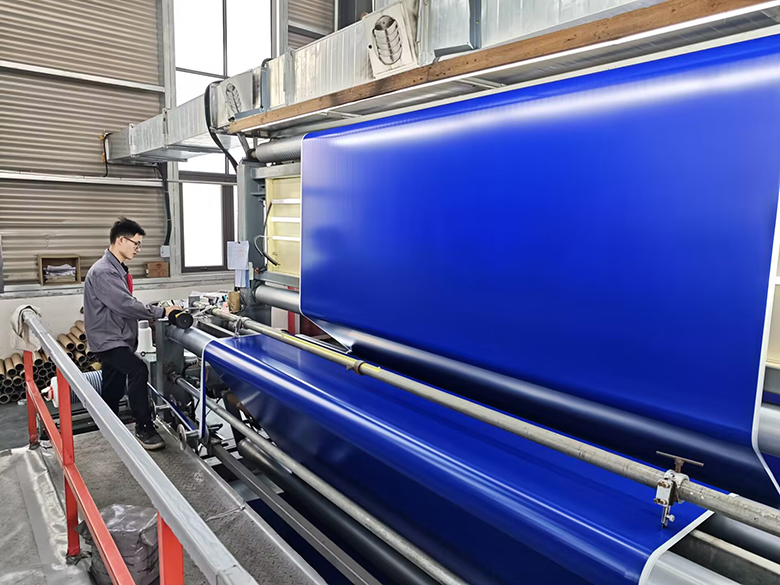
Material and finished-cover programs can support tarp converters, distributors and repeat OEM supply.
Nominal body length does not communicate tarp travel, pocket dimensions, cab-shield position or rear geometry.
An exact copy can reproduce the same tracking, tension or coverage problem.
Repeated wear at the same point often indicates geometry or hardware contact, not simply insufficient fabric weight.
Open mesh allows water through. Use solid PVC/vinyl when a closed weather barrier is required.
Extra full-surface weight can change roll behavior. Local reinforcement may be more useful at known stress points.
A pilot installation can verify pockets, travel and clearances before a larger fleet, dealer or OEM order.
The B2B value of a replacement program is converting an approved fit into a documented specification that can be reordered without starting from zero.
Trailer/system type, old cover, cargo, damage locations, photos, quantity and destination are reviewed.
Material direction, finished dimensions, pocket geometry, reinforcement and identification details are documented.
New geometry can be pilot-tested before the approved details are standardized for future replacement production.
These pages cover closely related materials and systems while keeping this page focused specifically on end dump trailer replacement tarps.
Direct answers for fleets, dealers, replacement channels, tarp-system companies and OEM buyers.
Mesh is commonly selected when airflow and loose-load containment are the priority. Solid PVC/vinyl is more suitable when the cargo needs stronger rain protection or a more closed surface. Final selection should also consider abrasion, system geometry and operating frequency.
No. Mesh contains openings that allow air and water through. It is selected primarily for breathable containment and lower billowing. Use solid PVC/vinyl when waterproof surface protection is required.
Measure actual deployed travel, old finished tarp dimensions, front roller pocket, rear crossbar or pull-bar pocket, tarp width, tailgate and hinge clearances and any shaped rear detail. Include photos of the complete tarp system.
Yes. A correctly fitting old tarp can be used as a reference. Combine it with actual trailer measurements, mechanism photos and documentation of any recurring wear locations.
DERFLEX can configure finished covers for selected manual and electric arrangements. Final compatibility must be confirmed against actual system geometry, pockets, travel path and attachments.
No. Rear construction varies by mechanism. Some layouts use an overlap, flap or shaped rear end, while front-to-back systems may terminate at a rear crossbar. Follow the verified old tarp or system drawing.
Not necessarily. Additional weight does not correct poor fit or hardware contact and can affect rolling behavior. Material construction should be selected together with cargo abrasion, system design and reinforcement requirements.
DERFLEX supports B2B programs with repeat dimensions, controlled material specifications, labels, packaging and repeat production. Provide the approved fit, quantity, destination and intended SKU structure when requesting a quotation.
Send DERFLEX the old tarp, trailer and system photos, finished dimensions, front/rear pocket details, tailgate clearances, cargo type, quantity and destination. The team can review a practical mesh or solid PVC/vinyl direction for sampling, fleet replacement, dealer inventory or OEM production.