News
Company News

Flexible Air Duct Manufacturer | Custom PVC Ventilation Ducts | DERFLEX

Update:2026/7/20 20:20:29 Views:
Finished Duct Assemblies · OEM & Project Supply

Flexible Air Duct Manufacturer for Industrial Airflow Systems

Configure the duct around the fan, pressure direction, route and operating environment—not around a generic hose description.

DERFLEX supplies finished flexible air duct assemblies for portable blowers, temporary ventilation, industrial exhaust, confined-space work, tunnels and mines. Diameter, section length, body material, wire reinforcement, cuffs, suspension details and identification can be developed against a confirmed project specification.

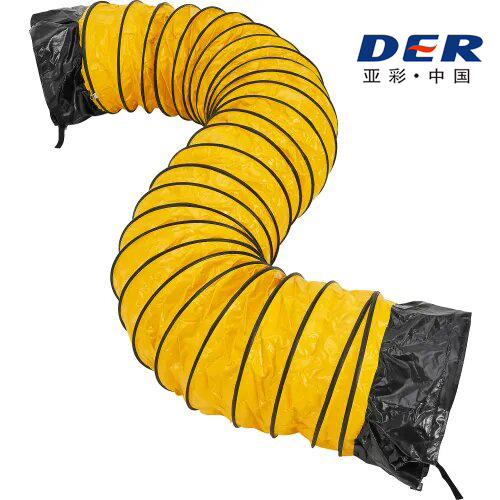
Yellow DERFLEX flexible air duct with spiral wire reinforcement
Spiral Wire-Reinforced Flexible Air Duct Compressible coated-fabric body with helical support and configurable end cuffs for blower, suction or exhaust connections.
Pressure-Specific Structure Layflat for positive-pressure air supply or wire reinforcement where the duct must remain open.
Project-Sized Sections Diameter, section length and connection geometry matched to fan data and installation handling.
Connection Options Drawstring cuffs, belts, steel rings, zippers, clamp ends and buyer-defined interfaces.
Documented Options Flame-retardant, antistatic or temperature-related requirements reviewed by construction and test method.
Product Definition

A Flexible Air Duct Is Part of the Ventilation System

A flexible air duct is a collapsible or shape-retaining passage used to move air between a fan and a work area. Compared with rigid sheet-metal ductwork, it can be routed through temporary layouts, around equipment, into confined areas and along projects where the airflow line must be extended or relocated.

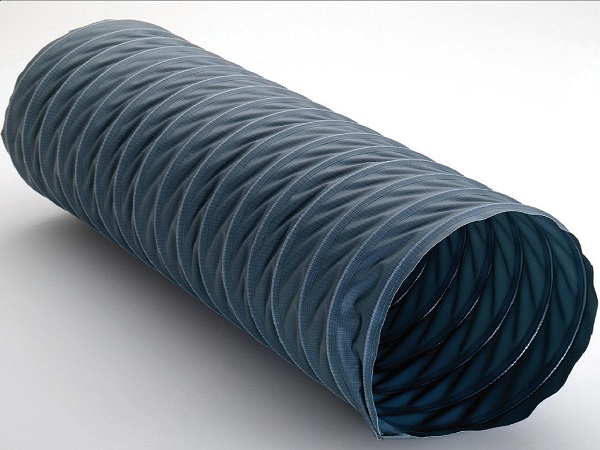
The phrase covers several constructions. A layflat tube depends on positive pressure to inflate. A spiral wire-reinforced duct uses a continuous helix to preserve its cross-section through bends or under suction. A portable blower duct may add high-visibility fabric, wear strips, carrying straps and quick cuffs for frequent jobsite handling.

This page focuses on finished industrial duct assemblies rather than residential foil HVAC duct or an unprocessed roll of coated fabric. For project selection, the useful question is not simply “What diameter do you sell?” but “What airflow, pressure, route, connection and safety requirement must the duct support?”

Final pressure capability, service temperature, fire behavior and surface resistance depend on the complete selected construction and the agreed test method. They should be confirmed on the approved specification rather than inferred from a product category name.
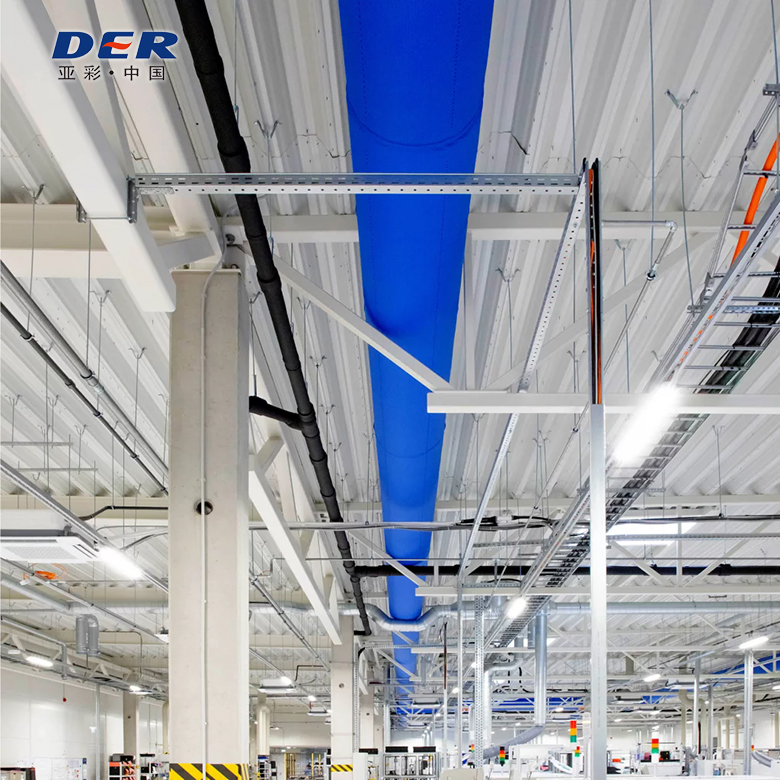
Blue flexible fabric air duct installed in an industrial facility
Flexible Routing for Changing Work Areas Industrial air distribution, temporary cooling and controlled airflow can require long, suspended or frequently adjusted duct routes.
Selection Logic

Choose the Construction Before You Choose the Color

Three operating questions separate a workable duct specification from a catalogue-only purchase.

01

Will the fan blow or extract?

Positive-pressure supply can use a collapsible layflat design. Negative-pressure extraction normally needs a spiral or ring-reinforced body to reduce the risk of collapse. Dual-direction systems should be discussed as a separate assembly requirement.

02

How will the duct be handled?

A duct that remains suspended for months has different needs from a hose that is dragged, coiled and moved between work zones every day. Wear strips, reinforcement pitch, carrying features and section length should reflect the actual handling cycle.

03

What does the environment demand?

Temperature, moisture, dust, abrasion, chemicals, visibility, underground rules and required documentation can change the fabric formulation, seam method, hardware and test plan. State the named standard when compliance is required.

Product Range

Flexible Air Duct Configurations for Different Pressure Modes

DERFLEX can discuss a finished duct configuration around the required airflow direction, equipment interface and site conditions.

Portable

Industrial Blower Duct

Compressible ducting for mobile fans and frequently relocated ventilation equipment.

  • High-visibility color options
  • Belted, drawstring or clamp cuffs
  • External wear-strip configurations
Positive Pressure

Layflat Air Supply Duct

Collapsible sections that inflate when the forcing fan operates.

  • Compact storage volume
  • Long-run suspension options
  • Ring, zipper or sleeve connections
Shape Retaining

Spiral Reinforced Duct

Helical-wire support for extraction, bends and routes that must remain open.

  • Configurable wire pitch
  • Positive or negative pressure review
  • Optional abrasion protection
Project Specific

Custom Duct Assemblies

Fabricated transitions and accessories for non-standard fan outlets or duct layouts.

  • Reducers, bends and Y-pieces
  • Custom end interfaces
  • OEM marks and packing plans
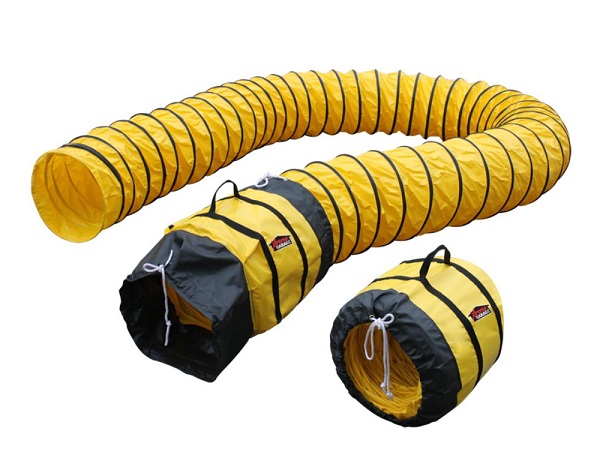
Coiled yellow flexible ventilation ducts with black reinforced ends
Coiled for Transport, Extended for Airflow Compression ratio, coil diameter and packed weight matter when crews repeatedly move duct sections between job sites.
Construction Details

Build the Duct Around Air Leakage, Collapse and Wear Risks

A finished flexible duct combines the textile body with structural and installation details. The coated fabric provides the air barrier and mechanical base. Welded or sealed seams close the longitudinal construction. Wire, rings or pressure maintain the intended cross-section. Cuffs connect the section to the fan or the next duct, while external strips and suspension points help manage handling loads.

PVC-Coated Polyester Body

Woven or knitted technical textile selected for flexibility, strength, coating adhesion and expected exposure.

Helical Wire or Ring Support

Used when the duct must hold its section under suction, tight bends or low-flow conditions.

Welded Seam Construction

Hot-air or high-frequency welding can be selected according to body material, diameter and seam geometry.

Connection & Suspension

Cuffs, belts, zippers, rings, hooks, tabs, grommets and fins are configured for installation and replacement practice.

Material choice should follow the service condition

Standard PVC constructions are widely used for ambient industrial airflow because they balance flexibility, weather exposure and fabrication. More demanding temperature or chemical conditions may require a different coated textile. Provide continuous and peak temperatures, not only a general description such as “hot air.”

Specification Framework

Reference Fields for a Custom Flexible Air Duct Enquiry

The ranges below are procurement references. Final values are confirmed against diameter, fan pressure, route, connection system and required test documentation.

Specification Field Typical Project Reference Selection Consideration
Product form Finished flexible air duct assembly Body, seam, reinforcement, end cuffs and selected accessories can be included.
Airflow mode Positive pressure, negative pressure or project-defined dual direction Pressure direction determines whether a layflat or shape-retaining structure is appropriate.
Body material PVC-coated woven or knitted polyester technical textile Fabric construction and coating formulation are selected by pressure, handling, weather and documentation needs.
Material weight Approximately 300–900 g/m², project dependent Lighter grades support portability; heavier constructions may be selected for pressure and wear exposure.
Diameter Portable sizes and project diameters up to approximately 3000 mm Calculate from airflow, velocity, fan pressure, line length, bends and allowable pressure loss.
Section length 5 m, 10 m, 15 m, 20 m or custom sections Longer sections reduce joints; shorter sections can simplify transport, extension and isolated replacement.
Operating temperature Common PVC reference: approximately −20°C to +80°C State continuous, peak and cold-flex requirements. Alternative materials should be reviewed outside the confirmed range.
Connections Drawstring cuff, belt and buckle, steel ring, zipper, clamp cuff or custom connector Provide fan outlet dimensions, photographs or a drawing to coordinate fit and sealing.
Suspension Hooks, eyelets, webbing loops, tabs, reinforced patches or suspension fins Spacing and reinforcement should match duct weight, support cable and route geometry.
Optional treatments Flame-retardant, antistatic, cold-resistant or custom color options Name the required test standard and report format before quotation. Availability depends on the complete construction.
Marking & packing OEM identification, section labels, folded or coiled packing Coordinate labels, batch traceability, carton or pallet method and container loading plan.
Applications

Where Flexible Air Ducts Support Temporary or Changing Airflow Routes

The operating condition determines the duct—not the industry label alone. The following scenarios show common procurement contexts.

Maintenance

Confined-Space Ventilation

Fresh-air supply or controlled exhaust for tanks, chambers, utility spaces, shipyards and maintenance zones, subject to the site ventilation plan and safety procedure.

Construction

Basements & Enclosures

Temporary airflow for drying, cooling, heating distribution, dust management and work-zone ventilation where rigid ducts would be slow to install.

Industrial

Equipment Cooling & Exhaust

Flexible connections between portable fans, chillers, dehumidifiers, machines and temporary intake or exhaust points.

Underground

Mine Development

Project-configured fresh-air supply or extraction lines for headings and temporary work areas, with pressure mode and required safety standards defined in advance.

Infrastructure

Tunnel Construction

Extendable duct sections for metro, road, rail, hydropower and utility tunnel works where routes change as excavation progresses.

Events & Facilities

Temporary Air Distribution

Directed hot or cold air movement in halls, temporary structures, storage zones and large rooms when the system needs relocatable duct sections.

Procurement Workflow

From Fan Data to an Approved Duct Specification

A useful request includes the operating information needed to select the structure and verify the interface.

Step 01

Define Airflow

Provide target m³/h or CFM, fan model, outlet size, pressure curve and whether the fan supplies or extracts air.

Step 02

Map the Route

State total length, bends, elevation changes, hanging method, clearance limits and expected extensions.

Step 03

Describe Exposure

Include temperature, moisture, abrasion, dust, chemicals, outdoor use and handling frequency.

Step 04

Confirm Interfaces

Share outlet dimensions, existing cuff details, connection photos, drawings and preferred section length.

Step 05

Name Documentation

List required fire, antistatic or material tests, report language, inspection needs and marking instructions.

Manufacturing & Quality

Control the Details That Affect Fit, Leakage and Repeat Orders

Consistent repeat supply depends on a documented combination of material, dimensions, reinforcement, seam layout and connection details.

DERFLEX Supply Approach

DERFLEX combines coated-textile knowledge with finished-product fabrication discussions. The enquiry can therefore cover both the duct body and the practical details that determine how crews connect, suspend, extend, repair and pack each section.

  • Project-based material and structure review
  • Finished cuffs, seams, reinforcement and suspension
  • Custom color, marking and OEM identification
  • Pre-production specification confirmation
  • Batch and packing requirements discussed before order
Material Verification Confirm selected fabric construction, weight, color, coating and any agreed test requirements.
Dimensional Control Check diameter, section length, cuff dimensions, reinforcement pitch and suspension spacing against the approved drawing.
Seam & End Inspection Review welded or sealed areas, reinforcement transitions and high-load connection details for the selected construction.
Interface Fit Review Use confirmed fan outlet data, samples or templates where a custom cuff or quick connection is required.
Identification Plan Coordinate section number, airflow direction, buyer mark, batch reference and handling information.
Packing Method Balance compression, coil diameter, edge protection, pallet size and site handling needs.
Product Images

Finished Duct, Installation and Connection References

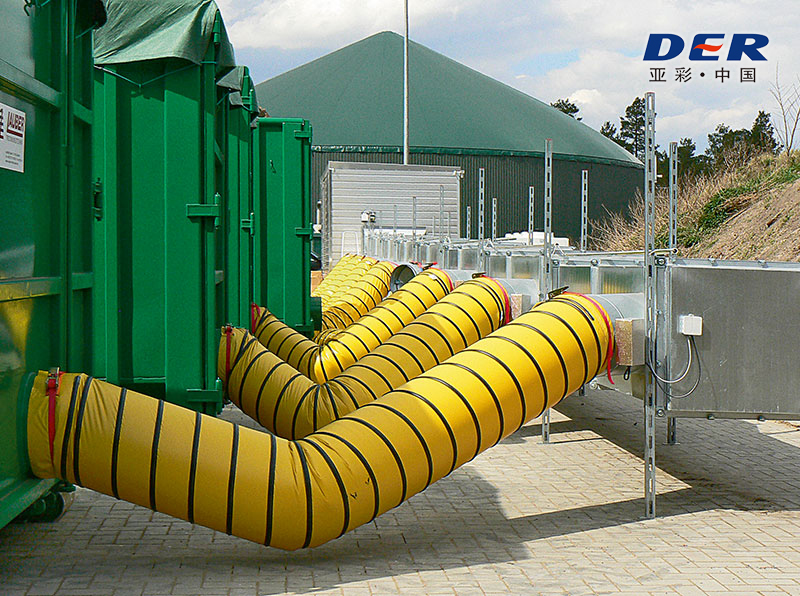
These DERFLEX website images show several flexible duct formats and operating contexts. Final supply is based on the approved specification.

FAQ

Flexible Air Duct Questions from Industrial Buyers

Practical answers for project engineers, distributors, equipment suppliers and OEM procurement teams.

What is the difference between a flexible air duct and a flexible ventilation hose?

In industrial purchasing, the terms often overlap. “Flexible air duct” commonly emphasizes the finished airflow passage and its connection to a ventilation system, while “ventilation hose” may describe a smaller or more portable shape-retaining product. The required pressure mode, diameter, reinforcement, cuffs and environment are more important than the label.

Can the same duct be used for both blowing and suction?

Not automatically. A layflat duct is normally intended for positive-pressure air supply and may collapse under suction. A wire- or ring-reinforced duct can be evaluated for negative pressure because its structure helps maintain the cross-section. State both operating directions and the fan pressure when dual-direction use is required.

Which information is needed for a custom quotation?

Provide target airflow, fan model and pressure, outlet diameter, required duct diameter and length, number of bends, airflow direction, operating temperature, handling conditions, connection style, suspension method, quantity, destination and any named fire or antistatic standard.

What sizes can DERFLEX manufacture?

Portable and project-specific diameters can be discussed, with large ventilation sections extending to approximately 3000 mm in suitable constructions. Practical limits depend on pressure, body material, reinforcement, seam layout, installation handling and shipping method.

Can DERFLEX provide custom cuffs, zippers or rings?

Yes, the finished-product discussion can include drawstring cuffs, belt ends, clamp interfaces, steel rings, zipper joints, hook-and-loop overlaps, suspension hardware and buyer-defined connections. A drawing, sample or clear fan-outlet measurements improves interface accuracy.

Are flame-retardant and antistatic options available?

Options can be evaluated when the required standard, classification and test method are stated. Compliance should apply only to the confirmed construction supported by the agreed documentation; broad terms such as “fireproof” are not sufficient for a project specification.

Is this duct intended for breathable or medical air?

This page addresses industrial and temporary ventilation. Applications involving breathing-air quality, medical use, food contact or other regulated service require a separate material, hygiene and compliance review before any product is selected.

Specify a Flexible Air Duct Around Your Fan and Worksite

Send the airflow direction, fan data, diameter, route length, connection drawing, environment and required documents. DERFLEX will review the finished duct construction and prepare a project-based quotation.

Consulting Services
+86-021-54361792 / 54361798
Email
sales@derflex.com